If you’re thinking about selling or trading your Rivian R1S in 2026, you’re not alone. Early Rivian buyers are starting to cycle out of their first SUVs, and fresh incentives plus new models are reshaping what dealers and online buyers will pay. Understanding your Rivian R1S trade‑in value in 2026 is the key to protecting your equity and timing your move.
Why this year matters
Rivian R1S trade‑in value in 2026: quick overview
Early‑2026 Rivian R1S value snapshot (estimates)
Every Rivian R1S is spec’d differently, and local demand plays a big role, so no online guide can give you a perfect number. But by looking at recent appraisal data, auction sales, and what Rivian itself is offering, we can outline realistic value bands for 2026 and show you how to land at the top of them.
How much is my Rivian R1S worth in 2026?
Estimated Rivian R1S value ranges in early 2026
These are directional examples for well‑equipped Adventure/All‑Terrain–type trims in "clean" condition. Local offers will vary, and rare specs or heavy options can move numbers up or down.
| Model year (R1S) | Typical mileage in 2026 | Condition example | Rough private‑party range | Rough dealer trade‑in range |
|---|---|---|---|---|
| 2022 | 35,000–60,000 miles | Good/clean, full history, no major damage | $58,000–$72,000 | $52,000–$65,000 |
| 2023 | 25,000–45,000 miles | Very clean, single owner, popular color/options | $65,000–$78,000 | $58,000–$70,000 |
| 2024 | 15,000–30,000 miles | Low miles, minimal wear, desirable spec | $72,000–$86,000 | $64,000–$76,000 |
| 2025 (early build) | 5,000–18,000 miles | Near‑new, still under full warranty | $78,000–$92,000 | $68,000–$80,000 |
Use these as starting points, then refine with live offers and a battery‑health report.
These are directional, not promises
In practice, you’ll see a spread of several thousand dollars between offers, even for the same R1S. A Rivian factory trade‑in, a traditional franchise dealer, and a used‑EV specialist like Recharged may all look at the same VIN and make very different assumptions about future demand, recon cost, and battery risk.
What drives Rivian R1S trade‑in values
Four levers that move your R1S trade‑in number
Get these right and you’ll usually land at the top of the range.
1. Mileage and usage pattern
Like any luxury SUV, the R1S is priced around age and miles, but usage matters too. A 2022 with 60,000 highway miles and meticulous records can be easier to sell than a 2023 with 30,000 hard off‑road miles and spotty maintenance.
2. Battery health and range
EV buyers obsess over usable range. If your R1S still delivers real‑world range close to its original rating and passes a battery diagnostic (like the Recharged Score), you’ll usually see stronger offers than a similar truck showing early degradation.
3. Trim, options, and color
Adventure and All‑Terrain trims, dual‑ or quad‑motor setups, Max/Large packs, and popular colors generally carry a premium. Niche color combos, base wheels, or unusual specs may take longer to sell and push trade offers down.
4. Condition, history, and software
Clean Carfax/AutoCheck, no paintwork, up‑to‑date over‑the‑air updates, intact accessories, and a tidy interior all matter. Accident history, wheel rash, missing keys, or ignored service bulletins signal risk to a buyer, and show up as lower trade‑in bids.
Pro tip: Bring documentation
Rivian R1S depreciation: what to expect
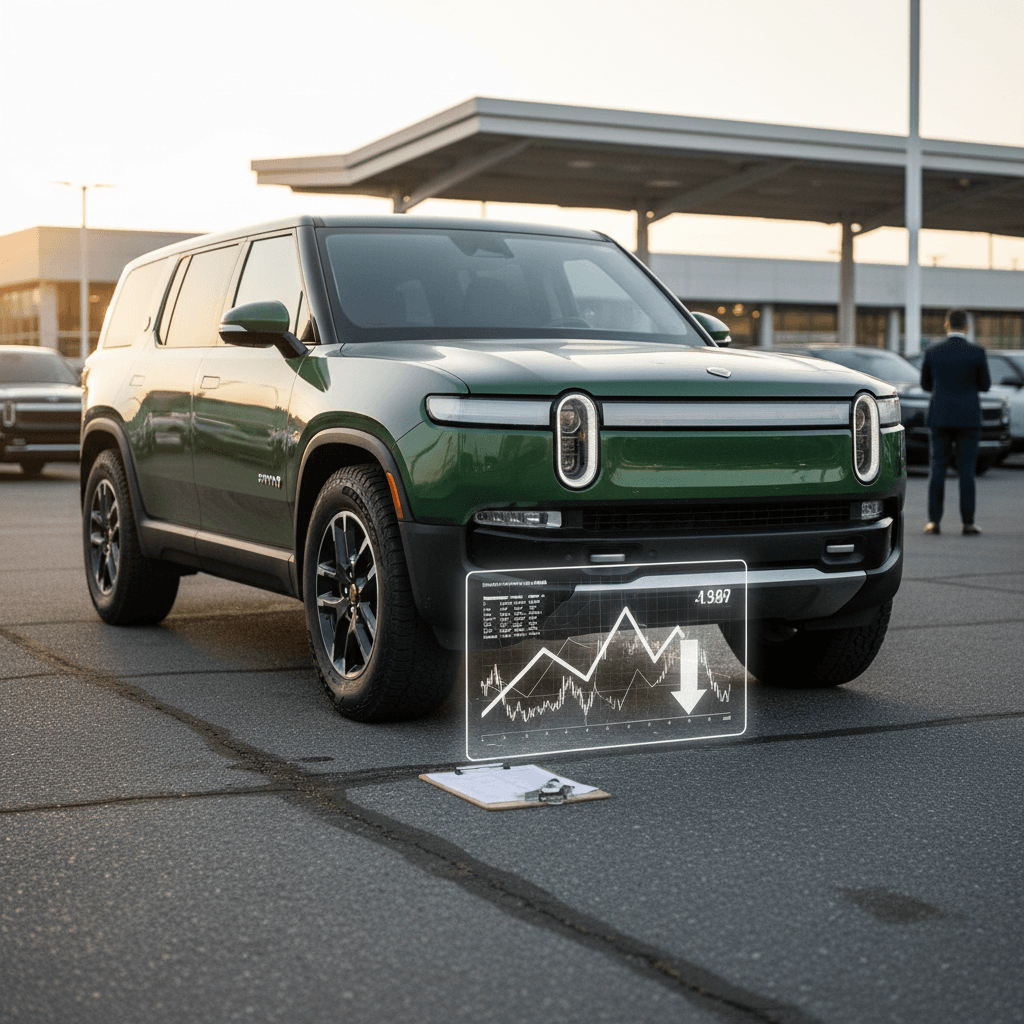
Across the luxury EV space, early data shows steeper initial depreciation than comparable gas SUVs, but the Rivian R1S has held up better than many peers. Several value guides and auction feeds point to roughly 45–50% retail depreciation over five years for typical use, with trade‑in values a bit lower once dealer margins and reconditioning are factored in.
Years 1–3: The steep drop
- Most R1S models lose the bulk of their value in the first 24–36 months, especially if they were purchased near peak pricing.
- Manufacturer discounts and new‑vehicle incentives introduced after launch effectively reset the “price ladder,” which can drag used values down for earlier buyers.
- If you’re in this window in 2026 with low miles, you may still have strong equity, but you’ll want multiple bids before committing.
Years 4–6: Value stabilizes
- Once an R1S crosses ~4 years old, values tend to flatten into a slower, more predictable depreciation curve.
- Battery health and software support become bigger factors than model‑year bragging rights.
- Well‑kept 2022–2023 trucks in 2026 can look like strong buys relative to new R1S pricing, which helps support solid trade‑in numbers.
Good news for R1S owners
Where to sell or trade your Rivian R1S in 2026
You’ve got more options than ever for moving a Rivian R1S in 2026, from Rivian’s own trade‑in tool to national online buyers to EV‑specialist marketplaces. Each route has different trade‑off points on price, speed and effort.
Main ways to sell a Rivian R1S in 2026
Match the channel to your priorities: top dollar, speed, or simplicity.
1. Rivian trade‑in
Rivian lets you request a trade‑in estimate when you order a new R1S or R1T. It’s convenient, and in recent promos they’ve layered in extra credits for trading into a new build.
Pros: One‑stop convenience, turnkey handoff. Cons: Tied to a new Rivian purchase, and the offer isn’t always the highest on the table.
2. National online buyers
Platforms that buy nationwide, often sight‑unseen at first, will give you quick quotes based on your VIN, photos and condition report.
Pros: Fast, low‑friction, usually arrange pickup. Cons: Conservative on unique specs; may under‑value clean EVs versus specialists.
3. EV‑focused marketplaces
Specialists like Recharged focus on used EVs, battery health and transparent pricing. You can get an instant offer or use consignment, where they sell the SUV for you at a retail price and you share in the upside.
Pros: EV‑savvy buyers, battery diagnostics, nationwide reach. Cons: Process may take slightly longer than a single wholesale bid, but usually with more money back to you.
Private‑party sale
Selling the R1S yourself through classifieds or forums can net the highest price if you’re patient and comfortable fielding questions, arranging test drives, and managing payment.
- Often $3,000–$8,000 higher than a typical trade‑in, depending on the market.
- Requires handling title work, payoff, and buyer vetting yourself.
- Best suited for lower‑mileage, well‑optioned trucks with clean history.
Instant‑offer and consignment models
If you want more than a dealer trade but less hassle than selling yourself, an EV marketplace like Recharged can strike a balance.
- Instant offers simplify the process: accept, sign, and schedule pickup.
- Consignment lets Recharged market your R1S nationwide, often achieving a retail‑level price while you keep control of the bottom line.
- Battery health and a Recharged Score report help justify stronger asking prices to buyers.
How to maximize your R1S trade‑in offer
Pre‑trade checklist for Rivian R1S owners
1. Get a real battery‑health report
Before you request offers, schedule a battery and high‑voltage system check. At Recharged, every vehicle gets a <strong>Recharged Score</strong> that quantifies pack health, range and charging behavior, data that helps support higher offers.
2. Gather your records and accessories
Collect digital and paper service receipts, software update logs, charger receipts, and accessories like keys, cables and cargo gear. Complete packages are easier to resell and tend to attract better bids.
3. Fix inexpensive cosmetic items
Touch up obvious wheel rash, repair chips in the windshield, and have the SUV professionally detailed. Skip very expensive cosmetic work unless a buyer specifically requires it; you rarely get every dollar back.
4. Get 3–5 competing offers
Use at least three different channels, Rivian, an online buyer, and an EV specialist like Recharged. When possible, let each party know you’re shopping the market; competitive pressure often lifts final numbers.
5. Time the market around incentives
Promotions on new R1S or competing three‑row EVs can move values fast. If Rivian is offering big factory discounts, used prices tend to soften. If incentives taper or production tightens, well‑kept used inventory becomes more valuable.
6. Be honest in your condition report
Undisclosed damage or issues will surface at inspection and can kill deals. Describe flaws accurately up front to avoid last‑minute price drops and wasted time.
Don’t anchor on one book value
Battery health, range, and the Recharged Score
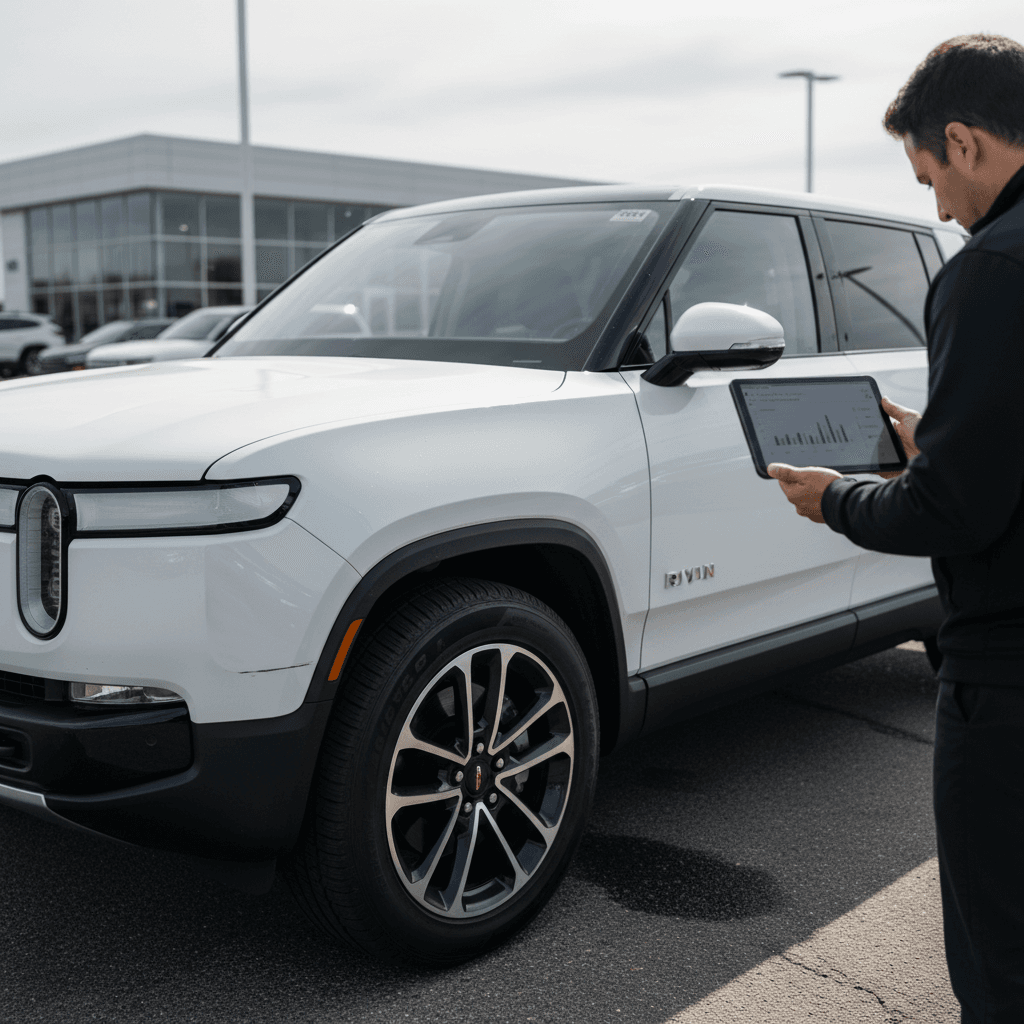
On a premium EV like the R1S, battery health is the new compression test. Two trucks built the same month can be worth very different amounts in 2026 if one shows strong pack health and the other is trending toward reduced range or charging quirks.
How battery health influences R1S value
Three real‑world scenarios appraisers see all the time.
Healthy pack, clean history
Range is close to original estimate, DC fast‑charging history is reasonable, and there are no error codes or warning messages.
Result: You’re likely at the top of the trade‑in band, especially with clean cosmetics and good tires.
Early signs of degradation
Noticeable range loss, heavy fast‑charge usage, or inconsistent charging behavior can spook buyers, especially outside warranty coverage.
Result: Offers often slip to the lower half of the range, or deals require price concessions.
Documented Recharged Score
At Recharged, every used R1S gets a Recharged Score Report, with verified battery health, charging stats and fair‑market pricing.
Result: Transparency builds confidence, which supports stronger offers when you sell or trade.
Show, don’t just tell
Leasing vs owning: impact on R1S trade‑in value
Rivian has leaned into leasing, especially from 2024 onward, with relatively high posted residuals that reflect confidence in long‑term value. In 2026, you’ll see R1S owners in three situations: traditional loans, cash purchases and leases nearing maturity. Each path changes how you think about “trade‑in value.”
You own the R1S outright
If your loan is paid off, or close, most of your trade‑in or sale proceeds go straight to you. Focus on maximizing top‑line price with the steps above, then compare a cash sale vs. trading into your next EV.
You’re still making payments
Your true equity is today’s sale value minus your payoff amount. In some early high‑MSRP purchases, the payoff in 2026 can exceed what buyers are willing to pay. Don’t be surprised if numbers show little or no equity, especially on high‑priced early quads.
You’re coming off a lease
With some R1S leases set with optimistic residuals, it may be cheaper to walk away than to buy out and resell. But in markets where used inventory is tight, a buyout‑then‑resale can still pencil. Get firm offers before you decide.
Mind the payoff vs. offer gap
Rivian incentives and market shifts in 2026
Rivian has used targeted incentives, trade‑in bonuses and lease support to keep R1S demand healthy as new models arrive and EV growth slows from its early surge. Those programs are great if you’re stepping into another Rivian, but they also ripple through the used‑vehicle market.
- When Rivian or its lenders raise residuals or layer in lease credits, monthly payments on new R1S models fall, making new trucks more attractive and putting downward pressure on used values.
- When production slows or incentives fade, clean used R1S inventory becomes a relatively better deal, helping support stronger trade‑in numbers for low‑mileage examples.
- As more mainstream three‑row EVs enter the market, the R1S’s off‑road credibility and design give it a niche. That uniqueness can help buoy resale, but buyers will compare it closely to newer options on range and tech.
Watch the broader EV headlines
FAQ: Rivian R1S trade‑in value in 2026
Frequently asked questions about R1S value in 2026
Bottom line: reading the R1S market in 2026
The Rivian R1S is still a young product, and 2026 is only the second big wave of trucks aging past their early years. That makes pricing noisy, but it also creates opportunity if you understand where your SUV sits in the pack. Focus on battery health, documentation, and condition, shop your truck to multiple buyers, and keep an eye on incentive‑driven swings in the broader EV market.
If you want a data‑driven look at what your R1S is really worth, a used‑EV marketplace like Recharged can help you benchmark live values, verify battery health with a Recharged Score Report, and decide whether to trade in, sell outright, or consign. That way, your next move, whether it’s another Rivian or something entirely different, starts from a position of strength, not guesswork.