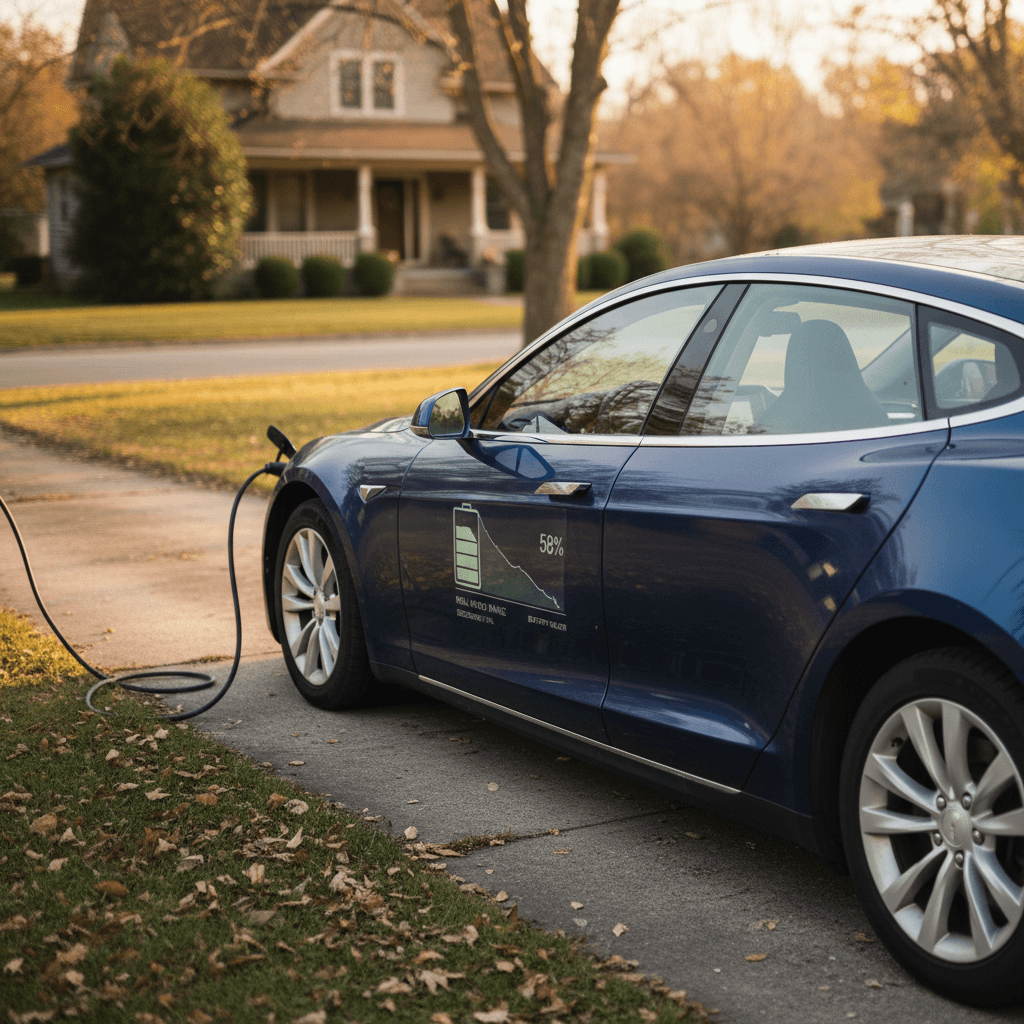
When people ask, “how long do electric cars charge last?”, they usually mean one of two things: how far you can drive on a single charge, or how many years the battery will keep doing that. The good news: for most drivers in the U.S., a full charge already covers several days of typical driving, and modern EV batteries are holding up better than many skeptics predicted.
Two meanings of “how long”
Charge vs battery life: what are you really asking?
1. Range per charge
This is the practical, everyday question: How many miles can I drive before I need to plug in again? It depends on:
- Battery size (kWh)
- Vehicle efficiency (mi/kWh)
- Speed, temperature, terrain
- How you use climate control
Think of this like the size of your gas tank multiplied by fuel economy.
2. Battery lifespan
This is the long view: How many years until I noticeably lose range? Most modern EVs lose range slowly, often around 10% or less in the first 5–6 years under normal use, thanks to sophisticated battery management and generous manufacturer warranties.
We’ll touch on both, but if you’re planning daily life with a used EV, range per charge is the number you’ll live with every day.
How many miles does an electric car charge last?
Typical range on a full charge (2024–2025 EVs)
On paper, most modern EVs are rated between about 220 and 330 miles on a full charge. High‑efficiency models like the latest Tesla Model 3 and Model Y stretch past 340 miles; some big, heavy trucks fall closer to 200. Small city EVs and older models can be 100–160 miles per charge, but that’s still several days of normal driving for many households.
Remember that EPA range is a lab test. In real life, your “tank” is smaller if you don’t charge to 100% daily, and weather, speed, and route matter. A very rough rule of thumb: expect about 70–90% of the posted EPA range in mixed driving once you factor in conditions and a healthy margin of comfort.
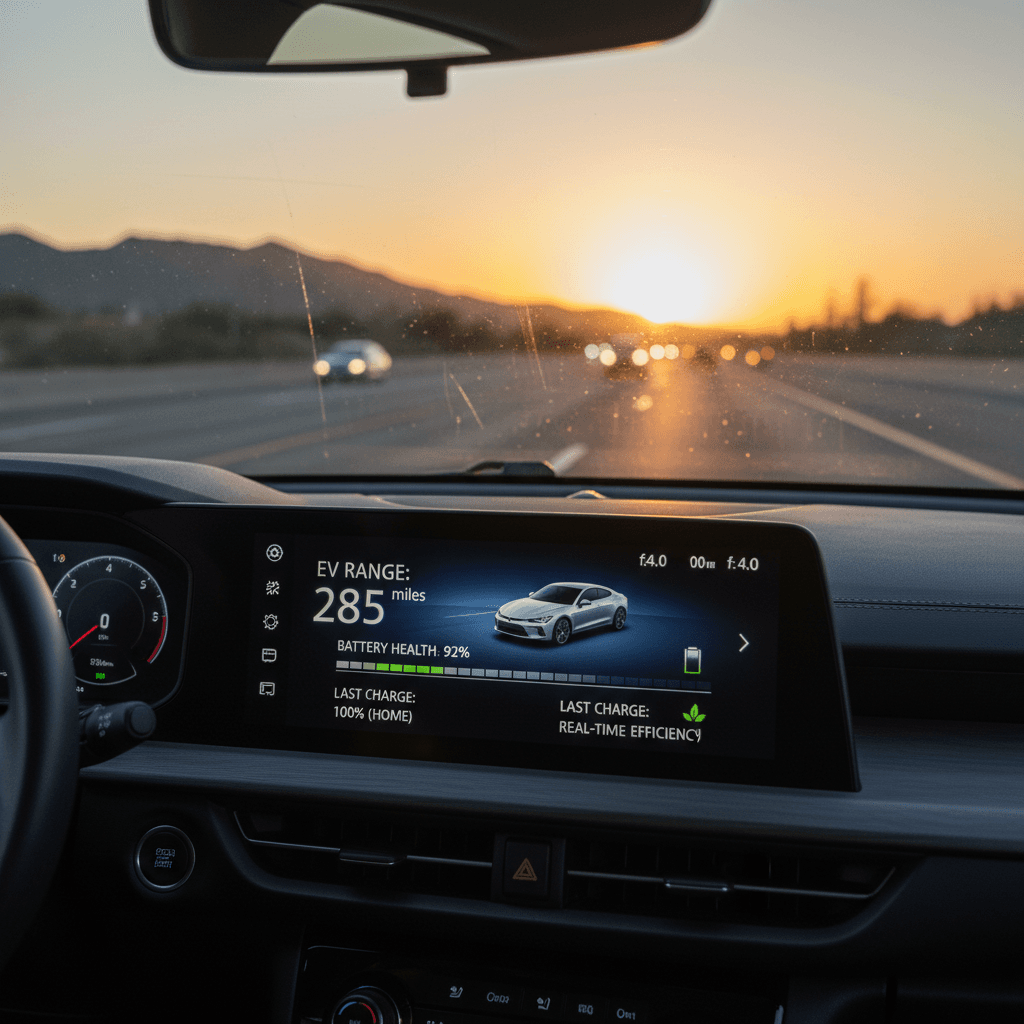
What actually drains an EV battery faster?
The big four range killers
These factors decide whether your charge feels generous or tight.
Speed
Cold weather
Hills & towing
Climate control
Think in miles per kWh, not just total miles
Will a single charge cover your daily driving?
For most Americans, the answer is a resounding yes. With the average driver covering about 33 miles per day, even a modest 150‑mile EV can go 4–5 days between full charges if you plug in opportunistically. Many owners treat their home charger like a smartphone cable: plug in overnight, wake up to a full “tank,” and never think about it.
Quick gut‑check: does an EV charge fit your routine?
1. Add up your typical weekday miles
Include commute, school runs, errands, and an emergency detour. If you’re under ~70 miles most days, almost any modern EV will feel effortless.
2. Consider days you <em>really</em> push it
Maybe you visit family once a week 90 miles away or hit three soccer fields in one afternoon. You want a car whose realistic range easily covers your biggest regular days.
3. Think about home charging access
If you can install a Level 2 charger or already have one, you’ll start each day near full. Apartment dwellers who rely on public charging may want extra buffer.
4. Decide how much buffer feels comfortable
Some drivers are happy finishing the day at 15–20% battery. Others want to see at least 40% left. Be honest about your comfort zone when you evaluate an EV’s range.
Why used EVs often over‑deliver for commuters
Ready to find your next EV?
Browse VehiclesHow far can you road-trip on one charge?
This is where “how long does an electric car charge last” really collides with our habits. We’ve been trained by gas stations to think in 400‑mile stretches. In practice, many drivers stop every 2–3 hours anyway for food, a bathroom, or a stretch, call it 140–200 miles at highway speeds.
If your EV has a true highway range around 230–260 miles, a full charge comfortably covers one of those stints. On a road trip, the rhythm becomes: drive 2–3 hours, DC‑fast‑charge for 20–30 minutes, repeat. You’re not so much asking “How far can I go on one charge?” as “How smoothly can I string charges together along my route?”
Highway reality: how much of the EPA range can you count on?
Approximate real‑world highway range vs. EPA rating for a healthy battery at typical U.S. freeway speeds.
| EPA rated range | Typical highway range | Comfortable planning range |
|---|---|---|
| 300 miles | 230–260 miles | 180–220 miles |
| 260 miles | 200–230 miles | 160–200 miles |
| 220 miles | 170–200 miles | 140–180 miles |
| 180 miles | 140–160 miles | 110–140 miles |
Numbers are illustrative; actual range varies by model, weather, and terrain.
Beware the last 10–15%
Do older batteries mean less range per charge?
Here’s the other half of the question: how long does an EV keep doing this day after day, year after year? Early internet folklore painted a grim picture of EV batteries turning into pumpkins after 5 years. Real‑world data tells a calmer story.
- Most manufacturers warranty the battery to around 70% capacity for 8 years or ~100,000 miles.
- Independent long‑term tests are finding many EVs still above 90% of original capacity after roughly 100,000 miles, even with frequent fast‑charging.
- Degradation tends to be steeper in the first couple of years, then flattens, many owners see just a few percentage points of loss over the next several years.
“The battery in our long-term test car retained 91% of its original capacity after four years and more than 100,000 miles, even with frequent DC fast charging.”
What this means for a used EV
Real-world range: popular EVs compared
Let’s ground this in some familiar names. Exact numbers change year by year, but this table gives you a sense of how long a charge lasts in broadly similar conditions for common EV types.
Approximate full‑charge range for popular EV categories
Representative figures for recent model years in mild weather with mixed driving.
| Vehicle type & example | Typical battery size (usable kWh) | Approx. EPA range | Realistic everyday range |
|---|---|---|---|
| Efficient compact (Tesla Model 3 RWD, Hyundai Ioniq 6) | 57–77 kWh | 270–360 miles | 220–320 miles |
| Family crossover (Tesla Model Y, VW ID.4, Hyundai Ioniq 5) | 70–82 kWh | 240–330 miles | 200–280 miles |
| Affordable older EV (Nissan Leaf, BMW i3, early Bolts) | 30–60 kWh | 80–220 miles | 70–190 miles |
| Large truck/SUV (Ford F‑150 Lightning, Rivian R1T/R1S) | 100–135+ kWh | 220–320 miles | 170–260 miles |
| Plug‑in hybrid (RAV4 Prime, Prius Prime, Wrangler 4xe) | 10–20+ kWh | 25–50 electric miles | 20–45 electric miles |
Always check the exact model, battery size, and EPA rating, especially on the used market.
Don’t forget usable vs. gross battery capacity
Simple ways to make each charge last longer
Easy habits that buy you extra miles
You don’t need hyper‑miling monk discipline, just a few smart tweaks.
Tame your right foot
Use climate control smartly
Plan routes with elevation in mind
Five‑minute setup that pays off every drive
1. Enable Eco or efficient drive mode
Most EVs have an efficiency‑focused mode that softens throttle response and optimizes climate settings, an easy way to stretch each charge.
2. Turn on battery pre‑conditioning
If your car supports it, let the battery warm up or cool down before fast‑charging or setting off in extreme temperatures. It improves range and charging speed.
3. Use the trip energy screen
Modern EVs show projected range based on your recent driving and route. Trust that more than the big headline number on the dash.
4. Keep tires properly inflated
Low tire pressure increases rolling resistance and eats range. Check monthly, especially with temperature swings.
5. Update your car’s software
Over‑the‑air updates often refine efficiency, thermal management, and range prediction. Keeping software current can subtly lengthen how long each charge lasts.
Buying a used EV: how to shop for range
On a spec sheet, two used EVs might both be “250‑mile cars.” In the real world, one might still comfortably deliver 230 miles per charge, while the other wheezes at 180. The difference is battery health and how the car was used in its previous life.
Questions to ask any seller
- What’s the current realistic range? Not just EPA, what do they actually see on their commute?
- How was it charged? Mostly home Level 2, or hammered on DC fast chargers every day?
- Any battery warranty left? Many OEM warranties transfer to the second owner.
- Has the car had any battery‑related service or recalls?
How Recharged helps de‑risk the guesswork
Every EV sold through Recharged includes a Recharged Score Report that measures battery health directly, not just odometer miles. You see:
- Verified state of health (SOH) of the pack
- Charging history patterns where available
- Fair market pricing that reflects real battery condition
- Expert EV‑specialist support to match range to your lifestyle
That way, you’re not buying a mystery, you’re buying a known, quantified range.
Don’t buy blind on range
FAQ: Common questions about how long EV charges last
Frequently asked questions about EV charge duration and range
Bottom line: how long do electric car charges last?
When you strip away the folklore, the answer is straightforward: a single charge in a modern EV usually lasts much longer than most people drive in a day, and batteries are proving more durable over time than early skeptics predicted. For the average U.S. driver, even a modest‑range EV can cover several days of errands and commuting on one charge. Long‑range models turn 250‑plus‑mile road‑trip stints into a non‑event with a bit of charging strategy.
If you’re shopping used, focus less on the badge and more on verified battery health. That’s the real key to how long each charge will last, for your daily life today and for years to come. With tools like the Recharged Score, EV‑specialist support, and nationwide delivery, Recharged is built to make that decision simple, transparent, and aligned with the way you actually drive.