If you’re eyeing a Porsche Taycan in 2026, especially on the used market, it’s smart to look beyond the sticker price. The real question is: what does Porsche Taycan maintenance cost in 2026, and how does it stack up against a 911, Panamera, or Cayenne over the long haul?
Key takeaway up front
Porsche Taycan maintenance cost in 2026: big picture
Typical Porsche Taycan maintenance profile in 2026
The Taycan doesn’t need oil changes, spark plugs, or complex emissions work. That’s where much of the savings come from versus a gas Porsche. Instead, your biggest maintenance costs are brake fluid service, inspections, filters, tires, and occasional brake work, plus any out-of-warranty electronic or charging-related repairs.
Think in 5-year chunks
How the Porsche Taycan service schedule works
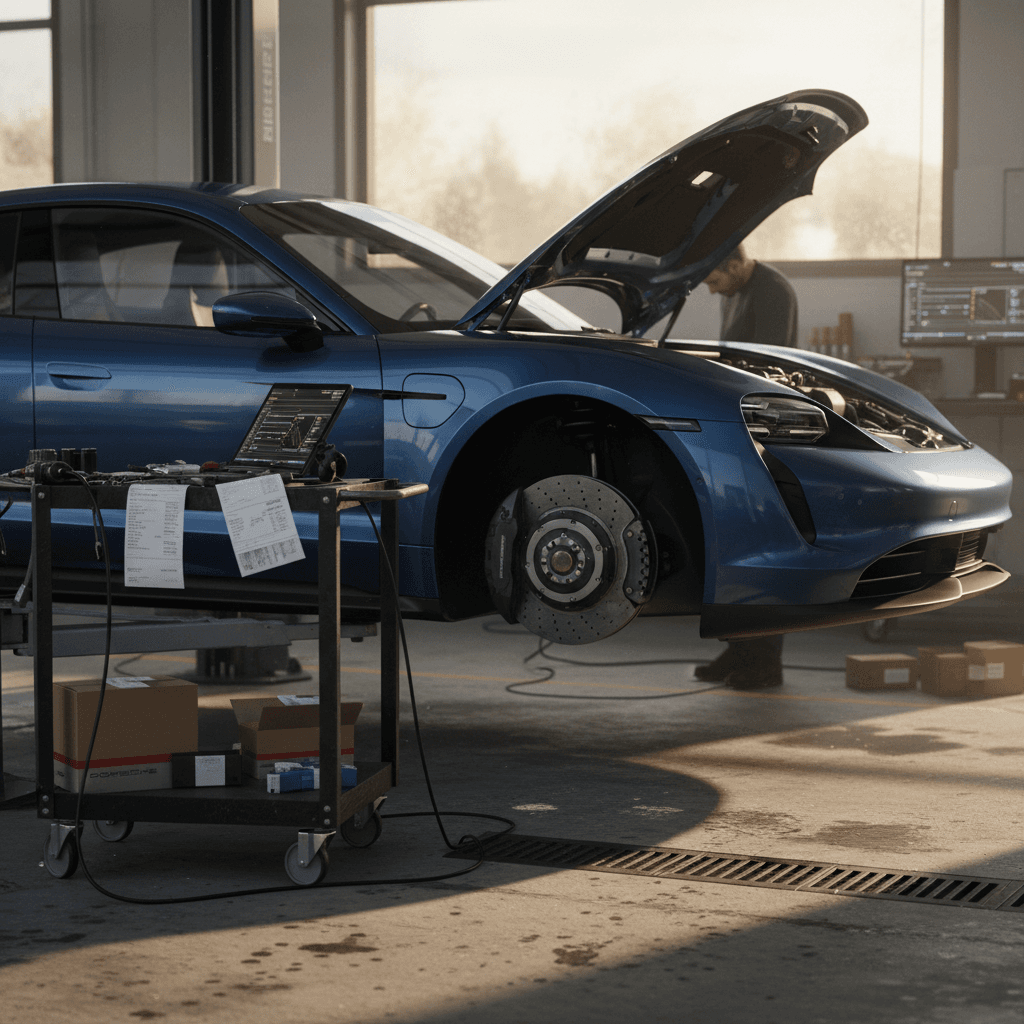
Porsche structures Taycan service around time and mileage, with most U.S. dealers in 2026 using roughly 2-year / 20,000-mile inspection intervals. Instead of dozens of line items at every visit, you get a short list of recurring tasks plus a detailed multipoint inspection.
- Brake fluid change every 2 years (regardless of mileage)
- Cabin air filter replacement typically every 2 years
- High-voltage battery and cooling system inspection
- Underbody, suspension, and brake visual inspection
- Software and control unit checks, plus any applicable updates
- Optional alignment checks if you report uneven tire wear or handling issues
If you drive less than 10,000 miles per year, you’ll likely see a dealer service visit about every two years. High‑mileage or heavily tracked cars might come in more often for tires, brakes, and alignment, but that’s driven by how you use the car, not by factory service requirements.
Dealer vs. independent shop
Real-world Taycan annual maintenance cost breakdown
Maintenance pricing can vary by region and dealer, but by 2026 owner reports and service menus have converged on a fairly consistent pattern. Here’s a realistic look at typical Taycan maintenance costs in the U.S., excluding tires and major repairs.
Typical Porsche Taycan maintenance items and 2026 costs (U.S.)
Approximate dealer pricing before tax; independent shops may be lower. Actual prices vary by region and model year.
| Service item | Typical interval | Approx. cost (dealer) | Notes |
|---|---|---|---|
| General inspection & diagnostics | Every 2 yrs / 20k mi | $300–$450 | Includes multipoint inspection, fault-code scan, basic software checks |
| Brake fluid replacement | Every 2 yrs | $200–$300 | Critical for preserving brake system performance |
| Cabin air filter | Every 2 yrs | $120–$200 | Often bundled with scheduled service |
| Wiper blades | As needed | $60–$120 | Weather and climate dependent |
| Coolant & HV battery inspection | Every 2 yrs | Usually included | Visual checks; coolant replacement is rare early on |
| AC service (optional) | 3–4 yrs or as needed | $200–$400 | Only if performance drops or leaks are detected |
| 12V battery replacement | 5–7 yrs | $300–$500 | Small auxiliary battery, not the traction battery |
This table focuses on routine service. Tires, crash damage, and out-of-warranty electronics are not included.
Spread across several years, those numbers translate into something like $600–$900 per year in routine costs for a typical U.S. Taycan owner in 2026. A lightly-driven car that sees the dealer only for scheduled visits may land toward the low end of that range; a high‑mileage or hard‑driven car tends toward the upper end.
Porsche Taycan vs gas Porsche maintenance costs
Taycan: where you save
- No oil changes: That alone can be $250–$400 per visit on a 911 or Panamera.
- No spark plugs, oxygen sensors, or timing chains.
- Far fewer fluids to change over 10 years.
- Less brake wear in normal driving thanks to regenerative braking.
Where costs are similar, or higher
- Performance tires cost about the same as on a 911 or Panamera.
- Suspension and alignment work are comparable to other Porsches.
- Out-of-warranty electronics or high-voltage repairs can be expensive.
- Dealer labor rates are premium-brand across the board.
Rule of thumb vs a 911
That’s why many buyers who move from a performance gas Porsche to a Taycan report that the EV feels more expensive to buy but cheaper to keep, especially if they charge at home and avoid frequent DC fast‑charging on road trips.
The expensive bits: brakes, tires, and the battery
Routine inspections are the boring part of Taycan ownership. The real money is in wear items and long‑term components, especially tires, brakes, and the high‑voltage battery. Understanding those costs will keep you from being surprised in year three or year seven.
High-cost Taycan wear and long-term items
What to watch and what to budget for as the miles add up
Performance tires
Most Taycans roll on wide, soft-compound tires:
- Front and rear sets can easily run $1,200–$2,000 installed.
- Aggressive driving or frequent launches may wear them out in 10k–15k miles.
- Gentler highway use can stretch them to 25k–30k miles.
Brakes
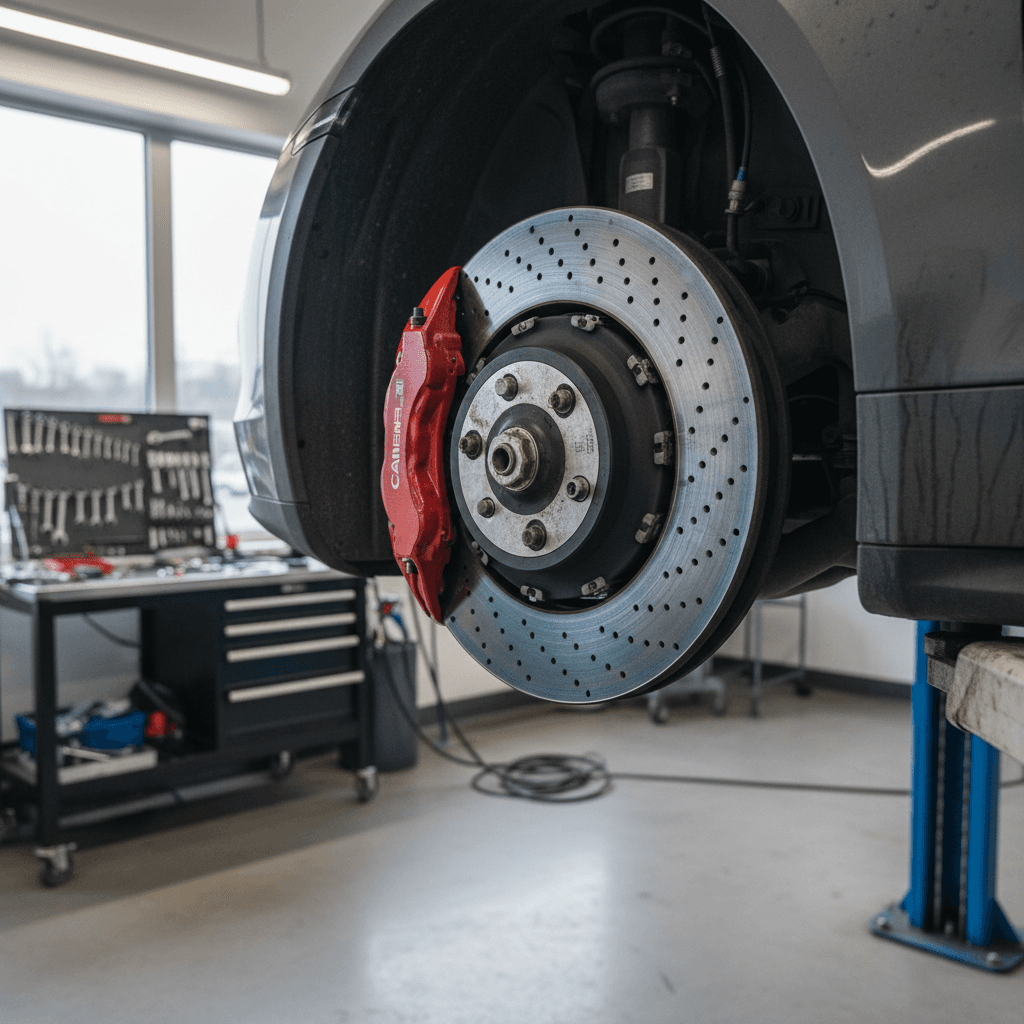
In daily driving, regenerative braking protects your pads and rotors. But:
- Track use or mountain driving can speed up wear.
- Steel brake jobs can climb into the four-figure range at a dealer.
- PCCB (carbon-ceramic) systems are pricey to service but wear slowly.
High-voltage battery
The big-ticket item most shoppers worry about:
- Covered by an 8-year / 100,000-mile battery warranty on most Taycans.
- Full replacements are rare so far, but very expensive out of warranty.
- Degradation has generally been modest for cars that avoid abuse.
Why fast charging habits matter
This is where a structured battery health check really earns its keep. At Recharged, every used EV comes with a Recharged Score battery health report, so you can see how the pack has aged before you commit to a particular Taycan instead of guessing based on mileage alone.
Warranty, software updates, and what Porsche covers
In 2026, Porsche Taycan coverage in the U.S. typically includes a 4-year / 50,000-mile new-vehicle warranty plus separate coverage for the high‑voltage battery, often 8 years or 100,000 miles. Exact terms can vary by model year and market, so always confirm what applies to the specific car you’re considering.
- New-vehicle limited warranty covers defects in materials and workmanship, not wear items like tires and wiper blades.
- High-voltage battery warranty usually covers excessive capacity loss or faults within the stated time/mileage window.
- Corrosion/perforation warranty often extends beyond the basic 4 years.
- Software updates for safety or reliability are typically covered; feature upgrades may be extra.
Why software matters for maintenance
If you’re looking at a used Taycan, ask the seller for service records and update history. A car that has been regularly serviced at a Porsche dealer and kept current on updates is generally a safer bet than one with a patchy history, especially as these cars age into their second and third owners.
How a used Taycan can lower your total cost
By 2026, the Taycan has several model years on the road. That means depreciation has already done a lot of work for you, often more than on a comparable 911 or Cayenne. Combine that with lower routine maintenance, and a well-chosen used Taycan can be a surprisingly rational purchase for an enthusiast who runs the numbers.
Why used can make sense
- Early steep depreciation means you may pay far less than original MSRP.
- The high-voltage battery may still be under warranty for years.
- Previous owner has already paid for the priciest initial years of ownership.
- Lower routine maintenance than a comparable gas Porsche once you’re in the car.
What you must verify
- Battery health: Capacity and fast-charging behavior.
- Service history: Especially brake fluid and software updates.
- Tire and brake condition: Performance rubber and big rotors aren’t cheap.
- Charging history: Heavy DC fast-charging, track use, or abuse.
How Recharged fits in
Ready to find your next EV?
Browse VehiclesChecklist: Practical ways to lower Taycan maintenance costs
Smart owner habits that keep Taycan costs in check
1. Stick to the 2-year service rhythm
Even though EVs need less maintenance, skipping brake fluid changes or inspections is false economy. Follow the 2-year service cadence and keep records, it protects the car and its resale value.
2. Treat tires as a budget line item
On a Taycan, tires are not an afterthought. Plan on replacing performance tires more often than on a mainstream EV, and shop around ahead of time so you’re not paying top dollar in an emergency.
3. Use regen to protect your brakes
Driving in modes that maximize regenerative braking, and looking further down the road, reduces mechanical brake use. Over time that can delay an expensive pad and rotor job, especially on heavy, powerful Taycan trims.
4. Be smart about fast charging
Use DC fast-charging when you need it, but rely on Level 2 home or workplace charging for daily use. That habit is kinder to the high-voltage battery and helps minimize long-term degradation risk.
5. Compare dealer and independent shop pricing
After the basic warranty period, it can make sense to get quotes from a qualified independent shop for tires, brakes, and suspension work while still leaning on Porsche dealers for EV-specific diagnostics and software.
6. Get a professional battery health report when buying used
If you’re buying a used Taycan, insist on a detailed battery health evaluation. A service like the <strong>Recharged Score</strong> gives you numbers instead of guesswork, which is invaluable when you’re assessing long-term cost.
FAQ: Porsche Taycan maintenance cost in 2026
Frequently asked questions about Taycan maintenance
Bottom line: Is Porsche Taycan maintenance expensive in 2026?
Looked at honestly, Porsche Taycan maintenance cost in 2026 lands in a sweet spot: higher than a mass‑market EV, but often lower than an equivalent gas Porsche when you factor in fewer fluids, no oil changes, and reduced brake wear. The big variables are how hard you drive, how often you fast‑charge, and whether you stay inside the warranty window for major components.
If you’re considering a Taycan, especially a used one, the smartest move is to treat maintenance, tires, and potential repairs as part of the purchase price, not an afterthought. Build a realistic 5‑year budget, verify battery health, and study the service history. That’s exactly the kind of due diligence Recharged is built to support, from Recharged Score battery diagnostics to expert EV guidance and flexible financing. Do that, and the Taycan can deliver supercar performance with ownership costs you understand before the first launch control run.