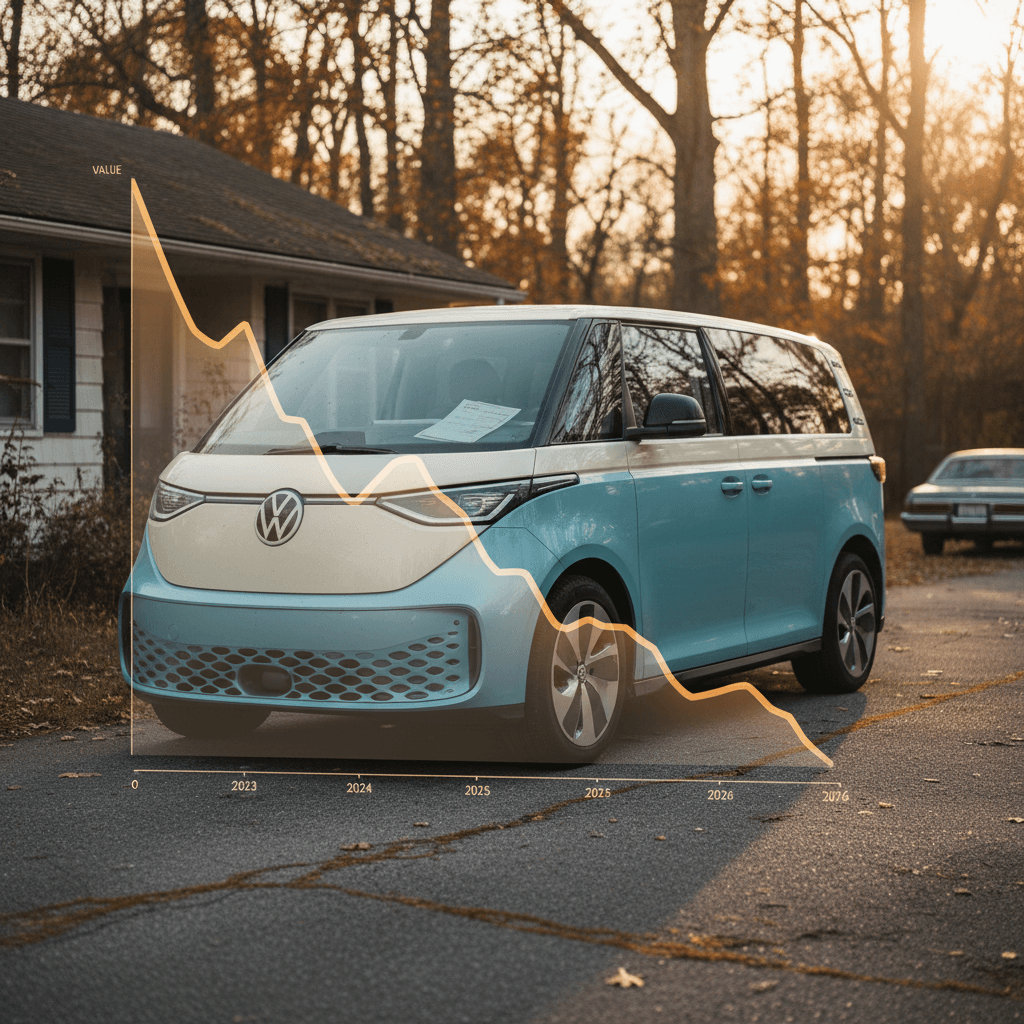
If you’re eyeing a Volkswagen ID. Buzz, you’re probably wondering the same thing every smart buyer asks: how fast does the Volkswagen ID. Buzz depreciate? Early U.S. sales, auction results, and pricing tools are finally painting a clear picture, and it’s not the rock-solid value story many fans hoped for. But if you play it right, that depreciation can work for you instead of against you.
Quick answer
Why Volkswagen ID. Buzz depreciation matters
The VW ID. Buzz isn’t a cheap experiment. In the U.S., most trims carry MSRPs in the low-to-high $60,000s, with some First Edition AWD vans cresting $70,000 before tax and fees. That’s luxury-SUV money for a family van with retro charm and modest range. When you’re tying up that much cash, or signing a big lease payment, how the Buzz holds its value becomes a major part of your real ownership cost.
Depreciation is where EVs can sting. Across the market, electric vehicles have been depreciating faster than comparable gas models, thanks to rapid tech changes, shifting incentives, and a used market that’s still finding its footing. The ID. Buzz is launching right into the middle of that storm, and its early numbers reflect it.
Early VW ID. Buzz value signals (U.S., 2025–2026)
How fast is the VW ID. Buzz depreciating so far?
Because the ID. Buzz only reached U.S. buyers in 2024 as a 2025 model, we don’t yet have clean 3‑ or 5‑year curves. What we do have are early resale and auction results, dealer discount data, and pricing tools like Edmunds and Kelley Blue Book that show how quickly values are adjusting.
- New‑car discounts: KBB’s Fair Purchase Price already sits roughly $5,000–$6,500 below MSRP on most trims, which means many buyers are paying well under sticker right out of the gate.
- Early resale: A high‑profile sale of a 2025 ID. Buzz 1st Edition with just a few hundred miles saw a drop of roughly 15–17% vs original MSRP in under six months.
- Trade‑in values: Edmunds and similar tools show trade‑in ranges in the mid‑$40,000s to mid‑$50,000s for 2025 vans, even though MSRPs commonly start around $61,500 and climb into the low $70,000s.
- Market momentum: Dealers have resorted to hefty incentives, and VW has already announced a pause for the 2026 U.S. model year, returning with an updated 2027 Buzz, another signal the first wave hasn’t met expectations.
Put that together, and the picture is clear: the VW ID. Buzz is experiencing steeper-than-average early depreciation, especially for buyers who paid MSRP or above when the vans first hit showrooms. If you buy well below sticker, you soften that blow considerably.
Sticker shock vs. real-world value
VW ID. Buzz vs other EVs and minivans on depreciation
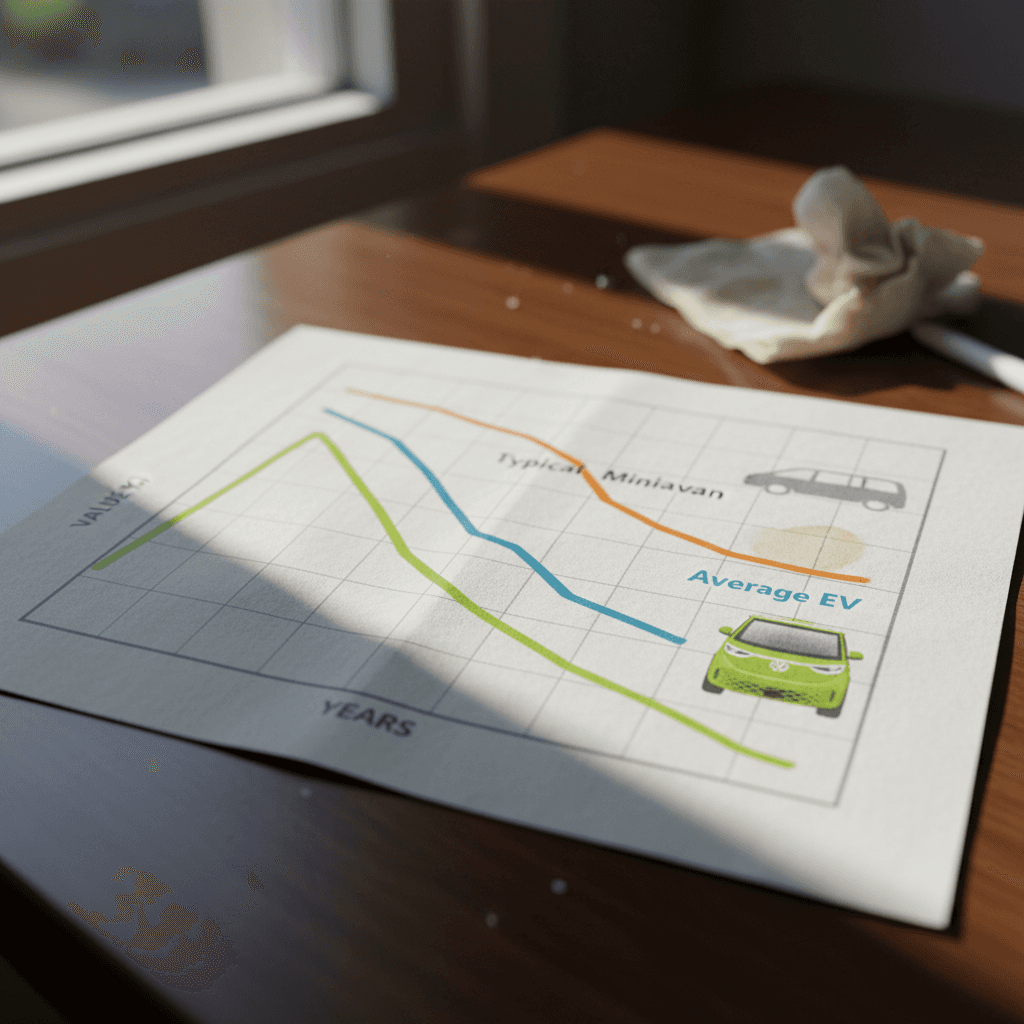
To understand how fast the Volkswagen ID. Buzz depreciates, you have to compare it to the two camps it straddles: electric SUVs and traditional gasoline or hybrid minivans.
How the ID. Buzz stacks up on value
Based on current EV market trends and early pricing data
vs. gas/hybrid minivans
Models like the Toyota Sienna and Chrysler Pacifica Hybrid are depreciation champs. Many hold 50–60% of their value at 5 years when well‑equipped and well‑maintained.
The ID. Buzz is unlikely to match that in percentage terms, especially in its first generation and with higher MSRPs.
vs. other EV crossovers
Electric crossovers and SUVs have typically lost around 55–60% of value over 5 years in recent U.S. data, faster than gas counterparts.
The Buzz, with its premium price and middling range, is likely to sit toward the faster side of EV depreciation unless incentives or used demand significantly improve.
vs. VW ID.4 & siblings
Volkswagen’s ID.4 has seen heavy discounting and soft used prices in many markets. That history doesn’t help the Buzz’s case.
On the other hand, the Buzz’s retro styling and limited supply give it more of a cult-car profile, which could stabilize long‑term values once the first steep drop is behind it.
The short version
1–10 year VW ID. Buzz depreciation forecast
Forecasting depreciation is part data, part educated guess. The ID. Buzz complicates things with a U.S. launch in 2025, a skipped 2026 model year, and a planned update for 2027. That said, we can sketch a realistic range based on similar EVs, current incentives, and early resale numbers.
Estimated VW ID. Buzz depreciation (U.S. market)
Approximate value retention for a well‑maintained ID. Buzz driven 12,000–15,000 miles per year, purchased at a reasonable discount from MSRP.
| Age | Approx. Value vs Original MSRP | What That Means on a $70,000 Buzz* | Notes |
|---|---|---|---|
| 1 year | 75–82% | $52,500–$57,400 | Early data already shows some 6–12 month vans down ~15–17% vs MSRP, especially if bought at sticker. |
| 3 years | 55–65% | $38,500–$45,500 | In line with many EVs that see steep early drops; leases often assume mid‑50s residuals at 3 years. |
| 5 years | 45–55% | $31,500–$38,500 | Likely below top minivans on a percentage basis, closer to the EV‑market average or slightly worse. |
| 8 years | 30–40% | $21,000–$28,000 | Battery age, range expectations, and upcoming models start to weigh heavily. |
| 10 years | 20–30% | $14,000–$21,000 | Survivor value for clean, lower‑mile vans; nostalgia and rarity could help strong examples. |
These are directional estimates, not guarantees. Real‑world values will vary by trim, options, region, and market conditions.
*Using $70,000 for easy math; many buyers will pay less, which changes the dollar amounts but not the percentage picture.
Buy at the right price, not just the right van
What’s driving VW ID. Buzz depreciation?
The Buzz’s value story isn’t just about being an EV. Several specific factors are pushing its depreciation curve steeper than you might expect for such a charismatic van.
Main forces shaping ID. Buzz depreciation
High MSRP vs real‑world value
Most ID. Buzz trims land in the $60,000–$70,000 MSRP range, but transaction prices are already several thousand lower. When the market quickly decides the van is over‑priced, early buyers eat that difference as depreciation.
Middling range in a fast‑moving market
With EPA range in the low‑230‑mile neighborhood for many trims, the Buzz doesn’t wow on efficiency. As 300+ mile EVs become the norm, shorter‑range vans may need bigger discounts on the used market.
No U.S. federal tax credit (so far)
Because it’s imported, the Buzz has not qualified for U.S. federal EV tax credits under current rules. That hurts its value proposition against some rivals and limits demand, which in turn pressures resale values.
Soft new‑car demand and long days on lot
High prices plus a niche body style mean some dealers are sitting on Buzz inventory for months. Slow new‑car movement almost always translates to steeper early depreciation as discounts pile on.
Model‑year pause and future updates
VW’s decision to skip the 2026 U.S. model year and bring back an improved 2027 version tells buyers that better Buzzes are coming, and that the first batch may age faster in shoppers’ eyes.
How battery health affects VW ID. Buzz value
With any used EV, battery health is the beating heart of resale value. That’s doubly true for the ID. Buzz, because its range is decent but not generous. Losing 10–15% of usable capacity feels different on a 230‑mile van than on a 320‑mile SUV.
Why battery health matters so much
- Range confidence: A Buzz that still delivers close to its original EPA range will command a premium over one that’s noticeably faded.
- Road‑trip practicality: This is a family hauler. If it can’t comfortably handle weekend trips without multiple fast‑charge stops, buyers notice.
- Warranty runway: Remaining years and miles on the high‑voltage battery warranty are baked into what shoppers are willing to pay.
What buyers and sellers should do
- Get an objective battery health report before you buy or sell. Tools like the Recharged Score use real diagnostic data, not guesses.
- Document charging habits: Heavy DC fast‑charging or frequent 100% charges can worry savvy buyers; gentle home charging is a plus.
- Highlight software and recalls: Keeping firmware and campaigns up to date reassures buyers that the battery and charging systems have been properly cared for.
How Recharged helps on the battery front
Ready to find your next EV?
Browse VehiclesShould you lease or buy an ID. Buzz based on depreciation?
When depreciation is this uncertain, leasing becomes more than just a payment choice, it’s a way to let Volkswagen, not you, take the risk on future values.
Lease vs. buy: how depreciation changes the math
Which makes more sense for a VW ID. Buzz in 2026?
Leasing an ID. Buzz
- Pros: VW Financial Services bakes a residual value into the lease; if the Buzz tanks harder than expected, you can hand it back and walk away.
- Leases often apply the equivalent of the federal EV tax credit as capitalized cost reduction, lowering your payment even though the van doesn’t qualify for a direct credit.
- You get a built‑in 2–3 year “test drive” of VW’s EV tech before committing long‑term.
- Cons: High money factors and big down payments can still make leases expensive, and if the Buzz holds value better than expected, you don’t benefit unless you buy it at lease‑end.
Buying an ID. Buzz
- Pros: If you negotiate a strong discount or buy used after the initial drop, you lock in a lower basis and keep all the upside if the van develops cult status.
- You’re not locked into mileage limits or lease‑end inspections.
- Cons: If depreciation follows the steeper EV pattern, you absorb that entire hit. Buying at or near MSRP today is a risky bet.
A balanced approach
Practical tips to protect your ID. Buzz’s resale value
You can’t control the entire market, but you can absolutely influence how your individual van performs within it. Here’s how to keep your Buzz on the right side of every appraisal.
Smart moves that slow VW ID. Buzz depreciation
1. Don’t pay full sticker today
Shop multiple dealers, look for factory and dealer cash, and be prepared to travel a bit. A $5,000–$8,000 discount today is the difference between painful and manageable first‑year depreciation.
2. Choose timeless colors and popular trims
Neutrals and classic two‑tone combos age better than wild one‑offs. Mid‑ to high‑spec trims with driver‑assist packages, AWD where useful, and comfort features tend to hold value better.
3. Keep mileage reasonable and service on time
Staying close to 12,000 miles per year and keeping complete maintenance records signals “well cared for” to the next owner. That can be thousands of dollars at trade‑in time.
4. Treat the battery kindly
Favor Level 2 home charging, avoid leaving the van at 0% or 100% for long stretches, and don’t fast‑charge more than you need to. A healthier pack is money in your pocket later.
5. Document software updates and repairs
Print or save service invoices, software‑update notes, and recall confirmations. A clean, well‑documented service history builds trust and resale value.
6. Sell at the right moment
If VW announces a big range bump or major refresh, the first‑gen Buzz may take another value step down. That’s your cue to decide whether you’ll own it long‑term or trade out before the news hits the used market.
When a used VW ID. Buzz makes more sense than new
If you care less about having the latest build and more about value, the ID. Buzz is shaping up to be exactly the kind of vehicle you want to buy used instead of new.
Who should still consider new
- You want a very specific color and options combination that’s rare on the used market.
- You plan to keep the van 8–10+ years, spreading out that early hit.
- You’re able to negotiate a deep discount and possibly stack regional incentives.
- You value the full new‑vehicle warranty window and don’t mind being an early adopter.
Who’s better off going used
- You’re payment‑sensitive and want the most metal (and battery) for the money.
- You’re willing to buy a 1–3‑year‑old Buzz and let someone else eat the steepest depreciation.
- You care deeply about verified battery health and prefer a van that’s been evaluated and priced against objective data.
- You’re open to cross‑shopping other used EVs or plug‑in vans if the numbers don’t work.
How Recharged fits into that picture
VW ID. Buzz depreciation: FAQ
Frequently asked questions about VW ID. Buzz depreciation
Bottom line: How fast does the VW ID. Buzz depreciate?
Right now, the Volkswagen ID. Buzz is depreciating faster than a traditional gas or hybrid minivan and roughly in line with other high‑priced EVs that launched into a cooling market. Expect a sharp initial drop, on the order of 15% or so in the first year if purchased at MSRP, and a realistic 45–55% value retention by year five for a typical van.
If you’re buying new, your best defense is negotiation: get the price right on day one, plan to keep the van long enough to spread out that early hit, or use a lease to offload some of the risk. If you’re shopping used, the ID. Buzz’s faster depreciation is your opportunity. Let someone else pay for that new‑car smell, then use tools like the Recharged Score Report to find a Buzz with a healthy battery, honest pricing, and a value story that finally works in your favor.