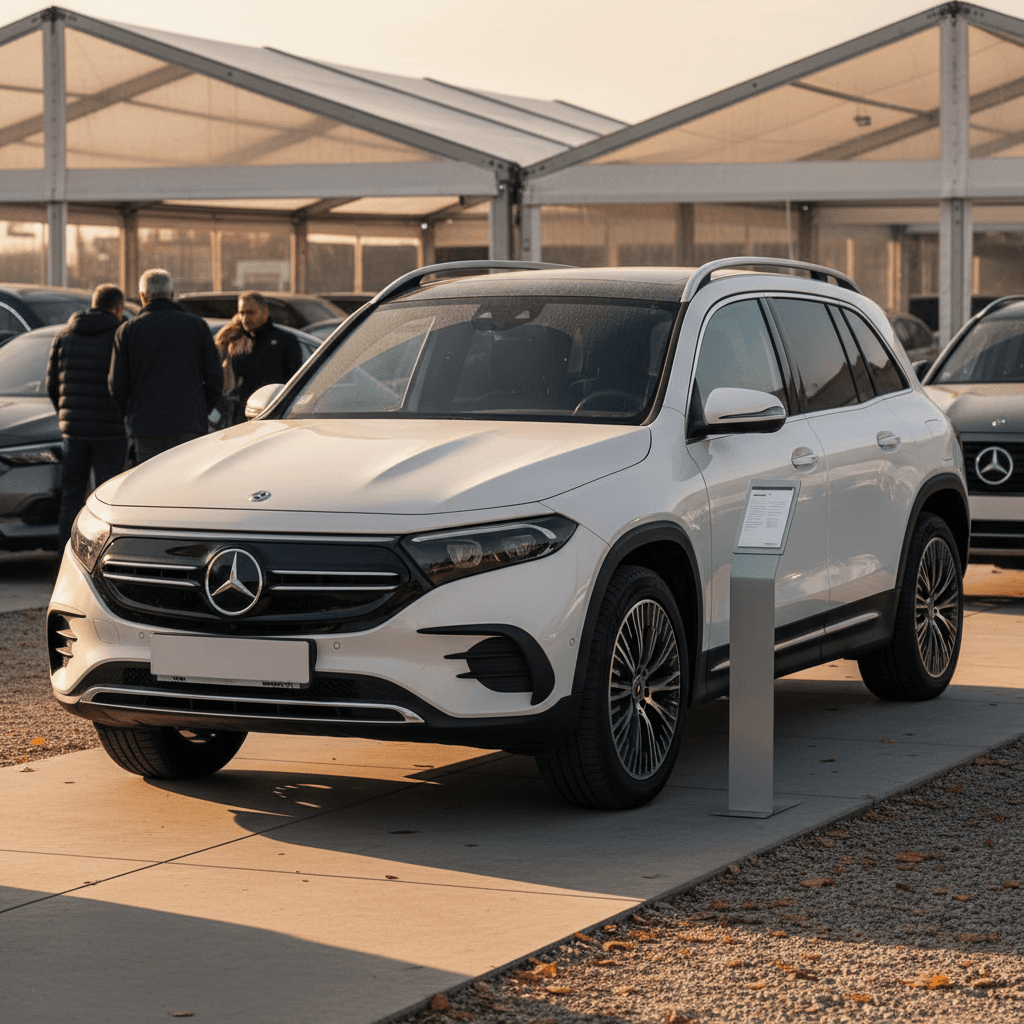
If you’re eyeing a Mercedes EQB, whether new or used, you’re probably wondering how fast the Mercedes EQB depreciates and what that means for your wallet. Luxury EVs earned a reputation for steep value drops in the last few years, but the EQB sits in a very different part of the market than six‑figure electric flagships.
Quick context
Mercedes EQB depreciation at a glance
Estimated Mercedes EQB value retention
Because the EQB launched in the 2022 model year, hard five‑year data doesn’t exist yet. But by combining auction results, retail listings, and third‑party value guides, you can sketch a realistic curve: modest early‑year drops, then a more traditional luxury‑SUV pattern by year three onward.
How fast does the Mercedes EQB depreciate?
Let’s translate percentages into something you can actually use. Imagine a new EQB 300 4MATIC with an MSRP around $62,000 including options and destination. Here’s a reasonable working estimate of how fast that EQB might depreciate in the current market, assuming average mileage and condition:
Illustrative Mercedes EQB depreciation curve (U.S. market)
Approximate retained value for a well‑kept EQB 300 or EQB 350 based on current used‑EV market behavior and early EQB data. Actual results vary by trim, mileage, incentives and region.
| Age | Estimated value retention | Approx. value on $62,000 MSRP | What this often looks like in the market |
|---|---|---|---|
| 1 year / ~12,000 mi | 80–85% | $49,500–$52,500 | Lightly used CPO‑style examples priced a bit below new, often with some incentives baked in. |
| 2 years / ~24,000 mi | 70–75% | $43,500–$46,500 | A noticeable savings versus new; many are off‑lease returns in well‑equipped trims. |
| 3 years / ~36,000–45,000 mi | 58–62% | $36,000–$38,500 | Where today’s shoppers are starting to see the value sweet spot vs. new EQB pricing. |
| 4 years / ~50,000–60,000 mi | 50–55% | $31,000–$34,000 | Competing directly with new mass‑market EV crossovers and well‑equipped gas SUVs. |
| 5 years / 60,000–75,000+ mi | 45–50% | $27,500–$31,000 | Strong value territory if service and battery health check out. |
Use this as a planning tool, not a guaranteed schedule. A detailed vehicle history and battery‑health report matter just as much as age.
These are estimates, not guarantees
From a shopper’s standpoint, that means the EQB is not the depreciation disaster some early luxury EVs were. Instead, it behaves more like a premium compact SUV with EV‑specific wrinkles: incentives, tech updates, and fast‑moving competition can all nudge values around the averages.
EQB vs other EVs and gas SUVs
How the EQB stacks up on depreciation
Looking across similar size and price segments
Vs. Tesla Model Y
The Model Y has been one of the stronger EVs for resale, often retaining mid‑60% of original value at three years in many markets. The EQB usually sits a bit lower than that, around the high‑50s to low‑60s, reflecting smaller buyer pools and fewer units overall rather than a fundamental product problem.
Vs. other luxury EVs
Early luxury EVs like the Mercedes EQS or Audi e‑tron saw five‑year depreciation north of 60% in some analyses. The EQB’s lower starting price and more practical packaging help it hold value a little better than those big flagships, closer to mainstream EV crossovers.
Vs. gas compact SUVs
Compared with a GLB or BMW X3, the EQB’s first three years are often a bit steeper, think 30–40% down by year three versus high‑20s to low‑30s for similar gas models. After that, curves begin to converge as the market focuses more on condition and equipment than powertrain type.
Why the EQB avoids the worst EV depreciation
- Form factor: It’s a compact three‑row‑optional SUV, right in the heart of U.S. demand.
- Shared platform: The EQB rides on bones related to the GLB, a known quantity for dealers and independent shops.
- Reasonable MSRPs: Its sticker prices are lower than full‑size luxury EVs, so absolute dollar drops are easier to swallow.
Where the EQB still feels like an EV on value
- Incentive noise: New‑car lease cash and occasional rebates ripple through used‑car pricing.
- Tech pace: Rapid updates to range, charging and driver‑assist features can date earlier model years faster.
- Thin data: Because it’s newer, pricing can be choppier until more off‑lease inventory hits auctions and retail lots.
Why the Mercedes EQB depreciates the way it does
- Segment positioning: As a compact luxury SUV, the EQB competes in a space with healthy demand but also intense competition from Tesla, BMW, Volvo, and mainstream brands moving upmarket.
- EV incentives and price cuts: Aggressive discounting or tax‑credit pass‑through on new EVs can pull used values down more quickly than in the gas world.
- Battery and charging expectations: Shoppers are laser‑focused on real‑world range, DC fast‑charging behavior, and battery health reports, rewarding vehicles with verifiable data and penalizing those without it.
- Brand and warranty strength: Mercedes’ brand equity and 8‑year/100,000‑mile high‑voltage battery warranty help keep a floor under values, especially in years 3–8.
- Volume and fleet mix: The EQB hasn’t been a massive fleet seller, which helps avoid the kind of rental‑car overhang that hurt some other models.
Look beyond the sticker price
Real‑world used Mercedes EQB pricing
Pull up nationwide listings and you’ll see how this plays out in the U.S. market today. At the time of writing, many early‑run EQB 250+ and EQB 300 models are trading at mid‑$30,000s to low‑$40,000s with typical commuter mileage, while nearly new 2024s with low miles still flirt with high‑$40,000s and beyond depending on equipment.
Signals that an EQB is priced aggressively vs. market
Below similar trims in your region
If a comparable‑spec EQB is several thousand dollars under others in your radius, dig into history reports, accident records, and the fine print on recon work.
Price gap vs. new EQB
A one‑year‑old EQB only $3,000–$4,000 under a similarly equipped new one may not be compelling once you factor in new‑car incentives, financing and warranty length.
Auction vs. retail spreads
Wholesale auction data suggests where the floor is. A dealer retail price only slightly above that floor might still be negotiable, especially on slower‑moving colors or trims.
Days on lot
If an EQB has been listed for 60+ days, sellers are usually more flexible on price, particularly as newer model‑year inventory arrives.
Where Recharged fits in
Ready to find your next EV?
Browse VehiclesLeasing vs buying an EQB with depreciation in mind
Luxury EV leases often look attractive because the lender, usually the captive finance arm, takes on most of the depreciation risk. They set a residual value at the start of the lease, and you only pay for the difference between that and the negotiated price, plus rent charges and fees.
When leasing an EQB can make sense
- You want the latest tech: If you care about the newest range, infotainment and driver‑assist features, leasing lets you step out every 2–3 years before major depreciation hits.
- Incentives favor leases: Many OEMs stack EV support into lease programs (subvented money factors, inflated residuals) more than straight purchase discounts.
- Uncertain long‑term needs: If you’re not sure an EV fits your lifestyle long‑term, leasing caps your downside.
When buying EQB can be smarter
- Shopping 2–4 years old: Let the first owner take the biggest depreciation hit, then buy a used EQB at 40%+ off original MSRP.
- Long‑term keeper: If you plan to drive it well past year six, average annual depreciation tends to flatten, improving total cost of ownership.
- Low‑mile usage: Light usage can leave you with an above‑market asset that you can sell later, especially if battery health remains strong.
Watch the fine print on residuals
How to protect your Mercedes EQB resale value
Practical moves that slow EQB depreciation for you
Stay on top of EV‑specific maintenance
Follow Mercedes’ service schedule, including brake‑fluid changes and coolant checks for thermal management. Keep invoices, buyers and lenders look for documentation as proof the vehicle was cared for.
Baby the battery when you can
Avoid frequent 100% fast‑charges, minimize repeated high‑speed DC sessions when the pack is hot, and store the EQB at moderate charge levels when parked for long periods. Healthier packs support stronger resale.
Avoid mileage spikes
High annual mileage still hurts EV values. If you’re crossing well above 15,000 miles a year, expect to be on the sharper end of those depreciation ranges.
Choose timeless specs up front
Neutral colors, popular wheel sizes, and practical option packages (heated seats, driver‑assist, premium audio) are easier to resell than niche colors or pricey cosmetic add‑ons.
Keep a clean history
Even well‑repaired accidents can shave thousands off resale. If damage happens, use OEM parts and document quality repairs to reassure future buyers.
Use battery data as a negotiation tool
Shopping for a used Mercedes EQB: what to look for
If you time it right, you can let depreciation work in your favor and come away with a relatively new EQB at a substantial discount to new. The key is separating cheap from good value.
Key checks when evaluating a used EQB
These are the factors that will matter to the next buyer after you, too
Battery & charging behavior
Look for documentation of DC fast‑charging rates, any charging faults, and realistic range on the seller’s typical routes. A verified high‑voltage battery check is worth its weight in resale value later.
Service history & recalls
Ask for a full service printout, including software updates and any warranty work on the driveline, charging system, or thermal management. Clean recall compliance reassures the next owner.
Warranty coverage remaining
Mercedes’ battery warranty (often 8 years/100,000 miles) is a safety net. A 3–4‑year‑old EQB with several years of coverage left usually commands stronger prices, and is easier to finance.
How Recharged simplifies this
FAQ: Mercedes EQB depreciation
Frequently asked questions about Mercedes EQB depreciation
Bottom line: Is Mercedes EQB depreciation a deal‑breaker?
The Mercedes EQB doesn’t defy gravity, no luxury EV does. But it also isn’t falling off a cliff the way some early six‑figure electric flagships did. In broad strokes, you’re looking at roughly 30–40% depreciation in the first three years and a total of about 50–55% by year five if you buy new and drive average miles.
For value‑focused shoppers, that makes a 2–4‑year‑old EQB a compelling play: someone else eats the biggest portion of the curve, while you get a modern, practical electric Mercedes at a sizable discount. The keys are timing, documentation, and a clear picture of battery health.
If you’re ready to let depreciation work for you instead of against you, explore the used EQB inventory on Recharged. Every vehicle includes a Recharged Score Report with verified battery diagnostics and market‑based pricing, plus optional financing, trade‑in and nationwide delivery, so you can focus on finding the right EQB, not just guessing what it will be worth in a few years.