Buy an EV

  • EVs for sale
  • Learn about EVs
  • Articles
  • Charging

Sell or trade

  • How it works

Financing

  • Get pre-qualified
  • Credit application

Contact us

  • Book a consultation
  • Call us at (804) 390-5910
  • Email us at hello@recharged.com
  • Visit our Experience Centers
    • Richmond, VA
    • Fairfax, VA
    • Charlotte, NC

© 2025 Recharged. All Rights Reserved.

7-Day Return Policy·Privacy Policy·SMS Opt-In·Do Not Sell or Share My Information·
TikTokYouTubeInstagramLinkedInFacebook
    How Fast Does the Chevrolet Bolt EV Depreciate in 2026?
    Ownership & Costs·10 min read·By Recharged Editorial Team

    How Fast Does the Chevrolet Bolt EV Depreciate in 2026?

    chevy-bolt-evchevy-bolt-euvev-depreciationused-ev-valuesbattery-healthev-resale-valuetax-creditsrecharged-score

    Table of Contents

    • Chevy Bolt EV depreciation at a glance
    • Why did the Chevrolet Bolt EV depreciate so quickly?
    • Chevy Bolt EV depreciation by model year
    • How Bolt EV depreciation compares to other EVs and gas cars
    • What drives Chevy Bolt EV resale value up or down?
    • How to shop smart for a used Chevrolet Bolt EV
    • Tips to protect your Bolt EV’s future resale value
    • Is the Chevy Bolt EV a good used buy despite depreciation?
    • Chevy Bolt EV depreciation FAQ

    If you’ve been watching used EV prices, you already know the uncomfortable truth: the Chevrolet Bolt EV depreciates faster in its early years than most gasoline cars. But how fast does a Chevrolet Bolt EV actually depreciate, and when does that curve start to flatten out so the car becomes a smart buy instead of a falling knife?

    Quick answer

    Most Chevrolet Bolt EVs lose roughly 45–55% of their original MSRP in the first 3–4 years, and about 60–70% by years 7–8. Early 2017–2019 cars are now trading at roughly 25–35% of their original price, while newer 2022–2023 cars are still holding closer to 40–55%, depending on mileage and condition.

    Chevy Bolt EV depreciation at a glance

    Typical Chevrolet Bolt EV depreciation in 2026

    ~50%
    Value lost by year 3–4
    Many Bolts lose around half their MSRP in the first few years, especially 2020–2023 models sold before big price cuts.
    25–35%
    Value retained at 8 years
    Early 2017–2018 Bolts now sell for roughly one-quarter to one-third of original MSRP.
    8 yrs / 100k
    Battery warranty
    Strong battery coverage helps support resale value when documented and transferable.
    Mid-teens
    Typical price
    Many 5–7 year old Bolts now list in the mid‑teens (USD) in early 2026, depending on trim and miles.

    Those numbers sound dramatic, but the story behind them matters. The Bolt didn’t just quietly depreciate; it rode a roller coaster of MSRP cuts, battery recalls, tax credits, and a looming new generation. Understanding those pieces will help you decide whether you’re staring at a money pit, or one of the best EV deals on the used market.
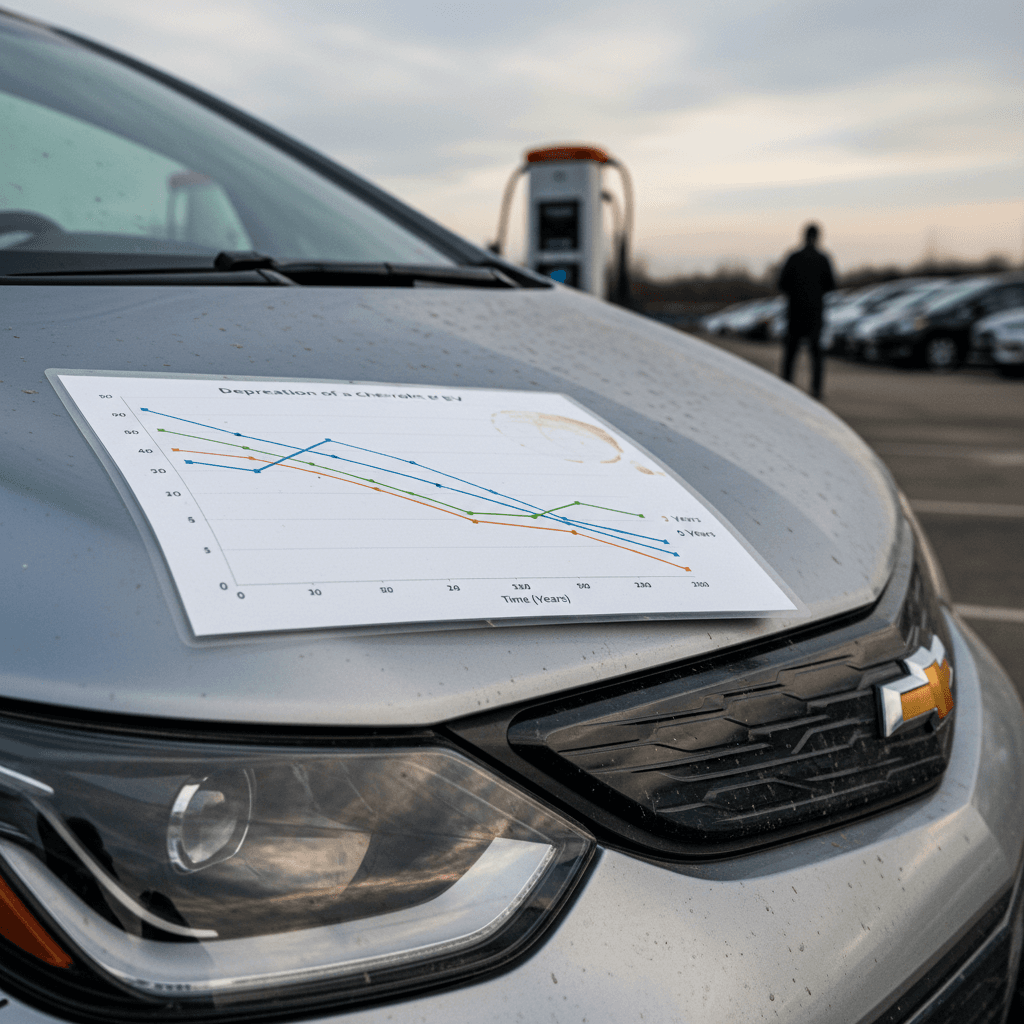
    Line graph showing Chevrolet Bolt EV depreciation curve over 3, 5, and 8 years compared with a typical gasoline compact car
    The Chevrolet Bolt EV’s depreciation curve is steep in the early years, then levels off, good news if you’re buying used today.

    Why did the Chevrolet Bolt EV depreciate so quickly?

    Four big forces behind Bolt EV depreciation

    The value story is about more than just age and miles.

    1. Aggressive price cuts on new Bolts

    Chevrolet slashed new Bolt EV and EUV pricing in 2022–2023, knocking thousands of dollars off MSRP. Great for new buyers, brutal for resale. When a new 2023 Bolt suddenly cost far less than a 2021 did when it was new, used prices had to fall to stay attractive.

    2. Battery recall headlines

    The Bolt’s high‑profile battery recall shook buyer confidence, even though affected packs were repaired or replaced under warranty. Shoppers who didn’t follow the details often saw only the scary headline, which pushed resale values down especially for 2017–2019 models.

    3. EV prices softened across the board

    Starting in 2023, EV prices in general slid as inventory grew and incentives shifted. Tesla’s price cuts alone rippled across the market. The Bolt, already inexpensive, had to drop further to stay compelling next to falling prices on other used EVs.

    4. A new‑generation Bolt is coming

    Chevrolet has confirmed a new‑generation Bolt on the way. That creates uncertainty for today’s buyers: will the new car be dramatically better? Cheaper? That unknown nudges resale down on first‑generation Bolts, especially for sellers trying to move cars before the new one lands.

    Don’t confuse fast early depreciation with a bad car

    A steep depreciation curve doesn’t mean the Bolt EV is unreliable or undesirable. It mostly reflects market shocks and pricing decisions. For value‑minded used buyers, those same forces can make the Bolt one of the best bang‑for‑the‑buck EVs you can buy today.

    Chevy Bolt EV depreciation by model year

    Because the Bolt launched back in 2017 and ran through the 2023 model year (with the Bolt EUV joining for 2022–2023), you’re looking at a wide spread of ages and prices in 2026. Here’s how depreciation typically shakes out by model year and age, using real‑world used‑car pricing and original MSRPs as a guide.

    Approximate Chevrolet Bolt EV depreciation by age (as of early 2026)

    Illustrative averages based on typical U.S. retail pricing and original MSRP ranges for 1LT/2LT trims. Individual cars will vary with mileage, condition, and region.

    Model yearsAge in 2026Typical price range (USD)% of original MSRP retainedNotes
    2017–2018 Bolt EV8–9 years$10,000–$13,000~25–35%Heaviest depreciation already taken; many have new recall battery, look for battery paperwork.
    2019 Bolt EV7 years$11,000–$14,000~30–40%Similar to 2017–2018 but with minor updates; condition and miles matter more than year.
    2020–2021 Bolt EV5–6 years$13,000–$17,000~35–45%Sold before GM’s big price cuts, so percentage loss looks steep but cash price can be excellent value.
    2022 Bolt EV / EUV4 years$15,000–$20,000~40–50%Post‑refresh interior and lower MSRP; more comfortable, and depreciation curve is starting to flatten.
    2023 Bolt EV / EUV3 years$18,000–$23,000~45–55%Last model year; many still under full warranty, and prices are attractive versus newer rival EVs.

    These are ballpark numbers, not quotes, always check current market data for a specific car.

    About those percentages

    You’ll see a lot of different numbers online for “exact” depreciation. That’s because regional pricing, incentives, mileage, and trim all tug values up or down. Think of these ranges as a realistic starting point, not a guarantee.

    Does the Bolt EUV depreciate differently?

    Broadly, Bolt EUV depreciation tracks very closely with the hatchback Bolt EV. EUVs often stickered slightly higher, and they can command a modest premium used thanks to more rear space and available Super Cruise on some trims.

    If you compare same‑year, similar‑mileage examples side by side, expect the EUV to cost about $1,000–$2,000 more than an equivalent EV in many markets. That’s less about slower depreciation and more about desirability.

    What about very low‑mileage cars?

    Ultra‑low‑mile Bolts, say, under 20,000 miles after several years, can sit one tier higher on price than the ranges in the table. But even those “cream‑puff” cars have been pulled down by overall market forces like new‑car price cuts and soft EV demand.

    In other words: low miles help, but they don’t erase the Bolt’s overall depreciation story.

    How Bolt EV depreciation compares to other EVs and gas cars

    To make sense of Bolt EV depreciation, you need a benchmark. Compared with a typical compact gasoline hatchback or small crossover, the Bolt drops faster in its first 3–5 years. But compared with other affordable EVs, it’s right in the mix, and sometimes better.

    • Versus gas compacts: A typical gasoline compact might lose ~40–50% of its value in five years. Many Bolts hit that level closer to year 3–4, especially 2020–2022 cars caught in the price‑cut crossfire.
    • Versus early EVs (e.g., Nissan Leaf): Older short‑range EVs can lose 70%+ of value by year 8. First‑gen Bolts, with more than 200 miles of range, generally retain a bit more than that.
    • Versus premium EVs (e.g., early Tesla models): Big‑ticket EVs can lose tens of thousands of dollars quickly in absolute terms, but often hold a better percentage of MSRP after 3 years than budget EVs like the Bolt or Leaf.
    • Versus newer long‑range mass‑market EVs (Kona EV, Niro EV, ID.4): The Bolt’s depreciation rate is similar, sometimes slightly worse, largely because of the recall baggage and Chevy’s dramatic MSRP cuts.

    The upside for used‑car shoppers

    Fast early depreciation is painful if you bought new. But if you’re buying in 2026, you’re stepping in after most of the damage is already done. That’s why so many savvy shoppers see the Bolt EV and EUV as “value plays” in the used EV world.

    What drives Chevy Bolt EV resale value up or down?

    Key factors that move Bolt EV depreciation

    These are the levers that separate a great deal from a problem child.

    Mileage & use pattern

    Like any car, mileage matters. A 2018 Bolt with 40,000 miles will generally be worth thousands more than one with 110,000. But city stop‑and‑go use isn’t automatically bad for EVs; what matters is overall miles and how the battery was treated.

    Battery health & recall history

    Battery condition is huge. A Bolt that has had its recall pack replaced with documentation can actually be more appealing than one still on its original pack. Tools like the Recharged Score read real battery data so you’re not guessing.

    Service records & ownership history

    Clean Carfax/AutoCheck, regular maintenance, and a simple ownership history (one or two owners) all support stronger resale. Gaps in records suggest the car might have been neglected or flipped quickly.

    Region & climate

    Hot climates and lots of DC fast charging can be harder on batteries. On the flip side, rust‑belt cars may see underbody or cosmetic wear that drags values down, even if the battery is healthy.

    Warranty remaining

    A Bolt still within the 8‑year/100,000‑mile battery warranty will almost always command more than one that’s out of coverage. For 2017 cars, that warranty window closes around 2025; for newer models, you have more runway.

    Incentives & financing

    Used EV tax credits, manufacturer incentives, and attractive financing all shape what buyers are willing to pay. If shoppers can get a big tax break on a similar car, your resale price may need to adjust to compete.

    Where Recharged fits in

    Every vehicle sold on Recharged comes with a Recharged Score Report that includes verified battery health and fair‑market pricing. That takes a lot of the guesswork, and risk, out of shopping for a used Bolt EV or EUV online.

    How to shop smart for a used Chevrolet Bolt EV

    If you’re trying to decide whether a specific Bolt is fairly priced, or how much depreciation is already baked in, start with a structured checklist. You don’t need to be an EV engineer; you just need to know what to ask and where to look.

    Used Chevy Bolt EV depreciation & value checklist

    1. Look up the original MSRP

    Find the car’s original MSRP (or close to it) from old window stickers, manufacturer documents, or pricing guides. Knowing whether it started life as a $37,000 launch‑year Premier or a $27,000 later‑year 1LT helps you judge how far it has fallen.

    2. Compare asking price to today’s typical range

    Cross‑check the listing against current pricing for similar year/mileage Bolts in your region. If a seller wants early‑2023 money in 2026, depreciation hasn’t been priced in, and you have room to negotiate.

    3. Verify recall completion and battery status

    Ask specifically about the <strong>battery recall</strong>. Has the pack been replaced or just software‑updated? Can the seller provide paperwork? On Recharged, the Recharged Score battery report surfaces this kind of info up front.

    4. Check warranty remaining

    Note both the basic warranty (3 years/36,000 miles when new) and the battery warranty (8 years/100,000 miles). A car with several years of battery coverage left is less risky and may deserve a modest price premium.

    5. Review mileage and charging habits

    High highway mileage isn’t necessarily bad, but a car that lived on DC fast chargers with little home charging can show more battery wear. Ask where and how it was usually charged, and look for clues in trip history if available.

    6. Factor in tax credits and fees

    If a particular car qualifies for the <strong>used EV tax credit</strong> or state incentives, that’s part of your effective cost, even if it doesn’t change the sticker price. Likewise, budget for taxes, registration, and a home charging setup if you don’t already have one.

    Red flags that can kill resale

    Salvage or rebuilt titles, missing recall documentation, persistent error messages on the dash, rapid range loss, or obvious crash repairs can all push a Bolt’s future resale value far lower than the averages you see in guides.

    Tips to protect your Bolt EV’s future resale value

    If you already own a Bolt, or you’re about to, there’s a lot you can do to keep it from sliding down the depreciation chart faster than it has to. You can’t change market forces, but you can absolutely control how attractive your specific car looks to the next owner.

    Seven practical ways to slow your Bolt’s depreciation

    Most are simple habits you can build into daily use.

    1. Treat the battery kindly

    Avoid living at 100% charge or 0% regularly. Use scheduled charging to arrive near 80–90% when you leave, and reserve full charges for trips. That protects long‑term capacity, which is a major driver of resale value.

    2. Park in moderate temperatures

    Heat is hard on EV batteries. Whenever possible, park in a garage or shade rather than baking in hot summer sun. In cold climates, pre‑conditioning while plugged in helps manage stress on the pack.

    3. Keep records obsessive

    Log every service visit, even tire rotations and software updates. Hang onto recall letters and repair invoices. A fat folder, or well‑organized digital record, builds buyer confidence and supports a higher resale price.

    4. Stay ahead on cosmetic care

    Curb‑rashed wheels, door dings, and a stained interior don’t change how the car drives, but they absolutely change what buyers will pay. Cleaning, paintless dent repair, and a professional detail before sale can pay for themselves.

    5. Limit fast‑charging abuse

    DC fast charging is there to be used, but making it your daily habit can speed up battery wear. Use Level 2 at home or work for routine charging, and reserve DC fast charging for road trips or genuine time crunches.

    6. Consider timing your sale

    Values may soften when the new‑generation Bolt hits dealers or big incentives return. If you’re planning to sell, keep an eye on news and local listings. Selling a few months before a wave of similar used cars hits the market can help.

    7. Sell in the right channel

    Trading into a dealer can be easy but not always lucrative. Marketplaces like Recharged that specialize in used EVs can connect you with buyers who understand the Bolt and are willing to pay for documented battery health.

    Is the Chevy Bolt EV a good used buy despite depreciation?

    Why depreciation can be your friend

    In early 2026, a well‑kept Bolt EV or EUV often costs half or less of what it did new, yet still delivers 200‑plus miles of range, low running costs, and modern safety tech. For many buyers, that equation beats a newer, more expensive EV with only a little more range.

    If you buy after the big drop, you’re not the one paying for it. You’re the one benefiting from it.

    Who should think twice

    If you’re the type who trades cars every 2–3 years, the Bolt’s front‑loaded depreciation makes it a risky new‑car buy. You’d be handing the next owner a fantastic deal at your expense.

    But if you plan to buy a used Bolt and keep it 5+ years, especially with verified battery health and a clean history, depreciation becomes less of a threat and more of a discount.

    “The surprise with the Bolt isn’t that it depreciated, it’s how much EV you still get once the dust settles on price.”

    Recharged Editorial Analysis, Recharged Used Chevy Bolt EV Buying Guide

    So how fast does the Chevrolet Bolt EV depreciate? Faster than a comparable gas car in those early years, and faster than many owners expected. But by 2026, much of that storm has already blown through. If you focus on battery health, recall history, and real‑world pricing, not just percentages, the Bolt EV and EUV can be some of the smartest used EV buys on the road. And if you’d like help decoding battery data or getting a fair offer for your current Bolt, Recharged is built to make that process simple, transparent, and squarely in your favor.

    Chevy Bolt EV depreciation FAQ

    Frequently asked questions about Chevrolet Bolt EV depreciation

    EVs on Recharged

    See all →
    2023 Ford Mustang Mach-E

    2023 Ford Mustang Mach-E

    GT•24K mi•257 mi range
    4.8/5Recharged Score
    $36,597
    2024 Honda Prologue

    2024 Honda Prologue

    Elite•1K mi•267 mi range
    4.7/5Recharged Score
    $33,597
    2024 Hyundai IONIQ 5

    2024 Hyundai IONIQ 5

    SE•9K mi•252 mi range
    4.6/5Recharged Score
    $26,997

    Related Articles

    EV Paint Quality Issues: Why They Happen and How to Protect Your Car
    Maintenance·10 min

    EV Paint Quality Issues: Why They Happen and How to Protect Your Car

    Worried about EV paint quality issues like chips, peeling, or thin clear coat? Learn why many EVs have fragile paint and how to protect a used or new electric car.

    ev-paint-qualityev-maintenancetesla-paint
    2024 GMC Hummer EV Problems: What Owners Are Seeing & How to Shop Smart
    Reviews & Comparisons·11 min

    2024 GMC Hummer EV Problems: What Owners Are Seeing & How to Shop Smart

    Worried about 2024 GMC Hummer EV problems? See the most common issues, recalls, and repair stories, plus shopping tips if you’re considering a used Hummer EV.

    gmc-hummer-evhummer-ev-problemsev-reliability
    2022 Mazda MX-30 Review: Brilliant Idea, Fatally Short Range
    Reviews & Comparisons·10 min

    2022 Mazda MX-30 Review: Brilliant Idea, Fatally Short Range

    2022 Mazda MX-30 review of range, charging, interior, driving, pricing, and used-buying advice. See if this short-range Mazda EV makes sense for your lifestyle.

    mazda-mx-302022-model-yearev-review