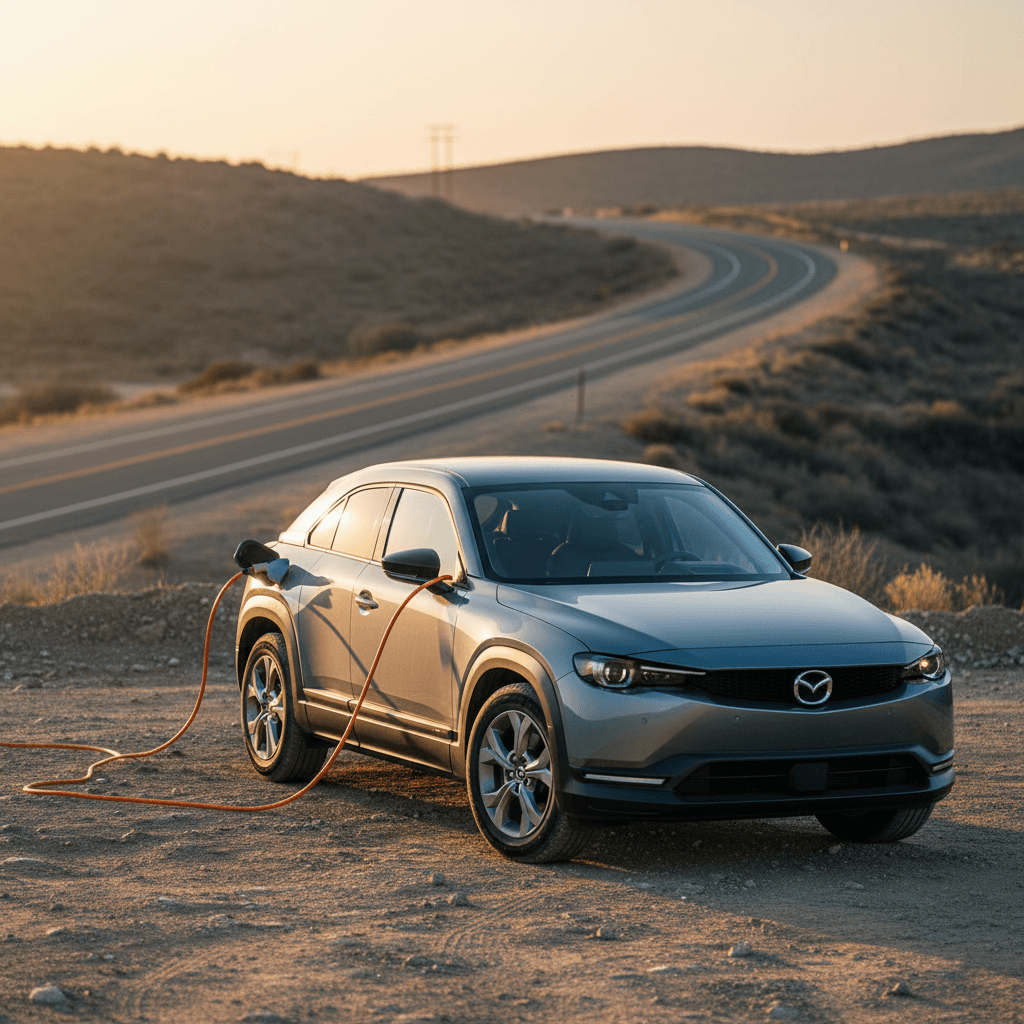
If you judge an EV only by its spec sheet, the 2022 Mazda MX-30 looks like a swing and a miss: roughly 100 miles of EPA range, modest power, and a battery that’s half the size of most rivals. On paper, it’s outgunned. But from behind the wheel, the MX-30 is something rarer in the EV world: a genuinely characterful, nicely made urban crossover that happens to have a tragically small gas tank.
Quick verdict
2022 Mazda MX-30 overview
The MX-30 was Mazda’s first production EV for the U.S., sold only in California and only for the 2022–2023 model years before being discontinued. It’s a small, front-wheel-drive crossover with "freestyle" rear doors, a boutique cabin full of eco-chic materials, and a driving character that feels more like a Mazda3 hatchback than a high-riding appliance. The problem: a 35.5 kWh battery and only about 100 miles of EPA-estimated range. That made it uncompetitive new, but also means today’s used pricing can be surprisingly soft.
Core 2022 Mazda MX-30 numbers (U.S. spec)
Key specs: battery, range and charging
2022 Mazda MX-30 key specifications
How the MX-30’s hard numbers stack up for daily use.
| Spec | 2022 Mazda MX-30 (US) |
|---|---|
| Battery capacity | ~35.5 kWh usable |
| EPA combined range | 100 miles |
| Motor power | 143 hp (107 kW) |
| Torque | 200 lb-ft |
| Drive layout | Front-wheel drive |
| 0–60 mph | ~8.7 seconds |
| Onboard AC charging | 6.6 kW Level 2 |
| Max DC fast charging | 50 kW (approx. 20–80% in ~30 min) |
| Charge port | CCS1 DC / J1772 AC |
| Curb weight | ~3,670 lb |
Figures shown are for the U.S.-spec 2022 MX-30 EV.
The headline compromise
Driving experience: the good kind of weird
Mazda went out of its way to make the MX-30 feel like a Mazda first and an EV second. Steering is light but precise, body roll is well controlled, and the chassis has that subtle, elastic quality the brand is famous for. You don’t fling it around like a Miata, but compared with many tall, heavy crossovers, the MX-30 drives with unusual delicacy.
Ride & handling
- Light, accurate steering that feels more like a compact hatchback than a chunky SUV.
- Well-damped ride that takes the edge off broken pavement without feeling mushy.
- Front‑drive layout and modest power keep things predictable in bad weather.
Performance & character
- 143 hp and 200 lb‑ft won’t snap your neck, but around town it’s brisk enough.
- 0–60 mph in under 9 seconds feels fine in daily traffic, less so for high‑speed merging.
- Mazda adds a subtle artificial "engine" sound to help you sense torque and speed, odd on paper, but helpful in practice.
Test-drive tip
Interior, tech and practicality
Open the MX-30’s doors, front first, then the rear-hinged "freestyle" back doors, and you’re greeted by one of the most interesting cabins in the class. Mazda mixes fabric, vegan leather and real cork trim, a nod to the company’s early 20th‑century cork business. It feels less like a rental car and more like a small Scandinavian hotel lobby.
Interior strengths and weaknesses
Charming and clever up front, tighter and less flexible in back.
What it gets right
- Materials and design feel premium for this price point, soft-touch dash, thoughtful textures, real cork.
- Front seats are comfortable and supportive, with good adjustment range.
- Physical shortcut buttons and a separate climate touchscreen keep the main infotainment uncluttered.
Where it falls short
- Rear-hinged back doors look cool but complicate loading child seats or tall passengers.
- Back seat and cargo area are tighter than most small crossovers.
- Infotainment lacks some of the flash and app depth of Tesla, Hyundai or Kia systems.
If you regularly carry adults in the back or load strollers and dogs, the MX-30’s compact footprint and quirky rear doors will remind you it’s a style-first vehicle. For a single driver or couple using it as a second car, it feels special in a way most small EVs don’t.
Range and charging: living with 100 miles
Let’s talk about the elephant in the garage. The 2022 MX-30’s official EPA range is around 100 miles. On a full overnight charge at home you might see slightly more in gentle city use, and less, sometimes much less, on cold days or fast highway slogs. This is not an EV you buy for spontaneous out‑of‑town adventures.
- Realistic daily comfort zone is about 50–70 miles of driving, leaving a buffer for weather, detours and battery aging.
- Highway range at 70–75 mph can drop well below the EPA number; think more in the 70–80 mile ballpark depending on conditions.
- Cold weather and heater use will meaningfully eat into range, as with any small‑battery EV.
- There’s no DC fast‑charge heroism here: peaks around 50 kW are fine for quick top‑ups, not cross‑country cannonball runs.
When the MX-30 does NOT make sense
- commute more than 60–70 miles round‑trip,
- don’t have reliable home or workplace charging, or
- expect to road‑trip regularly,
Can the MX-30 handle your routine? A quick checklist
1. Map your real daily miles
Add up your typical weekday: commute, school runs, errands and social stops. If it totals under about <strong>60 miles</strong> most days, the MX-30 can work, with home charging.
2. Confirm home charging options
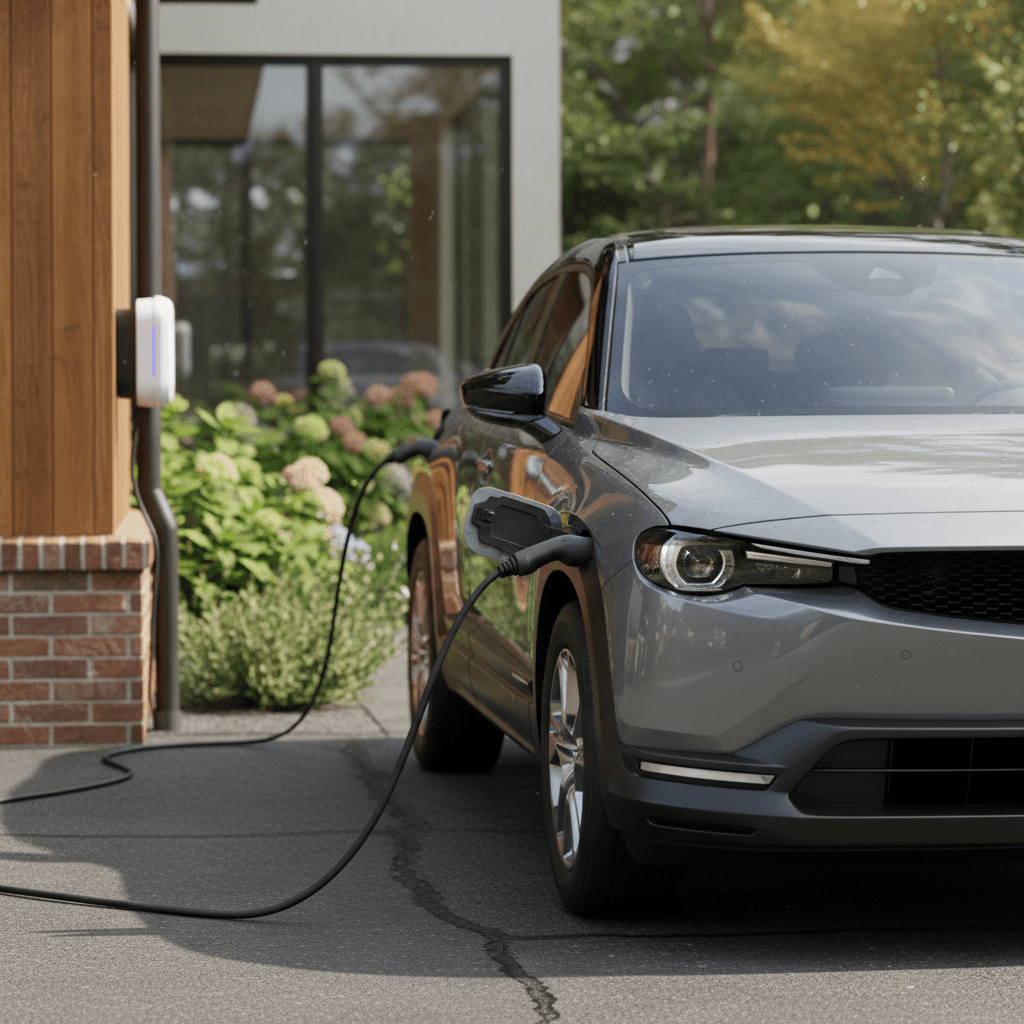
The MX-30 is happiest if you can plug into a <strong>Level 2 charger</strong> (240V) overnight. A standard 120V outlet will work in a pinch, but it’s slower and leaves you less margin.
3. Check your weekend pattern
Do you routinely drive 120+ miles in a day on weekends or holidays? If so, this may be the wrong tool. If most weekends stay local, you’re fine.
4. Audit public charging near you
Use PlugShare or your favorite charging app to see how many <strong>CCS fast chargers</strong> and Level 2 stations live near your home and regular routes.
5. Consider a backup vehicle
If your household has a gasoline or long‑range EV for road trips, the MX-30 can be an efficient, inexpensive runabout, not your only car.
Ownership costs, reliability and recalls
Because new sales were so limited, the MX-30 is a rare sight on American roads, and in reliability statistics. Early owners reported some software gremlins and, in a few cases, high‑voltage battery and brake‑system issues that required dealer visits. The upside is that Mazda’s EV component warranty is competitive, and most 2022s on the market today are low‑mileage cars still well within coverage.
Running costs and warranty snapshot
Cheap to fuel, but do your homework on service options.
Electricity vs. gas
Warranty coverage
Service reality
Dealer and parts availability
Who the 2022 Mazda MX-30 actually fits
Framed correctly, the MX-30 isn’t a failed Tesla rival; it’s a battery‑electric Fiat 500 or Mini Cooper SE, quirky, stylish and very much a city specialist. If you’re expecting a one‑car solution for an American family, you’ll be disappointed. If you want an efficient, charming urban runabout and already have something else for long trips, the MX-30 suddenly makes more sense.
Great fit for
- Urban and suburban commuters with short, predictable daily miles.
- Households with multiple vehicles, where the MX-30 is Car #2 or #3.
- Drivers who value design, refinement and quiet over outright speed.
- Shoppers hunting a low‑priced used EV with premium-feeling interior.
Poor fit for
- Single‑car households that routinely drive long distances.
- Folks who lack access to overnight home charging.
- Road‑trip regulars, or anyone needing serious cargo and rear-seat space.
- Buyers who want the latest DC fast‑charging speeds and long warranties.
Used 2022 MX-30 buying guide
Because the MX-30 flopped on the new‑car market, it shows up today as a bit of a used‑EV secret. Low production means you won’t see many, but the ones you do find often have very low mileage and aggressive pricing compared with similarly nice cabins from Hyundai, Kia or VW. The key is to make sure you’re not inheriting someone else’s experiment.
Checklist for buying a used 2022 Mazda MX-30
1. Get a battery-health report
The MX-30’s small pack makes <strong>every kilowatt-hour count</strong>. A professional battery-health test, like the Recharged Score report you get when you buy through <strong>Recharged</strong>, can reveal hidden degradation that a simple test drive won’t.
2. Verify software and recall history
Ask for documentation of all <strong>software updates, recall work and TSBs</strong>. Early cars saw fixes for braking, warning systems and EV control modules; you want a car that’s fully up to date.
3. Inspect charging hardware
Check the charge port for corrosion, damage or broken latches. Plug into both Level 2 and DC fast chargers if possible and confirm the car charges consistently without error messages.
4. Examine tires and brakes
EVs are heavy for their size. Uneven tire wear or pulsation under braking can hint at suspension or brake issues. Low mileage doesn’t always mean low wear if the car sat for long stretches.
5. Look for water intrusion
Inspect the tailgate area, door seals and charge-port area for signs of moisture or staining. As with any hatchback, leaks can lead to mouldy smells or electrical headaches down the road.
6. Confirm remaining warranty
Have the seller provide the <strong>original in‑service date</strong> and ask a Mazda dealer to confirm remaining battery and EV-system warranty. This is especially important if you’re buying out of state.
How Recharged can help
Ready to find your next EV?
Browse VehiclesAlternatives to the 2022 Mazda MX-30
Before you decide the MX-30 is your quirky soulmate, it’s worth looking at a few rivals. Some are similarly city‑focused; others deliver more conventional long‑range usefulness for not much more money on the used market.
Used alternatives to the 2022 Mazda MX-30
Short‑range city cars and longer‑range crossovers that shoppers often cross‑shop with the MX-30.
| Model | Type | Approx. EPA range | Why consider it instead |
|---|---|---|---|
| Mini Cooper SE | Small hatchback EV | ~110 miles | Similar city-only concept with more personality and sharper performance. |
| Fiat 500e (new-gen, where available) | City EV | ~150 miles+ | Ultra‑compact and stylish, designed for dense urban living. |
| Chevy Bolt EV / EUV | Compact hatchback / small crossover EV | ~247–259 miles | Much longer range, simple packaging, strong value on the used market. |
| Hyundai Kona Electric | Subcompact crossover EV | ~258 miles | Substantially more range, decent interior, strong DC fast‑charge performance. |
| Kia Niro EV (1st gen) | Compact crossover EV | ~239 miles | More space and range with similarly practical, understated styling. |
| Plug‑in hybrid crossovers (CX‑90 PHEV, RAV4 Prime, etc.) | PHEV | 25–40 EV miles + gas | If you like Mazda’s driving feel but need flexibility, a PHEV may be the smarter option. |
Approximate ranges shown are for common U.S. trims; always confirm exact figures by model year and battery size.
Short‑range EV vs. cheap long‑range EV
Frequently asked questions
2022 Mazda MX-30 FAQ
Bottom line: should you buy a 2022 Mazda MX-30?
The 2022 Mazda MX-30 is a lovely answer to a very small question. As a first EV from a company that cares deeply about driving feel and design, it’s charming, comfortable and refreshingly different. As a piece of transportation infrastructure in a vast country with long commutes and sparse fast‑charging between cities, its 100‑mile battery is a fundamental handicap.
If you have home charging, modest daily mileage and another vehicle for long trips, a well‑priced 2022 MX-30 can be a delightful, low‑stress city EV, especially when paired with a solid battery‑health report and remaining warranty. If you’re trying to cover every driving scenario with one car, it’s smarter to look at longer‑range EVs or plug‑in hybrids instead.
Either way, don’t buy on range rating alone. Whether you end up in an MX-30 or a rival, tools like the Recharged Score, transparent pricing and EV‑savvy guidance can help you match the right used EV to your real life, not just your wish list.