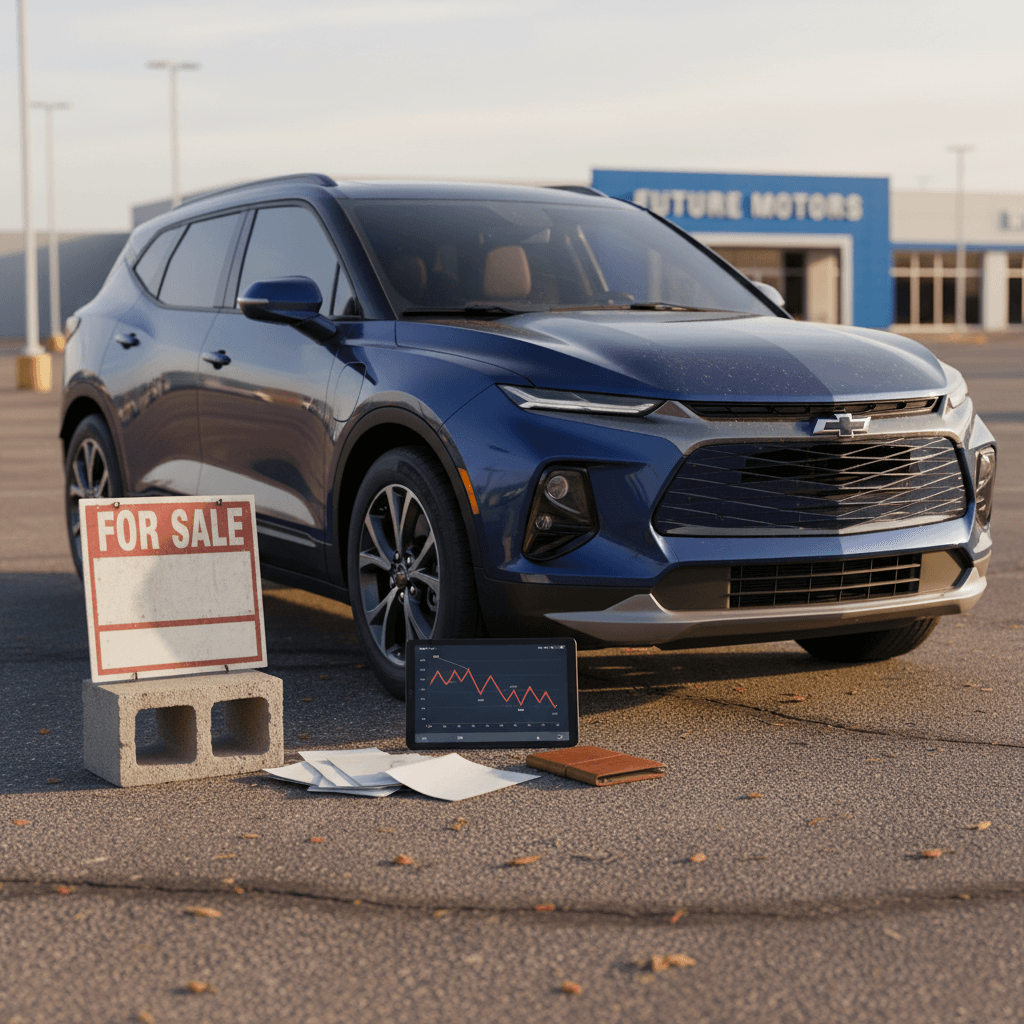
If you own or are eyeing a Chevrolet Blazer EV, you’ve probably already heard the whispers: this stylish Ultium SUV has been dropping in value fast. So **how fast does the Chevrolet Blazer EV depreciate** compared with other EVs and gas SUVs, and what does that mean for you as an owner or shopper in 2026?
Quick context
Blazer EV depreciation at a glance
Early Chevy Blazer EV depreciation snapshot
Put simply, **the Chevrolet Blazer EV is currently depreciating faster than the typical EV and significantly faster than a comparable gas SUV**. That’s driven by a mix of price cuts, incentives, and early reliability headlines that have weighed on buyer confidence.
Important caveat
Why the Chevy Blazer EV is depreciating so fast
To understand **how fast the Chevrolet Blazer EV depreciates**, you have to look at *why* the market is discounting it more heavily than some rivals. Three themes stand out so far: early software trouble, aggressive pricing moves, and broader EV headwinds.
Key drivers behind steep Blazer EV depreciation
Three forces pushing resale values down faster than expected
1. Software issues & stop‑sale
GM put the Blazer EV under a stop‑sale in late 2023 after owners reported software glitches that could affect infotainment and charging. Even after fixes, those headlines lingered.
For used shoppers and lenders, perceived reliability risk translates directly into lower bids.
2. Big price cuts & incentives
GM cut pricing and layered on rich incentives and lease subventions to jump‑start demand. Great news if you bought later, but painful for early buyers.
When a new MSRP falls quickly, used prices must re‑anchor around that lower baseline.
3. EV market softness
Across the industry, EVs have been depreciating faster than gas cars. Slower‑than‑expected demand, rapid tech change, and policy uncertainty all play a role.
The Blazer EV is swimming in that same current, on top of its own model‑specific challenges.
GM’s Ultium story matters
How Blazer EV depreciation compares to other EVs and SUVs
Depreciation is easiest to understand in context. Here’s roughly where **Chevy Blazer EV depreciation** sits against a few key benchmarks today, using early market data and broader EV studies.
Chevy Blazer EV vs. typical 5‑year depreciation
Approximate 5‑year loss from original MSRP, assuming average mileage and normal condition. These are directional comparisons, not guaranteed outcomes.
| Vehicle type / example | Typical 5-year depreciation | Notes |
|---|---|---|
| Chevy Blazer EV (2024–2025) | ≈55–65% (projected) | Early data suggests aggressive depreciation, especially for higher‑priced trims bought before price cuts. |
| Average battery‑electric vehicle | ≈55–60% | Recent studies show EVs overall losing more value than the all‑vehicle average. |
| All vehicles (gas + hybrid + EV) | ≈45–46% | Industry‑wide 5‑year depreciation average sits in the mid‑40% range. |
| Strong‑resale EVs (select Teslas, some Kia/Hyundai) | ≈45–55% | Top‑tier EVs with strong demand and brand pull can approach the overall market average. |
| Gas midsize SUVs | ≈40–50% | Popular gas SUVs with good reliability typically outperform EVs on 5‑year resale. |
Blazer EV currently looks worse than average EVs and notably worse than many gas SUVs for 5‑year depreciation.
Watch the gap, not just the percentage
5-year depreciation forecast for the Chevy Blazer EV
We don’t have five full years of history yet for any Blazer EV, but we can triangulate a reasonable range using early used listings, price‑cut history, and how similar EVs have behaved once incentives and headlines settle down.
- Early 2024 Blazer EVs bought near original MSRP (often ~$55,000–$60,000) are already trading at steep discounts, with some mainstream trims in the low‑$20,000s after roughly two years on the road.
- New 2025 Blazer EV pricing started lower, especially for front‑wheel‑drive trims, reducing the absolute dollar hit, but those vehicles will still carry the model’s reputation baggage.
- Across modern EVs, most of the damage tends to occur in the first 3–4 years, then the curve flattens as vehicles find a used‑market price floor.
Conservative scenario (worse case owners worry about)
- 5-year loss: ~60–65% of original MSRP for 2024–2025 models.
- Software reputation never fully recovers, incentives stay heavy, and newer GM or rival EV SUVs steal the spotlight.
- Example: A $50,000 Blazer EV ends up worth ~$17,500–$20,000 after five years.
Stabilized scenario (what many analysts expect)
- 5-year loss: ~55–60% for post‑fix, lower‑MSRP Blazer EVs.
- GM irons out software issues, charging infrastructure keeps improving, and demand finds a niche among value‑hunters.
- Example: A $46,000 Blazer EV ends up worth ~$18,500–$21,000 after five years.
What could make it worse?
Factors that move your individual Blazer EV’s value
Model‑level depreciation is only a starting point. When Recharged evaluates a Chevy Blazer EV, we see wide spreads between the best‑kept examples and the rough ones, even with the same model year and trim. Here’s what moves the needle most.
What affects your Blazer EV’s resale more than the nameplate
You can’t change the market, but you can still influence your outcome.
Mileage & use pattern
Like any vehicle, lower mileage and gentle use help. For 2024–2025 Blazer EVs, being under 10,000 miles can command a clear premium versus a similar SUV with 30,000+ miles.
Condition & history
Clean accident history, no structural repairs, and a documented service trail, especially for software and recall updates, tend to separate top‑of‑market examples from mid‑pack units.
Battery health & range
EV shoppers care about real‑world range. Strong battery diagnostics, healthy state‑of‑charge behavior, and no history of chronic charging problems all support higher offers.
Incentives & tax credits
The Blazer EV has been widely leased and sold with federal and local incentives. Those discounts effectively lower the true transaction price and shape where used buyers expect to see values.
Trim & options
Range‑leading trims, popular colors, all‑wheel drive, and desirable tech packages typically hold better than niche builds. The flip side: very high MSRPs on early RS and SS‑style builds can mean bigger dollar losses.
Where & how you sell
Private sale vs. dealer trade vs. EV‑specialist marketplace can change your net by thousands. Transparent battery reports and clean online listings tend to do better than quick‑bid wholesale offers.
How to slow depreciation and protect your Blazer EV’s resale value
You can’t rewrite the Blazer EV’s early history, but you can make smart moves to defend your individual SUV’s value. Think of it as swimming faster than the current, even if the whole segment is drifting down.
Practical steps to protect your Chevy Blazer EV’s value
1. Stay fully up to date on software and recalls
Blazer EV buyers are hyper‑sensitive to software reliability. Get every campaign and recall handled promptly, keep paperwork, and make sure your infotainment and charging performance are rock‑solid before you list or trade.
2. Document charging and battery health
Use your service records and, ideally, a third‑party or marketplace battery health report to show that your pack is behaving normally. Recharged’s <strong>Recharged Score</strong> includes verified battery diagnostics on every Blazer EV we list.
3. Keep mileage and wear in check
Avoid piling on unnecessary miles in the first few years. Fix cosmetic damage quickly, keep the interior clean, and stick to recommended maintenance schedules so your SUV presents like a top‑tier example.
4. Time your exit strategically
If you bought early at a high MSRP, selling before a big wave of lease returns or before warranty expiration can sometimes limit downside. If you bought later with strong discounts, holding longer may let the curve flatten out in your favor.
5. Shop multiple offers, not just one trade number
A single trade‑in quote rarely tells the whole story. Compare traditional dealers, instant‑offer tools, and EV‑focused marketplaces like Recharged that actually value battery health, not just odometer readings.
6. Market the right story to buyers
When it’s time to sell, highlight what matters: clean history, up‑to‑date software, reliable charging behavior, and any range or efficiency data you have. A well‑told story with documentation supports stronger offers.
Good news for patient buyers
Is the Chevy Blazer EV a good buy used?
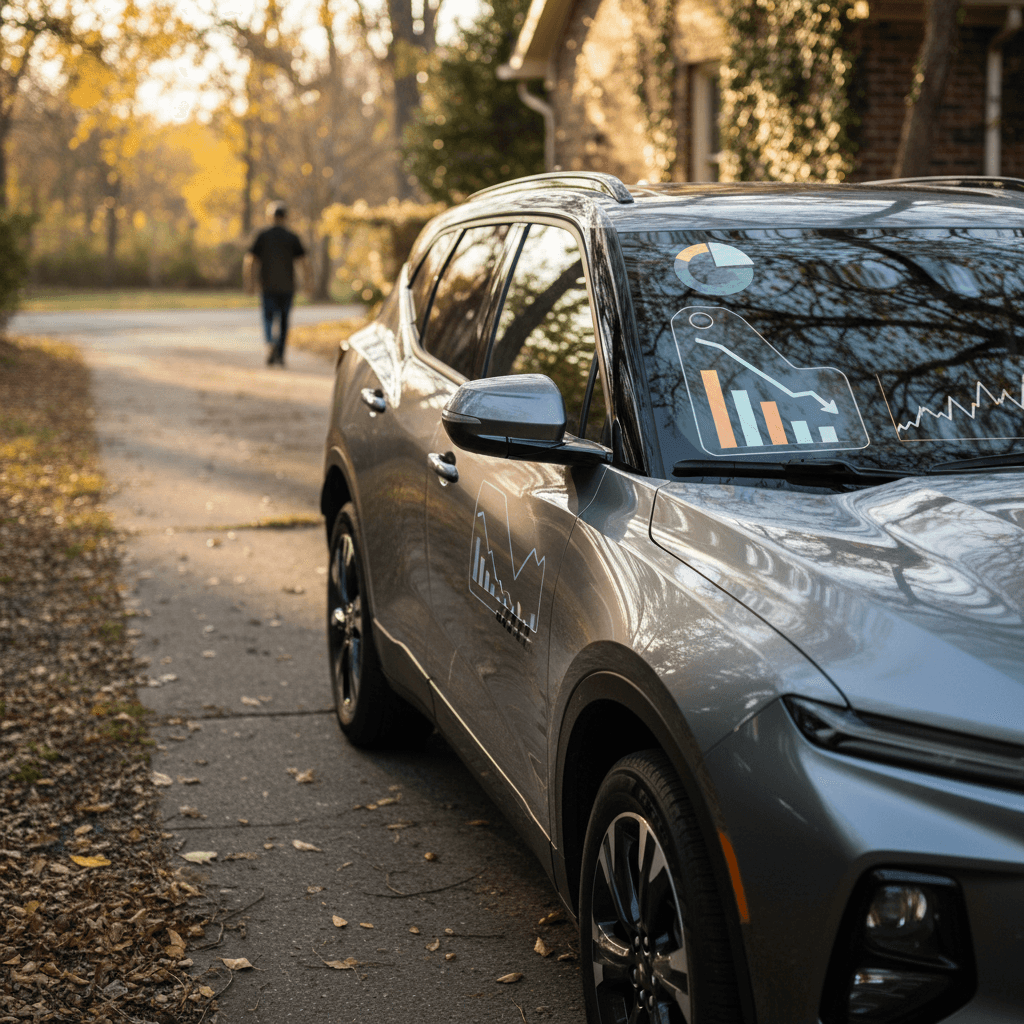
From a pure depreciation standpoint, **a used Chevy Blazer EV can actually make more sense than a new one**, provided you pick carefully.
Why a used Blazer EV can be attractive
- Early buyers have already absorbed the steepest depreciation, so you’re starting closer to the price floor.
- You can target post‑fix vehicles with documented software updates and real‑world owner feedback.
- If you buy from an EV‑specialist retailer such as Recharged, you can review detailed battery health data before committing.
What you need to watch out for
- Units that lived through the worst of the software issues but lack complete service records.
- High‑MSRP builds still priced as if they’ll retain value like a premium gas SUV.
- Vehicles with unclear charging behavior, inconsistent range, or warning‑light histories.
Use data, not guesswork
How Recharged helps you value and sell a Blazer EV
Because depreciation is the single biggest cost of owning most vehicles, getting **transparent, EV‑specific valuation** is critical if you own a Blazer EV today. That’s exactly where Recharged is built to help.
What you get with Recharged for a Blazer EV
Tools and services designed around used EVs, not generic book values.
Recharged Score battery report
Every Blazer EV we buy or list goes through Recharged Score diagnostics that evaluate pack health, charging behavior, and range performance, giving buyers and sellers objective data.
Multiple ways to sell
Get an instant offer, trade‑in toward another EV, or use a consignment‑style listing where we help you market your Blazer EV nationwide while you keep driving it.
Financing & delivery support
Recharged offers financing options for buyers, trade‑in support for sellers, and nationwide delivery, plus an in‑person Experience Center in Richmond, VA if you prefer to see vehicles onsite.
Ready to find your next EV?
Browse VehiclesWhether you’re trying to exit a Blazer EV lease early, trade into something with slower depreciation, or shop for a value‑priced used example, our EV‑specialist team can walk you through numbers that reflect **actual battery health and real‑time market conditions**, not just generic depreciation curves.
Chevy Blazer EV depreciation FAQ
Frequently asked questions about Blazer EV depreciation
Bottom line on how fast the Chevrolet Blazer EV depreciates
Putting it all together, the **Chevrolet Blazer EV is currently a fast‑depreciating EV SUV**, with early model‑year owners absorbing unusually large value losses in the first few years. For shoppers, that creates both risk and opportunity: new‑car buyers have to price in aggressive 3–5‑year depreciation, while used‑car buyers can sometimes pick up a lot of EV for surprisingly little money.
If you already own a Blazer EV, your best play is to control what you can, software updates, condition, battery documentation, and how and where you sell. If you’re shopping for one, focus on examples that have already shouldered the heavy depreciation hit and come with transparent health data. Recharged was built for exactly this kind of used‑EV decision, pairing **battery‑aware valuations** with expert guidance so you understand not just the price on the window, but where that Blazer EV is likely headed over the next five years.