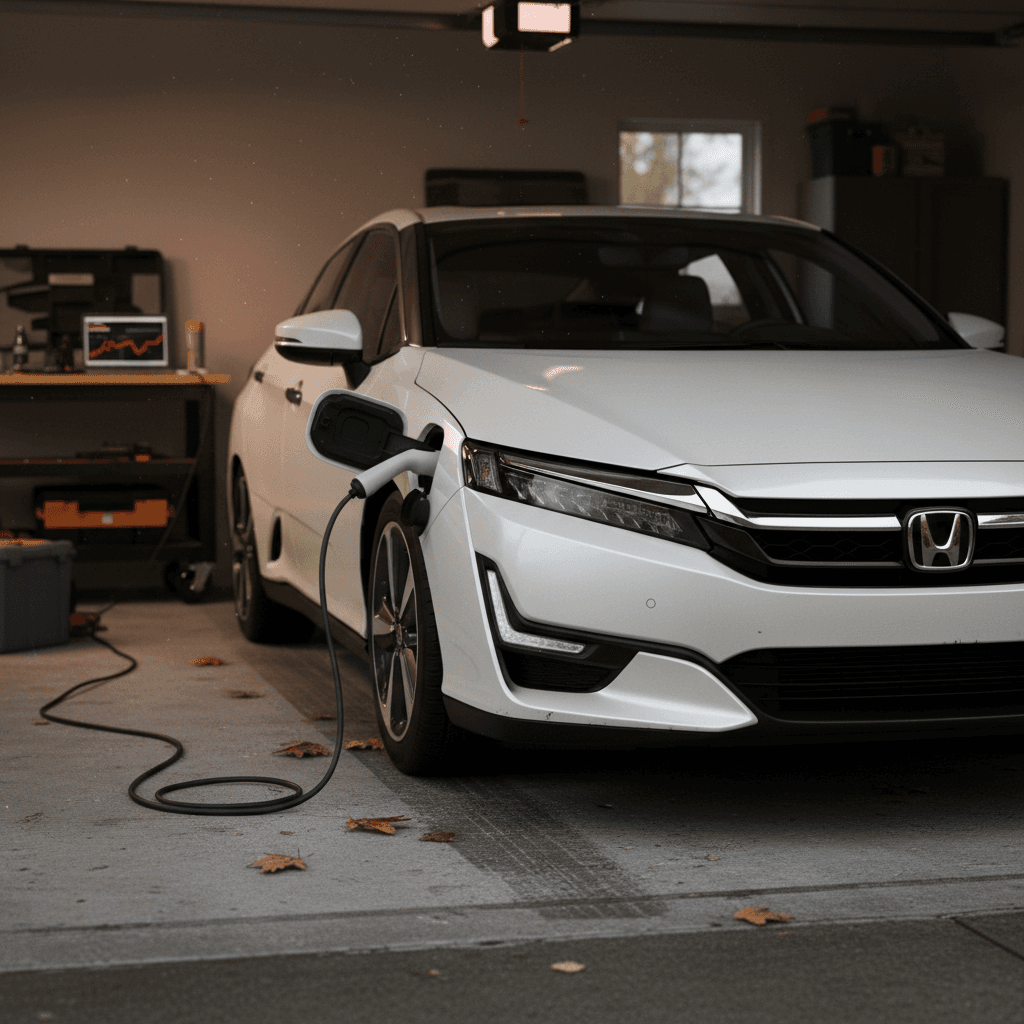
If you’re shopping for a used plug-in hybrid, the Honda Clarity PHEV is one of those cars that quietly checks a lot of boxes: long electric range, roomy interior, Honda build quality, and strong efficiency when the gas engine kicks in. But like any used plug‑in, it has a handful of common problems you should understand before you sign a purchase agreement, or decide to keep yours long term.
Quick context
Overview: Honda Clarity PHEV Pros, Cons & Reliability
Where the Clarity PHEV shines
- Excellent EV range for its class (around 40–50 miles when new).
- Smooth electric driving feel for most daily commutes.
- Honda interior practicality with adult-friendly back seat.
- Generally good long‑term reliability when maintained properly.
- Often strong value on the used market compared with newer PHEVs.
Where owners report issues
- Noticeable EV range loss with age and mileage.
- Episodes of high engine revs and sluggish acceleration in HV mode.
- Intermittent charging failures at home or public Level 2 stations.
- Premature failure of the 12‑volt accessory battery.
- Occasional transmission shudder and electronics glitches.
Honda Clarity PHEV Reliability at a Glance
Is the Honda Clarity PHEV reliable overall?
Broadly speaking, the Honda Clarity Plug‑In Hybrid has a better-than-average reliability record for a first‑generation plug‑in. Many owners report 80,000–120,000 miles with only routine maintenance plus a 12‑volt battery replacement. At the same time, there are patterns of issues, especially with early 2018 cars, that you should factor into your decision.
From a used‑car shopper’s perspective, the Clarity is less likely to suffer total powertrain failure than some European plug‑ins. But it can hit you with nuisance problems, particularly battery range loss, charging quirks, and occasional driveability complaints, that are frustrating if you rely on the car for long road trips or don’t have a trusted hybrid mechanic.
How Recharged can help
1. Battery degradation and EV range dropping over time
The Clarity PHEV’s headline feature when new was its class‑leading electric range. It’s common to see real‑world 40–50 miles of EV range when the car is young, with careful driving and mild weather. As these cars age, though, owners increasingly report noticeable range loss and capacity degradation.
- Owners with 80,000–120,000 miles often report displayed EV range in the low‑ to mid‑30‑mile range instead of 45–50.
- Cold climates, frequent fast highway driving, and charging to 100% and then letting the car sit in heat all accelerate degradation.
- The range estimate on the dash is a guess‑o‑meter based on recent driving, not a direct battery health meter, so it can fluctuate with habits.
Battery warranty basics
- Ask the owner or dealer to fully charge the car before your test drive so you can see the estimated EV range.
- Drive a consistent loop in EV mode; then compare miles driven vs. range consumed to sense whether the estimate is realistic.
- If you’re serious, use an OBD‑II reader with Clarity‑specific PHEV PIDs to read the battery’s usable capacity in amp‑hours or kWh.
When battery degradation is a red flag
2. High engine revs and loss of power in HV mode
One of the most discussed Honda Clarity PHEV problems is the feeling that the car suddenly screams and loses power when the battery is depleted and the system relies on the gas engine in HV mode (hybrid mode). Owners describe steep grades or highway merges where the engine revs climb dramatically, yet the car feels sluggish.
Some high‑rev events are just a side effect of how Toyota‑style, e‑CVT hybrids work: the engine spins up to provide power while the electric motor and generator manage torque. But in the Clarity, a subset of owners report abnormally high revs paired with true power loss, especially on long grades after the EV battery buffer has been depleted.
- Sudden surge to high RPM with minimal acceleration when the car switches from EV to HV at highway speeds.
- “Snowmobile” or “rubber‑band” feel, as if the engine and wheels aren’t linked.
- Temporary reduced‑power warning or check‑engine light in rare cases.
Why it matters
Honda has issued software updates and technical service bulletins over the years to refine hybrid control logic and address specific complaints. Many cars that felt marginal in early ownership behave better after updated software and fresh spark plugs or fuel‑system cleaning.
How to test for HV high‑rev issues on a test drive
1. Start fully charged
Begin with a full battery so you can compare EV operation to HV operation later in the drive.
2. Drain most of the EV range
Drive normally until EV range is near zero, then switch to HV and drive at highway speed on a gentle grade if possible.
3. Listen for abnormal rev flare
It’s normal for the engine to spin up, but watch for <strong>extended</strong> high revs and a feeling that the car is struggling to gain speed.
4. Repeat on a hill if you can
If you live in a hilly area, a long climb is the best way to reveal marginal HV performance when the battery buffer is low.
5. Scan for warning lights
Any check‑engine or hybrid‑system lights after a high‑rev episode should be read with a full code scan before you buy.
3. Charging problems at home and public stations
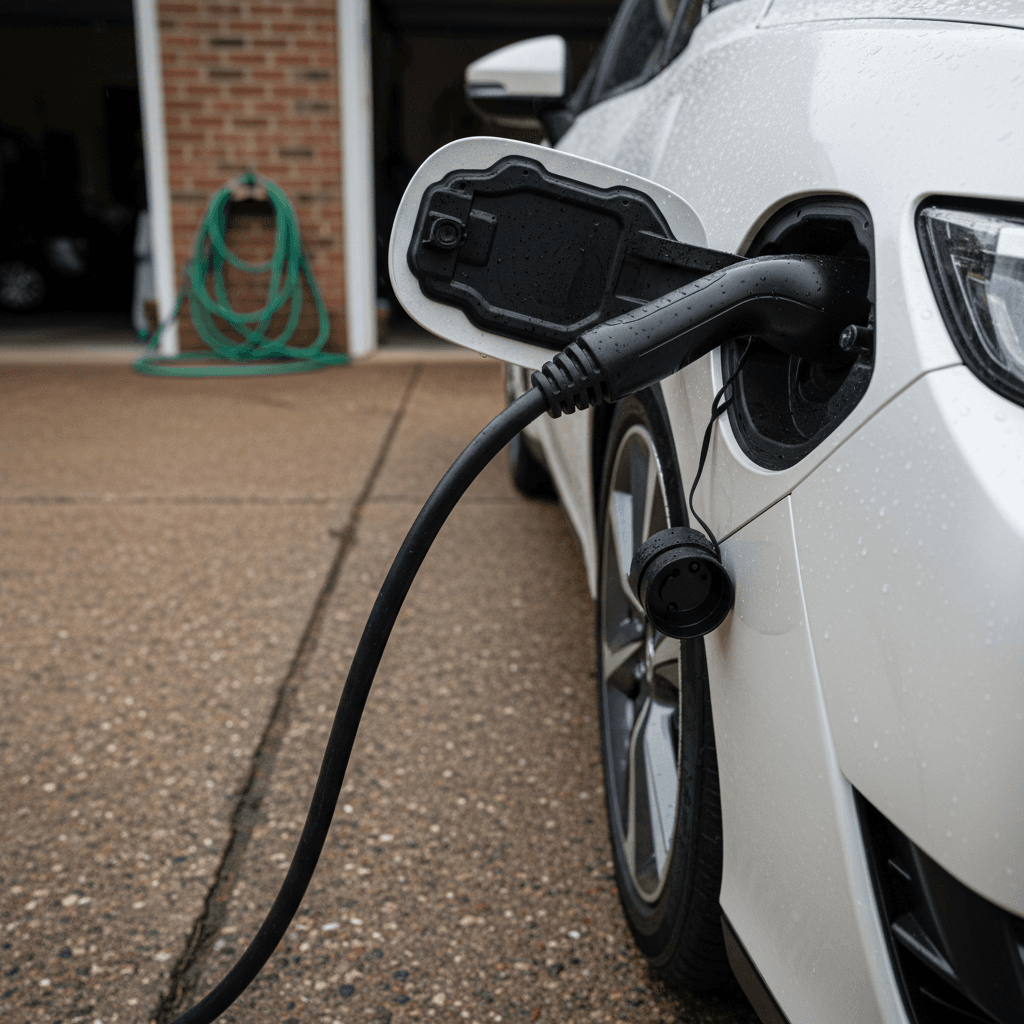
Another frequently reported Honda Clarity PHEV problem is intermittent charging failures. Some owners plug in at home, or to a Level 2 public station, and see the green charge light blink briefly and then shut off, or charging stops prematurely without an obvious cause.
- Clarity doesn’t start charging when plugged in, even though the station shows ready.
- Charging begins, then stops after a few minutes with no dashboard error message.
- Car charges fine on the included 120‑volt cord but not on certain 240‑volt Level 2 units, or vice versa.
Potential causes
Simple charging checks before you panic
Try another outlet or station
If possible, test with a different Level 2 station, or a different circuit at home, to rule out wiring or EVSE issues.
Inspect the charge port
Look for bent pins, debris, or obvious damage to the port or cable. Confirm the connector clicks firmly into place.
Check for scheduled charging
Make sure you’re not inadvertently using a delayed‑charging schedule in the car’s settings that makes it seem like it won’t start.
Look for software updates
Ask a Honda dealer whether your VIN has any open service bulletins or firmware updates related to charging behavior.
Buying tip for used Clarity shoppers
4. 12‑volt battery failures that can strand the car
Like most modern EVs and hybrids, the Clarity relies on a small 12‑volt battery to boot the computers and close the high‑voltage contactors. When that battery goes weak, the entire car can appear “dead,” even if the main traction battery is fully charged.
- Car won’t “Ready” even though the high‑voltage battery shows plenty of charge.
- Random warning messages, flickering screens, or intermittent no‑start situations.
- 12‑volt battery going flat after the car sits parked for several days, especially in cold weather.
Why the 12‑volt is a known weak link
Preventive care for the 12‑volt system
Drive long enough
Short, infrequent trips don’t give the DC‑DC converter much time to keep the 12‑volt charged. Mix in longer drives when you can.
Replace proactively
If the 12‑volt is more than 4–5 years old, consider replacing it before winter to head off no‑start surprises.
Test during inspection
Have a shop load‑test the 12‑volt battery and check parasitic draw when evaluating a used Clarity.
5. Transmission shudder and drivability quirks
Some independent shops and owners note that the Clarity can develop a shudder or vibration under light acceleration, especially at certain speeds. Because the Clarity uses an e‑CVT‑style hybrid system rather than a traditional stepped automatic, diagnosing these sensations can be tricky.
- Light vibration or shudder between 20–40 mph on gentle throttle.
- Driveline “rubber‑band” sensation that seems worse than typical hybrid behavior.
- Occasional clunks or harsh transitions between EV and engine power.
What usually fixes it
On a test drive, use normal, light throttle around town and pay close attention to how the car transitions between EV and gas modes. A small amount of flare and vibration is normal; heavy shudder or harsh clunks are not.
6. Electronics, infotainment, and Honda Sensing glitches
Beyond the powertrain, the Clarity PHEV shares a set of electronics and driver‑assist quirks familiar to many late‑2010s Hondas. These don’t usually strand the car, but they can be annoying and occasionally expensive to fix out of warranty.
- Intermittent infotainment reboots or frozen screens.
- Sensitivity problems with Honda Sensing: false collision warnings, lane‑keeping that “ping‑pongs” in the lane, or adaptive cruise cutting out.
- Random dashboard warning lights that clear on restart, often traced to voltage fluctuations from a weak 12‑volt battery.
Pay attention to warning lights
Recalls and service bulletins affecting the Clarity PHEV
The Clarity line, fuel‑cell, electric, and plug‑in hybrid, has been subject to several recalls and technical service bulletins over the years, including campaigns related to charging behavior and safety systems. Many Plug‑In Hybrids also received software updates outside of formal recalls to smooth hybrid operation and address no‑start or no‑charge complaints.
- Battery‑management and charging‑system updates to reduce charge interruption issues.
- Updates to hybrid control logic to improve drivability in HV mode.
- Miscellaneous campaigns for airbags, lighting, or other shared Honda components.
How to check a specific car
What to check before buying a used Honda Clarity PHEV
If you’re cross‑shopping multiple plug‑ins, the Clarity can be a smart buy, as long as you screen carefully for the specific issues we’ve covered. Here’s a structured way to evaluate a candidate car, whether you’re buying from a private seller, dealer, or an online marketplace.
Used Honda Clarity PHEV inspection checklist
1. Confirm EV range in real conditions
Charge to 100% and note the displayed EV range. Drive at least 20–30 miles and see whether real mileage roughly matches the estimate for the conditions.
2. Test HV mode on highway and hills
With the battery mostly depleted, drive in HV mode at 60–70 mph and on any available grades. Watch for excessive revs and lack of power.
3. Demonstrate Level 2 charging
Plug into a 240‑volt station from low charge. Confirm that the car starts charging promptly and continues without dropping out.
4. Check 12‑volt battery age
Look for a date sticker on the 12‑volt or review service records. Anything older than ~5 years is a negotiation point or a preventive replacement.
5. Scan for stored fault codes
Ask for a pre‑purchase inspection with a hybrid‑savvy shop that can read Honda‑specific hybrid and driver‑assist modules, not just generic OBD‑II.
6. Verify recall and service history
Use the VIN to check recall status and ask for documentation of software updates, hybrid system work, and fluid changes.
How Recharged evaluates a used Clarity PHEV
Ready to find your next EV?
Browse VehiclesWhen to walk away, or consider alternatives
No used car is perfect, but some Honda Clarity PHEV problem combinations should give you pause. Because the model is discontinued and not every Honda technician is deeply familiar with its hybrid system, you don’t want to start ownership already behind the eight ball.
- Severe EV range loss plus hybrid‑system warning lights or reduced power under load.
- Repeated charging failures across multiple stations, especially if the seller can’t document prior diagnosis.
- Documented high‑voltage battery or hybrid‑system repairs that didn’t fully resolve the original complaint.
- Obvious neglect: overdue maintenance, mismatched tires, and no record of transmission fluid changes.
When it’s smarter to move on
FAQ: Honda Clarity PHEV common problems
Frequently asked questions about Honda Clarity PHEV issues
Bottom line: Should you buy a Clarity PHEV?
If your daily driving fits within 30–40 miles and you like the idea of driving mostly on electricity but keeping gas as a safety net, a well‑sorted Honda Clarity Plug‑In Hybrid remains one of the most compelling used PHEVs on the market. The big caveats are battery health, HV‑mode behavior, and charging reliability, all things you can and should evaluate before committing.
Approach any used Clarity with a structured test drive, a close look at its charging behavior, and a thorough hybrid‑system inspection. If it passes those tests, you’ll own a plug‑in that delivers excellent efficiency, a comfortable ride, and, once you know its quirks, confidence on both short hops and long trips. And if you’d rather have experts do that homework for you, consider finding your next used EV through Recharged, where every car comes with a transparent battery‑health score and support from EV specialists who live and breathe this stuff.