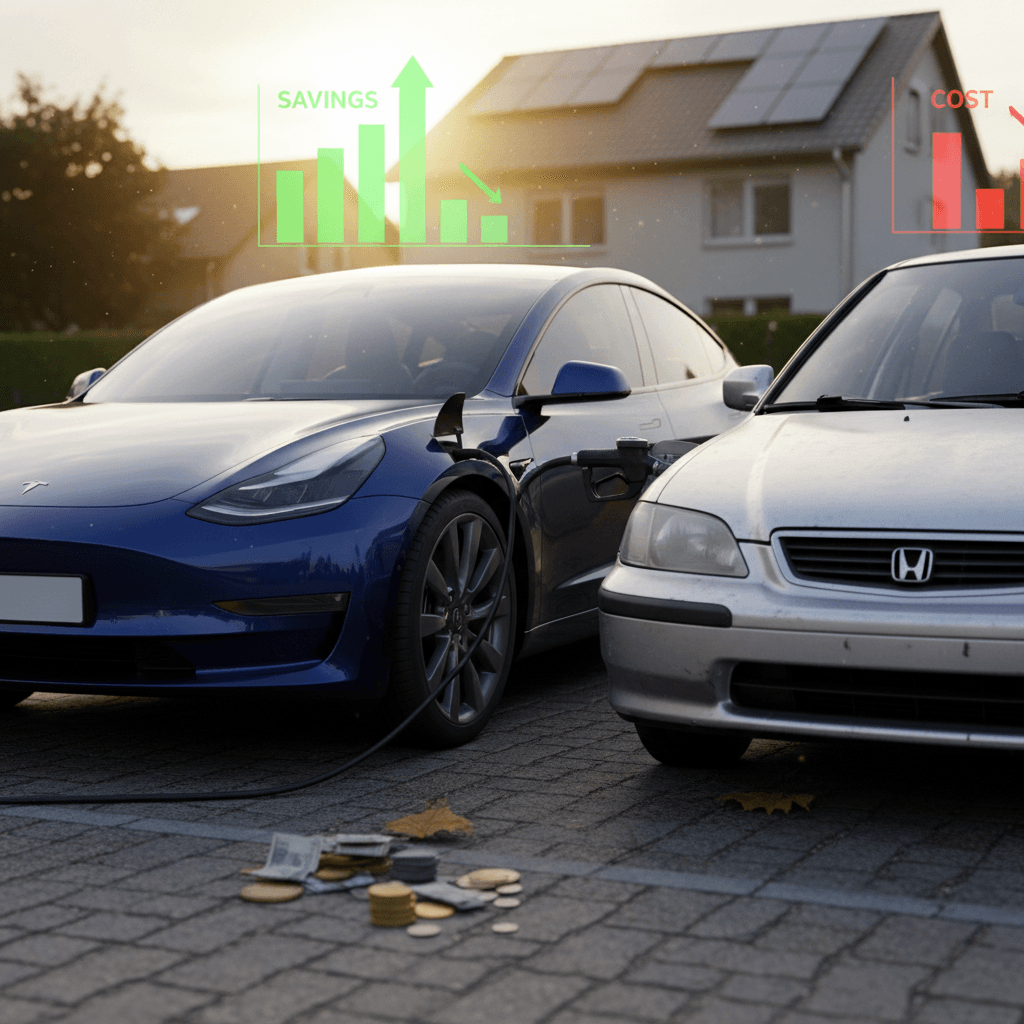
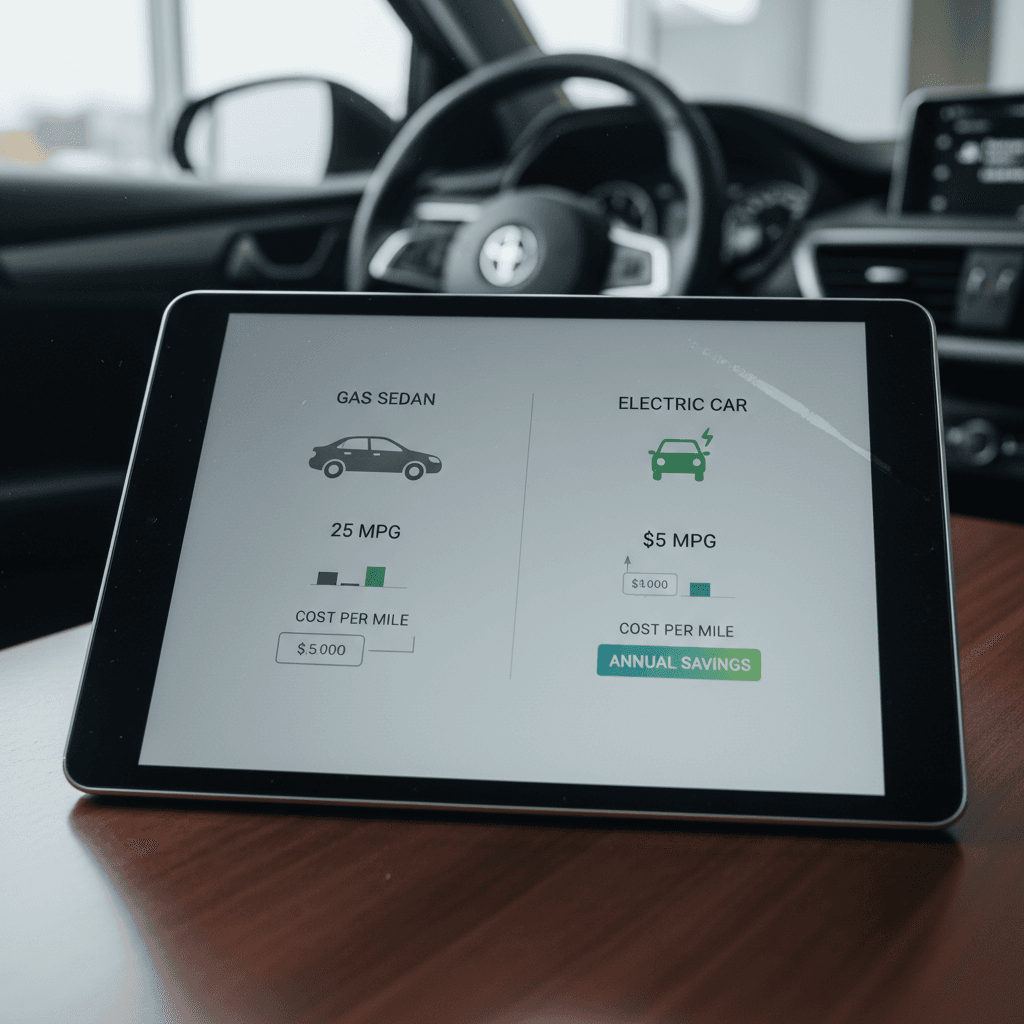
If you’re driving a 25 mpg gasoline sedan, you’re right at the tipping point where an electric car can start saving you serious money. The question isn’t just “Will I save?” It’s how much you’ll save switching from a 25 mpg sedan to an electric car, and how long it takes those savings to outweigh the higher purchase price.
Key idea in one sentence
Why a 25 MPG Sedan Is the Pivotal Breakpoint
A lot of gas sedans live around that 25 miles per gallon mark. It’s decent, not terrible, but not great either. That makes it a perfect baseline for comparing an EV, because the math is simple and the difference is big enough to notice on your monthly budget.
- 25 mpg is typical for many compact and midsize sedans from the last decade.
- You’re burning about 4 gallons of gas for every 100 miles you drive.
- At $3.50 per gallon, that’s $14 in fuel for 100 miles.
- Electric cars effectively pay “miles per kWh” instead of miles per gallon.
Rule of thumb
Step-by-step Math: 25 MPG Sedan vs Electric Car
Let’s walk through the numbers carefully, so you can plug in your own situation. We’ll use round, realistic U.S. averages and a typical used EV you might actually buy today.
25 MPG Sedan vs Electric Car: Headline Numbers
Fuel cost per mile in your 25 MPG sedan
Here’s the basic math for your current car:
- Assume gas price: $3.50 per gallon.
- Your sedan gets: 25 miles per gallon.
- Cost per mile = $3.50 ÷ 25 = $0.14 per mile.
- Over 10,000 miles per year, fuel costs ≈ $1,400 per year.
- Over 15,000 miles per year, fuel costs ≈ $2,100 per year.
Gas price sensitivity
Electric car cost per mile (home charging)
Now assume you switch to a typical EV, say a used Tesla Model 3, Chevy Bolt, or Nissan LEAF, with efficiency around 3–4 miles per kWh in mixed driving. We’ll also use a realistic U.S. home electricity rate.
- Assume electricity price: $0.15 per kWh.
- Assume EV efficiency: 3.5 miles per kWh.
- Energy cost per mile = $0.15 ÷ 3.5 ≈ $0.043 per mile.
- At 10,000 miles per year, home charging costs ≈ $430 per year.
- At 15,000 miles per year, home charging costs ≈ $645 per year.
Annual “Fuel” Cost at 10,000 Miles
- 25 mpg gas sedan: about $1,400
- Comparable EV: about $430
Rough savings: $970 every year
Annual “Fuel” Cost at 15,000 Miles
- 25 mpg gas sedan: about $2,100
- Comparable EV: about $645
Rough savings: $1,455 every year
What if you sometimes use public DC fast charging?
Maintenance Savings: The Part Most People Miss
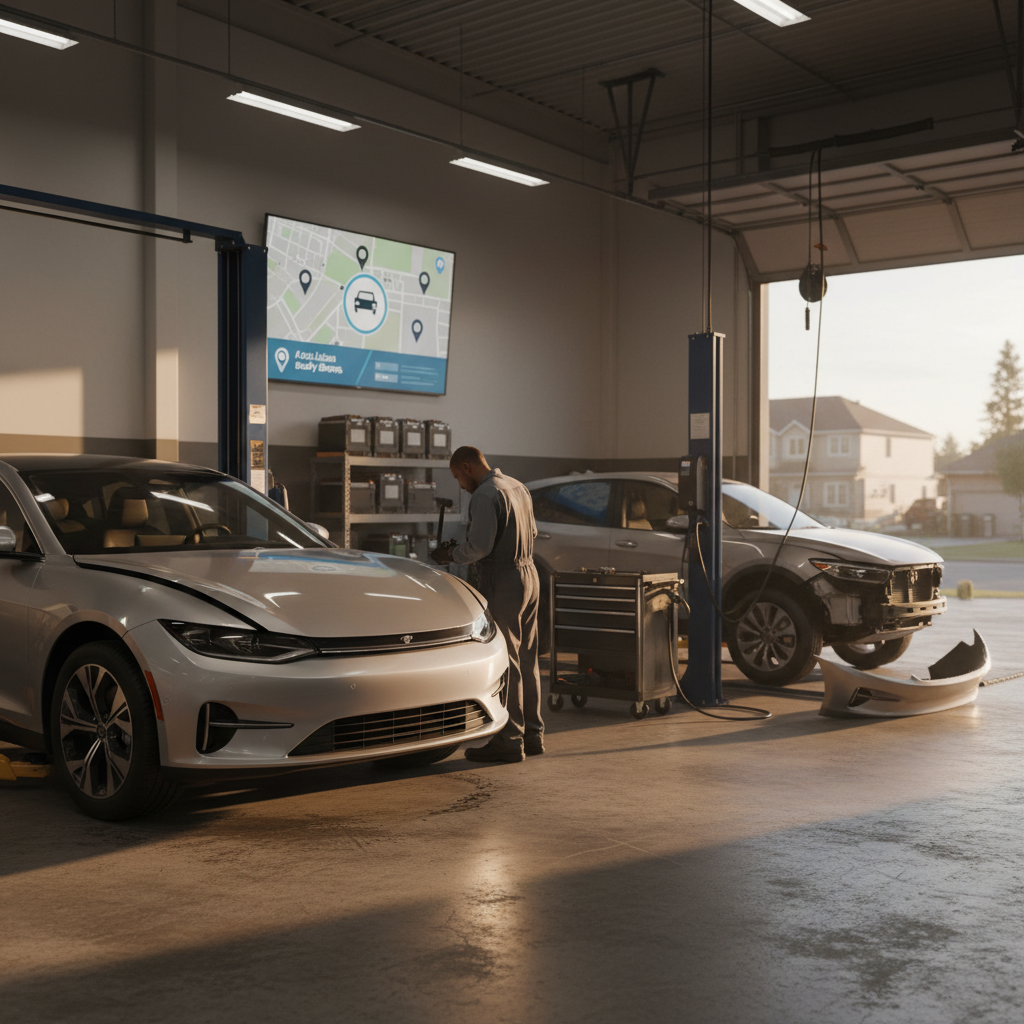
Fuel is the obvious savings. Maintenance is the quiet one that piles up in the background. Electric cars eliminate or drastically reduce many common service items that a gasoline sedan needs regularly.
Where EVs Cut Maintenance Compared With a 25 MPG Sedan
Less time in the shop, more money left in your pocket
Oil & Filters
Gas sedan: 2–4 oil changes per year plus filters.
EV: No engine oil, no oil filters, ever.
Engine & Exhaust
Gas sedan: Spark plugs, belts, emissions system, mufflers.
EV: None of that hardware exists to maintain.
Brakes & Rotors
Gas sedan: More frequent pad and rotor replacements.
EV: Regenerative braking extends brake life significantly.
Over a typical 5-year period, it’s reasonable to expect an EV to save you hundreds to low thousands of dollars in routine maintenance compared with a 25 mpg gasoline sedan, especially if that sedan is aging past 80,000–100,000 miles.
Simple way to estimate maintenance savings
Upfront Costs, Tax Credits, and Used EV Prices
The main pushback against switching to an EV is almost always price. New electric cars can be expensive. But today’s used EV market has changed the equation, and incentives can take another big bite out of the cost.
Typical Price Ranges: 25 MPG Sedan vs Used EV
Illustrative used market price bands in the U.S. as of mid‑2020s (exact numbers vary by model, region, and condition).
| Vehicle Type | Age / Mileage | Typical Price Band | Notes |
|---|---|---|---|
| 25 mpg gas sedan | 6–8 years / 80k–120k miles | $10,000–$18,000 | Think Civic, Corolla, Malibu, Optima, etc. |
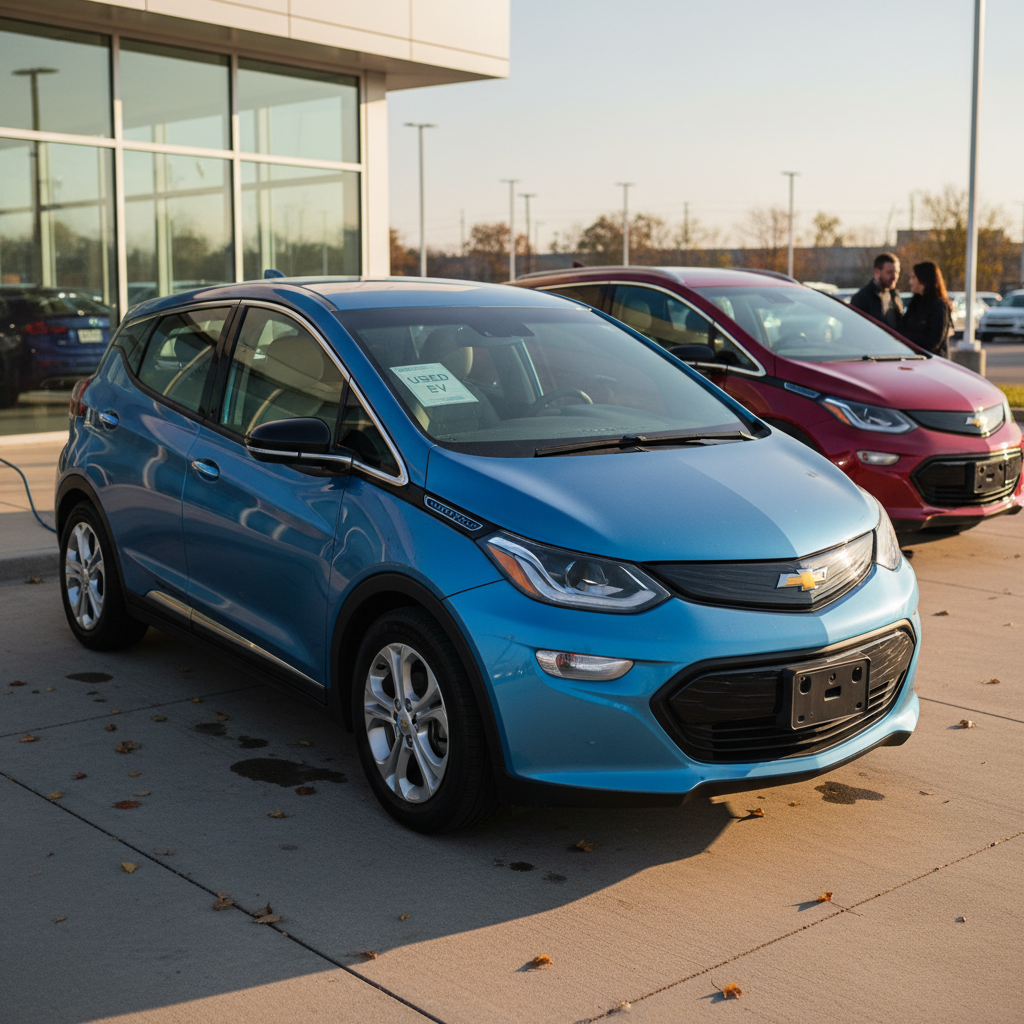
| Compact used EV | 4–7 years / 40k–90k miles | $12,000–$22,000 | Examples: Nissan LEAF, Chevy Bolt, older Model 3. |
| Newer long-range EV | 2–4 years / 25k–60k miles | $22,000–$32,000+ | Examples: Model 3, Ioniq 5, Mach‑E, depending on trim. |
Think in terms of bands, not exact prices. The key is that many solid used EVs now sit in the same ballpark as well-kept 25 mpg sedans.
Don’t forget federal and state incentives
Recharged focuses on used electric vehicles, which is where the value story really gets compelling. Because the biggest depreciation hit has already happened, you can often buy a used EV near the same price as a similar gas sedan, then let fuel and maintenance savings tilt the total cost of ownership in your favor.
When Do You Break Even Switching From 25 MPG to an EV?
“Break-even” simply means: at what point do your fuel + maintenance savings equal the difference in purchase price between your gas sedan and the EV you choose?
How to Estimate Your Personal Break-even Point
1. Estimate the price gap
Subtract what you’d realistically pay for a comparable 25 mpg sedan from the price of the EV you’re considering. Example: EV at $22,000 vs gas sedan at $17,000 → <strong>$5,000 difference</strong>.
2. Calculate annual fuel savings
Use your own gas price, miles per year, and local electricity rate. For many 25 mpg drivers, savings land in the <strong>$800–$1,500 per year</strong> range when mostly home charging.
3. Add conservative maintenance savings
If your gas sedan averages $900 per year in maintenance and you expect the EV to average $450, that’s another <strong>$450 per year</strong> in savings.
4. Divide price gap by annual savings
If your total annual savings (fuel + maintenance) is $1,400 and the EV costs $5,000 more up front, break-even ≈ <strong>3.6 years</strong> ($5,000 ÷ $1,400).
5. Consider financing vs cash
If you’re financing, compare the <strong>extra monthly payment</strong> on the EV to your monthly fuel savings. Many shoppers find that the payment difference is largely offset, sometimes entirely, by lower fuel and maintenance costs.
Typical break-even range
How Your Driving Patterns Change the Savings
The more you drive, the more you stand to gain. But it’s not only about mileage, it’s also about where and how you charge.
High-mileage commuters
- Driving 15,000–20,000 miles per year supercharges EV savings.
- Your 25 mpg sedan’s fuel bill quickly passes $2,000 per year.
- EV fuel costs stay in the mid-hundreds if you mostly charge at home.
If you have a stable commute and a place to plug in overnight, you’re in the EV sweet spot.
Low-mileage urban drivers
- Under 8,000 miles per year means slower payback.
- You’ll still enjoy smoother driving and less maintenance hassle.
- Savings matter less than whether public charging is convenient for you.
An EV can still be great here, just view savings as a bonus, not the only reason to switch.
Heavy fast-charging usage changes the math
Real-World Examples: What Different Drivers Actually Save
Let’s put all this into a few simplified scenarios so you can see how switching from a 25 mpg sedan to an electric car plays out for different kinds of drivers.
Three Driver Profiles Switching From 25 MPG to EV
Numbers rounded for clarity; actual results depend on your local prices and vehicle choice.
The 10k-mile Suburban Commuter
Mileage: 10,000 mi/yr
Gas cost (25 mpg): ≈ $1,400/yr
EV charging (home): ≈ $430/yr
Fuel savings: ≈ $970/yr
Est. maintenance savings: ≈ $300/yr
Total annual savings: ≈ $1,270
The 15k-mile Sales Rep
Mileage: 15,000 mi/yr
Gas cost (25 mpg): ≈ $2,100/yr
EV charging (home-heavy mix): ≈ $750/yr
Fuel savings: ≈ $1,350/yr
Est. maintenance savings: ≈ $400/yr
Total annual savings: ≈ $1,750
The 8k-mile City Household
Mileage: 8,000 mi/yr
Gas cost (25 mpg): ≈ $1,120/yr
EV charging (mix of home + public): ≈ $450–$550/yr
Fuel savings: ≈ $600/yr
Est. maintenance savings: ≈ $250/yr
Total annual savings: ≈ $850
Use these as a starting template
How to Maximize Savings With a Used EV
Not every EV delivers the same financial outcome. To really capitalize on the switch from 25 mpg, you want the right car, the right price, and the right charging setup.
Checklist: Getting the Most Financial Benefit From Your EV Switch
1. Buy the battery, not the badge
Prioritize <strong>battery health and range</strong> over flashy features. A car with a strong battery and enough real-world range for your routine will serve you longer and protect your resale value. Tools like the Recharged Score give you an objective battery health snapshot before you buy.
2. Aim for home or workplace charging
Having a <strong>reliable place to plug in overnight</strong> is the single biggest driver of savings. You can often start with a standard 120V outlet, then consider a Level 2 charger if you need faster replenishing.
3. Compare total monthly cost, not just sticker prices
If you’re financing, look at <strong>payment + fuel + maintenance</strong> for each option. A slightly higher monthly payment on an EV can be more than offset by lower running costs compared with your 25 mpg sedan.
4. Shop smart in the used market
Used EV prices have become more accessible, but condition and history matter. A marketplace like <a href="/">Recharged</a> pairs transparent pricing with <strong>battery diagnostics</strong>, so you aren’t guessing about the most expensive component in the car.
5. Consider incentives and utility programs
Beyond federal tax credits, many utilities offer <strong>rebates for home chargers</strong> or cheaper overnight electricity plans for EV owners. These hidden levers can noticeably lower your cost per mile.
Where Recharged fits in
Ready to find your next EV?
Browse VehiclesCommon Worries That Don’t Hurt Your Savings as Much as You Think
If you’re used to a 25 mpg sedan and gas stations on every corner, it’s natural to have reservations. Some of those concerns matter less to your wallet than you might expect.
Three Common Concerns, And Their Real Cost Impact
It’s worth separating emotional worries from actual dollars and cents.
“What if I can’t road-trip?”
Occasional fast-charging road trips won’t destroy your savings. They’re a small slice of most people’s annual miles. Plan your route, expect a bit more time at stops, and remember: 90%+ of your driving is local for most households.
“Cold weather will ruin range.”
Yes, winter reduces range and can raise consumption. But if your EV has adequate buffer and you still mostly charge at home, the cost-per-mile gap vs 25 mpg remains substantial over the course of a year.
“I’m worried about battery replacement.”
That’s why battery health data is crucial on a used EV. With a solid pack and your expected ownership horizon, the savings from lower fuel and maintenance can easily outweigh long-term battery risks.
The one concern you shouldn’t ignore
FAQ: Switching From a 25 MPG Sedan to an Electric Car
Frequently Asked Questions
Bottom Line: Is Switching From 25 MPG to an EV Worth It?
If you’re in a 25 mpg gasoline sedan today, an electric car isn’t just a technology upgrade, it’s very likely a financial upgrade as well. With realistic assumptions about gas prices, electricity rates, and miles driven, you can often cut your per‑mile energy costs by half or more and trim your maintenance along the way.
For many households, especially those driving 12,000–15,000 miles per year with reliable home charging, the switch from 25 mpg to electric can pay for itself in 3–6 years and continue compounding savings after that. The key is choosing the right EV, at the right price, with a healthy battery and a charging plan that fits your life.
If you’re ready to run the numbers on a specific car rather than just a spreadsheet, explore used EVs on Recharged. Every vehicle comes with a Recharged Score Report that spells out battery health and fair market pricing, so you can see clearly how switching from your 25 mpg sedan to an electric car will play out, in dollars and cents, not guesswork.