If you’ve looked up a GMC Hummer EV safety rating or crash test, you’ve probably noticed something odd: for such a high‑profile electric truck, there isn’t a neat five‑star score from NHTSA or an IIHS Top Safety Pick badge. That doesn’t mean the Hummer EV is unsafe, but it does mean you have to read between the lines a bit more than usual.
Short answer
Why GMC Hummer EV safety is a special case
Most modern EVs slot into existing crossover or sedan categories that NHTSA and IIHS test routinely. The GMC Hummer EV is different. In pickup form it can weigh more than 9,000 pounds with a driver on board, far beyond the mass of a typical half‑ton pickup and heavier than what many testing rigs were designed around. That weight isn’t just a trivia stat; it changes how the truck crashes, what it does to roadside barriers, and how much risk it poses to people outside the vehicle.
- Battery pack alone weighs roughly as much as an entire compact car, driving curb weight up dramatically.
- Overall length and width place it in the extreme end of the light‑duty vehicle spectrum.
- Taller ride height and bluff front profile increase risk to pedestrians and occupants of smaller vehicles in multi‑vehicle crashes.
- Regulators and safety labs are still adapting protocols for ultra‑heavy EVs, which slows down traditional crash‑test programs.
Don’t assume “no rating” means “five stars” are coming
Does the GMC Hummer EV have official crash test ratings?
Here’s the current landscape of Hummer EV crash testing and safety scores in the U.S. as of February 2026:
GMC Hummer EV crash test rating status (U.S.)
Where major U.S. safety agencies stand on testing the GMC Hummer EV pickup and SUV.
| Agency | Program | GMC Hummer EV pickup | GMC Hummer EV SUV | Notes |
|---|---|---|---|---|
| NHTSA | 5‑Star Safety Ratings (NCAP) | No public rating | No public rating | Hummer EV has not appeared in published MY 2024–2026 test lists; low‑volume vehicles are often skipped. |
| IIHS | Crashworthiness & crash‑avoidance ratings | No rating | No rating | IIHS has tested several EVs and pickups, but not the Hummer EV to date. |
| Other regions | Foreign NCAP programs | Not a reliable proxy | Not a reliable proxy | U.S. experts caution against relying on overseas ratings due to different specs and protocols. |
Status reflects public information available through early 2026; always verify if new data has been released since.
This puts the Hummer EV in the same bucket as many low‑volume or luxury vehicles: there’s simply no standardized star or letter grade from independent labs yet. Consumer safety groups point out that some models will never be tested; for those, your best bet is to look at real‑world outcomes, recalls, and the underlying safety engineering.
Why some vehicles never get tested
How crash tests work, and why heavy EVs are hard to rate
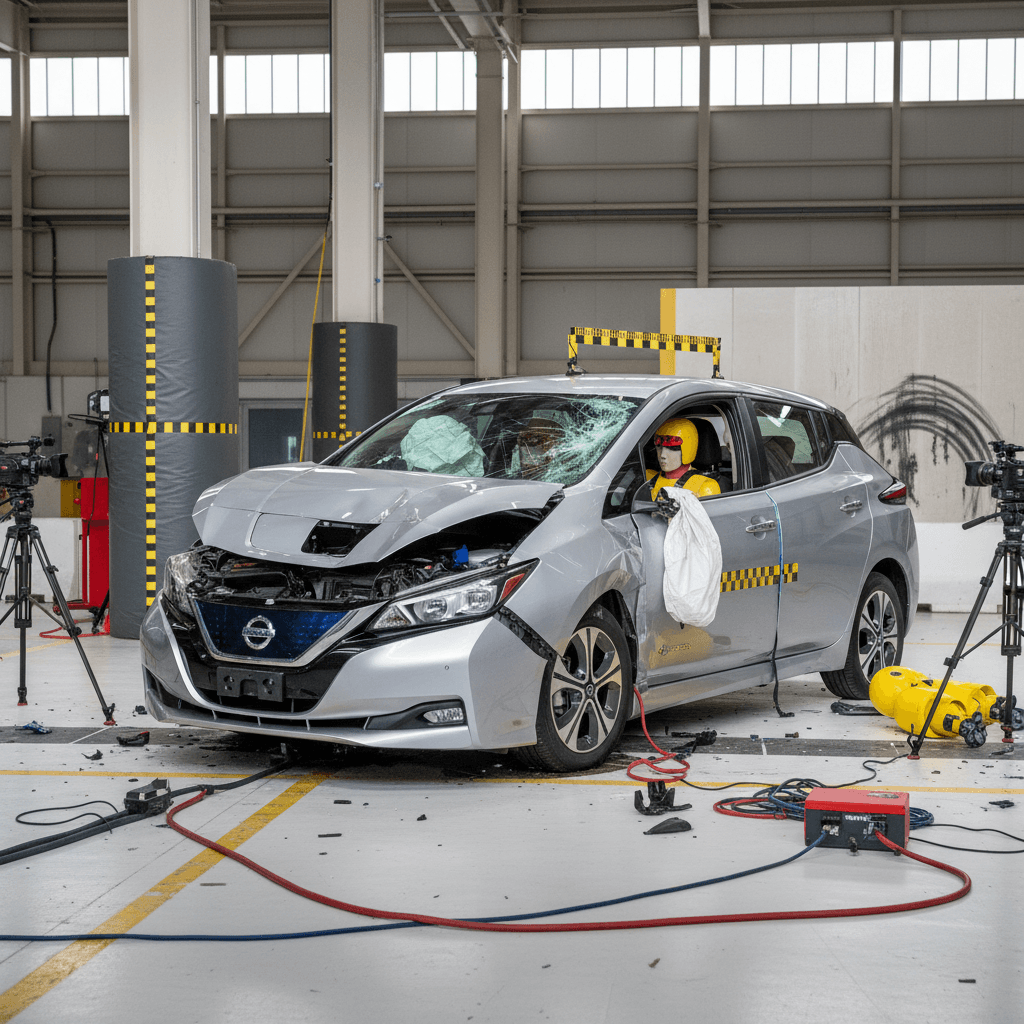
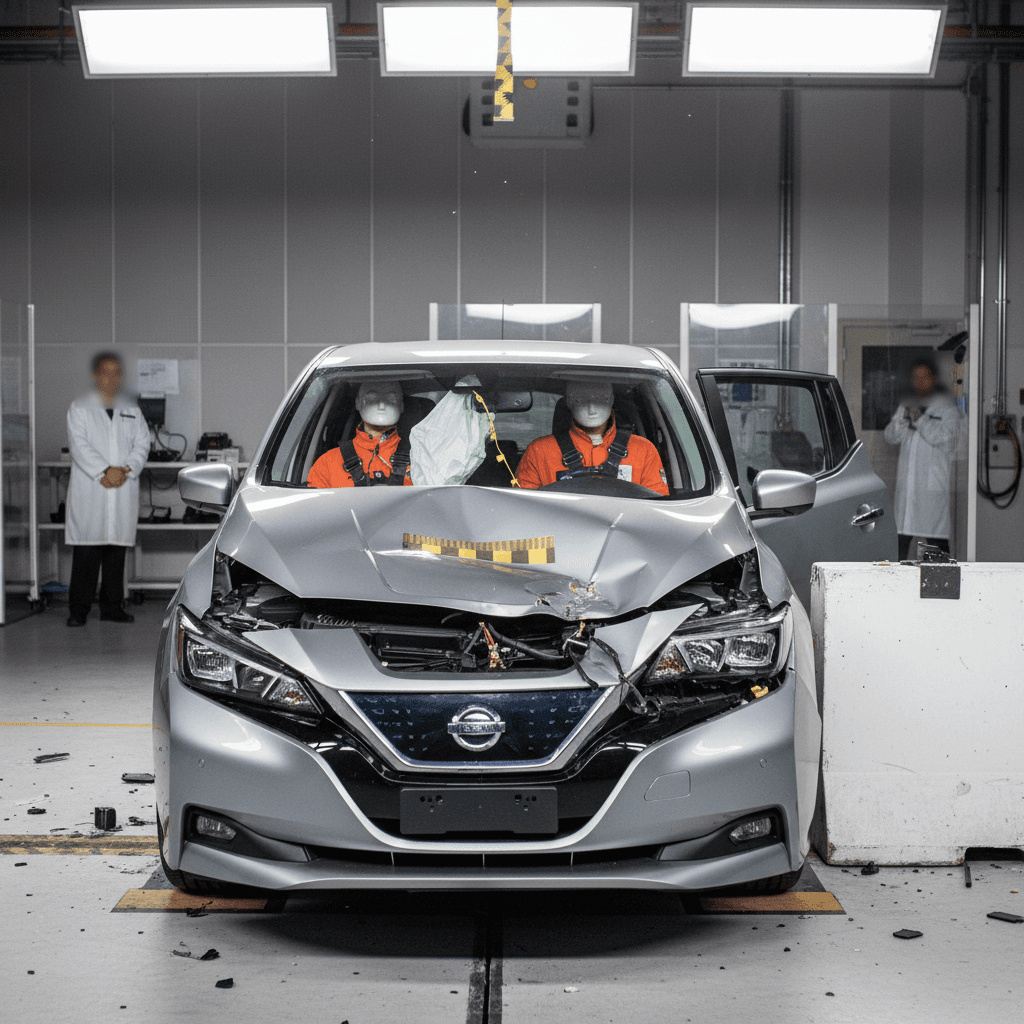
To understand what’s missing for the Hummer EV, it helps to know what NHTSA and IIHS usually do. Both organizations crash vehicles into fixed barriers and sleds at defined speeds, then measure how much injury risk the restraints and structure allow for crash‑test dummies. Tests are designed around realistic crashes like a 40 mph frontal offset impact or a side hit from a typical SUV.
What standard crash tests usually measure
These are the benchmarks you won’t find yet for the Hummer EV.
Crashworthiness
How well the vehicle’s structure, crumple zones, and cabin protect occupants in frontal, side, and rollover crashes.
Injury measures
For each body region, dummies track forces to head, neck, chest, legs, and pelvis to estimate serious injury risk.
Crash compatibility
Some programs also look at how aggressive a vehicle is when it hits another car, especially important for very heavy trucks and SUVs.
The Hummer EV complicates things because most crash rigs and movable barriers were engineered around much lighter vehicles. A 9,000‑pound truck can overpower the barrier in a way that doesn’t match the assumptions built into many tests, which is one reason experts say ultra‑heavy EVs may need updated procedures.
How to sanity‑check safety without a star rating
- The list of standard and optional safety tech (AEB, lane keeping, blind‑spot monitoring).
- Recall history and what systems they touch.
- Insurance losses and driver fatality data as it becomes available.
- Owner reports of stability, braking, and electronic glitches.
GMC Hummer EV safety features on paper
Even without formal crash ratings, we do know quite a bit about the Hummer EV’s safety equipment from GMC’s own specs and early test drives. This is the baseline hardware and software designed to keep you out of trouble and protect you when things go wrong.
Key Hummer EV safety and driver‑assist features
Exact equipment varies by trim and model year, always confirm on an individual truck.
Passive safety
- High‑strength steel frame and battery guard structure
- Multiple front, side and curtain airbags
- Advanced seatbelt pretensioners and load limiters
- Rigid passenger cell with large front crumple zone
Active safety & ADAS
- Automatic emergency braking with forward collision warning
- Lane‑keep assist and lane‑departure alerts
- Blind‑spot monitoring and rear cross‑traffic alert
- Available surround‑view camera and parking assists
- GM Super Cruise hands‑free highway assist on some trims
Good news for used‑EV shoppers
The weight question: how 9,000 pounds changes a crash
Weight is the Hummer EV’s calling card and its biggest safety double‑edged sword. For people riding inside, a heavy vehicle can be an advantage in some collisions because physics favors the more massive object. But that same physics can make things worse for everyone else, and can stress braking systems, tires, and roadside hardware.
What weight can do for you
- In a two‑vehicle crash with a much lighter car, the heavier vehicle often experiences lower deceleration forces on its occupants.
- The huge battery pack mounted low in the frame helps lower the center of gravity, which improves rollover resistance compared with a tall gas truck of similar size.
- Big brakes and regenerative deceleration give strong stopping power when everything is working correctly.
What weight can do to others (and you)
- In crashes with small cars, the lighter vehicle typically sees much higher forces, which can raise injury risk for those occupants.
- Roadside guardrails and crash cushions weren’t designed with 9,000‑pound EVs in mind and may not manage energy as intended.
- Longer stopping distances if tires, brakes, or road surface aren’t in ideal condition, and more kinetic energy if something fails.
Heavy EVs raise system‑level safety questions
Why the Hummer EV sits in its own weight class
Recalls and real‑world issues to know about
In the absence of formal crash‑test scores, recall history and on‑road experience take on extra importance. For the Hummer EV, a few themes are already clear: GM is still debugging a complex new platform, and some of those bugs land squarely in the safety column.
- A 2025–2026 recall campaign targeted certain Hummer EV pickups and SUVs for a front passenger airbag wiring defect that could prevent deployment in a frontal crash. Affected owners were advised to schedule free repairs and could check their VINs on the NHTSA website.
- Owners have reported intermittent electronic and propulsion issues after over‑the‑air software updates, ranging from warning messages to sudden loss of power until the vehicle is restarted or repaired.
- Like many new‑platform EVs, early Hummer EVs have seen multiple software and component campaigns aimed at improving reliability and safety‑related behavior over time.
If you’re considering a used Hummer EV
Shopping a used Hummer EV? Safety checks that matter
If you’re in the market for a used Hummer EV, especially one coming off lease, your due diligence needs to go beyond paint and tires. You’re buying a very fast, very heavy truck with complex software and a six‑figure original MSRP; it pays to verify that its safety systems are actually working the way the spec sheet promises.
Used GMC Hummer EV safety checklist
1. Run the VIN for recalls and campaigns
Use the NHTSA recall lookup or GMC’s owner portal to confirm every open safety recall is addressed, including any airbag wiring, seatbelt, or battery‑system campaigns.
2. Confirm ADAS features work in a test drive
On a safe, marked road, verify that automatic emergency braking, lane‑keeping support, blind‑spot alerts, parking cameras, and, if equipped, Super Cruise behave as expected, no random dropouts or warnings.
3. Inspect tires, brakes, and suspension carefully
9,000 pounds is brutal on wear items. Uneven tire wear, vibration under braking, or clunks over bumps are bigger safety red flags on a Hummer EV than on a light crossover.
4. Ask for software update history
Repeated post‑update failures, shutdowns, or propulsion warnings may indicate deeper electrical or software instability. A dealer or EV‑specialist inspection can help interpret the logs.
5. Evaluate charging and high‑voltage behavior
Slow or inconsistent DC fast‑charging, unexplained shutdowns, or persistent high‑voltage warnings should be diagnosed before you buy; they may tie into both reliability and safety.
6. Get an independent EV‑focused inspection
A shop or marketplace that specializes in EVs can run high‑voltage system checks, pull detailed diagnostic reports, and spot patterns in the model’s failure history that an ordinary shop might miss.
Where Recharged fits in
How the Hummer EV compares to other large EVs
Since there’s no one‑line safety score for the Hummer EV, it’s useful to put it next to other large electric SUVs and trucks that have been tested. While you can’t copy scores directly, these comparisons give you a sense of where the Hummer fits in the broader safety landscape.
Hummer EV vs. other big electric SUVs & trucks
Illustrative comparison of safety information landscape for large EVs available in the U.S.
| Model | Vehicle type | Approx. weight class | Independent crash ratings? | Notable safety storyline |
|---|---|---|---|---|
| GMC Hummer EV | Electric pickup / SUV | Ultra‑heavy (≈9,000 lb GVWR) | No NHTSA or IIHS ratings yet | Very high mass and complex electronics; early airbag and software‑related issues. |
| Tesla Cybertruck | Electric pickup | Very heavy | Limited new‑generation crash data emerging | Early tests highlight strong driver protection but raise concerns about stiffness and compatibility with smaller cars. |
| Rivian R1S | Electric SUV | Heavy, but lighter than Hummer EV | Some IIHS/NHTSA ratings available | Positions itself as an adventure SUV with robust safety engineering and modern ADAS. |
| Mainstream electric crossover (e.g., Mustang Mach‑E, Hyundai Ioniq 5) | Electric crossover | Mid‑weight | Extensive IIHS & NHTSA data for many trims | Multiple models earn Top Safety Pick or 5‑Star Overall ratings, reflecting more mature test coverage. |
Ratings shown for non‑GM vehicles are examples of how mainstream EVs are being evaluated; the Hummer EV currently lacks equivalent public scores.
When a Hummer EV might make sense
- You want a halo truck with extreme off‑road capability and acceleration.
- You already own another, smaller vehicle for everyday family duty.
- You’re comfortable being an early adopter in a segment where crash‑test science is still catching up.
When you might look elsewhere
- You prioritize documented five‑star or Top Safety Pick ratings.
- Most of your driving is urban or suburban, where pedestrian and cyclist safety is a major concern.
- You want a simpler, lighter EV with a longer track record and more crash data.
FAQ: GMC Hummer EV safety ratings & crash tests
Common questions about GMC Hummer EV safety
Bottom line: is the GMC Hummer EV “safe”?
The GMC Hummer EV is a study in contrasts. On one hand, it’s packed with modern airbags and driver‑assist features, built around a stiff battery‑protecting structure, and backed by a company that’s steadily issuing updates and recalls to address issues. On the other, it’s an ultra‑heavy, ultra‑complex truck that lacks independent crash‑test ratings and pushes the boundaries of what our current safety infrastructure was designed for.
If you’re considering one, especially on the used market, go in with clear eyes. Verify recall completion, test every safety feature, and think hard about how and where you’ll drive it. For some shoppers, a big EV with no star rating will always feel like too much of a question mark. For others, the Hummer EV’s capability and presence outweigh the uncertainty.
Either way, you don’t have to make the call alone. Recharged can help you compare options, interpret incomplete safety data, and source a used EV that fits both your appetite for risk and your daily reality, whether that’s a Hummer EV or something far more modest.