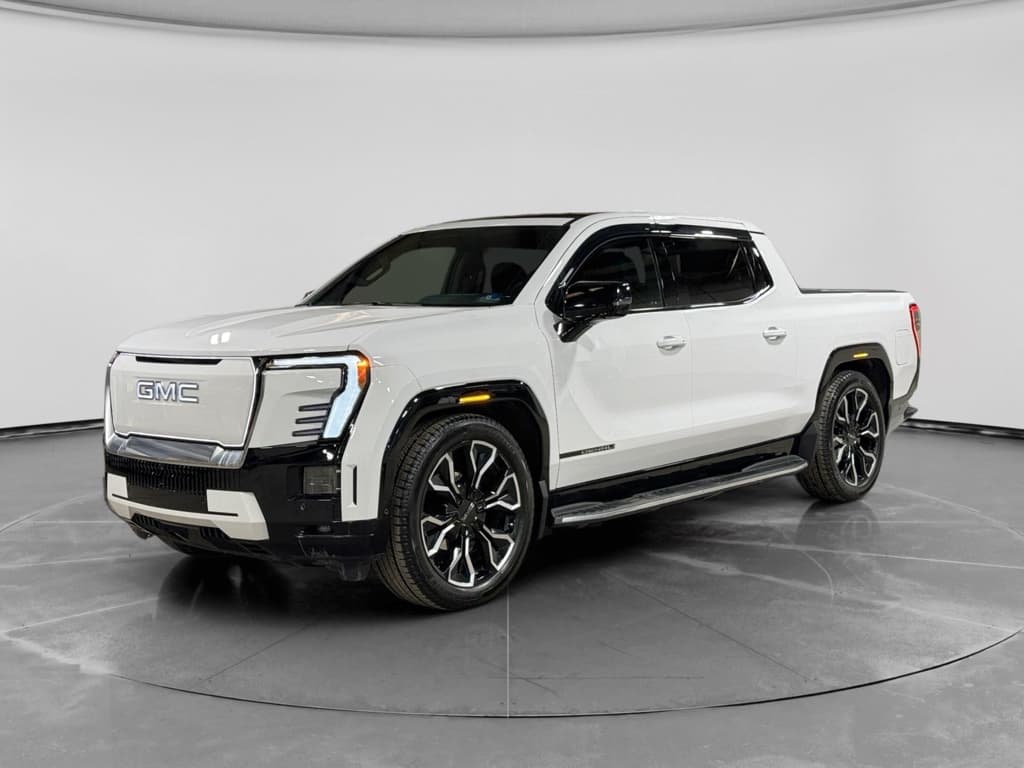
If you’re looking at a GMC Hummer EV, you’ve probably seen the big numbers on the window sticker, up to 381 miles of range in some trims. But what does GMC Hummer EV real world range on the highway actually look like when you’re cruising at 70 mph, maybe towing a trailer, into a headwind? That’s where things get much more interesting, and more sobering.
Quick takeaway
GMC Hummer EV highway range at a glance
Hummer EV range snapshot (pickup & SUV)
The Hummer EV is a 5-digit-pound, brick-shaped super truck with sports‑car power. That combination is thrilling but not efficient. Owners and instrumented tests consistently see highway efficiency in the **1.5–1.8 mi/kWh** range, versus 2.0–2.5 mi/kWh for many other electric pickups and SUVs. That means the huge battery buys you big absolute range numbers, but every mile is expensive in electrons.
EPA range vs real-world highway results
First, it helps to separate the **official numbers** from what people are actually seeing on real roads.
GMC Hummer EV range: EPA vs. real-world highway
Key Hummer EV trims and what you can realistically expect at steady highway speeds in good weather, without towing.
| Model / Trim | Battery configuration | Official range | Typical real-world highway range | Notes |
|---|---|---|---|---|
| Pickup EV3X (24-module pack, all‑terrain tires) | ~205 kWh | GM-estimated up to 381 mi | 260–320 mi | Long-range king; Off-Road package and MT tires trim range |
| Pickup EV3X (20-module pack) | ~170 kWh | EPA ~314 mi (varies by year) | 230–280 mi | More efficient, smaller pack; still very heavy |
| Pickup Edition 1 | 24-module pack | GM-est. 329–355 mi (depending on year/options) | ~290 mi @ 75 mph | Independently tested at about 290 miles on a 75‑mph loop before stopping |
| SUV EV3X (20-module pack) | ~170 kWh | EPA ~314 mi | 240–290 mi | Shorter body, same pack; similar or slightly better highway range than 20‑module pickup |
| SUV EV2X (20-module pack) | ~170 kWh | EPA low‑300s mi | 240–290 mi | Less power, similar aerodynamics; range very close to 3X in practice |
Real‑world highway range estimates assume 65–75 mph cruising, moderate temps, and no trailer.
How to sanity-check claimed range
Independent testing backs this up. A Hummer EV Edition 1 pickup has been driven about **290 miles on a controlled 75‑mph highway loop** before the truck came to a stop, lining up well with a 75–80% haircut from GM’s own estimates. That’s impressive for a vehicle this large, but it also highlights how hard high‑speed air resistance hits a truck with the frontal area of a small condo.
Pickup vs. SUV: which Hummer EV goes farther?
Hummer EV Pickup
- Available 24‑module "max range" pack around 205 kWh.
- GM estimates up to 381 miles in ideal conditions.
- Longer wheelbase and open bed hurt aerodynamics a bit.
- Real‑world highway range: roughly 260–320 miles, depending on speed, tires, and weather.
Hummer EV SUV
- 20‑module pack standard, around 170 kWh.
- EPA combined range around 314–315 miles for many trims.
- Shorter body and enclosed cargo area can slightly help aero.
- Real‑world highway range: typically 240–290 miles in decent conditions.
In practice, the **pickup with the 24‑module pack** is the road‑trip champ, simply because it carries more energy. The SUV is a bit more maneuverable and still delivers solid highway range, but its smaller pack means you’ll stop more often on very long routes.
7 factors that crush (or help) Hummer EV highway range
- Speed: jumping from 65 mph to 80 mph can easily wipe out 15–25% of your range.
- Tires: aggressive mud‑terrain (MT) tires and X‑Pro / Extreme Off‑Road packages add rolling resistance and aero drag.
- Temperature: very cold or very hot days increase HVAC use and reduce battery efficiency.
- Elevation: long climbs, especially in mountainous states, draw huge power; you gain some back on the way down, but not all.
- Wind: a strong headwind can make your truck feel like it’s towing all the time.
- Payload: passengers, gear, rooftop accessories and bed racks all add weight and drag.
- Driving style: rapid passing and punchy acceleration are fun, but they show up on the consumption screen.
Highway speed is your #1 lever
Easy ways to stretch Hummer EV highway range in real time
1. Aim for 65–70 mph, not 80
If traffic allows, dropping 5–10 mph is often the single biggest range extender you have, especially in strong wind or rain.
2. Use the live consumption screen
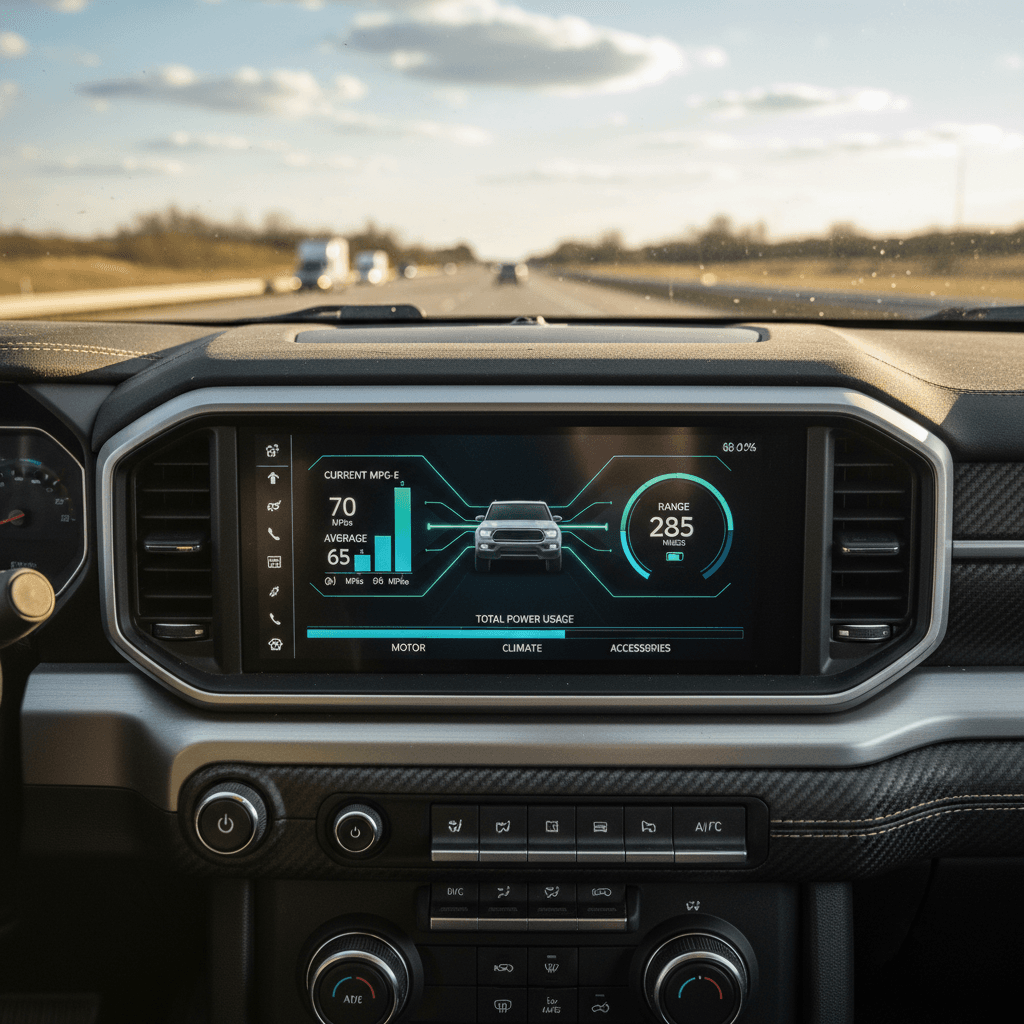
Watch your mi/kWh readout as you change speed or lane position. Treat it like a game to keep the number above **1.7–1.8** where possible.
3. Precondition in your driveway
On cold or hot days, use shore power to heat or cool the cabin and battery before you leave. That way, the pack doesn’t have to work as hard at highway speed.
4. Travel in Standard ride height when possible
If your truck has adaptive air suspension, slam‑low off‑road modes increase drag. Use them for trails, not hours of freeway slog.
5. Pack the bed smartly
Big roof racks, light bars, and exposed cargo in the bed are aero killers. Use a tonneau cover where possible and keep bulky items low.
6. Use one‑pedal and regen smartly
On rolling highways, let the truck coast where safe instead of constantly accelerating and braking. Regen helps, but not wasting the energy in the first place helps more.
How towing and payload hammer your Hummer EV range
If you’re eyeing a Hummer EV as a tow vehicle, the numbers get much more dramatic. The truck can tow up to **12,000 pounds** in some dual‑motor configurations, but highway range takes a serious hit long before you reach the rating.
What happens to Hummer EV range when you tow?
Approximate real‑world highway range impacts at 65–70 mph using a mid‑weight travel trailer or similar load.
| Scenario | Approx. trailer weight | Expected highway range | What it means |
|---|---|---|---|
| No trailer, light cargo | , | 260–320 mi | Typical real‑world range for a 24‑module pickup in good weather. |
| Moderate trailer (e.g., 6,000–7,000 lb travel trailer) | 6,000–7,000 lb | 130–190 mi | Plan on roughly **halving** your comfortable highway range. |
| Heavy boxy trailer near max rating | 9,000–12,000 lb | 100–150 mi | You’ll be stopping frequently; charging options and pull‑through access become critical. |
| Loaded SUV with family & gear, no trailer | Passengers + cargo | 220–280 mi | Weight matters, but aero from a trailer is usually the bigger range killer. |
These are ballpark figures, your trailer shape, weight, and terrain will move the needle up or down.
EV towing reality check
For some owners that’s fine, they like to stop often anyway. For others, it’s a deal‑breaker. The key is going in with realistic expectations and planning your charging and campground stays tightly around that shortened highway range.
Planning road trips around real-world highway range
3 steps to stress-free Hummer EV highway trips
Use tools, buffers, and a realistic range assumption to stay out of the red.
Start with conservative range
Begin your planning assuming about 75–80% of your rated range at highway speeds, then adjust based on your own history.
If your truck is rated at 381 miles, start planning around 280–300 miles per leg.
Map DC fast chargers first
Use apps like PlugShare, ABRP, or the in‑vehicle planner to place DC fast chargers every 120–180 miles along your route.
Favor sites with food, restrooms and easy pull‑through access if you’re towing.
Charge from ~10–15% to 70–80%
On long trips, it’s usually faster to take more, shorter fast‑charges than to sit from 80–100% every time.
The Hummer EV can fast‑charge quickly at low states of charge; it slows down as you fill the pack.
Use your own data
If you’re buying a Hummer EV primarily as a **weekend adventure rig or second vehicle**, that 240–320‑mile highway window is often more than enough. Where range planning becomes critical is when you’re running multi‑state road trips, winter driving in the upper Midwest or Northeast, or pulling toys and trailers behind you.
Buying a used Hummer EV? Range, degradation and battery health
With more Hummer EVs hitting the resale market, highway range isn’t just a spec‑sheet question anymore, it’s a **condition** question. How a previous owner drove and charged the truck will shape the real‑world range you see in year three, five, or eight.
- Look for consistent DC fast‑charging history vs. mostly home Level 2 charging.
- Check for software updates that may have adjusted range estimates or charging curves.
- Inspect tires, oversized or aggressive aftermarket setups can quietly sap highway range.
- Pay attention on a long test drive to the mi/kWh you’re seeing at 65–70 mph.
How Recharged helps on used Hummer EVs
If you’re shopping used, a retailer that understands EVs can also walk you through how the truck’s original equipment, tires, suspension packages, even accessory racks, affects **highway‑range reality**, not just the original EPA label. That’s exactly the kind of nuance EV‑specialist teams like the one at Recharged are built for.
GMC Hummer EV highway range: FAQs
Frequently asked questions about Hummer EV highway range
Bottom line: who the Hummer EV’s highway range really works for
The GMC Hummer EV’s real‑world highway range isn’t shy about what it is. You’re driving a 9,000‑plus‑pound, 1,000‑horsepower billboard for electric torque. On paper, the **300‑plus‑mile ratings** look competitive. In practice, most drivers will see **something closer to the mid‑200s at typical U.S. highway speeds**, and substantially less when towing or battling harsh weather.
If that still fits your lifestyle, shorter road‑trip legs, plenty of DC fast‑charging on your routes, and realistic expectations, the Hummer EV is an outrageous, capable way to go electric. If you’re shopping used, pairing a test drive with a third‑party battery health report (like the Recharged Score you get on every EV at Recharged) will help you understand exactly how much real highway range you’re buying, not just the number printed when the truck was new.