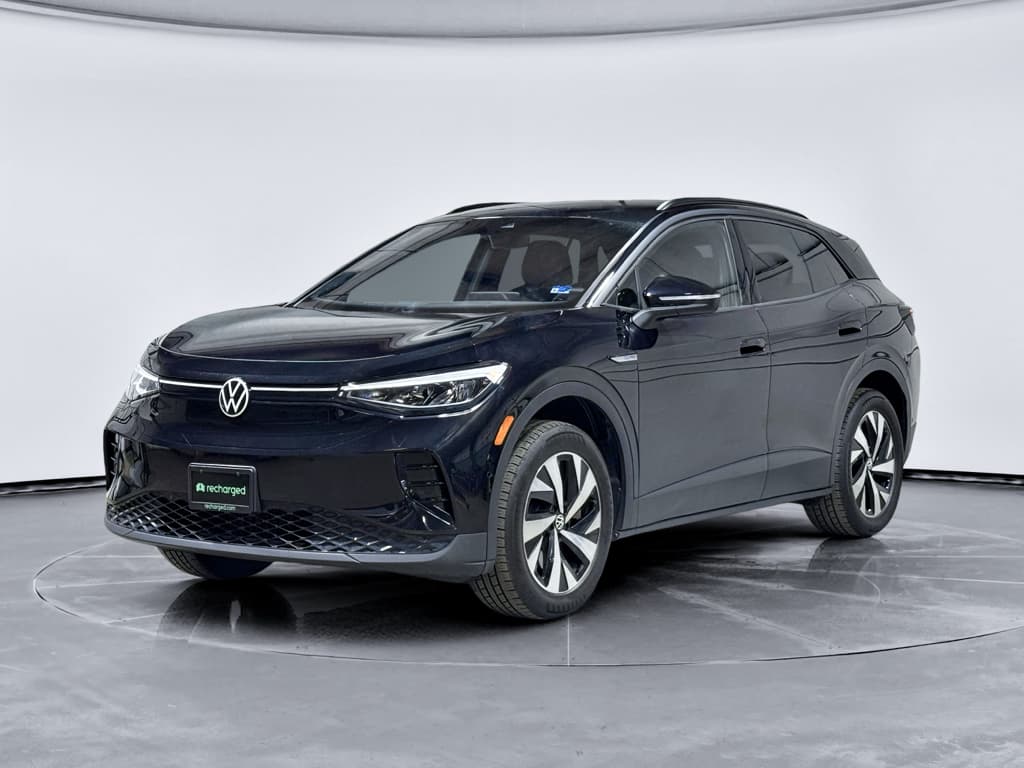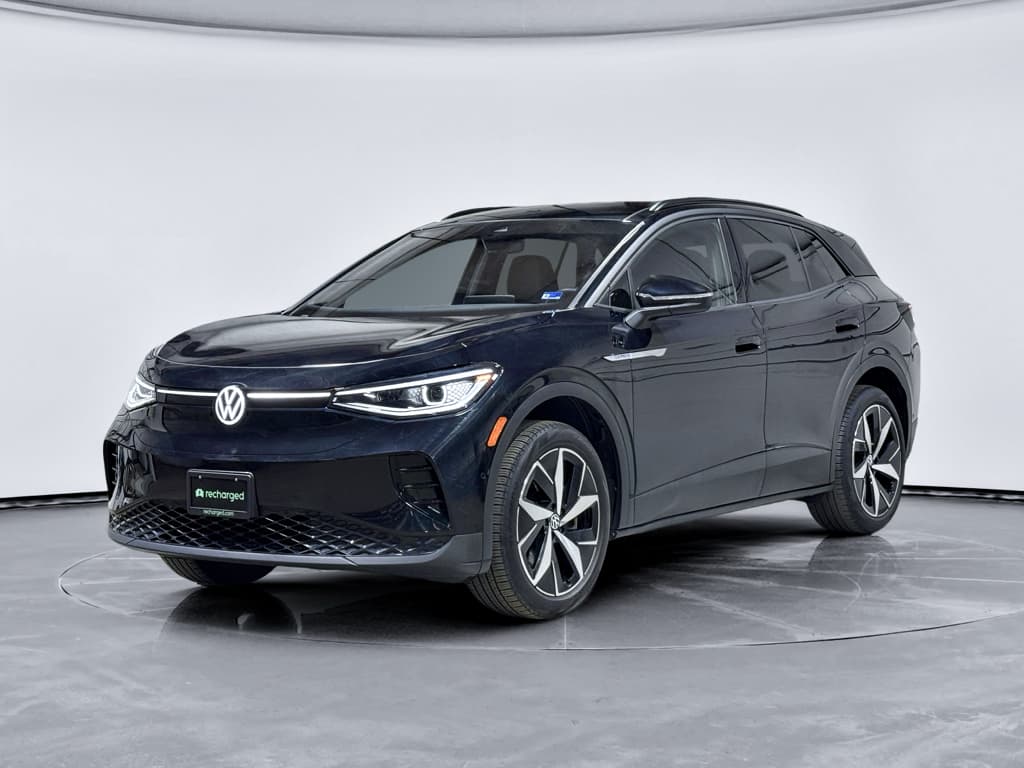
If you’re torn between a Volkswagen Tiguan and a Volkswagen ID.4, you’re really asking a bigger question: does a gas compact SUV or an electric SUV make more sense for your budget over time? Looking at sticker prices only tells part of the story. To understand which one truly costs less, you need to compare total cost of ownership, fuel or electricity, maintenance, insurance, tax credits, and resale value, over several years.
What this guide covers
Why compare the Volkswagen Tiguan vs. Volkswagen ID.4?
The Tiguan and ID.4 sit in roughly the same garage space and appeal to the same buyer: you want a practical, family‑friendly Volkswagen SUV. The Tiguan is a familiar, gasoline‑powered compact SUV, while the ID.4 is Volkswagen’s dedicated electric SUV built on a different platform. If you’re cross‑shopping them, you’re trying to balance up‑front price vs. long‑term operating costs, not just features and styling.
Quick snapshot: Tiguan vs. ID.4 at a glance
Same badge, very different cost profile
Volkswagen Tiguan (gas)
- Compact gas SUV
- Regular maintenance (oil, transmission)
- Fuel costs tied to gas prices
- Lower upfront price, fewer incentives
Volkswagen ID.4 (electric)
- All‑electric compact SUV
- Higher purchase price (new), strong used deals
- Much lower fuel and maintenance costs
- Eligible for EV incentives depending on model/year
Key question
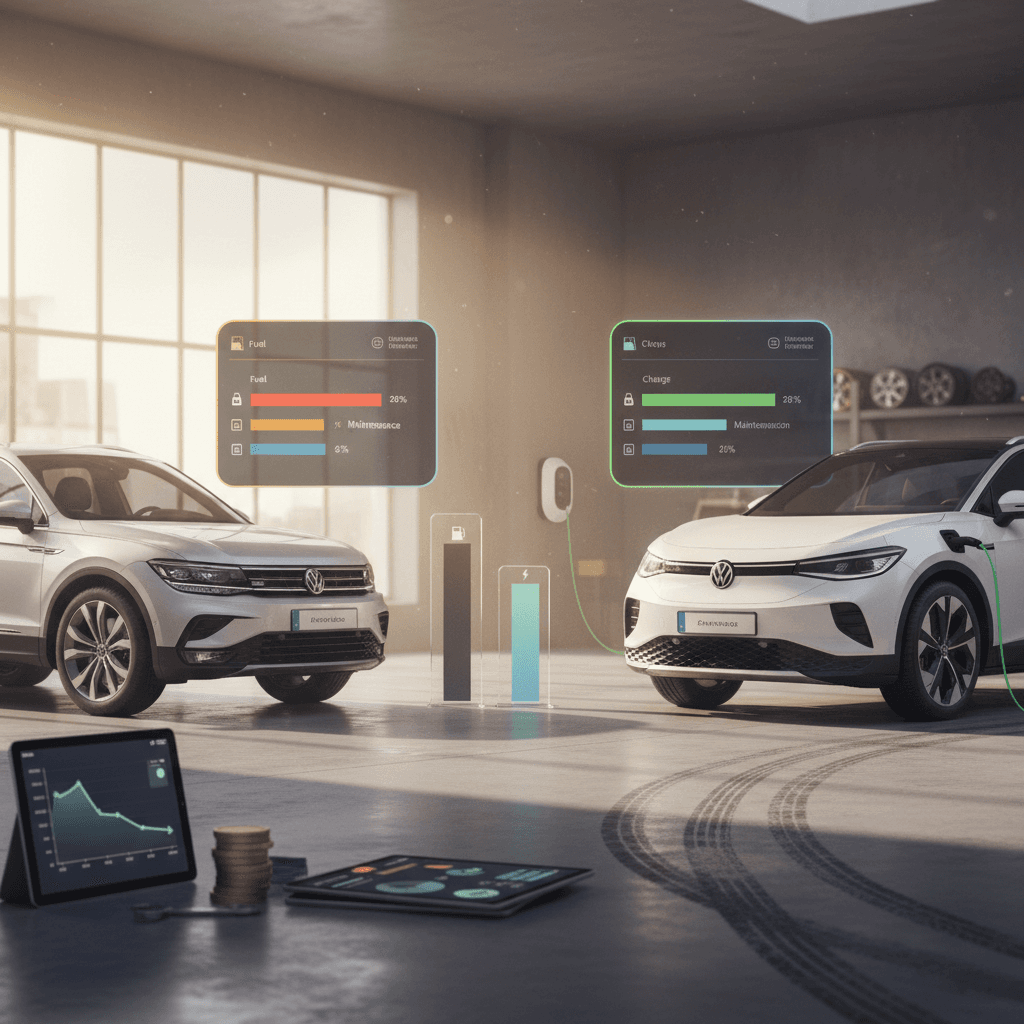
Does the ID.4’s higher purchase price get paid back through lower running costs in your specific driving pattern, or is the Tiguan still cheaper for how you drive?
Think in monthly terms
How we compare total cost of ownership
To keep this Volkswagen Tiguan vs. Volkswagen ID.4 total cost of ownership comparison grounded, we’ll use a consistent set of assumptions you can easily tweak for your own situation.
- Ownership period: 5 years
- Annual mileage: 12,000 miles (U.S. average is in this ballpark)
- Fuel price: $3.50 per gallon of regular gas
- Home electricity price: $0.15 per kWh (nationally plausible; your rate may differ)
- Public DC fast charging: roughly 2–3x the cost per kWh of home charging (used occasionally, not exclusively)
- Tiguan real‑world fuel economy: ~27 mpg combined (varies by drivetrain and driving style)
- ID.4 real‑world efficiency: ~3.0 miles per kWh (can be higher or lower depending on climate and driving)
Your numbers will be different
Purchase price and incentives: new vs. used
New for new, the Volkswagen ID.4 typically carries a higher sticker price than a similarly equipped Tiguan. That said, EV incentives and the rapidly maturing used EV market can narrow or even flip that gap.
Typical price landscape (illustrative ranges)
Approximate U.S. transaction ranges for context; exact pricing varies by trim, incentives, and market conditions.
| Vehicle | New price range | Used (3‑year‑old) range | Incentives potential |
|---|---|---|---|
| VW Tiguan (gas) | Mid-$30,000s–low $40,000s | High $10,000s–mid-$20,000s | Occasional dealer incentives, no federal EV credit |
| VW ID.4 (electric) | High $30,000s–$50,000+ depending on trim | Low‑to‑mid $20,000s (often competitive with used Tiguan) | Federal or state EV incentives may apply on some new/used models |
These ranges are directional, not quotes. Always check current listings in your area.
EV tax credits and used‑EV deals
On the used side, the ID.4’s early‑adopter depreciation can actually be a win for today’s shoppers. A 3‑year‑old ID.4 with a verified healthy battery can deliver new‑car tech and very low running costs at a price that looks more like a mainstream used compact SUV.
Fuel vs. electricity: what you actually spend to drive
Fuel or electricity is where the Volkswagen Tiguan vs. Volkswagen ID.4 total cost of ownership really starts to diverge. Even with modest U.S. electricity prices, the cost per mile to power an ID.4 is usually far lower than feeding a Tiguan gasoline, especially if you can charge at home most of the time.
Illustrative annual energy costs (12,000 miles)
Fast charging vs. home charging
At a blended $0.15/kWh, many U.S. drivers see their ID.4’s per‑mile energy cost land around one‑third to one‑half of a similar gas SUV’s fuel cost. Again, your exact savings ride on local prices and driving habits, but over 5 years that difference is usually measured in thousands of dollars, not hundreds.
Maintenance and repairs: where EVs usually win
The Tiguan is a modern, relatively efficient combustion SUV, but it still carries all the complexity of an engine, exhaust system, transmission, and more. The ID.4 sidesteps most of that. An EV still has wear items like tires, brakes, cabin filters, and coolant, but you’re eliminating oil changes and many routine services that come with gasoline ownership.
Volkswagen Tiguan (gas)
- Regular oil and filter changes
- Transmission fluid and potential transmission service
- More under‑hood components that can fail over time (belts, exhaust components, ignition system)
- Brake wear can be higher in stop‑and‑go if there’s less regenerative braking than an EV
Volkswagen ID.4 (electric)
- No oil changes, no spark plugs, no exhaust system
- Single‑speed gearbox with fewer moving parts
- Regenerative braking reduces brake wear
- Maintenance focuses on tires, brake fluid, cabin filters, and software updates
Typical maintenance savings
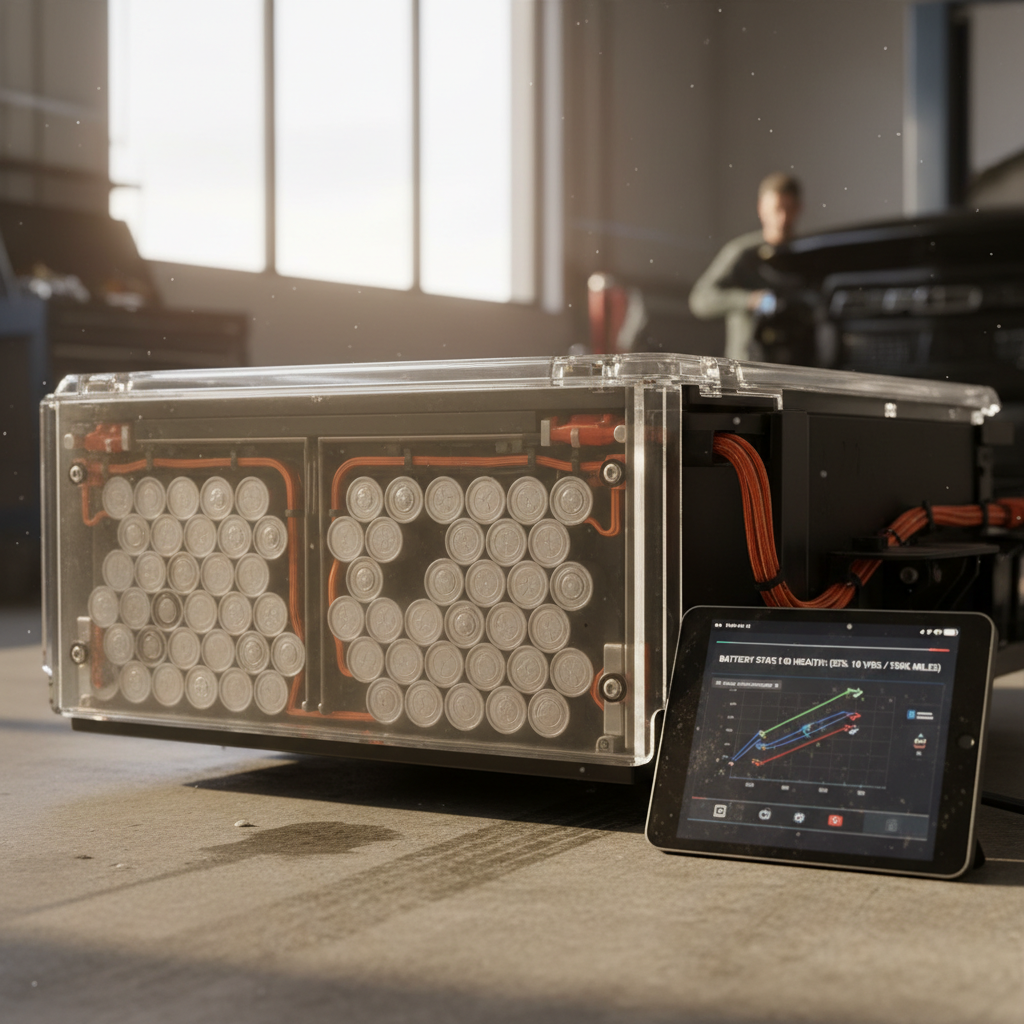
The wildcard with EVs is long‑term battery health, especially as vehicles age. That’s one reason Recharged created the Recharged Score battery health report, so used‑EV buyers can see objective battery diagnostics instead of guessing about range loss or future costs.
Insurance, taxes, and fees
Insurance on an ID.4 can run slightly higher than on a Tiguan in some markets, largely because EVs often have higher MSRPs and pricier collision repairs. On the flip side, some states offer discounts for EV insurance or have lower registration fees for low‑emission vehicles, while others charge extra EV registration fees to replace lost gas tax revenue.
- Insurance: Expect modestly higher premiums for the ID.4 vs. a comparable Tiguan trim in many regions, but shop around, insurer appetite for EVs varies.
- Registration fees: Some states charge extra annual fees for EVs; others don’t. In a few markets, plug‑in vehicles get favorable treatment instead.
- Sales tax: EV purchase incentives and exemptions can reduce up‑front taxes on an ID.4 in certain states, narrowing the initial price gap.
Check your ZIP code
Depreciation and resale value
Depreciation is often the single biggest cost in owning any newer vehicle, and it behaves differently for the Tiguan and ID.4. Early‑run EVs, including the ID.4, saw steeper depreciation as technology improved quickly and new incentives arrived. That hurt first owners but is a gift to today’s used‑EV shoppers.
How depreciation shapes your decision
Tiguan depreciation
- More predictable, similar to other compact gas SUVs
- 5‑year‑old Tiguans still attract buyers who prefer traditional powertrains
- Resale values influenced heavily by gas prices and SUV demand
ID.4 depreciation
- Early years depreciated faster due to tech improvements and incentives
- Result: attractive prices on 2–4‑year‑old used ID.4s
- Future resale will hinge on battery health, charging network access, and EV adoption trends
Why battery health drives resale
5‑year Volkswagen Tiguan vs. ID.4 cost comparison
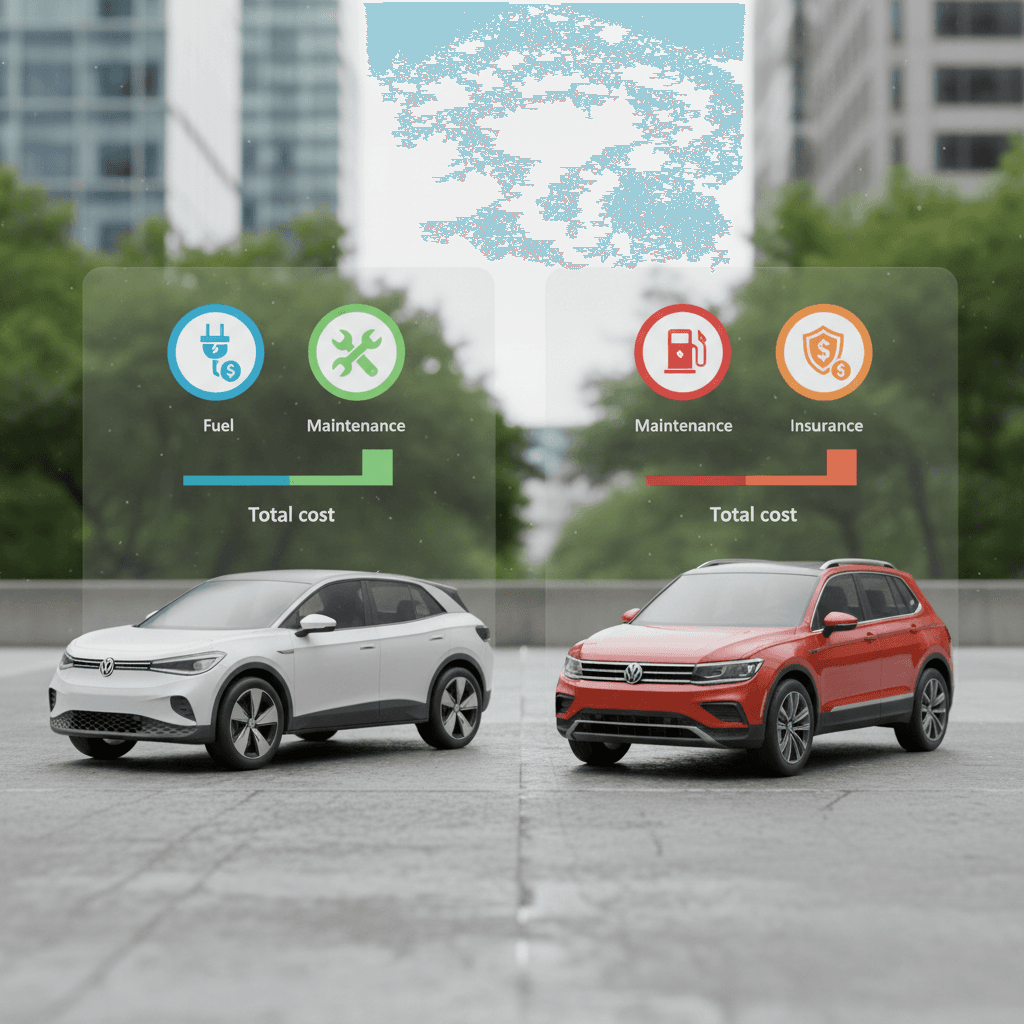
Pulling the pieces together, here’s a simplified 5‑year Volkswagen Tiguan vs. Volkswagen ID.4 total cost of ownership comparison using the assumptions above. These are directional numbers for a typical driver, not personalized quotes.
Illustrative 5‑year cost of ownership (example scenario)
Assumes 12,000 miles/year, $3.50/gal gas, $0.15/kWh home electricity, and typical maintenance patterns. Purchase price and resale are rounded for simplicity.
| Category (5 years) | VW Tiguan (gas) | VW ID.4 (electric) |
|---|---|---|
| Purchase price (net of incentives) | $36,000 | $42,000 |
| Fuel / electricity | ≈$7,750 | ≈$3,000 |
| Routine maintenance | ≈$3,000 | ≈$1,500 |
| Insurance & fees (incremental difference) | Baseline | ≈+$750 vs. Tiguan |
| Estimated resale value after 5 years | $16,000 | $20,000 |
| Net 5‑year cost (very rough) | ≈$30,750 | ≈$26,250 |
Your actual costs will vary. Use this table as a framework to plug in your own numbers.
How to use this table
Used VW ID.4 vs. used Tiguan: where Recharged fits in
If you’re shopping used, the math gets even more interesting. A 2–4‑year‑old Tiguan and a similar‑age ID.4 often have overlapping asking prices, especially once you factor in dealer discounts and market fluctuations. That’s where the ID.4’s electric advantages can deliver outsized value, if you’re confident in the battery and pricing.
Key questions when cross‑shopping used Tiguan and ID.4
1. What’s the true battery health of the ID.4?
Range is the life of an EV. Ask for an objective battery‑health report, not just a dashboard estimate. Recharged provides a Recharged Score with battery diagnostics on every EV we list.
2. How do local gas and electricity prices compare?
In expensive gasoline markets with moderate electricity prices, the ID.4’s energy advantage grows. In markets with unusually cheap gas or expensive electricity, the gap narrows but often doesn’t disappear.
3. How many miles do you actually drive?
High‑mileage drivers tend to favor the ID.4, because every added mile amplifies fuel savings. Lower‑mileage drivers see a smaller payback window and may prioritize other factors.
4. Where will you charge most of the time?
Home or workplace charging is the sweet spot for EV savings. If you’re stuck with pricey public fast charging most of the time, some of the ID.4’s cost advantage gets eaten away.
5. How long do you plan to keep the vehicle?
If you churn cars every 2–3 years, depreciation and incentives matter most. If you buy and hold 7–10 years, fuel and maintenance dominate. Run the math for your real timeline.
6. Do you value quieter, smoother driving?
Total cost of ownership isn’t just dollars. The ID.4’s quiet, instant‑torque drive can be a daily quality‑of‑life upgrade that’s hard to price but easy to notice.
How Recharged simplifies used ID.4 ownership
Ready to find your next EV?
Browse VehiclesWho should choose the Tiguan vs. the ID.4?
Volkswagen Tiguan is a better fit if…
- You can’t reliably charge at home or work and live far from public charging.
- You regularly tow or drive in conditions where gas stations are plentiful but fast chargers are scarce.
- You prefer familiar gasoline technology and don’t want to think about charging curves or range planning.
- Your local electricity prices are unusually high relative to gasoline.
Volkswagen ID.4 is a better fit if…
- You have dependable access to home or workplace charging.
- You drive at least 10,000–12,000 miles per year and care about long‑term costs.
- You value a quieter, smoother drive and lower local emissions.
- You’re open to using apps and planning charging stops on long road trips.
When the Tiguan might be cheaper overall
Frequently asked questions: Tiguan vs. ID.4 ownership costs
Volkswagen Tiguan vs. Volkswagen ID.4 TCO FAQs
Bottom line: which Volkswagen costs less to own?
For many U.S. drivers, particularly those who can charge at home and drive at least 10,000–12,000 miles a year, the Volkswagen ID.4 often wins the total‑cost‑of‑ownership battle against the Volkswagen Tiguan. Lower energy and maintenance costs, plus competitive used pricing and potential incentives, typically outweigh its higher sticker price over a 5‑year window.
That said, the Tiguan still makes sense if your charging options are limited, you log relatively low miles, or you’ve found a deal that’s simply too good to ignore. The right answer depends on the way you actually live and drive, not just the spec sheet.
If you’re leaning toward electric but wary of battery risk and pricing, exploring a used VW ID.4 with a Recharged Score Report can thread the needle: lower upfront cost than new, with transparent battery health, market‑aligned pricing, financing, and expert EV support. That’s the kind of data‑driven clarity you want when you’re choosing between gas and electric for your next Volkswagen SUV.