If you’re considering a Genesis GV60, you’re probably not just asking, “Can I afford the payment?” You want to know the **true cost of ownership over 5 years**, including depreciation, charging, insurance, and maintenance, so you can decide if this luxury EV crossover actually pencils out better than a comparable gas SUV.
What this guide covers
Genesis GV60 5‑Year Cost of Ownership: Quick Overview
Estimated 5‑Year Ownership Snapshot (Typical U.S. Driver)
These are realistic, not perfect, numbers
Key Assumptions and Methodology
To get a meaningful **Genesis GV60 true cost of ownership over 5 years**, we have to make some reasonable assumptions. Here’s the baseline scenario used in this guide:
- Driver in the U.S. averaging 12,000 miles per year (60,000 miles over 5 years).
- Mix of trims centered around an Advanced/Performance AWD configuration, not the absolute base or maxed‑out spec.
- Mostly home Level 2 charging at roughly $0.16–$0.18/kWh, with occasional DC fast charging on road trips.
- Insurance costs based on national averages for a luxury compact SUV with good driving record and full coverage.
- Charging and maintenance modeled using 2024–2025 EV cost data and Genesis’s own maintenance schedules and warranty coverage.
Want a more precise number for your situation?
Purchase Price, Financing, and Depreciation
New EVs carry a price premium, and the GV60 is no exception. In exchange, you’re getting a genuinely premium interior, strong performance, and cutting‑edge tech, but depreciation is where a lot of your 5‑year cost hides.
Typical Transaction Prices for Genesis GV60
Approximate U.S. market ranges as of early 2026
New GV60
Typical transaction: $58,000–$70,000 depending on trim and options.
Includes destination but excludes taxes, fees, and add‑ons.
2–3‑Year‑Old Used GV60
Typical asking price: $38,000–$50,000.
Much of the steep early depreciation is already baked in.
4–5‑Year‑Old Used GV60 (Future Market)
Projected used pricing in the low‑to‑mid $30,000s for higher‑mileage examples, assuming current EV depreciation trends persist.
Luxury EV crossovers like the GV60 tend to depreciate faster than mainstream gas SUVs. Industry data suggests many EVs lose **45–55% of their value in the first 3 years**, especially as newer tech and longer‑range models arrive. That’s painful if you buy new, but a huge opportunity if you buy used.
Illustrative Depreciation: New Genesis GV60 Over 5 Years
Rounded example assuming a $65,000 purchase price before taxes and fees.
| Year | Estimated Market Value | Loss vs Prior Year | Total Depreciation vs New |
|---|---|---|---|
| 0 (New) | $65,000 | , | , |
| Year 1 | $50,000 | -$15,000 | -$15,000 |
| Year 2 | $42,000 | -$8,000 | -$23,000 |
| Year 3 | $36,000 | -$6,000 | -$29,000 |
| Year 4 | $32,000 | -$4,000 | -$33,000 |
| Year 5 | $29,000 | -$3,000 | -$36,000 |
Actual depreciation will depend on trim, options, mileage, condition, and market. This is a directional model, not a quote.
Depreciation is your single biggest cost
Financing a New GV60
Assume a $65,000 purchase, 10% down, 6.5% APR over 72 months:
- Down payment: ~$6,500
- Amount financed: ~$58,500
- Monthly payment: roughly $950–$1,050 before taxes and fees
- Total interest over 5 years: around $9,000–$11,000 (depending on rate and payoff timing)
That interest is part of your true 5‑year ownership cost, even though you don’t see it on a window sticker.
Financing a Used GV60
Now assume a 2‑year‑old GV60 at $44,000 with the same 10% down and a slightly higher used‑car APR:
- Down payment: ~$4,400
- Amount financed: ~$39,600
- Monthly payment: typically $650–$750 before taxes and fees
- Total interest over 5 years (shorter term or early payoff): often $6,000–$7,000
Lower depreciation plus lower financing cost is why late‑model used EVs, especially with verified battery health, can be such strong value plays.
Charging Costs vs Gasoline Over 5 Years
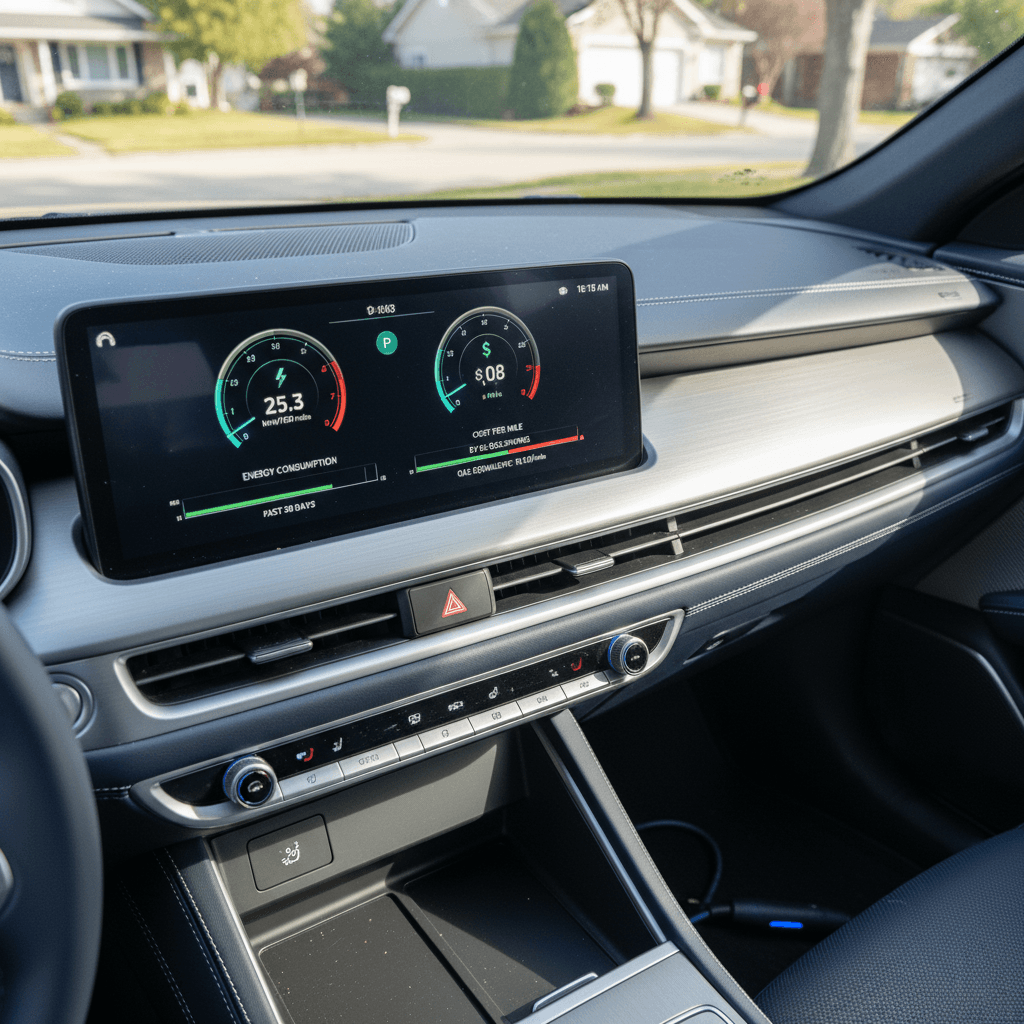
The GV60’s efficiency depends on trim, wheels, climate, and your right foot, but most owners see real‑world consumption in the **2.6–3.1 miles/kWh** range. For 12,000 miles per year, that’s roughly **3,900–4,600 kWh annually**.
Illustrative 5‑Year Charging Cost for Genesis GV60
Assumes 12,000 miles per year, mixed climate, mostly home charging at $0.17/kWh with some public DC fast charging at higher rates.
| Scenario | kWh per Year | Blended Cost per kWh | Annual Energy Cost | 5‑Year Energy Cost |
|---|---|---|---|---|
| Home‑Heavy (about 85% home, 15% DC fast) | 4,200 | $0.17 | ~$714 | ~$3,570 |
| More Public Charging (60% home, 40% DC fast) | 4,200 | $0.22 | ~$924 | ~$4,620 |
| High‑Cost Electricity Region | 4,200 | $0.26 | ~$1,092 | ~$5,460 |
If your home electricity is cheaper, or you install solar, your 5‑year charging cost can be significantly lower.
How this compares to gas
Genesis GV60 Insurance Costs
Insurance is where the GV60 behaves more like a European luxury SUV than a mass‑market crossover. High MSRP, advanced bodywork, and expensive sensors push premiums up compared with a mainstream gas compact SUV.
Estimated Annual Insurance Cost for Genesis GV60
U.S. averages for a clean‑record driver with full coverage; your quote may be substantially higher or lower.
| Vehicle | Estimated Annual Premium | 5‑Year Total |
|---|---|---|
| Genesis GV60 (luxury EV crossover) | $2,500–$2,800 | $12,500–$14,000 |
| Mainstream gas compact SUV | $1,800–$2,100 | $9,000–$10,500 |
| Mainstream non‑luxury EV crossover | $2,000–$2,300 | $10,000–$11,500 |
Insurance tends to be higher for luxury EVs due to repair complexity and parts prices, but shopping around helps.
3 ways to keep GV60 insurance in check
- Ask for EV‑friendly insurers, some carriers now price EVs more competitively because their claims data is improving.
- Stack discounts (telematics, multi‑car, homeowner, safe driver) aggressively; they can offset the EV/luxury premium.
- If you’re buying a used GV60, your lower vehicle value may translate into modestly lower comprehensive/collision costs.
Maintenance, Repairs, and Warranty Coverage
This is where EVs quietly win. The GV60 doesn’t need oil changes, timing belts, spark plugs, or multi‑thousand‑dollar transmission services. Most of your routine spend will be tires, cabin filters, brake fluid, and the occasional alignment.
Genesis GV60 Warranty Coverage at a Glance
One reason 5‑year ownership can be low‑risk
Basic Warranty
5 years / 60,000 miles bumper‑to‑bumper coverage.
Most defects and many repairs in your first 5 years are covered, especially if you bought new.
Battery & EV Components
Typical EV warranty is 8 years / 100,000 miles (or more) on the high‑voltage battery, with a minimum capacity guarantee.
That spans your entire 5‑year window even if you buy used.
Corrosion & Other Coverage
Additional corrosion and roadside assistance coverage can reduce out‑of‑pocket surprises.
Check your specific model year’s warranty booklet for exact terms.
Illustrative 5‑Year Routine Maintenance Cost: Genesis GV60
Typical service items for 60,000 miles over 5 years.
| Item | Frequency (5 Years) | Rough Cost per Visit | Total Over 5 Years |
|---|---|---|---|
| Tire rotations & balances | Every 7,500–10,000 miles | $60–$120 | $240–$480 |
| New tires (performance EV‑rated) | Once | $900–$1,300 | $900–$1,300 |
| Brake fluid service | Once | $150–$250 | $150–$250 |
| Cabin air filters | 1–2 times | $80–$150 | $80–$300 |
| Misc. inspections, software, alignment | As needed | $150–$250 | $300–$600 |
| Total routine maintenance | , | , | ≈ $1,700–$2,900 over 5 years |
Excludes unexpected damage or non‑routine repairs; assumes proper tire rotation and alignment intervals.
How this compares to a gas luxury SUV
What about battery replacement?
Taxes, Fees, and Incentives to Consider
Your tax and fee picture depends heavily on where you live and when the vehicle was first placed in service. Recent federal policy changes have made the incentive landscape more fluid, but a few themes still matter for 5‑year cost of ownership:
- Sales tax and registration: In many states you’ll pay 5–8% sales tax on the purchase price plus higher registration fees for newer, heavier vehicles.
- EV‑specific fees: Some states now charge annual EV fees (often $100–$250) in lieu of gas taxes. Over 5 years that can add $500–$1,250 to your cost of ownership.
- Local or utility incentives: Even as federal incentives shift, many utilities and municipalities still offer rebates for home chargers, off‑peak charging rates, or bill credits, which effectively lower your 5‑year charging cost.
- Used EV incentives: Depending on when you buy and your income, some used EVs have qualified for tax credits in recent years. Always verify current rules before you pencil them into your budget.
Work the charger incentives into your math
New vs Used Genesis GV60: How the 5‑Year Math Changes
Because depreciation is so front‑loaded on EVs, the **Genesis GV60’s true 5‑year cost of ownership often looks dramatically better if you start from a 2–3‑year‑old vehicle instead of brand new.** The rest of the cost stack, electricity, maintenance, insurance, doesn’t change nearly as much.
Scenario A: New GV60, 5‑Year Ownership
- Purchase price (before tax/fees): ~$65,000
- 5‑year depreciation: roughly $36,000
- 5‑year charging: ~$3,500–$5,000
- 5‑year insurance: ~$12,500–$14,000
- 5‑year maintenance: ~$1,700–$2,900
- Financing interest (typical loan): ~$9,000–$11,000
Illustrative 5‑year total: often in the $75,000–$82,000 range all‑in, depending on incentives, fees, and how you finance.
Scenario B: 2‑Year‑Old GV60 Bought Used, Kept 5 Years
- Purchase price (before tax/fees): ~$44,000
- Value in 5 years (7‑year‑old GV60): perhaps ~$24,000 in a normal market
- 5‑year depreciation: about $20,000 instead of $36,000
- 5‑year charging: similar $3,500–$5,000
- 5‑year insurance: slightly lower as the car ages, say ~$11,000–$12,000
- 5‑year maintenance: similar band of $1,700–$3,000
- Financing interest: often $6,000–$7,000 with a smaller loan
Illustrative 5‑year total: commonly lands in the $55,000–$60,000 range all‑in. That’s a $15,000–$25,000 swing vs buying the same vehicle new.
Where Recharged fits in
Ready to find your next EV?
Browse VehiclesHow the GV60’s 5‑Year Cost Compares to Gas SUVs
To understand whether the Genesis GV60 is “expensive” to own, you have to compare it to what you’d buy instead. For many shoppers, that’s a similarly quick, similarly premium compact SUV, think Audi Q5, BMW X3, or Lexus NX with a turbo engine.
5‑Year Ownership Snapshot: GV60 vs Comparable Gas Luxury SUV
Illustrative comparison using mid‑trim vehicles with similar performance and equipment.
| Cost Category (5 Years) | Genesis GV60 (New) | Comparable Gas Luxury SUV (New) |
|---|---|---|
| Depreciation | ≈ $36,000 | ≈ $30,000–$33,000 |
| Fuel / Energy | ≈ $3,500–$5,500 (electricity) | ≈ $15,000–$20,000 (gasoline) |
| Maintenance | ≈ $1,700–$2,900 | ≈ $3,500–$5,000 |
| Insurance | ≈ $12,500–$14,000 | ≈ $11,000–$13,000 |
| Financing Interest | ≈ $9,000–$11,000 | ≈ $8,000–$10,000 |
| Taxes, Fees, EV Surcharges | Similar band; varies by state | Similar band; varies by state |
| Approx. 5‑Year Total | ≈ $75,000–$82,000 | ≈ $77,000–$83,000 |
The GV60 often trades somewhat higher depreciation for lower energy and maintenance costs. The balance depends on how you buy and how long you keep the car.
The economics are closer than people expect
How to Reduce Your 5‑Year GV60 Ownership Cost
7 Practical Ways to Lower Your GV60’s True 5‑Year Cost
1. Start with the right purchase price
Depreciation starts the moment you overpay. Use objective market data and battery health information, like a Recharged Score Report, to negotiate or choose listings that are fairly priced from the start.
2. Consider late‑model used instead of new
Let the first owner absorb the steepest depreciation. A 2–3‑year‑old GV60 can deliver nearly all of the tech and performance at a dramatically lower 5‑year cost.
3. Optimize your charging mix
Prioritize home Level 2 charging at off‑peak rates. DC fast charging is great for road trips but can be 2–3x more expensive per kWh. Time‑of‑use plans from your utility can meaningfully cut your energy bill.
4. Right‑size your insurance coverage
Adjust deductibles, shop carriers that understand EVs, and periodically re‑quote as the car ages. Small tweaks here can save hundreds per year without compromising protection.
5. Stay on top of tire care
The GV60’s torque and weight can wear tires quickly if you never rotate or align. Following a regular rotation schedule and keeping pressures in check extends tire life and keeps efficiency up.
6. Take advantage of local incentives
Even as federal programs shift, local incentives for home chargers, off‑peak charging, or EVs themselves can quietly shave thousands off your 5‑year cost. Check with your utility and state energy office.
7. Plan to keep the GV60 long enough
EVs are front‑loaded on cost and savings. The longer you own the vehicle, especially beyond an equivalent gas SUV’s maintenance sweet spot, the more your lower fuel and maintenance bills compound in your favor.
Genesis GV60 5‑Year Cost: Frequently Asked Questions
Genesis GV60 5‑Year True Cost of Ownership FAQs
Bottom Line: Is the Genesis GV60 Worth It Over 5 Years?
If you strip the Genesis GV60 down to the numbers, the story is more balanced than the sticker price suggests. As a new vehicle, its **5‑year total cost of ownership** looks a lot like other luxury SUVs once you add everything up, depreciation, energy, insurance, maintenance, and financing. The big difference is in where those dollars go: less to fuel and routine service, more to upfront price and depreciation.
Where the GV60 becomes genuinely compelling is as a **late‑model used EV**. Let someone else take the steep early depreciation, then step into a still‑modern, still‑under‑battery‑warranty electric crossover with materially lower energy and maintenance costs for the next five years. That’s where the economics start to look less like a splurge and more like a smart arbitrage of how the market currently undervalues used EVs.
If you’re running this math not just on a spreadsheet but on a specific vehicle, the next step is simple: find a GV60 with transparent history and verified battery health. Platforms like Recharged exist precisely to make that easy, with Recharged Score battery diagnostics, fair‑market pricing, expert EV support, and nationwide delivery, so your 5‑year ownership story reads more like a win than an experiment.