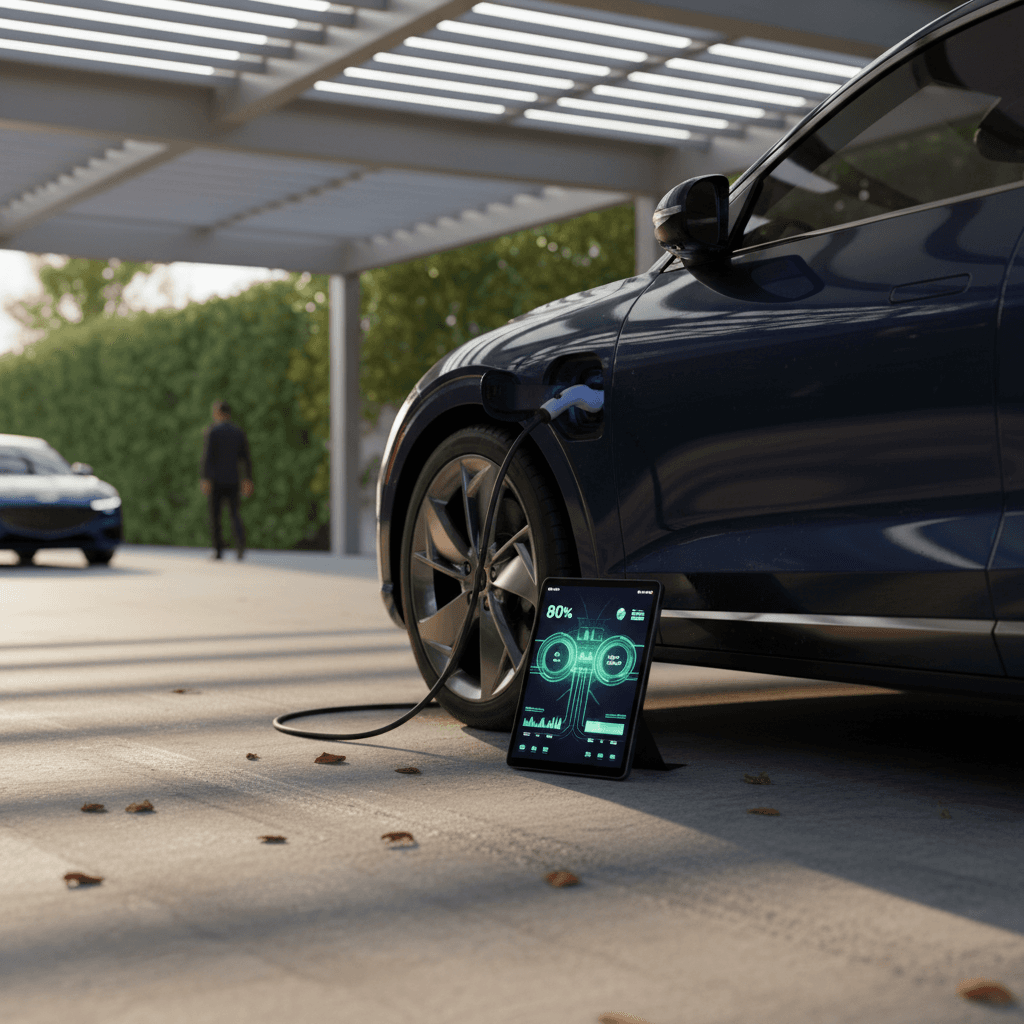
If you own or are considering a Genesis GV60, maximizing battery life isn’t just about squeezing out a few extra miles of range. It’s about protecting a very expensive 77–84 kWh battery pack, preserving performance, and keeping your luxury EV feeling new well into six figures on the odometer. The good news: with a few smart charging, climate, and driving habits, your GV60’s battery should age gracefully.
Quick answer: how to maximize GV60 battery life
Why Genesis GV60 battery health matters
Three reasons to care about GV60 battery life
Battery health affects more than just the range estimate on your dash
Real-world range
Resale value
Peace of mind
Hyundai’s E-GMP platform, which underpins the Genesis GV60, Ioniq 5/6, and Kia EV6, has proven to be robust in real-world use, with many owners reporting very low degradation in the first several years. Still, your day-to-day behavior, how you charge, where you park, how you use fast charging, can shift you toward the “best case” or “worst case” end of that spectrum.
GV60 battery and E-GMP basics
Genesis GV60 battery at a glance
The GV60’s pack is a high-energy, liquid-cooled lithium-ion battery mounted low in the floor. It’s designed for quick DC charging and strong performance, but like any lithium-ion pack it’s sensitive to extreme state of charge (SoC) and heat. That’s why the same set of best practices you might hear for other EVs, staying away from 0% and 100% for daily use, avoiding heat, and not living on DC fast chargers, apply especially well here.
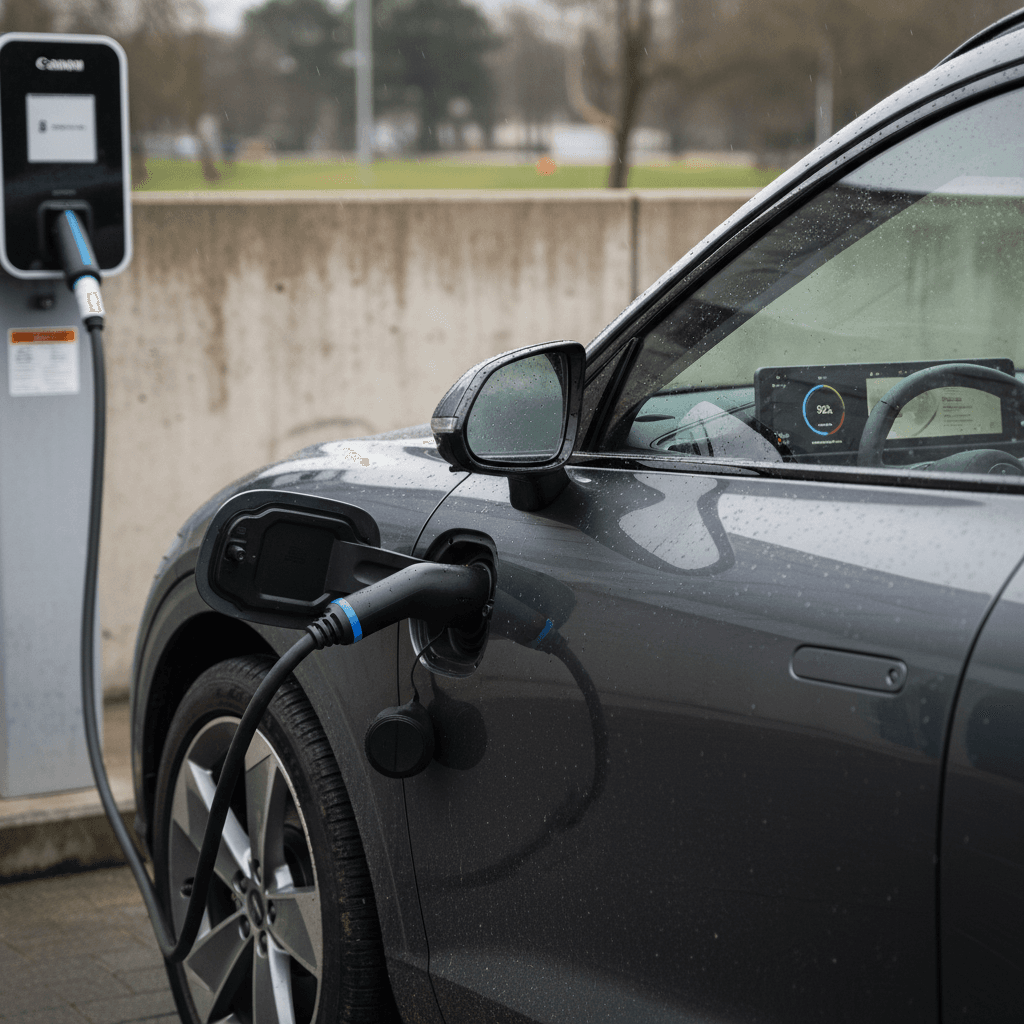
Daily charging: how to maximize GV60 battery life
Most battery wear happens slowly and quietly during daily use, not on the occasional road trip. If you get your everyday charging pattern right, you’ve already won half the battle for long-term GV60 battery health.
Healthy daily charging routine for your GV60
1. Aim for a 20–80% sweet spot
For typical commuting and errands, try to live mostly between about <strong>20–80% state of charge</strong>. You don’t have to be obsessive, occasionally going higher or lower is fine, but avoiding long stretches at 100% or near empty reduces stress on the cells.
2. Set a charge limit for home charging
Use your home EVSE or the GV60’s charging settings to <strong>cap routine charging at 80–90%</strong>. Bump it to 100% the night before a road trip if you need the range, then drive soon after instead of letting it sit full all day.
3. Prefer Level 2 over constant DC fast charging
Whenever possible, charge at home or work on <strong>Level 2 (240 V)</strong> instead of frequent DC fast charging. Level 2 is easier on the battery and usually cheaper, especially if you schedule it for off-peak utility rates.
4. Avoid deep discharges when you can
Running down to 0–5% occasionally won’t destroy the pack, but routinely arriving home nearly empty increases the number of full equivalent cycles. Plug in around <strong>15–25%</strong> when it’s convenient instead of regularly flirting with “, ” on the gauge.
5. Use scheduled charging to your advantage
If your utility offers off-peak rates, set a <strong>delayed charging schedule</strong> so the GV60 finishes charging just before you depart. That minimizes time spent at a high state of charge, which the battery likes, and saves you money.
Home charging pro tip
Using DC fast charging wisely in your GV60
One of the GV60’s killer features is its 800 V fast-charging capability, which can take you from 10–80% in roughly 18 minutes under ideal conditions. That doesn’t mean you should fast charge every day, but it does mean road trips don’t have to be slow.
- Save DC fast charging primarily for road trips, emergencies, or when you truly need a quick turnaround.
- When planning a long drive, think in terms of 10–70% or 15–80% hops instead of always hammering the car from 5–100%. The middle of the pack charges fastest and is gentler on the cells.
- If the station or weather is very hot, consider stopping the charge a bit earlier (say, at 70–80%) instead of squeezing out those last few slower percent.
- Don’t worry if you fast charge more on a cross-country trip, that’s what the system is built for. Just go back to your gentler Level 2 habits once you’re home.
Fast charging and heat
Climate control and preconditioning tips
Temperature is a big factor in both range and long-term health. The GV60’s heat pump and thermal management help, but your habits still matter, especially in very hot or cold climates.
Smart climate habits for GV60 owners
Use comfort features without abusing the battery
Cold weather tips
- Precondition while plugged in: On winter mornings, warm the cabin and battery while the car is still on the charger so energy comes from the grid, not the pack.
- Expect lower range temporarily in freezing temps; that’s normal and not permanent degradation.
- Keep the car in a garage when possible to reduce cold soak.
Hot weather tips
- Avoid leaving the GV60 parked in full sun for hours at high SoC; if you can, park in the shade or a garage.
- If you’ll be parked for a long time on a very hot day, it’s kinder to the battery to leave it at 40–60% than at 100%.
- Use the cabin preconditioning or remote climate features while plugged in on especially hot days before you drive.
Avoid this battery stress scenario
Driving habits that protect battery and range
The way you drive your GV60 affects not only efficiency today but also how hard the battery has to work over thousands of cycles. You bought a quick luxury EV; you should enjoy it. But a few small changes can add up in your favor.
- Use the Eco or Normal drive mode for routine driving; save Sport for fun stretches. Heavy acceleration and high speeds draw large currents from the pack, which adds heat and wear.
- Take advantage of regenerative braking. Using regen paddles to slow down smoothly recaptures energy and reduces mechanical brake use.
- On the highway, be realistic. Driving at 80–85 mph will noticeably cut range compared to 65–70 mph in any EV, GV60 included.
- Avoid constant short, aggressive bursts, like launching hard from every light and then braking sharply. That seesaws power in and out of the battery and isn’t great for efficiency or comfort.
Range-friendly GV60 driving recipe
Making the most of GV60-specific battery features
The GV60 rides on Hyundai’s E-GMP platform, so it inherits some clever battery-related software and hardware features. Used well, these can both improve range and reduce long-term stress.
Battery preconditioning for fast charging
Many E-GMP models, including the GV60, can precondition the battery before a DC fast charge when you use the built-in navigation to route to a supported high-power station. Warming or cooling the pack into its preferred temperature window helps maintain fast charge speeds and can be easier on the cells.
When planning a trip, set the charger as your destination in the car’s nav rather than just using a phone app alone. That way the car knows to prep the battery on the way in.
Vehicle-to-Load (V2L) without overdoing it
The GV60’s Vehicle-to-Load (V2L) feature is fantastic for camping, tailgating, or powering tools, but it does add cycles to the pack. A few practical guidelines:
- Keep SoC in a comfortable band (for example 30–80%) when using V2L for hours.
- Avoid running the battery extremely low purely to power external devices.
- Don’t combine high V2L loads with extreme temperatures for long periods.
Occasional V2L use won’t hurt a healthy GV60 pack; just treat it like any other significant discharge.
Use software updates to your advantage
Storage, road trips, and long-term battery care
Life doesn’t always fit into the “daily commute” box. Maybe you’re flying out for a few weeks, parking at a vacation home for the season, or taking a multi-day road trip. A few simple principles will keep your GV60’s battery happy in these edge cases.
GV60 battery care scenarios and best practices
How to treat your GV60’s battery in common real-world situations
| Scenario | Best SoC Target | Key Tips |
|---|---|---|
| Parking for 3–7 days | 40–60% | Park in shade or garage, avoid leaving at 100%, check that all accessories are off. |
| Parking for 1–3 months | 40–50% | If possible, leave unplugged in a temperate garage; avoid extreme heat and cold. |
| Overnight at an airport | 50–70% | Don’t top to 100% just to sit; leave margin for vampire drain but avoid extremes. |
| Road trip with frequent DC fast charging | 10–70% or 15–80% | Plan shorter hops, start charges earlier instead of arriving nearly empty, and give the car a Level 2 “rest day” if you’re on a very long tour. |
| Winter road trip | 20–90% | Use preconditioning while plugged in, expect slower charging in deep cold, and be conservative with range buffers. |
Use these rules of thumb to avoid both low and high state-of-charge stress during unusual usage patterns.
What about the 12 V battery?
Signs of battery issues in a Genesis GV60
Most GV60 owners will never see dramatic battery problems, gradual range loss over many years is normal. Still, it’s helpful to know what counts as a red flag versus normal aging or weather effects.
- Noticeably reduced range that doesn’t track with weather: If your car suddenly seems to lose a chunk of range in mild conditions, it’s worth having a dealer check it out.
- Big left–right differences in displayed cell/module voltages (if shown via service tools) can indicate an imbalance that deserves attention.
- Repeatedly slow DC fast charging in moderate weather, even at many different stations, may point to an issue with the battery or thermal management rather than the charger.
- Warning messages or reduced-power ("turtle") modes appearing well above 0% SoC are the car’s way of telling you it’s not happy, don’t ignore them.
Don’t self-diagnose serious issues
Used Genesis GV60 battery checklist
If you’re shopping for a used Genesis GV60, battery health should be high on your list, especially as more early E-GMP vehicles reach the second-hand market. The goal isn’t to chase a perfect number so much as to avoid outliers and understand how the car was used.
What to look at on a used GV60’s battery
1. Odometer and usage pattern
Ask how the car was used. A GV60 that did mostly <strong>suburban commuting with home Level 2</strong> is often a safer bet than one that lived on DC fast chargers as a rideshare vehicle.
2. Visible range at common SoC points
On a full charge and at, say, 80%, note the <strong>estimated range</strong> in mild weather. Compare it to period EPA values as a sanity check, keeping in mind that wheels, tires, and driving history matter too.
3. Charging history, if available
Some service records or connected services can hint at how often the car fast-charged versus using AC. You don’t need zero DC charging, but constant high-power use over years can accelerate wear.
4. Software, recalls, and service campaigns
Confirm that important <strong>software updates and service campaigns</strong>, especially those related to charging and the 12 V system, have been completed. This helps ensure the pack has been managed properly.
5. Independent battery health insight
Where possible, use a <strong>third-party battery health report</strong> or marketplace that measures real pack condition. On Recharged, every EV listing comes with a <strong>Recharged Score Report</strong> that summarizes battery health versus similar vehicles, so you’re not buying blind.
How Recharged helps with GV60 battery confidence
Ready to find your next EV?
Browse VehiclesGenesis GV60 battery life FAQ
Frequently asked questions about GV60 battery life
Key takeaways for maximizing GV60 battery life
The Genesis GV60 gives you cutting-edge charging speeds, a refined cabin, and the proven E-GMP battery platform. To keep that package feeling fresh for years, focus on the fundamentals: moderate states of charge for day-to-day use, Level 2 charging as your default, smart use of DC fast charging, and a bit of care around heat and cold. None of this should make the car harder to live with, in fact, once your routine is set, it fades into the background.
If you’re shopping used, don’t let battery anxiety scare you away from a GV60. Look for a clean charging and service history, sensible real-world range, and independent battery insight where possible. On Recharged, every EV listing comes with a Recharged Score Report, financing and trade-in support, and EV-specialist guidance so you can compare battery health and value across models with confidence. Treat the battery well, choose carefully, and your GV60 should be an exceptionally capable electric companion for the long haul.