If you’re cross-shopping the Genesis GV60 with gas SUVs or other EVs, **charging cost per mile** is one of the most useful numbers you can look at. It tells you, in plain dollars and cents, what it costs to actually drive the GV60 every day, at home and on public chargers.
Key takeaway
Genesis GV60 charging cost per mile: quick overview
Typical Genesis GV60 charging cost per mile (U.S. 2026)
Those ranges are **averages**, not guarantees. Your actual **Genesis GV60 charging cost per mile** will depend on your local electricity price, trim (Standard vs. Performance), weather, and how often you rely on public fast charging.
GV60 efficiency and battery basics
To figure out charging cost per mile, you need two ingredients: **how efficient the GV60 is** and **what you pay per kWh**. Let’s start with the vehicle itself.
- The Genesis GV60 uses a **77.4–84 kWh battery pack** depending on model year and market, built on Hyundai’s E‑GMP platform with 800‑V architecture.
- EPA‑rated combined efficiency for recent U.S. GV60 models lands around **112 MPGe**, which translates to roughly **3.3–3.6 miles per kWh** in official testing.
- Independent tests and owner reports commonly show **about 3.0–3.4 mi/kWh** in mixed real‑world driving, sometimes better in mild weather, lower in winter or at high speeds.
Quick formula you’ll use
Home charging: GV60 cost per mile with today’s electricity rates
Most GV60 owners will do the bulk of their charging at home. In 2025–2026, the **average U.S. residential electricity rate** is hovering around **$0.17–$0.19 per kWh**, with some states well below that and others pushing past $0.25. For simple math, we’ll use **$0.17, $0.20, and $0.25 per kWh** as common scenarios and assume **3.2 mi/kWh** as a realistic combined efficiency for a GV60.
Estimated Genesis GV60 home charging cost per mile
Assumes 3.2 miles per kWh real‑world efficiency.
| Home electricity price (per kWh) | Effective mi/kWh (GV60) | Estimated cost per mile | Approx. cost per 1,000 miles |
|---|---|---|---|
| $0.14 (cheaper-than-average state) | 3.2 mi/kWh | $0.04/mi | $40 |
| $0.17 (near recent U.S. average) | 3.2 mi/kWh | $0.05–$0.06/mi | $53 |
| $0.20 (moderately high-cost state) | 3.2 mi/kWh | ≈$0.06/mi | $62 |
| $0.25 (high-cost coastal city) | 3.2 mi/kWh | ≈$0.08/mi | $78 |
| $0.30 (very expensive electricity) | 3.2 mi/kWh | ≈$0.09/mi | $93 |
Your actual cost will vary with weather, speed, tire choice, and how often you precondition the cabin.
If your driving is mostly **suburban, 40–60 mph, mild weather**, you may sit closer to **3.5 mi/kWh**, which nudges your **GV60 charging cost per mile** even lower. At 3.5 mi/kWh and $0.17/kWh, you’re at roughly **$0.05 per mile**.
Don’t forget fixed fees
Public and fast charging: what a mile really costs
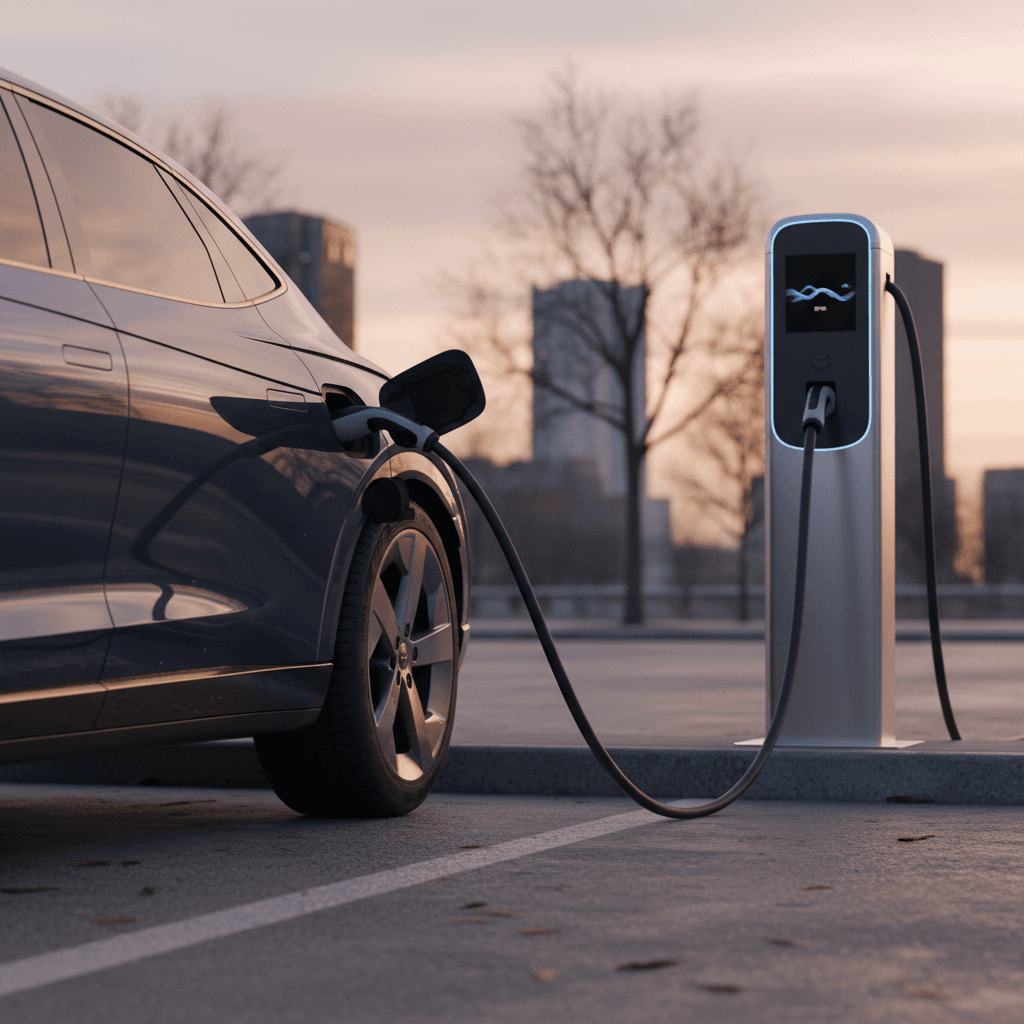
On road trips or for apartment dwellers, a big share of charging may happen on public stations. That pushes **Genesis GV60 charging cost per mile** upward because public networks charge more than your utility, especially for DC fast charging.
- Many Level 2 public chargers cost roughly **$0.20–$0.35 per kWh**, sometimes plus session or parking fees.
- DC fast chargers from major networks commonly range from about **$0.35–$0.55 per kWh**, depending on location, time of day, and membership discounts.
- Some stations bill **per minute** instead of per kWh, which means cost per mile varies with how quickly your GV60 is actually charging.
Let’s again assume **3.0–3.2 mi/kWh** (a bit lower because highway driving and fast‑charging sessions are less efficient).
Genesis GV60 cost per mile on public chargers
Approximate costs using realistic public charging price ranges and slightly lower road-trip efficiency.
| Charger type & price | Assumed efficiency | Estimated cost per mile | Approx. cost per 1,000 miles |
|---|---|---|---|
| Public Level 2 at $0.25/kWh | 3.2 mi/kWh | ≈$0.08/mi | $78 |
| Public Level 2 at $0.35/kWh | 3.1 mi/kWh | ≈$0.11/mi | $110 |
| DC fast at $0.40/kWh | 3.0 mi/kWh | ≈$0.13/mi | $133 |
| DC fast at $0.50/kWh | 3.0 mi/kWh | ≈$0.17/mi | $167 |
| DC fast at $0.55/kWh | 2.9 mi/kWh | ≈$0.18–$0.19/mi | $185–$190 |
For per‑minute DC pricing, your effective $/kWh can be higher if your GV60 is charging slowly due to a crowded site or cold battery.
What about free charging?
Genesis GV60 cost per mile vs. a gas SUV
To put **Genesis GV60 charging cost per mile** into context, compare it with a similar gasoline compact luxury SUV. Many competitors sit around **22–26 mpg combined** on regular or premium fuel.
Gas SUV example
- Fuel economy: 24 mpg combined
- Gas price: $3.50/gal (national averages often move between $3–$4)
- Fuel cost per mile: $3.50 ÷ 24 ≈ $0.15/mi
- 1,000 miles of driving: about $150 in fuel
Genesis GV60 example
- Efficiency: 3.2 mi/kWh
- Home electricity: $0.17/kWh
- Charging cost per mile: $0.17 ÷ 3.2 ≈ $0.05–$0.06/mi
- 1,000 miles of driving: around $50–$60 in electricity
Even if you spend **half your miles on DC fast charging** at $0.40/kWh and half at home at $0.17/kWh, your **blended GV60 charging cost per mile** still typically lands around **$0.08–$0.11**, usually below what you’d pay in fuel for a comparable gas SUV.
Where EVs really shine
Real-world GV60 cost-per-mile examples for different drivers
Let’s run through a few realistic scenarios. Use them as templates and plug in your own miles and electricity prices.
Sample Genesis GV60 ownership scenarios
From short‑hop commuters to frequent road‑trippers, cost per mile shifts with where and how you charge.
City commuter
Profile: 30‑mile round‑trip commute, mostly city/suburban driving, 10,000 miles per year.
- Home electricity: $0.17/kWh
- Efficiency: ~3.4 mi/kWh (stop‑and‑go is good for EVs)
- Cost per mile: ≈ $0.05/mi
- Annual charging cost: roughly $500
Suburban family driver
Profile: Mix of school runs, errands, and weekend trips, 12,000–15,000 miles per year.
- 80% home at $0.18/kWh, 20% DC fast at $0.40/kWh
- Blended electricity price: ≈ $0.22/kWh
- Efficiency: ~3.1 mi/kWh
- Cost per mile: ≈ $0.07/mi
- Annual charging cost: about $840–$1,050
Frequent road‑tripper
Profile: Regular highway trips, 18,000 miles per year, heavier use of fast charging.
- 50% home at $0.17/kWh, 50% DC at $0.45/kWh
- Blended electricity price: ≈ $0.31/kWh
- Efficiency: ~2.9 mi/kWh (highway speeds)
- Cost per mile: ≈ $0.11/mi
- Annual charging cost: around $1,980
Track your actual numbers
7 ways to lower your GV60 charging cost per mile
Practical tips to bring your GV60’s cost per mile down
1. Hunt for cheaper electricity plans
If you live in a deregulated market, compare electric suppliers and **time‑of‑use (TOU) plans**. Charging your GV60 overnight on off‑peak rates can drop your effective cost per mile by several cents.
2. Use scheduled charging and preconditioning
Set the GV60 or your wallbox to charge when rates are lowest, and precondition the cabin while plugged in. That reduces energy used while driving and keeps your **mi/kWh** higher, especially in winter.
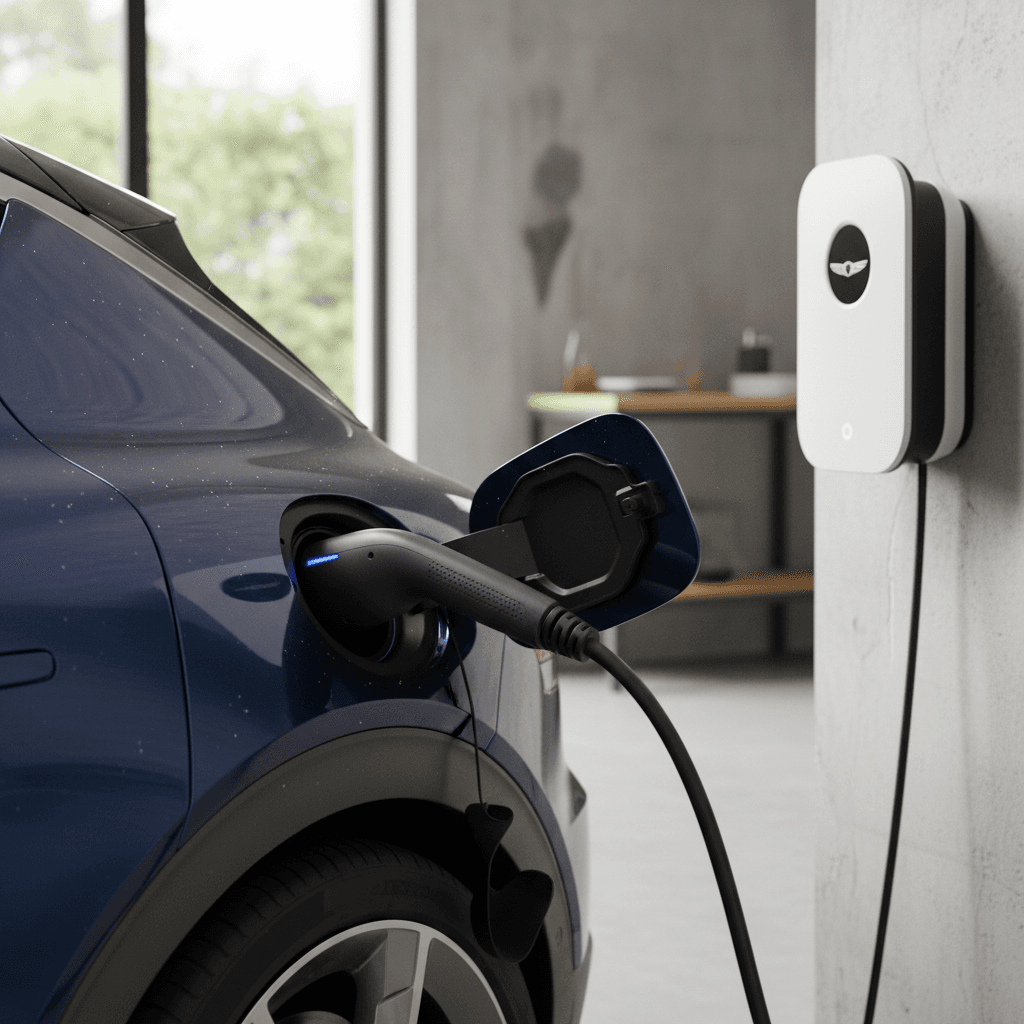
3. Install (or share) a home Level 2 charger
Level 1 trickle charging works, but a **proper 240‑V Level 2 setup** is more convenient and often more efficient. Just make sure any electrical work is done by a qualified electrician.
4. Drive smoother and slightly slower
EVs are extremely sensitive to speed. Backing down from 80 mph to 70 mph on the highway and avoiding hard launches can boost efficiency by 10–20%, directly lowering $/mile.
5. Favor free or low‑cost Level 2 when possible
Check apps for lower‑cost or free charging at workplaces, hotels, and retail centers. Even a few free sessions a month can noticeably cut your average **Genesis GV60 charging cost per mile**.
6. Mind tire pressure and wheel choices
Under‑inflated tires and heavy, oversized wheels hit your efficiency. Keep tires at recommended pressure and know that performance‑oriented setups can trim a bit off your **mi/kWh**.
7. Plan fast‑charge stops smartly
Because DC fast charging is pricey, use it mainly to **bridge gaps on road trips** instead of topping up daily. Stopping when your battery is low and unplugging around 70–80% often gets you the most miles per dollar and per minute.
Be cautious with per‑minute pricing
Battery health, range, and cost per mile on a used GV60
If you’re considering a **used Genesis GV60**, it’s natural to wonder how battery health and degradation affect cost per mile. The short answer: as long as the pack is healthy and the car’s efficiency is intact, your **charging cost per mile** doesn’t suddenly skyrocket with age.
What changes over time
- Usable battery capacity can slowly decline, trimming peak range.
- You might stop to charge a bit more often on road trips.
- If you rely heavily on fast charging, efficiency can dip slightly in harsh conditions.
What usually doesn’t
- Your **electricity price per kWh** and **mi/kWh** in daily driving generally remain similar.
- Even with some degradation, the GV60 stays far more efficient than a comparable gas SUV.
- Cost per mile tends to stay in the same ballpark, while total usable miles per full charge decline modestly.
How Recharged can help with a used GV60
If you’re browsing pre‑owned GV60s, pairing those battery insights with the cost‑per‑mile math in this guide gives you a much clearer picture of real‑world ownership costs than the window sticker alone.
FAQ: Genesis GV60 charging cost per mile
Frequently asked questions about GV60 charging costs
When you boil it down, the **Genesis GV60 charging cost per mile** is one of its strongest selling points. For most owners, home charging keeps energy costs far below what you’d spend on fuel in a similar gas SUV, and even frequent fast‑charging road‑trippers often come out ahead. If you’re weighing a new or used GV60, take a few minutes to run your own numbers with your local electricity prices, and if you’re shopping pre‑owned, pair that math with a **battery health report** like the Recharged Score so you know exactly what to expect from your GV60 over the long haul.