If you’re car shopping in 2025, you’re not choosing a car so much as choosing a fuel and hardware ecosystem. The headline question, gas vs electric cars: pros and cons, is really about how you spend money, where you spend time, and what you value when you drive.
The decision has never been closer
How to Think About Gas vs Electric Cars
Forget the tribal shouting match of “EVs rule” vs “long live V8s.” For most drivers, this decision comes down to a few practical axes: upfront price, running costs, convenience, driving experience, and resale value. You don’t need to be an engineer. You just need a clear view of the trade‑offs.
Where gas cars still shine
- Lower purchase prices and more choices under $25k.
- Refueling in 5 minutes almost anywhere.
- Better fit if you can’t install home charging.
- Simpler road trips in remote regions.
Where electric cars are ahead
- Much lower fuel and maintenance costs per mile.
- Instant torque, quiet cabins, and smooth driving.
- Far lower lifetime emissions, especially in cities.
- Great for commuters with driveway or garage parking.
Gas vs Electric Cars: Pros and Cons at a Glance
Pros and Cons Summary
High‑level strengths and weaknesses of gas and electric cars.
| Gas Cars | Electric Cars | |
|---|---|---|
| Upfront price | Usually cheaper, huge used supply | Higher new prices, used prices dropping |
| Fuel & running costs | Fuel and maintenance cost more per mile | Electricity usually 2–3x cheaper per mile, less maintenance |
| Range & refueling | Long range, 5‑minute refuel almost anywhere | Good daily range, charging can be slower and location‑dependent |
| Home convenience | No special setup, but frequent gas stops | Plug in at home, wake up full; tricky without off‑street parking |
| Performance & noise | Wide range, from basic to high‑performance | Instant torque, very smooth and quiet |
| Emissions | Higher tailpipe and lifetime emissions | Lower lifetime emissions, especially on cleaner grids |
| Reliability & repairs | Many shops can fix, parts are cheap but frequent | Fewer moving parts, less maintenance but some repairs costly |
| Resale value | More predictable, slower tech obsolescence | Improving but still volatile; battery health matters |
Use this as a jumping‑off point, then dig into the sections that matter most to you.
Upfront Price, Incentives, and Financing
Right now, gas cars win on sticker price. A new gasoline compact or small SUV in the U.S. commonly starts in the low‑ to mid‑$20,000s, while comparable new EVs tend to start closer to the low‑$30,000s and climb quickly. On average, new EVs still cost several thousand dollars more than similar gas cars, even after years of price cuts and competition.
Mind the incentive cliff
Price factors that tilt gas vs electric
Sticker price is only the opening bid in a long financial relationship.
Purchase price
Financing & insurance
Incentives & rebates
Why many shoppers go used EV instead
Running Costs: Fuel and Maintenance
The biggest everyday difference between gas vs electric cars is how they burn (or don’t burn) money once you’re on the road. Here, EVs have structural advantages that are hard for combustion to match.
Typical 2025 running‑cost realities
Fuel: gas station vs wall outlet
With a typical gas sedan at around 30 MPG and U.S. gas averaging a bit over $3 per gallon, you’re spending roughly 10–12¢ per mile on fuel. An average EV getting 3–4 miles per kWh and paying around 15–18¢/kWh is more like 4–6¢ per mile.
If you drive a lot and can charge cheaply at home, those pennies add up to four‑figure annual savings. If you drive very little or rely heavily on pricey DC fast charging, the advantage shrinks.
Maintenance: fewer moving parts, fewer headaches
Internal‑combustion cars are a festival of moving parts: pistons, valves, timing chains, fuel pumps, exhaust systems. They demand regular oil changes, tune‑ups, and fluid services.
EVs skip most of that. No engine oil, no spark plugs, no multi‑speed transmission. You’re mainly paying for tires, cabin filters, and the occasional brake service, often 40–60% less in maintenance costs over several years.
The EV repair curveball
Range, Charging, and Everyday Convenience
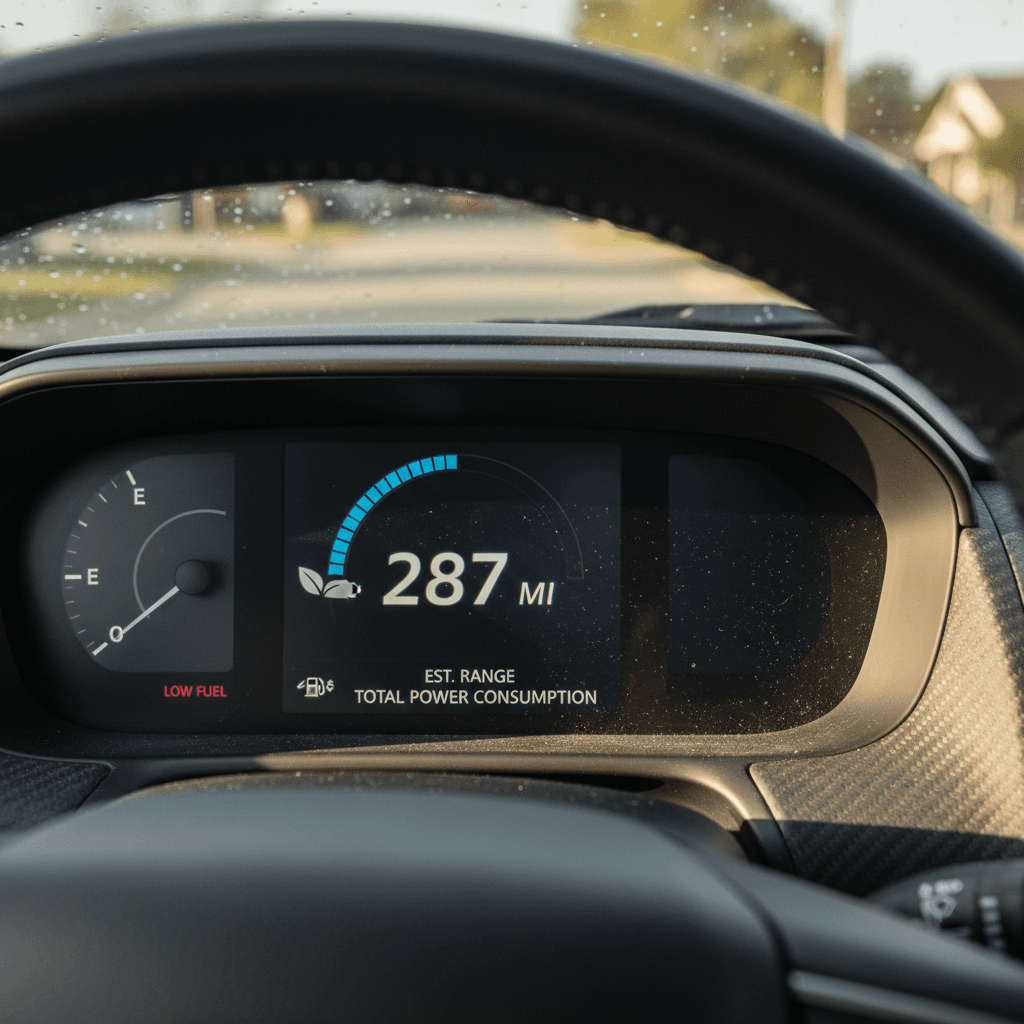
Ask 10 EV skeptics for their top concern and you’ll hear the same phrase: range anxiety. Gas cars have conditioned us to believe 400 miles of range and 5‑minute refuels are normal. Anything less feels like deprivation, even if most people rarely drive more than 40–50 miles a day.
- Typical gas car: 350–500 miles of range, 5 minutes to refuel almost anywhere.
- Typical mainstream EV: 220–320 miles of rated range, 20–40 minutes to fast‑charge from low to around 80% on a good DC fast charger.
- Daily reality: Many EV owners simply plug in at home a few nights a week and rarely think about public chargers except on road trips.
When gas is more convenient
- You live in an apartment or street‑park and can’t add reliable home charging.
- You take frequent long road trips through rural areas with sparse charging.
- Your winters are brutal and you’re not ready to plan around reduced EV range in the cold.
- You want to refuel anywhere, anytime, without thinking about networks or apps.
When electric is more convenient
- You have a driveway or garage and can install at least a Level 2 charger.
- Your driving is mostly commuting, school runs, and errands under 70 miles a day.
- You’d rather plug in while you sleep than stand in the wind at a fuel pump.
- You drive in cities where chargers are now as common as coffee shops.
Try your commute on “hard mode”
Performance, Driving Feel, and Noise
On performance, electric cars are like smartphones: deceptively quiet until you tap the accelerator and discover the whole world just sped up. Even humdrum family EVs feel quick around town thanks to instant torque and single‑gear transmissions.
How gas and electric cars feel from the driver’s seat
Numbers matter, but the everyday sensations matter more.
Off‑the‑line punch
Noise & refinement
Character & engagement
The first time you floor a modern EV, your inner skeptic usually shuts up before the front tires do.
Emissions and Environmental Impact
The environmental ledger is one place where the pros and cons of electric cars vs gas skew heavily toward electric, provided you zoom out to the full life cycle, not just the tailpipe (or lack of one).
- Building an EV, especially its battery, is more carbon‑intensive than building a gas car.
- Once on the road, EVs emit no tailpipe pollution, which matters a lot in dense cities and around schools.
- Even on a relatively dirty grid, most EVs “work off” their higher manufacturing emissions after tens of thousands of miles and then pull ahead over the rest of their life.
- As grids add more wind, solar, and nuclear power, the lifetime emissions advantage of EVs keeps widening.
Local air quality vs global emissions
Reliability, Battery Life, and Resale Value
EV fans sometimes talk like electric cars never break. That’s wishful thinking. The truth is more nuanced: EVs typically have fewer things to service, but when something does go wrong, especially in the high‑voltage system, the bill can be eye‑watering and not every shop can handle it.
Battery longevity: the big question mark
Modern EV batteries are aging far better than the early skeptics predicted, often losing only a couple percent of capacity per year. Most manufacturers back them with 8–10‑year warranties on the pack.
That said, battery health is the single biggest swing factor in used EV value. A pack that’s been fast‑charged constantly or baked in extreme heat will age faster than one babied in a temperate climate.
Resale: who holds value better?
Gas cars benefit from familiarity: every buyer understands them, every shop can service them. Their resale curves are boring but predictable.
EV resale is more volatile. Fast tech updates and shifting incentives can hammer values, but that’s also why shoppers are finding surprisingly affordable used EVs. The key is buying one with verified battery health rather than guessing from a dash‑display range estimate.
Never buy a used EV blind
Who Should Choose Gas vs Electric?
Gas vs electric: best fits by lifestyle
Pick the description that sounds most like your actual life, not your dream road‑trip Instagram feed.
You’re better off with a gas car if…
- You can’t reliably charge at home or work.
- You drive unpredictable long distances in areas with sparse charging.
- You replace cars infrequently and want something simple almost any mechanic can work on.
- You’re shopping on a tight budget and need the most metal for the least money right now.
You’re better off with an EV if…
- You have a driveway or garage and can install home charging.
- You drive mostly local miles and rack up at least 8,000–10,000 miles per year.
- You care about quiet, smooth acceleration and lower emissions.
- You’re comfortable trading some road‑trip spontaneity for big savings on fuel and maintenance.
How a Used EV Changes the Equation
New EVs still ask you to pay a premium and recoup it slowly on the back end. Used EVs flip that script. Thanks to faster depreciation and earlier incentives, a three‑ to five‑year‑old electric car can cost roughly what a similar‑age gas car does, sometimes less, while still delivering low running costs.
Where Recharged fits in
Ready to find your next EV?
Browse VehiclesChecklist: Is a used EV right for you?
1. You can charge at home or reliably nearby
Without a convenient charging plan, you’ll never see the full benefit of lower fuel costs. Confirm you can install a Level 2 charger or have access to dependable local infrastructure.
2. Your daily driving fits within typical EV range
Look at your real daily mileage, not the one epic road trip. If most days are under 80–100 miles, even modest‑range used EVs can work beautifully.
3. You’re comfortable with tech and apps
Living with an EV means using apps for charging, trip planning, and sometimes even preconditioning the cabin. If that sounds fun instead of annoying, you’re in the right demographic.
4. You insist on verified battery health
Only consider used EVs that come with a battery‑health report, like the Recharged Score. Guessing based on the dashboard range readout is gambling with your money.
FAQ: Gas vs Electric Cars Pros and Cons
Frequently Asked Questions
The Bottom Line: Match the Drivetrain to Your Life
There’s no single verdict in the gas vs electric cars pros and cons debate; there’s only the right answer for your budget, driving pattern, and tolerance for new tech. Gas cars still dominate on upfront price and do‑anything, go‑anywhere simplicity. EVs increasingly dominate on running costs, refinement, and emissions, but they ask more from your home setup and planning brain.
If your daily driving is predictable and you can charge at home, an EV, especially a carefully chosen used one, can feel like unlocking a cheat code for commuting. If your life is all road trips, remote towns, and street parking, a gas car may still be the saner choice for now. And if you’re EV‑curious but cautious, that’s exactly the middle lane Recharged is built for: helping you test the electric waters with expert guidance, verified battery health, flexible financing, and nationwide delivery when you’re ready.