If you’ve shopped for an electric car lately, especially a brand‑new one, you’ve probably heard the hard sell on gap insurance. With EVs known for steep early depreciation and long loan terms, it’s fair to ask: is gap insurance for an electric car really worth it, or just another add‑on you’ll never use?
Quick answer
What is gap insurance for an electric car?
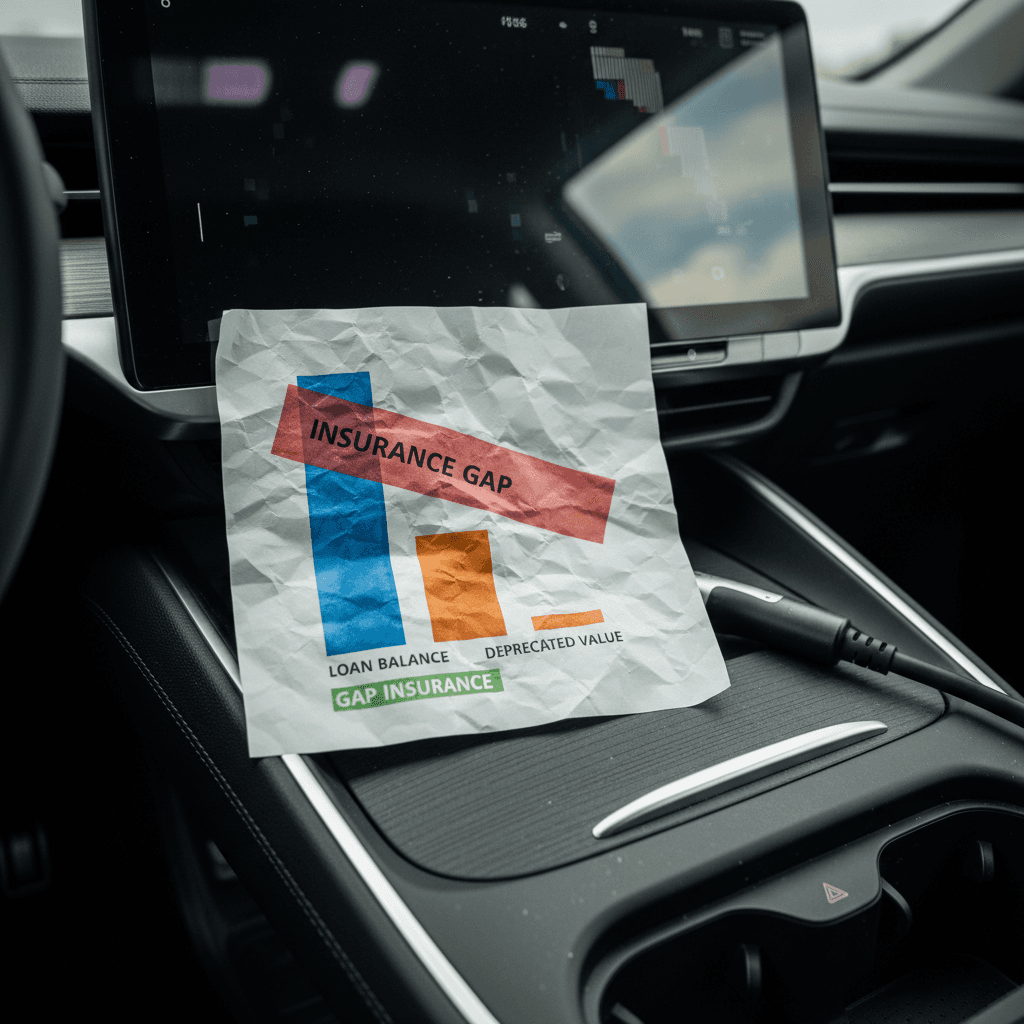
Gap (Guaranteed Asset Protection) insurance kicks in if your EV is **declared a total loss**, after a crash, theft, fire, or flood, and your regular auto policy payout isn’t enough to pay off your loan or lease. Your insurer pays the vehicle’s actual cash value (what it’s worth today), and gap coverage can pay the difference between that amount and what you still owe on your contract.
Without gap insurance
- You owe $42,000 on your EV loan.
- Your EV is totaled; insurer says its value is $35,000.
- They send $35,000 to your lender.
- You still owe $7,000 on a car you no longer have.
With gap insurance
- Same scenario: you owe $42,000, car is worth $35,000.
- Auto insurer pays $35,000 to the lender.
- Gap policy pays the $7,000 difference (sometimes plus your deductible).
- Your loan is cleared, and you start fresh with no leftover balance.
What gap usually doesn’t cover
Why gap insurance comes up more with EVs
Gap coverage isn’t unique to electric cars, but several EV‑specific trends make the risk of being upside‑down higher in the first few years of ownership:
Key reasons EV owners consider gap insurance
It’s not just price, it’s how EV values move in the first 3 years.
Faster early depreciation
Battery drives total‑loss math
Long, low‑APR loans
Recent EV depreciation snapshots
Why this matters for gap
When gap insurance for an electric car is worth it
Don’t think of gap insurance as an automatic must‑buy. Think of it as protection for a specific window of time when your loan balance is higher than your EV’s market value. Here’s where it tends to make real sense.
Scenarios where EV gap insurance is usually worth it
1. You put little or nothing down
If you financed taxes, fees, and maybe a protection package on a $50,000+ EV with less than 10% down, you’re likely upside‑down for at least the first 2–3 years. Gap coverage can plug a big hole if you have a total loss in that period.
2. You took a 72–84‑month loan
Stretching a high‑dollar EV over 6–7 years keeps payments low but slows principal paydown. The longer the term, the more months you’re at risk of owing more than the car is worth.
3. You’re leasing a new EV
Most leases already build gap coverage into the contract, because leasing companies know how fast values can move. If your lease includes gap, and many do, you’re covered for the difference between the insurer’s payout and the lease payoff.
4. Your EV model is known for steep depreciation
Some early‑generation EVs and low‑range models have dropped faster than the market average. If you’re financing one new, or rolling negative equity into it, separate gap protection is often cheap insurance against a sudden total loss.
5. You’d struggle to write a big check after a loss
If a surprise $5,000–$10,000 bill would blow up your budget, gap coverage can be a safety valve. You’re protecting not just the loan, but your <strong>savings and credit</strong>.
Rule of thumb
When gap insurance might not be worth it
There are plenty of situations where gap insurance adds cost without much benefit, even with electric cars. The key is whether you’ll spend much time **right‑side‑up vs. upside‑down** on your loan.
- You’re buying a reasonably priced **used EV** with a solid discount from original MSRP and financing for 48–60 months.
- You’re putting **20% or more down** on a new EV, or trading in with positive equity that acts like a large down payment.
- You have a **short loan term** (36–48 months) and plan to keep mileage moderate.
- You could comfortably pay a few thousand dollars out of pocket without derailing your finances.
- You’re in the last couple of years of the loan and your payoff is already close to, or below, the car’s resale value.
Do the quick equity check
Gap insurance costs: how much should you pay?
Pricing varies by insurer and state, but there are clear patterns in how gap insurance is sold, and where EV owners tend to overpay.
Common ways to buy gap insurance for an EV
What you’ll pay and what to watch out for.
| Where you buy | How it’s charged | Typical cost range | Pros | Cons |
|---|---|---|---|---|
| Auto dealer/finance office | One‑time fee rolled into loan | $500–$1,200+ | Easy to add during purchase; may cover long terms | Often most expensive; you pay interest on the fee; hard to cancel or get a fair refund |
| Your auto insurer | Added to your policy premium | About $5–$20/month on top of full coverage, when offered | Usually cheapest; easy to remove once you have equity | Not all insurers offer gap; some cap coverage at a % of vehicle value |
| Your EV lender or credit union | Monthly or small one‑time fee | Varies, often between insurer and dealer pricing | Can be tailored to your exact payoff; easy for them to confirm balance | May be limited to new loans; coverage rules vary |
Dealer gap is convenient but often the most expensive option. Checking your insurer or lender first can save hundreds.
Watch the real cost
Lease vs. loan: how gap works on electric cars
Leased and financed EVs both face depreciation risk, but the way gap protection is handled is very different, and a lot of confusion starts right there.
Leasing an EV
- Most mainstream EV leases include gap automatically in the contract, because the leasing company owns the car and wants its payoff covered.
- You may see a line item for “GAP” or “Total Loss Protection” in the lease disclosures, or it may be wrapped into the money factor.
- If your leased EV is totaled, gap usually covers the difference between the insurer’s payout and the lease payoff, so you can walk away clean.
Action: Before buying add‑on gap at the dealership, ask to see whether **gap is already built into your lease**.
Financing an EV (loan)
- Gap is almost never automatic, you decide whether to buy it from the dealer, lender, or your insurer.
- Loan contracts with tiny down payments, long terms, or rolled‑in negative equity are the ones that most benefit from gap.
- You can usually **cancel gap** if you refinance, sell, or build enough equity, but refunds from dealer‑sold products can be slow or partial.
Action: If you’re taking out a long‑term loan on a pricey EV, price gap through your **insurance company and lender** before accepting the dealer’s offer.
Check for built‑in gap on leases
New vs. used EVs: does gap insurance still make sense?
From a risk standpoint, new and used EVs behave very differently. That changes the gap conversation.
Gap insurance on new vs. used electric cars
Where the risk window is widest, and where it’s already passed.
Brand‑new or nearly new EV
- Highest upfront price and steepest early depreciation.
- Buyers often finance taxes, fees, and add‑ons.
- More likely to be upside‑down in years 1–3.
Gap often makes sense here, especially with long loans or minimal down.
3–7‑year‑old used EV
- Previous owner already absorbed the worst depreciation.
- Purchase price is closer to long‑term resale value.
- Shorter loans and bigger down payments are more common on used EVs.
Gap is more optional, but can still help if you borrow heavily relative to the car’s price.
At Recharged, for example, our inventory consists of used electric vehicles that have already gone through the sharpest part of the depreciation curve. Each one comes with a Recharged Score battery and value report, so you can see how its battery health, mileage, and history line up against current market pricing before you finance. That transparency can reduce how upside‑down you become, and how long you’d even need gap coverage.
How to check if you already have gap insurance
Before you buy anything, confirm whether you’re already covered. With EVs, it’s common for shoppers to discover they have gap from more than one place.
Quick audit: do you already have gap coverage?
1. Review your finance or lease contract
Look for line items labeled **GAP**, **Guaranteed Asset Protection**, **Total Loss Protection**, or **Loan/Lease Payoff**. These usually indicate a built‑in product covering the difference between your loan/lease balance and the insurer’s payout.
2. Call your auto insurer
Ask directly: “Does my policy include loan/lease payoff or gap coverage for my EV?” Some insurers automatically include modest gap on new vehicles, or offer it as a cheap add‑on you may have already accepted.
3. Ask your lender or credit union
If you financed through a bank, credit union, or captive finance arm, ask whether you added gap protection at signing. It may appear in your welcome packet or online account under “add‑on products.”
4. Check for multiple policies
If you leased through a captive finance company and also added gap via your insurer or dealer, you may be paying for **duplicate coverage**. In most cases you only need one gap product.
Step-by-step: should you buy gap for your EV?
You don’t need to be a finance pro to make a smart call on gap insurance. Walk through this simple process with your specific electric car in mind.
Decision roadmap: is gap insurance for your electric car worth it?
If you’re buying or just bought a new EV
Calculate how much you’re financing relative to MSRP, after trade‑in and down payment.
If you financed **more than 90% of the purchase price** or took a **72+ month loan**, assume you’ll be upside‑down for a while.
Get gap quotes from your **insurer and lender**, not just the dealer.
If coverage is affordable (for example, a few dollars a month) and your budget is tight, carry gap for at least the **first 3–4 years**.
Re‑evaluate once your loan balance is close to your EV’s trade‑in value, then consider canceling.
If you’re financing a used EV
Compare the purchase price to similar listings and trade‑in values to see how much “air” is in the deal.
If you’re putting down 10–20% and financing for 60 months or less, your upside‑down window is likely short.
Consider gap if you’re borrowing close to the full price or rolling in negative equity from another vehicle.
Keep an eye on depreciation trends for your specific model; some older EVs still move sharply with policy or incentive changes.
Once your payoff is at or below expected trade‑in value, you can safely skip or drop gap.
Leverage used‑EV pricing
How Recharged helps you manage EV risk without overpaying
Gap insurance is one way to protect yourself from the financial shock of a total loss. Another is to make sure you’re not wildly overpaying for the car, or its condition, on day one. That’s where Recharged comes in.
- Every EV we sell comes with a Recharged Score Report showing verified battery health, pricing vs. market, and condition details.
- Transparent pricing and depreciation‑aware valuations help you avoid starting your loan deep underwater.
- If you’re trading in or getting an instant offer on your current EV, we’ll show how your equity affects the new deal, so you know whether gap even makes sense.
- Our EV‑specialist team can walk through payment options, including loan terms and down payments, to reduce your overall risk before you ever shop for insurance.
Finance smarter, insure smarter
Ready to find your next EV?
Browse VehiclesGap insurance for EVs: FAQ
Common questions about gap insurance for electric cars
So, is gap insurance for an electric car worth it? If you’re financing a pricey new EV with little money down over a long term, the answer is usually yes, at least for the first stretch of ownership when depreciation outpaces your payoff. If you’re buying a fairly priced used EV, putting real money down, and choosing a reasonable term, gap becomes a more optional layer of protection. The key is to do the math on your own situation, avoid overpaying at the dealership, and pair smart insurance decisions with a smart purchase. That’s exactly the combination Recharged is built to help you find.