Fully electric vehicles are no longer niche science projects, they’re becoming the default choice for a lot of drivers. If you’re EV‑curious but still have questions about range, charging, battery life, or whether a used electric car is a smart buy, you’re in the right place. This guide walks you through how fully electric vehicles work, what they really cost to own, and how to choose one with confidence.
Quick definition
What is a fully electric vehicle?
A fully electric vehicle, technically a battery electric vehicle (BEV), uses an onboard battery pack and one or more electric motors for all of its propulsion. There’s no internal combustion engine, no fuel tank, and no exhaust system, just a charging port, battery, power electronics, and motors doing all the work.
- Runs exclusively on electricity stored in a high‑voltage battery
- Charges by plugging into the grid (home, workplace, or public charger)
- Has zero tailpipe emissions because there is no tailpipe
- Uses regenerative braking to recapture energy when you slow down
Terminology you’ll see
Fully electric vs hybrid and plug‑in hybrid
A lot of the confusion comes from the alphabet soup of HEV, PHEV, and BEV. Here’s how fully electric vehicles differ from the rest.
How fully electric vehicles compare to other electrified cars
Same idea, less gasoline. But the details matter when you choose what to drive.
Fully electric (BEV)
- Energy source: Battery only
- Fuel: Electricity
- Emissions: Zero tailpipe
- Best for: Daily driving, commuters, most road trips with planning
Hybrid (HEV)
- Energy source: Gas + small battery
- Fuel: Gasoline
- Charging: No plug; battery charges from engine/regeneration
- Best for: Maximizing MPG without changing fueling habits
Plug‑in hybrid (PHEV)
- Energy source: Battery + gas engine
- Fuel: Electricity + gasoline
- Range: 20–50 miles electric, then behaves like a hybrid
- Best for: Short electric commutes with gas backup
Watch the fine print
How fully electric vehicles work
Under the skin, fully electric vehicles are mechanically simpler than gas cars. The complexity shifts from thousands of moving engine parts to software, power electronics, and the battery pack.
Core components of a fully electric vehicle
High‑voltage battery pack
This is the EV’s fuel tank, stacks of lithium‑ion (or newer chemistries) cells that store energy. Capacity is measured in kilowatt‑hours (kWh), like the size of a phone battery scaled up thousands of times.
Electric motor(s)
One or more motors drive the wheels directly. They deliver instant torque, which is why fully electric vehicles feel quick off the line even if they’re not “performance” models.
Inverter and power electronics
These convert the battery’s DC power into the AC power many motors use and control how much power the motor gets at any moment.
Onboard charger
When you plug into AC power at home or work, the onboard charger converts AC to DC and feeds it into the battery at a controlled rate.
Thermal management system
A mix of cooling and heating circuits keeps the battery and motors in the right temperature range for performance and longevity.
Regenerative braking
When you lift off the accelerator, the motor acts as a generator, slowing the car and sending energy back into the battery instead of wasting it as heat.
Why EVs feel different to drive
Charging a fully electric vehicle
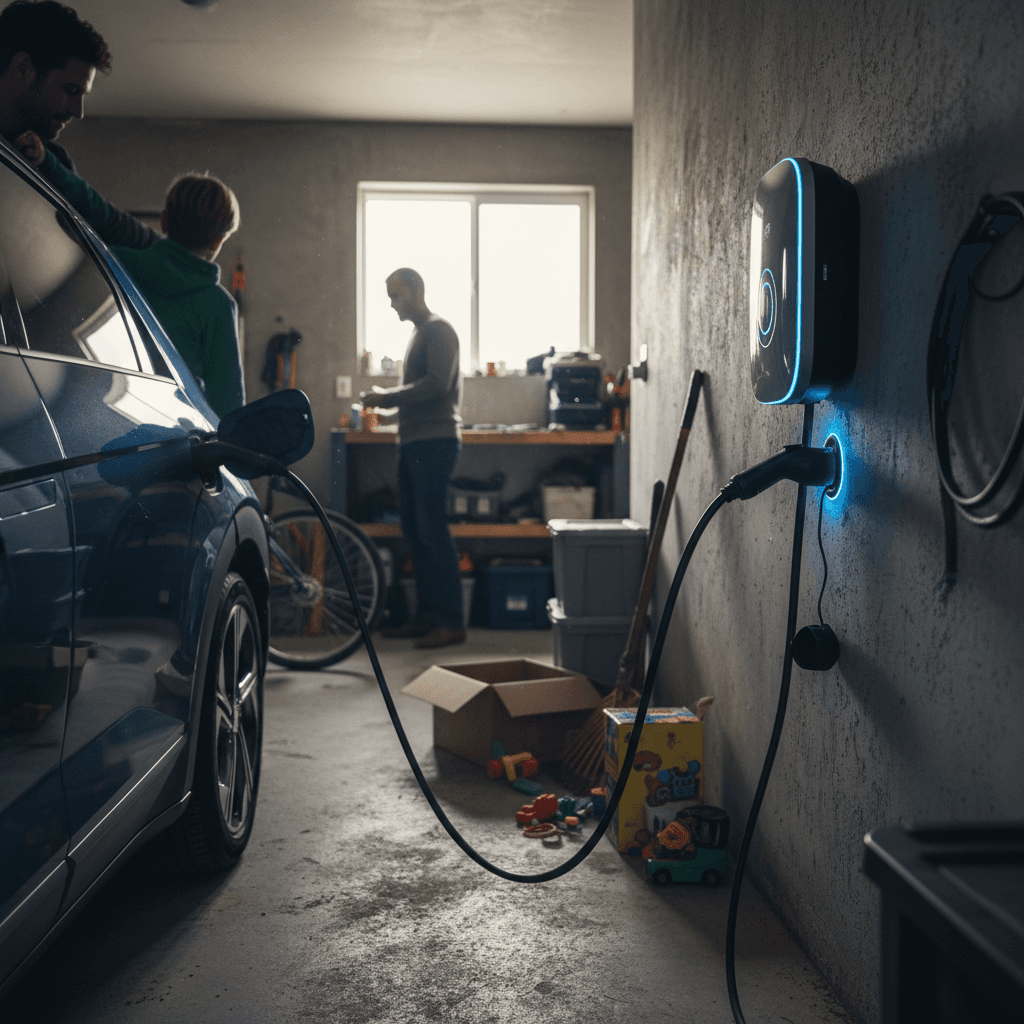
Charging is where the ownership experience of fully electric vehicles diverges most from gas cars. Instead of occasional fill‑ups at a station, you typically “refuel” at home overnight and use public chargers when you’re adding a lot of miles in a short time.
Charging options for fully electric vehicles
Three main ways to charge, from slowest to fastest.
| Charging type | Common name | Power source | Typical speed | Best for |
|---|---|---|---|---|
| Level 1 | Standard outlet | 120V household outlet | 3–5 miles of range per hour | Occasional top‑ups, very low‑mileage drivers |
| Level 2 | Home or workplace charger | 240V circuit (like an electric dryer) | 20–40 miles of range per hour | Daily home charging, overnight refills |
| DC fast charging | Public fast charger | High‑power DC (50–350 kW) | Up to ~180 miles in 20–30 minutes for many modern EVs | Road trips, quick top‑ups en route |
Actual charging speeds depend on your vehicle’s max charging rate, battery size, temperature, and the specific charger you use.
Home charging is the game‑changer
Don’t have a garage or dedicated parking? Fully electric vehicles can still work, many drivers rely on workplace charging, public Level 2 stations at grocery stores and parking garages, or DC fast charging hubs. The trade‑off is you’ll spend more time planning where and when to charge, especially on busy travel days.
Range and real‑world driving
Range anxiety, the fear of running out of charge, is real, but it tends to fade once you live with a fully electric vehicle. Most modern BEVs in the U.S. today are rated somewhere between about 150 and 350 miles of EPA range, with outliers on both ends.
Range in the context of everyday driving
Real‑world range varies with speed, weather, terrain, and how you drive. High speeds and cold temperatures reduce range; moderate speeds and city driving often stretch it. Over time, you’ll learn your own car’s “personal” range in different conditions and plan accordingly.
Cold weather caveat
Costs of owning a fully electric vehicle
Sticker price is only part of the story. Fully electric vehicles often cost more up front than comparable gas cars, especially new, but they tend to pay you back over time through lower fueling and maintenance costs.
Fuel and maintenance savings
- Electricity vs gas: In many states, driving on electricity is roughly like paying $1–$2 per gallon of gas, depending on local rates and when you charge.
- Less maintenance: No oil changes, fewer fluids, and far fewer moving parts. You’ll still need tires, cabin air filters, brake fluid, and occasional coolant service for the battery system.
- Brakes last longer: Regenerative braking means your physical brakes often last significantly longer than on gas cars.
Up‑front price and incentives
- Purchase prices: New EVs still tend to be several thousand dollars more than similar gas models, though used EV prices have become increasingly competitive.
- Federal incentives: As of late 2025, federal tax credits for buying new or used EVs have ended for vehicles purchased after September 30, 2025, but earlier purchases may still qualify at tax time.
- State and utility programs: Some states, cities, and utilities still offer rebates, discounted off‑peak charging, or home‑charger incentives, worth checking before you buy.
Think in total cost of ownership
Battery health and longevity
Battery life is the number‑one concern for many people considering a fully electric vehicle, especially on the used market. The good news: real‑world data from millions of EVs now on the road shows that most packs hold up well, with gradual capacity loss over many years rather than sudden failure.
- Most modern EV batteries are designed to last well over 100,000 miles, often 150,000–200,000+ miles with sensible use.
- Automakers typically warranty the battery for 8 years and around 100,000 miles (sometimes more) against excessive degradation.
- You’ll see range slowly decrease over time rather than “the battery dying” overnight, similar to a smartphone, just on a much longer timeline.
Habits that help your EV battery last
Why battery health matters most on used EVs
Buying a used fully electric vehicle
Used fully electric vehicles can be one of the best values in the market right now, if you know what you’re looking at. Early‑adopter depreciation, shifting incentives, and rapid model turnover mean you can often get a lot of technology and performance for the money.
Key steps when shopping for a used fully electric vehicle
1. Confirm it’s truly fully electric
Verify that the vehicle is a BEV, not a hybrid or plug‑in hybrid, if your goal is to drive gasoline‑free. Look for terms like “all‑electric,” “BEV,” or an obvious lack of fuel filler door.
2. Understand original range vs current range
Look up the original EPA range rating and compare it with what the car currently reports at 100% charge. A modest gap is normal; a huge gap may indicate heavy degradation or unusual use.
3. Get real battery health data
Whenever possible, rely on an independent battery health report rather than just the dash gauge. At Recharged, every vehicle includes a Recharged Score Report with verified battery diagnostics so you’re not guessing.
4. Review charging history and usage pattern
Frequent DC fast charging from very low state of charge or long periods left at 100% can accelerate wear. Sellers who can share charging habits, logs, or service records provide valuable context.
5. Inspect charging hardware and connectors
Check that the charge port, cables, and any included home charging equipment are in good condition and appropriate for your home setup.
6. Test drive with an eye on efficiency
During the test drive, pay attention to how many miles of indicated range you use versus miles driven. It’s a quick way to sanity‑check that the car’s range estimate feels realistic.
Why the used market is compelling
How Recharged helps you buy smarter
The hardest part of shopping for a used fully electric vehicle isn’t finding cars, it’s knowing which ones are actually good bets for the long haul. That’s where a more transparent, data‑driven approach matters.
What you get when you buy a used fully electric vehicle through Recharged
Less guesswork, more clarity from first click to delivery.
Recharged Score Report
Fair pricing and financing
EV‑specialist support & delivery
Ready to find your next EV?
Browse VehiclesYou can shop and complete your purchase entirely online, or visit Recharged’s Experience Center in Richmond, VA if you prefer to see vehicles in person before you commit.
Frequently asked questions about fully electric vehicles
Fully electric vehicles: common questions
The bottom line: Is a fully electric vehicle right for you?
Fully electric vehicles shift the ownership experience from gas stations to outlets, from oil changes to software updates, and from engine noise to quiet torque. For many drivers, especially those who can charge at home or work, they’re already the more convenient and lower‑cost option over the life of the vehicle.
The key is to match the car to your reality: your daily miles, climate, charging options, and budget. If you’re exploring the used market, focusing on battery health, realistic range, and charging compatibility will matter more than badge prestige or 0–60 times. That’s why Recharged centers every transaction around transparent battery diagnostics, fair market pricing, and EV‑savvy support from first search to delivery.
If you’re ready to see what’s possible, browse used fully electric vehicles, get a trade‑in offer, or pre‑qualify for financing with no impact to your credit. Owning an all‑electric car isn’t just about driving something new, it’s about choosing a system that finally aligns the economics of driving with where the technology is headed.