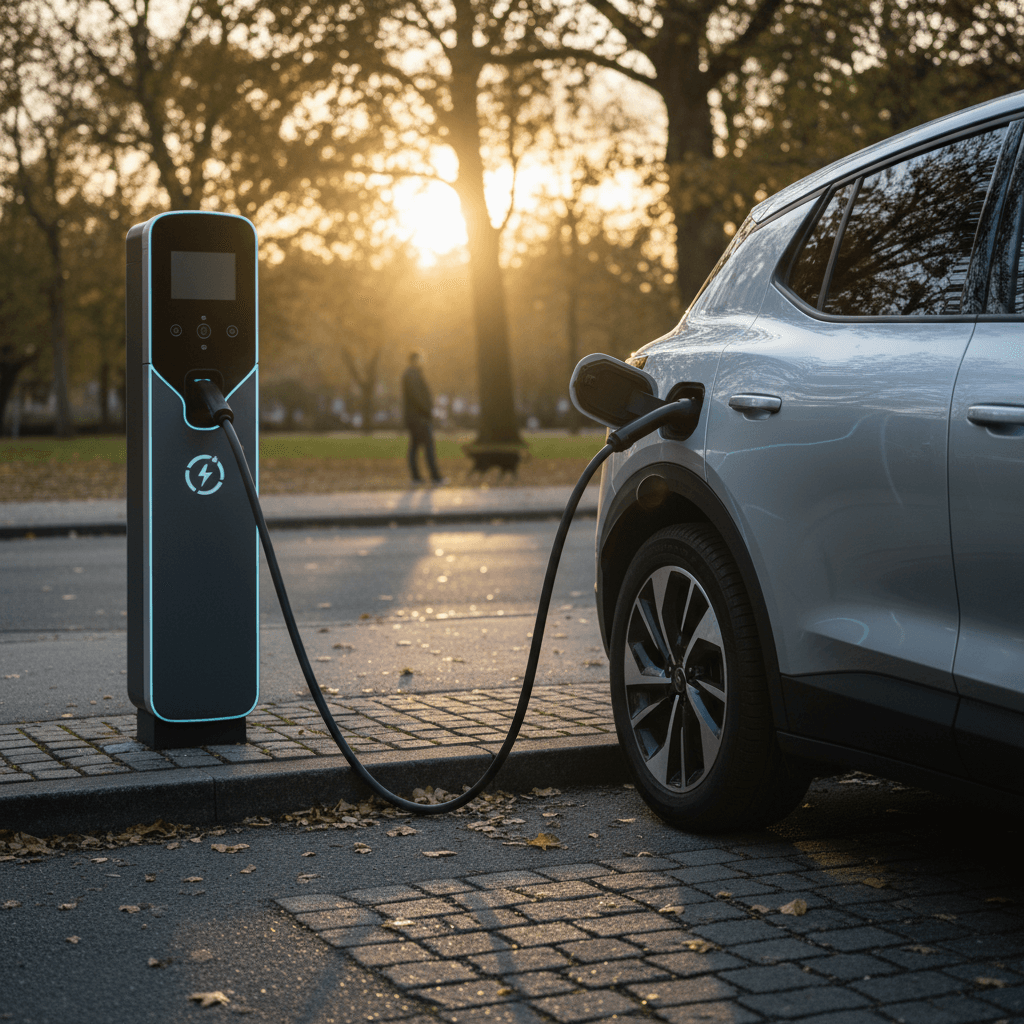
Type “free public EV charging near me” into your phone and you’ll get a blizzard of green pins, smiling apps, and promises of zero‑cost electrons. The reality on the ground is a lot messier: time limits, “guests only” rules, broken stations, and parking fees hiding behind that magic word, “free.” This guide walks you through where free charging actually exists in 2026, how to find it efficiently, and when it’s smarter to skip the freebie and just plug in at home.
Good news, bad news
Why free public EV charging exists in the first place
Before you hunt for free public charging near you, it helps to understand why anyone gives electricity away. Once you see the business model, you’ll immediately know which locations are likely to be free and which will quietly hit you with a per‑kWh or hourly fee.
The three business models behind “free” charging
Follow the money and you’ll find the outlets
You’re the customer magnet
Retailers, grocery stores, and malls use free Level 2 charging as a loss leader to keep you on‑site longer.
They don’t care about selling you electrons. They care that you buy a cart full of groceries while you charge.
You’re the employee perk
Companies install free workplace chargers to make commutes easier and hit sustainability targets.
The electricity bill is small compared with recruiting and retention costs, so they swallow it as a benefit.
You’re the policy win
Cities, utilities, and libraries offer free charging to promote EV adoption or revitalize downtowns.
Grants and pilot programs often cover the bill for a few years, then pricing may change.
Free is usually temporary
Where to find free public EV charging near you
If you drive an EV in the U.S., your best shot at free charging is not a mystery highway oasis, it’s the places you already spend time: work, shopping, school runs, libraries, and hotels. Here’s where to look first when you fire up your favorite charging app and filter for price = $0.
Common places to find free public EV charging
Use this as a mental checklist when you search around home, work, or your usual errands.
| Location type | How often it’s free | Typical speed | Common fine print |
|---|---|---|---|
| Libraries & municipal lots | Often | Level 2 | Time limits, hours match building, ticketing in busy downtowns |
| Workplaces | Often (employees only) | Level 2 | Badge access, parking permits, limited ports |
| Retail & grocery | Sometimes | Level 2 | Customers only, 1–2 hour limits, busy on weekends |
| Casinos & destination resorts | Sometimes | Level 2 or DC fast | Guests only, paid parking, resort fees |
| Hotels & motels | Sometimes | Level 2 | For guests, limited plugs, call ahead |
| Park‑and‑ride / transit hubs | Sometimes | Level 2 | Commuter time caps, permit requirements |
| Universities & campuses | Sometimes | Level 2 | Student/faculty permits, visitor zones only |
Availability and rules vary by city, host, and even individual parking lots, always confirm details in your app or by calling ahead.
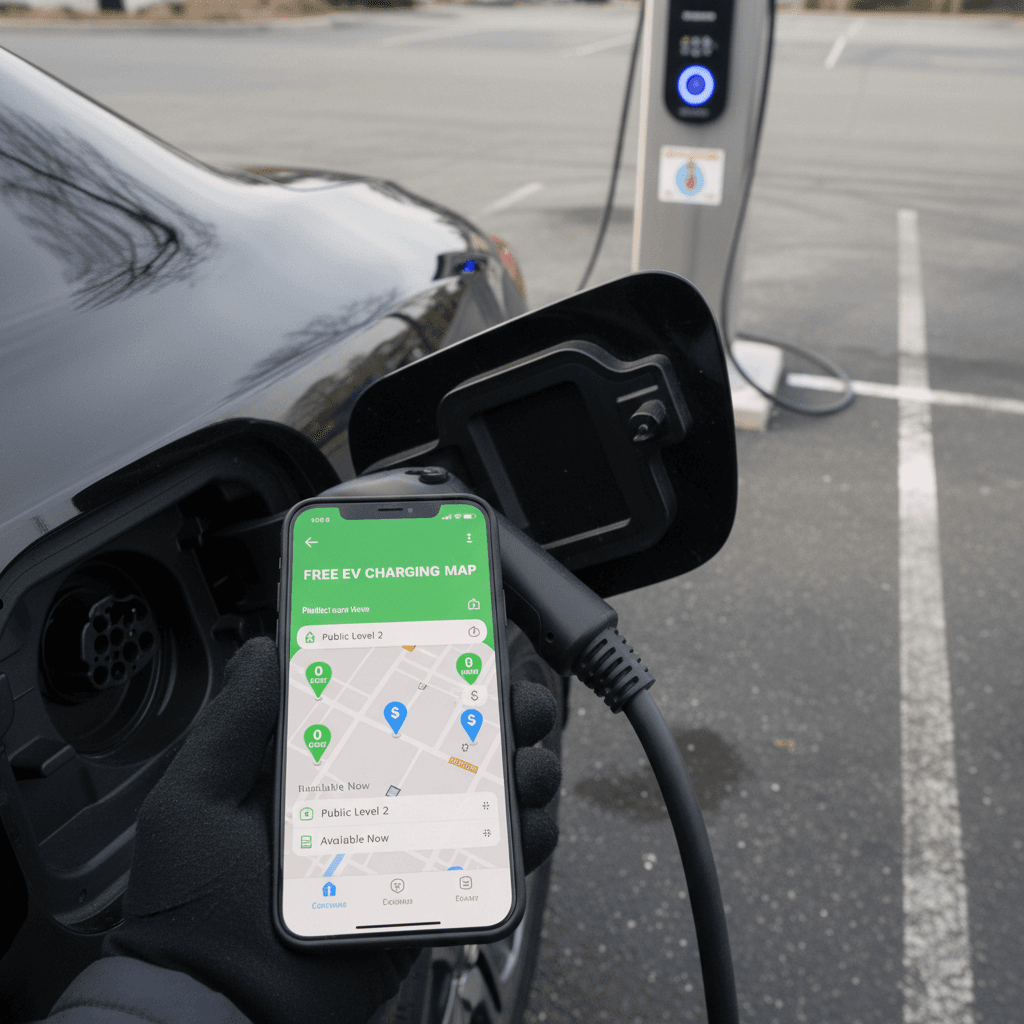
Start with your real life, not the map
Step-by-step: using apps to locate free chargers
Finding free public EV charging near you is mostly about mastering the filters in a few key apps. The stations are there; they’re just buried under a pile of paid chargers, broken plugs, and private networks.
Why apps matter more than ever
Go-to tools for finding free public EV charging
Use more than one, coverage and data quality vary by region
PlugShare
The EV world’s unofficial atlas. Lets you filter by connector type, charging speed, and cost (including free).
- Shows user check‑ins and photos
- Flags broken stations and policy changes
- Includes some shared home chargers
ChargeHub, ChargePoint & others
Network and aggregator apps often have reliable, real‑time status.
- Filter by price and plug type
- Start sessions in‑app where supported
- Watch for promos like “$0 session fees”
Google Maps & Apple Maps
Good as a quick sanity check, weaker on price filters.
- Search “EV charging” then tap stations
- Some show pricing and plug types
- Cross‑reference with PlugShare before you drive
Shortcut for U.S. drivers
What “free” really means: the fine print
With EV charging, "free" is rarely unconditional. You’re trading money for something else: your time, your attention, your parking flexibility. Understanding the usual strings attached will save you from nasty surprises and parking tickets.
Common catches at “free” chargers
- Time limits: 1–2 hour caps at grocery stores or Volta‑style advertising chargers.
- Guest‑only rules: Hotels, resorts, and casinos may tow or ticket non‑guests.
- Paid parking: Downtown garages may advertise free charging but charge $10–$30 for parking.
- Idle fees: Some stations add a per‑minute idle fee once your session ends to keep cars moving.
How to vet a “free” charger fast
- Check the pricing line in your app: look for $0.00/kWh or $0.00/hr and any notes about parking.
- Scroll for recent user comments mentioning pricing changes or new enforcement.
- Look up the host website (hotel, city garage, retailer) to confirm guest rules and parking rates.
- When in doubt, call the front desk, security desk, or customer service.
Don’t ignore idle fees
Is free public charging actually worth it versus home charging?
For most EV owners, especially in single‑family homes, cheap overnight home charging remains the backbone of their fueling strategy. Free public charging is the side quest, not the main story. The trick is knowing when it makes sense to chase the green pin and when you’re better off paying a fair rate for convenience.
Free public charging vs. home charging
Use this as a sanity check before you detour 15 minutes for a “free” plug.
| Scenario | Best option | Why |
|---|---|---|
| You have a Level 2 home charger and off‑peak rates | Charge at home | Overnight charging at $0.10–$0.20/kWh is cheap and effortless; free public charging rarely beats the convenience. |
| You live in an apartment with no guaranteed parking | Smart mix of free + paid public | Free Level 2 at work, gym, or grocery can cover a lot of miles; paid DC fast fills in the gaps. |
| You’re on a road trip | Paid DC fast, occasional free Level 2 | You’re buying time, not electrons. Use free chargers only if they’re on‑site where you’re already stopping. |
| You’re running low and the only free charger is a 20‑minute detour | Nearby paid charger | The extra miles and time often cost more than simply paying at a closer station. |
Think in terms of total cost, money, time, and stress, not just the per‑kWh rate.
Do the back‑of‑envelope math
Etiquette rules for using free EV chargers
Free charging doesn’t mean free‑for‑all. These stations are often the most coveted in the lot, and bad behavior can push hosts to start charging, or rip the stations out entirely. A little etiquette goes a long way toward keeping those kilowatts truly free.
Unofficial code of conduct at free public chargers
1. Don’t camp on the charger
Move your car promptly when you’ve added the energy you need, even if there’s no formal time limit. Free stations are community resources, not personal reserved parking.
2. Respect posted limits and signage
If the host asks you to limit sessions to 2 hours or 80% state of charge, play by the rules. Abuse is the fastest way to kill a free‑charging program.
3. Don’t unplug other vehicles without permission
Unless the station signage explicitly allows "courtesy unplugging" for fully charged cars, assume cables stay where their owners left them.
4. Park EVs only, plug in while parked
No "just parking" in charging spots without plugging in. These spaces are built for charging, not front‑row parking privileges.
5. Be honest in app reviews
If a station starts charging, mark it as paid. If policies get stricter, leave a clear, factual note. That honesty saves fellow drivers wasted trips.
Planning road trips around free charging
On road trips, free public EV charging is more like a pleasant surprise than a reliable backbone. You’re moving quickly, covering long distances, and your time is worth more than the electricity. Still, with a bit of planning, you can fold some zero‑cost stops into your route without turning the vacation into a scavenger hunt.
How to weave free charging into a paid-fast-charging road trip
Think of free stations as bonuses layered on top of a solid DC fast plan
Use free Level 2 where you’d stop anyway
Look for free Level 2 chargers at hotels, destination resorts, and downtowns where you were already planning a long meal or overnight stay.
If a hotel advertises free charging, call ahead to confirm plugs, power level, and whether you need to bring an adapter.
Anchor the route on fast chargers, not freebies
Build your route around reliable DC fast networks, then sprinkle in free stops as icing on the cake.
Aim to leave each fast‑charging stop with enough buffer that you don’t *need* the next freebie to make it to your destination.
Beware the cheap road-trip trap
How free charging fits into your overall EV ownership plan
Free public EV charging is like coupons: great when they align with what you were going to do anyway, not worth rearranging your life around. The smartest EV owners use it to shave the top off their charging costs, not to avoid paying for electricity entirely.
Two smart ways to work free charging into your routine
If you own a home or dedicated driveway
Install at least a basic Level 2 home charger or 240V outlet where possible; make overnight charging your default.
Use your utility’s time‑of‑use plan if available so home charging stays cheap, often cheaper than public rates.
Treat free public charging as a bonus when it’s in the same parking lot as errands you already have.
Skip long detours for free Level 2; your time and extra driving typically cost more than the power you save.
If you rely on public charging
Use PlugShare or similar apps to map 2–3 reliable free Level 2 spots near home, work, and your usual errands.
Identify 1–2 dependable paid DC fast hubs for “oh no” moments or road trips; save them as favorites.
Try to stack charging with existing stops, work, gym, groceries, so the clock on the charger matches something you’d be doing anyway.
Keep a simple weekly plan: for example, free charging at work 3 days a week + one paid fast‑charge session on Sunday.
How Recharged can help
Ready to find your next EV?
Browse VehiclesFree public EV charging: FAQ
Frequently asked questions about free public EV charging
Free public EV charging is a nice perk of the electric‑car era, not a substitute for a solid charging strategy. Use the apps, filters, and etiquette in this guide to build a small, reliable rotation of free or low‑cost spots that line up with the life you already live. And if you’re still shopping for the right EV, remember that the car you choose, its battery health, range, and charging speed, matters as much as the plugs on the map. That’s where tools like the Recharged Score and EV‑specialist support can turn a chaotic charging experience into something almost boring, in the best possible way.