If you drive an electric vehicle in the Puget Sound region, you’ve probably wondered how much **free EV charging Seattle, WA** really has, and whether you can cut your fuel bill to nearly zero. The short answer: yes, there **are** free or nearly free options, but you’ll need the right tools, realistic expectations, and a plan that fits how you actually drive.
Quick take
Why free EV charging matters in Seattle
Seattle drivers already enjoy relatively low electricity prices from **Seattle City Light**, but housing and parking realities complicate the picture. A big share of city residents live in apartments or older homes without easy access to home charging, so public stations, especially low-cost or free ones, play an outsized role. If you can regularly pair a solid used EV with occasional free workplace, curbside, or retail charging, you can push your running costs far below what a comparable gas car would cost.
EV charging landscape in and around Seattle
Types of free or low-cost EV charging in Seattle
Before you start hunting, it helps to understand the **categories** of free or cheap charging you’ll encounter in and around Seattle. Each has different rules, speeds, and trade‑offs.
Common ways Seattle drivers get “free” EV miles
Know what you’re plugging into before you plan around it.
Truly free Level 2 stations
Occasionally you’ll find public Level 2 stations set to a $0.00 session fee, often at libraries, parks, smaller municipal lots, or pilot projects. These are rare and may switch to paid at any time.
Retail & destination chargers
Grocery stores, hotels, and attractions sometimes offer Level 2 charging as a **guest amenity**. Charging might be free, but you’ll still pay for parking in garages or for your stay.
Workplace & private chargers
Large employers and some apartment or condo buildings offer free or heavily discounted charging for **tenants or employees only**. Great if you qualify, off‑limits if you don’t.
Level 1: 120V outlets
Occasionally you’ll see EV drivers using a regular 120‑volt outlet in a garage or at work. It’s technically “free” if the property is footing the bill, but charging is very slow, often just 3–5 miles of range per hour. Useful for topping up at work, not for road‑trip days.
Level 2: 240V public and curbside
Most of the free or low‑cost opportunities you’ll find in Seattle are **Level 2**, adding roughly 20–30 miles of range per hour depending on your car. They’re perfect for a workday or an evening at a restaurant, but you can’t treat them like a reserved parking spot, others want to use them too.
Check details before you assume it’s free
Best apps to find free EV charging in Seattle, WA
The single biggest mistake new EV drivers make is relying on their car’s built‑in navigation alone. Around Seattle, you’ll want a **stack of apps** that specialize in mapping chargers, filtering for free sites, and showing real‑time status.
Apps every Seattle EV driver should install
These apps make it much easier to spot free or low-cost charging, avoid broken stations, and plan errands around plug‑ins.
| App | What it’s best for in Seattle | Can filter for free charging? | Typical use |
|---|---|---|---|
| PlugShare | Crowdsourced map of almost every charger in the region, including comments from local drivers. | Yes – use price filters and community notes. | Trip planning, scouting new neighborhoods, checking reliability. |
| ChargePoint | Extensive presence at Seattle workplaces, garages, and some municipal sites. | Sometimes – look for $0.00 or sponsored sessions. | Daily driving, garage parking, checking real‑time availability. |
| EVgo / Electrify America | Fast charging on major corridors and near big retail centers. | Rarely – these are usually paid DC fast chargers. | Top‑off stops between Seattle, Tacoma, and Portland. |
| A Better Routeplanner (ABRP) | Planning longer trips when you’re not sure about range or terrain. | Not specifically, but you can prioritize slower/cheaper options. | Weekend getaways, first‑time long trips out of town. |
Pricing and features can change; always confirm in the app.
Pro tip: use PlugShare’s filters
Where to look for free EV charging around town
Free charging in Seattle is more about **patterns** than about one secret spot that never changes. Once you know where to look, you’ll start to see opportunities everywhere, from Queen Anne to West Seattle and the Eastside.
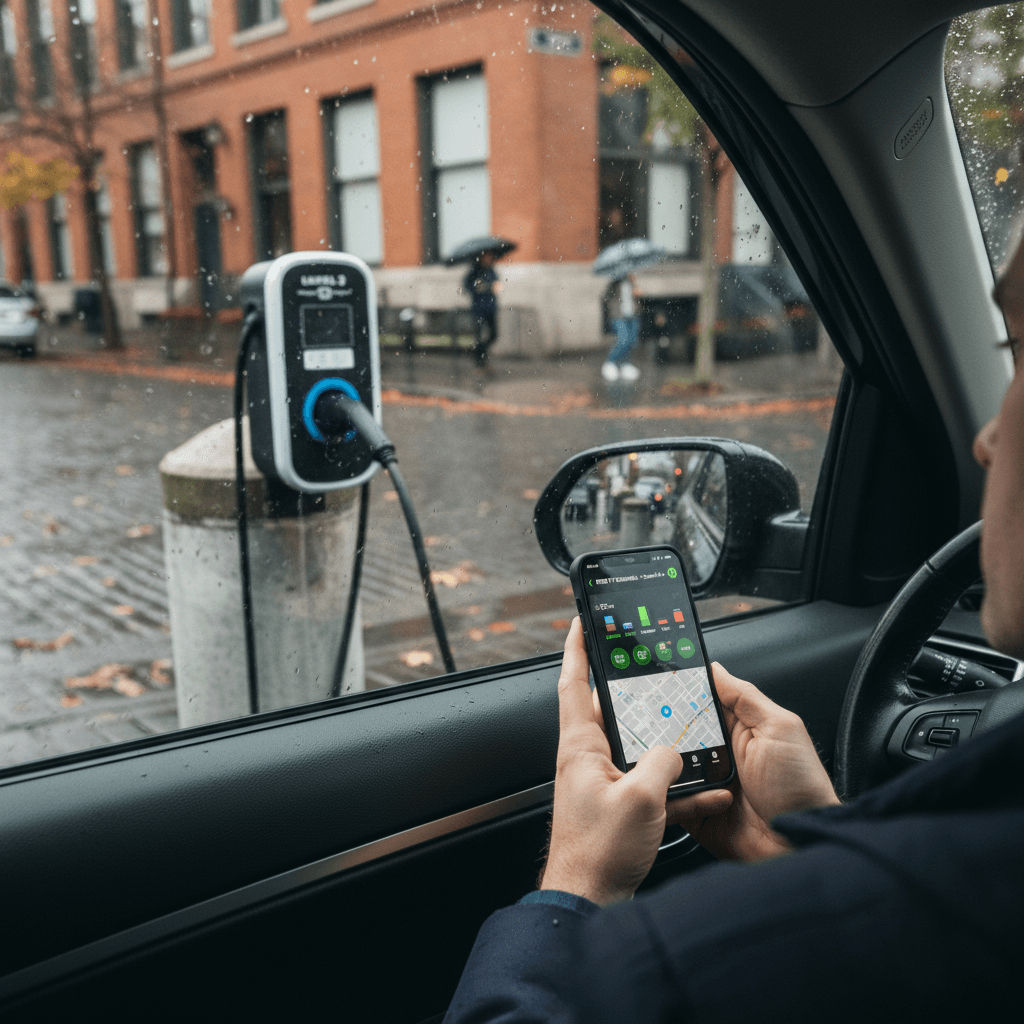
Typical places Seattle drivers snag free or nearly free charging
1. Grocery stores and big-box retail
Several Whole Foods, Fred Meyer, and other grocery locations around the metro have Level 2 chargers. Sometimes charging is free while you shop, limited to 1–2 hours. Others charge a modest per‑kWh rate but may be cheaper than downtown garages.
2. Malls and entertainment districts
Garages near major venues, like the Seattle Center area or stadium districts, may offer free charging but paid parking. Check rules carefully: some event garages shut down overnight or strictly limit charging to event hours.
3. City and neighborhood parking lots
Seattle and neighboring cities have been adding Level 2 chargers to public lots and park‑and‑ride locations. In a few cases the energy is free while the city evaluates usage, with standard parking rates applying normally.
4. Workplaces and office towers
If you work for a large employer in South Lake Union, downtown, or the U‑District, ask about employee charging. Many companies quietly offer **no‑fee Level 2** as a benefit, one of the most stable forms of free charging you can get.
5. Hotels and destination properties
Hotels near downtown, the waterfront, or the airport often promote EV charging as a guest perk. Some let you charge for free while you’re staying; others charge for parking but no extra fee for the electrons.
6. Suburban municipal lots and libraries
Smaller suburbs around Seattle sometimes install Level 2 chargers in civic centers, libraries, or park lots. These are occasionally free in the early years of a program, then switch to paid once usage ramps up.
Don’t rely on employer or hotel charging if you’re not authorized
How Seattle City Light curbside chargers fit in
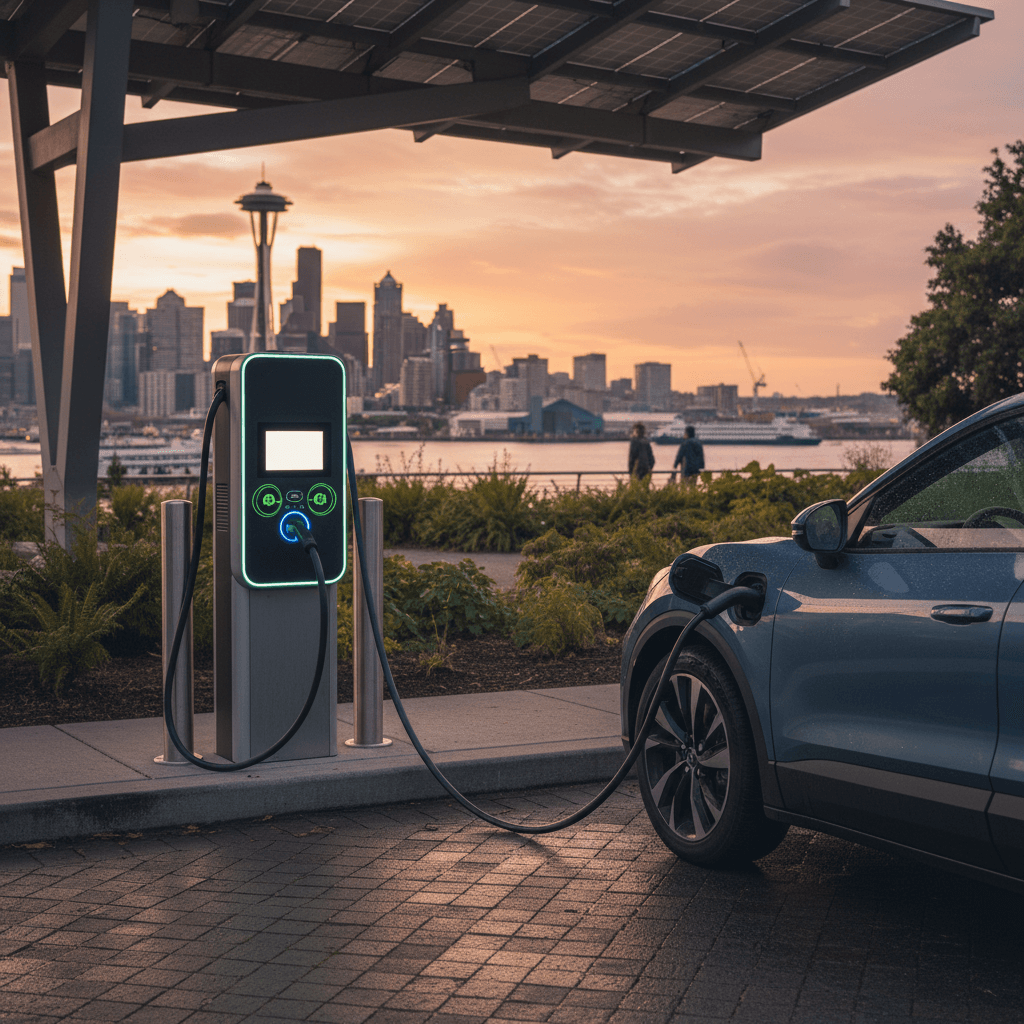
Seattle City Light has been rolling out a network of **curbside Level 2 chargers** in residential neighborhoods and business districts. They’re designed for drivers who can’t plug in at home, apartment dwellers, renters, and older homes without driveways.
These stations typically aren’t free, but they’re often **priced competitively** with home electricity once you factor in the lack of a service fee or monthly subscription. For many urban Seattleites, they’re the backbone of an affordable EV lifestyle, with occasional free charging at work or while shopping as a bonus.
What to expect from curbside Level 2
Smart strategies for using free charging without the hassle
Free EV charging can feel like a game: fun when you’re winning, frustrating when you’re circling full parking lots. A few habits will let you take advantage of free sessions without turning your life into a constant charger hunt.
Turn free charging into a consistent bonus, not a second job
Use these strategies to save money without wasting time.
Align charging with errands
Plan your grocery run, Costco trip, or dinner out around locations that offer free or inexpensive Level 2 charging. You’re there anyway, your car might as well sip electrons while you shop.
Charge from 20–70%, not 0–100
Your time is worth something. The middle of the battery fills fastest, so partial charges during errands are often more efficient than waiting for the last few slow percent.
Be a good charging neighbor
Move your car promptly when you’re done, especially at popular curbside or garage stations. It keeps the network flowing and reduces the risk of time‑based idle fees.
Checklist: How to make free charging work in Seattle
1. Confirm price before you plug in
Always check your app or the station screen to confirm it’s still free or discounted. Programs change quickly, and what was “free last month” might not be today.
2. Know your car’s charging limits
Your EV might only accept 6–7 kW on AC even if the station can do more. Understanding your max AC rate will help you estimate how long you need to occupy a spot.
3. Build a few “go‑to” locations
Instead of chasing every green pin on the map, pick a small set of reliable locations in your normal orbit, near home, work, and your usual grocery store.
4. Avoid planning around DC fast being free
Around Seattle, DC fast charging is usually paid. If you stumble on a free promotional session, treat it as a windfall, not part of your monthly budget.
5. Watch for time limits and overnight rules
Some garages and event venues offer free charging but forbid overnight stays or have strict closing times. Read posted rules carefully to avoid tickets or towing.
Beware of idle fees
Free vs. paid charging: What really pencils out in Seattle?
In a city with relatively low electric rates and high gas prices, you don’t need **all** of your charging to be free for an EV to make financial sense. The real question is how to **minimize your cost per mile** without making your life harder than driving a gas car.
Seattle driver with home charging
If you’re lucky enough to have a driveway or garage, a Level 2 home charger running on Seattle City Light power can make your energy cost equivalent to paying roughly **$1.00–$1.50 per gallon** of gasoline for many efficient EVs.
Add in occasional free top‑ups at work or while shopping and your effective cost per mile drops even further, without changing your routine very much.
Apartment dweller relying on public charging
If you can’t install home charging, you’ll mix curbside Level 2, workplace chargers, and occasional DC fast sessions. Your average “fuel” bill might end up similar to a very efficient hybrid, but still with far lower maintenance and a smoother drive.
In that scenario, free charging sessions here and there can be the difference between EV costs matching a hybrid and beating it by a comfortable margin.
Why you don’t need 100% free charging
How free charging fits with buying a used EV in Seattle
If you’re shopping for a used EV in the Seattle area, it’s tempting to assume you’ll live off free chargers and skip installing anything at home. In practice, the happiest owners usually do the opposite: they **treat free charging as a bonus**, not a lifeline, and focus first on the right car and a solid everyday charging plan.
Smart way to combine a used EV with Seattle’s free charging
Start with the car, then layer in free charging opportunities.
Prioritize battery health
On a used EV, a strong battery makes every free or cheap kilowatt go farther. With Recharged’s Score Report, you get verified battery health so you’re not guessing about hidden degradation.
Map your real routine
Before you buy, look at the chargers within a mile or two of your home and workplace. Can you reasonably plug in 2–3 times a week without major detours? If not, factor in curbside or future home charging upgrades.
Match range to your lifestyle
In Seattle’s hills and winter weather, a car that had 250 miles of EPA range new might feel more like 180–200 miles in real life. That’s still plenty if you can top up regularly on Level 2, free or not.
At Recharged, every used EV comes with a **Recharged Score battery health report**, transparent pricing, and the option for nationwide delivery or in‑person help at our Experience Center in Richmond, VA. That puts you in a position to make Seattle’s mix of free, curbside, and workplace charging work in your favor, without worrying that a weak battery will undermine the math.
Thinking about trading in or selling?
FAQ: Free EV charging in Seattle, WA
Common questions about free EV charging in Seattle
Bottom line on free EV charging in Seattle
Seattle is one of the better places in the country to own an EV, strong public‑charging build‑out, relatively low electric rates, and a growing mix of curbside and workplace chargers. **Truly free EV charging in Seattle, WA** exists, but it’s scattered and fluid. The most sustainable strategy is to buy the right EV for your needs, secure a reliable everyday charging option (home, curbside, or workplace), and use free sessions at grocery stores, municipal lots, and other destinations as a smart way to trim your costs, not as your only source of energy.
If you’re weighing a used EV and wondering how it will fit into your Seattle charging reality, a transparent **Recharged Score battery health report**, fair pricing, and expert guidance can take the guesswork out of the decision. Start with the car that fits your life, then let Seattle’s mix of free, curbside, and workplace charging make a good deal even better.