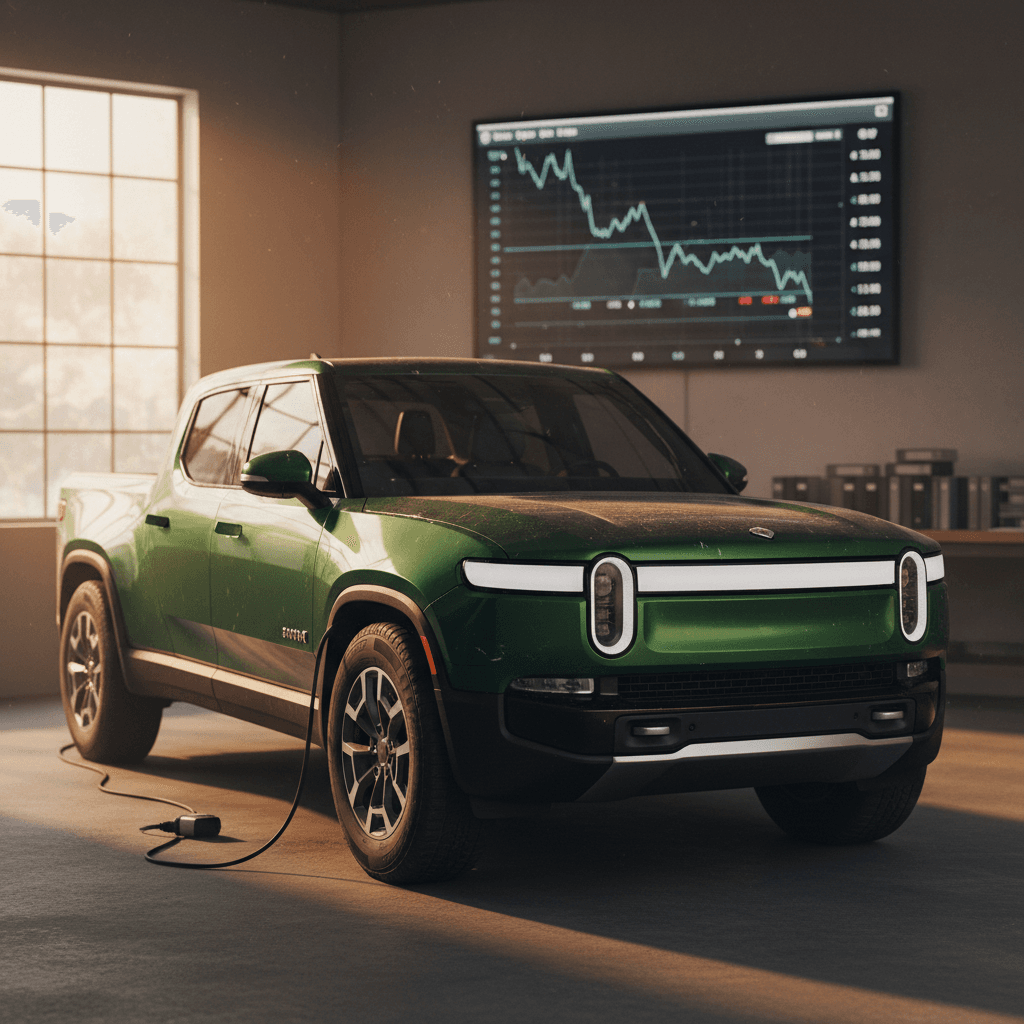
If you’re thinking, “Is now the right time to sell my 2025 Rivian R1T, and what’s it actually worth?” you’re not alone. Between big EV price cuts, federal credit changes, and Rivian’s own promo deals, resale values are moving targets. This guide walks through what a 2025 R1T is realistically worth in 2026, what affects that number, and how to sell or trade yours without leaving thousands of dollars on the table.
Quick take
Why 2025 Rivian R1T value matters right now
The 2025 Rivian R1T sits at a strange crossroads. On one side, it’s the only electric pickup with genuine adventure‑truck credibility and a fresh 8‑year battery warranty that still has seven‑plus years left for most 2025 owners. On the other, EV prices have been whipsawed by discounts, and the $7,500 federal tax credit disappeared for Rivian’s R1T and R1S after September 2025 for many buyers, softening new‑truck demand and complicating resale math.
At the same time, Rivian’s halo is bright. The R1T was just recognized by major valuation guides as having best‑in‑class resale performance among electric trucks, which is the industry’s way of saying: this thing will not crater in value the way some early EVs have. That’s good news for you, if you know how to present and price the truck correctly.
2025 Rivian R1T value snapshot for 2026 sellers
How much is a 2025 Rivian R1T worth in 2026?
Used EV pricing is slippery, but Rivian has already given us a preview. Early‑build 2022 R1Ts that stickered around $74,500 have recently been listed around $52,000, about a 30% drop over roughly three years. That’s in line with a healthy, not‑catastrophic depreciation curve for a premium truck in an overbuilt EV market.
Translate that to a 2025 R1T that’s just one model year old in 2026 and, barring a market crash or recall scandal, you’re usually looking at something like 15–25% off original MSRP for a clean, low‑mile truck. The exact number depends heavily on where your R1T sits on this spectrum:
2025 Rivian R1T value ranges in 2026 (big‑picture guide)
Approximate resale ranges for typical 2025 R1T configurations with clean history. These are directional, not appraisal numbers.
| Condition & mileage (2026) | Example trim | Original MSRP (est.) | Likely private‑party range | Likely dealer / instant‑offer range |
|---|---|---|---|---|
| Excellent, under 12,000 miles | Dual Motor Large Pack Adventure | $80,000 | $60,000–$68,000 | $55,000–$62,000 |
| Excellent, under 12,000 miles | Dual Motor Max Pack, well‑optioned | $88,000 | $66,000–$76,000 | $60,000–$70,000 |
| Good, 15,000–25,000 miles | Dual Motor Large Pack | $80,000 | $54,000–$62,000 | $50,000–$58,000 |
| Good, 15,000–25,000 miles | Dual Motor Max Pack | $88,000 | $60,000–$70,000 | $55,000–$64,000 |
| Prior accident / visible wear | Any 2025 R1T | Varies | 10–20% less than clean comps | 15–25% less than clean comps |
Use this as a sanity check, then refine using current market data and a condition‑based evaluation like the Recharged Score.
These are ranges, not quotes
What really drives 2025 R1T resale value
The six big levers on your 2025 R1T’s value
Some you can’t change. Several you absolutely can.
1. Spec & options
Dual‑motor with the Large or Max pack, Adventure interior, and popular colors tend to hold value better. Oddball wheel choices and niche trims can narrow your buyer pool.
2. Mileage & use pattern
Under ~12,000 miles in the first year will usually command a premium. High‑miles highway commuter trucks can still sell well if battery health and service history are strong.
3. Title & accident history
A clean title and no structural damage are huge. A single cosmetic repair is fine; airbags deployed, frame damage, or a branded title are value landmines.
4. Battery health
Buyers care less about 0–60 and more about how much range is actually left. A verified healthy pack can add serious confidence, and real money, to your asking price.
5. Service & warranty status
Documented Rivian service visits, up‑to‑date recalls, and a truck still well inside its 8‑year battery and drivetrain coverage all support stronger resale.
6. Market mood & incentives
EV price cuts, interest rates, and incentives on new trucks push used values around. When new R1Ts are discounted or heavily subsidized, used prices feel the downdraft.
Think like the next owner
Battery health & warranty: the quiet power behind your value
On paper, most 2025 R1Ts carry an 8‑year, high‑voltage battery warranty out to at least 120,000 miles, and on some configurations up to 150,000–175,000 miles. There’s also a promise that the pack will retain a minimum percentage of its original capacity in that window. At one year old, you’re just barely out of diapers on that clock. To a second owner, that is gold.
In the real world, early R1T owners are reporting surprisingly modest degradation in the first few years when trucks are driven normally and not fast‑charged to death. But here’s the catch: the built‑in range display is not a scientific instrument, and different trucks age differently. A serious buyer, or any smart lender, is going to want independent, test‑based proof that the giant skateboard under your feet is still as healthy as it looks.
How Recharged turns battery health into real dollars
Ready to find your next EV?
Browse VehiclesWhy the battery matters so much
- It’s the single most expensive component on the truck.
- Range anxiety is worse in used EVs than new ones.
- Bank underwriters increasingly look at battery health on high‑value EV loans.
- A pack that looks weak can chop thousands off your truck’s realistic value.
How to talk about it when you sell
- Quote your typical real‑world range at highway speeds, not the brochure number.
- Have a recent battery health report or capacity test ready to share.
- Mention that the 8‑year warranty transfers to the next owner.
- Keep your DC fast‑charging habits honest; savvy buyers will ask.

Selling options for your 2025 R1T, ranked by value vs effort
With a 2025 R1T, you’re not trying to offload a worn‑out commuter; you’re rehoming a six‑figure electric Swiss Army knife. You have more options than just tapping the “trade‑in” box on a configurator. Here’s how the main paths stack up.
Four main ways to sell your 2025 R1T
From “just make it go away” to “I’ll squeeze every last dollar.”
1. Private‑party sale
Best for: Maximizing price, especially on well‑optioned trucks with low miles.
- Often yields $5,000–$10,000 more than a quick trade‑in.
- Requires good photos, detailed listing, and time for test drives.
- You’ll handle payoff, paperwork, and vetting buyers yourself.
2. Trade‑in at Rivian or another dealer
Best for: Convenience, rolling equity into a new R1T/R2 or another vehicle.
- Fast and relatively painless, but usually the lowest dollar amount.
- Occasional Rivian promotions or loyalty bonuses can narrow the gap.
- Less control over final number; they’re hedging auction risk.
3. Consignment with an EV‑focused retailer
Best for: Sellers who want near‑private‑party value without DIY chaos.
- Retailer lists and markets the truck, you retain ownership until it sells.
- You pay a fee or margin, but can net more than a wholesale trade.
- Especially powerful when paired with verified battery health.
4. Instant offer / online wholesale
Best for: Speed. Job relocation, divorce, cash crunch, truck needs to move.
- Minutes to get an offer, days to be done.
- Pricing algorithms are conservative on niche EVs.
- Great if time matters more than extracting the last $3–7k.
Where Recharged fits in
How to price your 2025 Rivian R1T without guessing
Pricing a 2025 R1T is part math, part anthropology. You need numbers from valuation tools and recent listings, and you need to understand the current mood around premium EV trucks. Here’s a step‑by‑step approach that keeps you out of the fantasy‑pricing trap.
Step‑by‑step: build a realistic asking price
1. Start with your original MSRP
Grab your Rivian build sheet or order agreement. Don’t guess, 2025 pricing moved around with discounts and promos. Knowing your real, out‑the‑door MSRP gives you a baseline.
2. Pull current valuation estimates
Use tools like KBB, Edmunds, or Recharged’s own pricing guides for a 2025 R1T matching your spec and mileage. Note <strong>trade‑in</strong>, <strong>private‑party</strong>, and <strong>retail</strong> numbers separately.
3. Scan real‑world listings
Look at current listings for 2024–2025 R1Ts with similar specs on EV‑focused sites, Rivian’s pre‑owned program, and marketplaces like Recharged. Ignore obviously mispriced outliers.
4. Adjust for condition & history
If your truck is truly mint, no curb‑rashed wheels, no dings, no pets, no smoke, you can live toward the high end of the range. Any damage, missing accessories, or accidents? Slide your expectations down.
5. Factor in battery proof
If you have a recent, independent battery health report, you can justify a premium compared with similar trucks that don’t. If you don’t, pricing slightly under the top of the range makes sense.
6. Choose a strategy band
For a private sale: consider listing at <strong>3–7% above</strong> the number you actually want to net, to leave room for negotiation. For a quick sale or instant offer: prepare yourself for the <strong>bottom third</strong> of the range.
Watch the new‑vs‑used gap
Prep checklist: get your 2025 R1T ready to fetch top dollar
Buyers don’t pay top dollar for mystery trucks. They pay for a narrative: here’s exactly what this R1T is, how it’s been used, why the battery’s solid, and why I, the seller, am not a chaos goblin. That narrative starts long before your first test drive.
Sale‑ready 2025 R1T prep list
1. Get a proper detail, inside and out
A Rivian is modernist design on wheels. Dirt fights the lines. Professional detailing, especially cleaning seat bolsters, rubberized surfaces, and the frunk, returns multiples of its cost when buyers see the truck in person.
2. Fix small cosmetic stuff
Touch up curb rash, address windshield chips, replace missing plastic trims, and clean the under‑bed storage. Leave the buyer with the impression you cared about the truck in the unglamorous ways.
3. Gather your receipts and records
Export your Rivian service history, save tire receipts, and note any software‑related service visits. Organize these in a single PDF or folder you can send to serious buyers.
4. Run or obtain a battery health check
Schedule a high‑quality battery health diagnostic, through Recharged or another third party, so you’re not arguing about range based on one cold‑morning commute. Show concrete data to justify your price.
5. Restore factory accessories
Buyers expect both keys, charge cable, cargo hooks, and removable panels. If you deleted anything, either reinstall it or be explicit in your pricing that it’s missing and priced accordingly.
6. Photograph like you’re selling a house
Shoot in soft daylight, horizontal, with clean backgrounds. Cover the key angles: three‑quarter front and rear, interior wide shots, driver’s seat, touchscreen, bed with gear tunnel doors, under‑bed storage, charge port, tires, and any flaws.
Don’t hide the blemishes
Timing the market: sell now or wait?
The macro backdrop for EVs in 2026 is…complicated. Rivian has trimmed prices on new R1T and R1S models at various points to stoke demand, and the loss of the federal tax credit for many Rivian buyers after late 2025 took some oxygen out of new‑truck pricing power. At the same time, the R1T just picked up a major resale‑value award in the electric truck category, signaling that used‑market confidence is rising, not falling.
Reasons to sell sooner
- You’re under 10–12k miles and can market the truck as nearly new.
- You expect a wave of refreshed or Gen‑2 Rivian models that could make Gen‑1.5 trucks feel old overnight.
- You want to roll equity into something that does qualify again for federal or state incentives.
- You’re nervous about broader EV price cuts or a recession pressuring used values.
Reasons to hold for a while
- You love the truck and don’t actually have a compelling replacement.
- Your mileage is already high enough that another year won’t radically change its story.
- You’re waiting for more charging build‑out or accessory ecosystem before switching brands.
- You believe the used‑EV market will mature, with better financing and more buyers in a year or two.
Think in 12‑month chunks
FAQ: 2025 Rivian R1T resale & selling questions
Frequently asked questions about selling a 2025 Rivian R1T
Bottom line: how to sell your 2025 R1T smartly
A 2025 Rivian R1T is not a commodity pickup; it’s a rolling thesis about where trucks are headed. The upside is that demand for clean, well‑optioned, low‑mile examples should stay healthy, even as the broader EV market lurches through growing pains. The downside is that traditional pricing tools and generic used‑car outlets still struggle to value these trucks correctly, which is how perfectly good R1Ts end up underpriced at auction or languishing with unrealistic asking numbers.
If you want to sell a 2025 Rivian R1T for its true value in 2026, focus on what serious buyers care about: documented battery health, clean history, honest pricing anchored in current data, and a transparent story about how the truck has been used. Whether you decide to sell privately, consign with a specialist, or get an instant offer from a platform like Recharged, you’re not just handing over keys, you’re handing over the narrative that justifies your price. Make that story a strong one, and the market will usually meet you there.