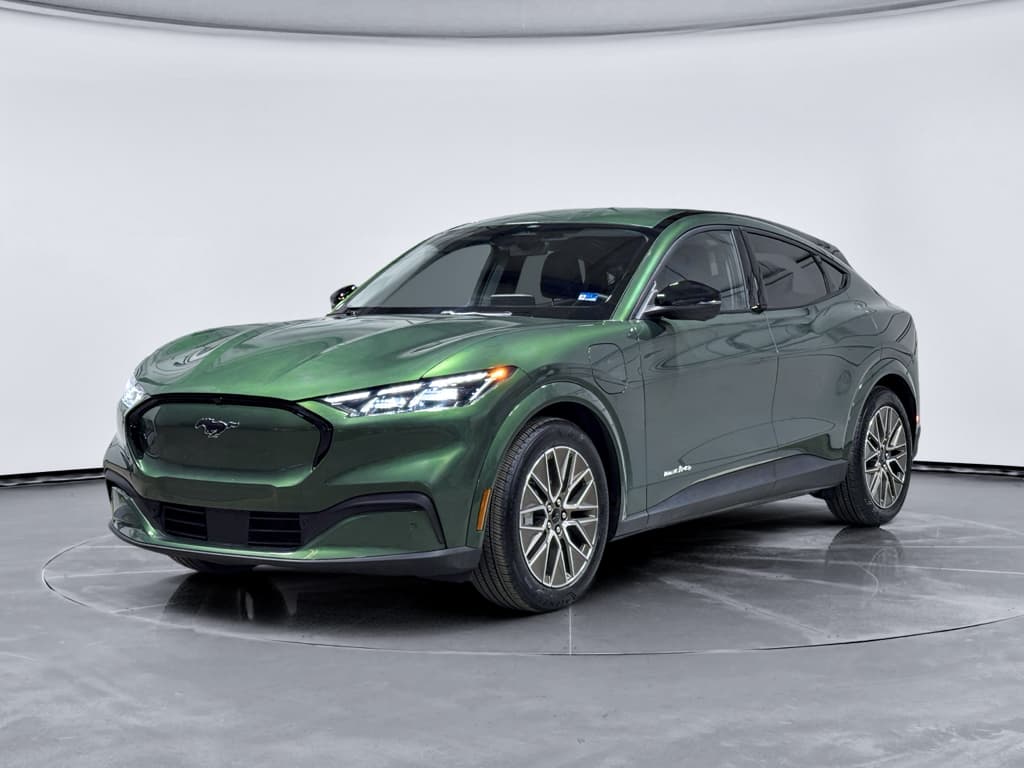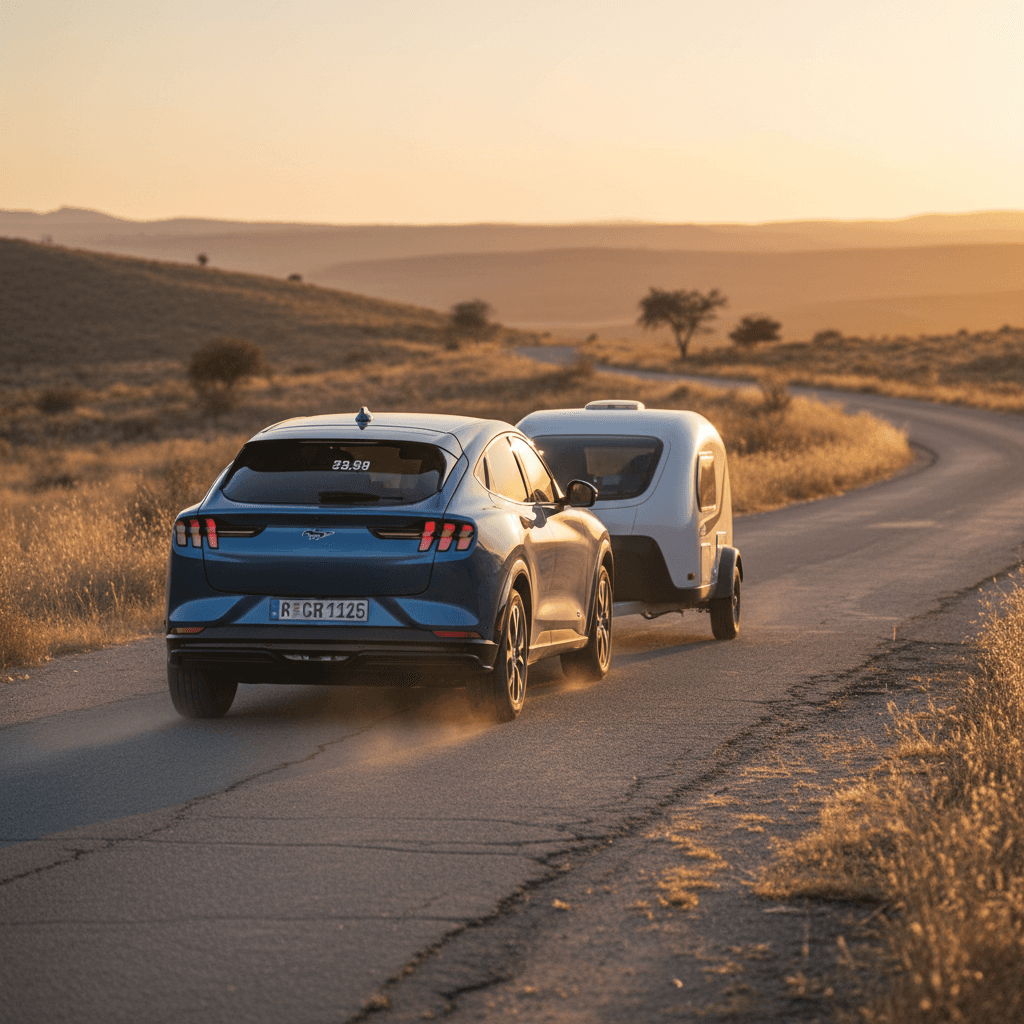
If you own or are shopping for a Ford Mustang Mach-E, it’s natural to wonder how much it can tow, and how badly a trailer will chew through your range. EVs are incredibly torquey, but battery size, aerodynamics and speed all play huge roles in towing capacity and range loss.
Quick answer
Mustang Mach-E towing basics in one glance
Mustang Mach-E towing & range at a glance
Before we dive into charts and edge cases, it helps to separate what Ford officially approves from what owners actually do. In the U.S. and Canada, Ford markets the Mach-E strictly as a non-towing vehicle. In Europe and other regions, Ford publishes formal tow ratings and sells factory hitches, and the underlying vehicle hardware is essentially the same. That’s where the confusion (and a lot of forum debates) comes from.
Region matters
Official Mustang Mach-E towing capacity by market
Ford’s own data is the best place to start, then we layer real-world experience on top. Here’s how Mustang Mach-E towing capacity breaks down in broad strokes by region and configuration.
Ford Mustang Mach-E towing capacity overview
High-level view of how tow ratings differ by region. Always confirm with the owner’s manual for your exact model year and market.
| Market / Region | Battery & Drivetrain (examples) | Official braked towing capacity | Typical use cases |
|---|---|---|---|
| North America (U.S./Canada) | All trims, all years | 0 lb (no official tow rating) | Bike racks on hitch, small cargo carriers (if you add an aftermarket hitch) |
| Europe – earlier extended-range RWD & AWD | ER battery (~91 kWh), RWD or AWD | 1,000 kg (~2,200 lb) | Small boat, light utility trailer, compact camper |
| Europe – later updates on extended-range RWD & AWD | ER battery (~91 kWh), RWD or AWD with tow package | Up to 1,500 kg (~3,300 lb) | Larger pop-up camper, heavier utility trailer within limits |
| Other markets (varies) | Depends on local homologation | Often 750–1,000 kg, some up to 1,500 kg | Light to moderate recreational towing within local rules |
North American Mach-E models are officially "no-tow," while many European models carry formal tow ratings.
Braked vs. unbraked trailers
In Europe, Ford has even moved some extended-range Mach-E trims from 1,000 kg to around 1,500 kg after software and cooling tweaks, giving owners more headroom for pop-up campers and small caravans. In North America, that same hardware exists, but the official line remains: no towing.
How towing actually hits Mustang Mach-E range
Tow ratings tell you what the car can legally and mechanically handle. They don’t tell you what most Mach-E shoppers care about: how far you can actually go between charges when you’re towing. That’s where range loss comes into play.
- Extra weight means your motors and inverter have to work harder climbing grades and accelerating.
- Trailers, especially tall campers, add a huge aerodynamic penalty at highway speeds.
- Roof boxes, bikes on the back, and crosswinds can all stack on top of the trailer’s drag.
- Your Mach-E’s battery size and drivetrain (RWD vs. AWD) set the baseline for how much range you have to give up.
In independent EV towing tests and owner reports across multiple models, a consistent pattern has emerged: EVs typically lose 40–60% of their solo range when towing a full-height camper at highway speeds, and roughly 20–40% with smaller, more aerodynamic loads. The Mach-E is no exception, it has the power, but it doesn’t have a pickup truck–sized battery.
Think in percentages, not exact miles
Real-world examples of Mach-E range loss while towing
Official EPA or WLTP numbers won’t tell you how a Mach-E behaves with a trailer in tow. But when you combine broad EV towing data with what Mach-E drivers report on forums and in road tests, you can build realistic expectations.
Typical Mustang Mach-E towing scenarios
Approximate range loss bands based on load size and speed. Your results will vary, but these bands are a solid planning baseline.
Light, low trailer (best case)
Examples: small utility trailer, lightweight motorcycle hauler, single jet-ski trailer.
- Solo highway range: 230–280 miles (depending on trim)
- Estimated towing range loss: 20–35%
- Conservative planning range: roughly 150–200 miles between fast charges in mild weather.
Mid-size camper or boat
Examples: compact pop-up camper, small fiberglass boat, taller cargo trailer.
- Estimated towing range loss: 35–50%
- Practical planning range: 110–160 miles between stops, with a buffer.
- Expect more frequent fast-charging and slower average speeds.
Near max tow rating (EU)
Examples: heavy boxy trailer near 1,000–1,500 kg limit.
- Estimated range loss: 50–70%+ at 65–70 mph
- Planning range can drop to 70–120 miles, especially in cold or hilly conditions.
- Trip pacing starts to feel like driving an early-generation EV.
Cold weather compounds the hit
Trip-planning math: turning ratings into real miles
Let’s walk through how to turn all this into practical numbers. We’ll assume a recent extended-range Mach-E with roughly 260–310 miles of real-world solo highway range, depending on trim and conditions.
Step 1: Start with your solo range
Use your own experience, not just the window sticker. Ask: “On a typical highway trip at 65–70 mph, with a light load and decent weather, how far can I comfortably go from 80% down to 10–15%?” For many Mach-E owners, that’s 180–220 miles in a standard-range model and 220–260+ in an extended-range trim.
Step 2: Apply a towing penalty band
Pick the band that fits your trailer:
- Light, low trailer: multiply solo range by 0.7–0.8
- Mid-size, moderate trailer: multiply by 0.5–0.65
- Large, boxy trailer near max rating: multiply by 0.3–0.5
Then subtract another 10–15% if you want a comfortable buffer for weather, detours, and charger issues.
Mach-E towing trip-planning checklist
1. Confirm your market’s tow rating
Double-check the owner’s manual or local Ford documentation for your exact market and model year. If you’re in North America, assume there is <strong>no official tow rating</strong> and plan accordingly.
2. Weigh your trailer properly
Don’t guess. Use a truck stop scale or tongue-weight scale to confirm that <strong>gross trailer weight and tongue weight</strong> stay within what your region and hitch allow.
3. Map chargers closer together
When towing, plan legs of <strong>60–120 miles</strong> between DC fast chargers instead of trying to stretch 180+ miles. Build in redundancy in case a site is down or congested.
4. Target 20–80% battery
Fast chargers are quickest in the middle of the pack. On a tow road trip, it’s often better to <strong>charge more often for shorter bursts</strong> than to push to 5% and sit to 100%.
5. Preview charger access with a trailer
Some stations are pull-through, others are tight back-in spots. Use satellite view and user photos to make sure you can maneuver a trailer without blocking others.
6. Watch weather and elevation
Headwinds, mountain passes, and cold weather can all stack on top of towing penalties. If your route is hilly and cold, be extra conservative with distance estimates.
Tow hitches, warranties, and safety considerations
Because the Mustang Mach-E sits in two different worlds, rated for towing in Europe, unrated in North America, you’ll see a lot of aftermarket hitch options and strong opinions online. Here’s how to navigate that landscape without risking your safety or your investment.
- Factory vs. aftermarket hitches: In markets where towing is approved, Ford sells or approves specific tow bars and wiring kits. In North America, you’re limited to aftermarket hitches that are officially marketed for bike racks and cargo carriers, even if their hardware is technically strong enough for a trailer.
- Warranty gray areas: If your owner’s manual says the vehicle is not approved for towing, and you tow anyway, Ford could deny powertrain or suspension-related claims. It doesn’t mean they definitely will, it means you’re taking on additional risk.
- Insurance and liability: If you’re involved in a collision while towing against manufacturer recommendations, some insurers could argue you weren’t operating the vehicle as intended. That’s another reason to respect local ratings, even if the EU spec sheet says the car can tow.
- Brake and cooling loads: EVs offer strong regenerative braking, but you still rely on friction brakes and cooling systems to deal with repeated high loads on long descents. That’s part of why formal tow ratings matter, they certify that the full system has been validated for those use cases.
Play it safe with North American cars
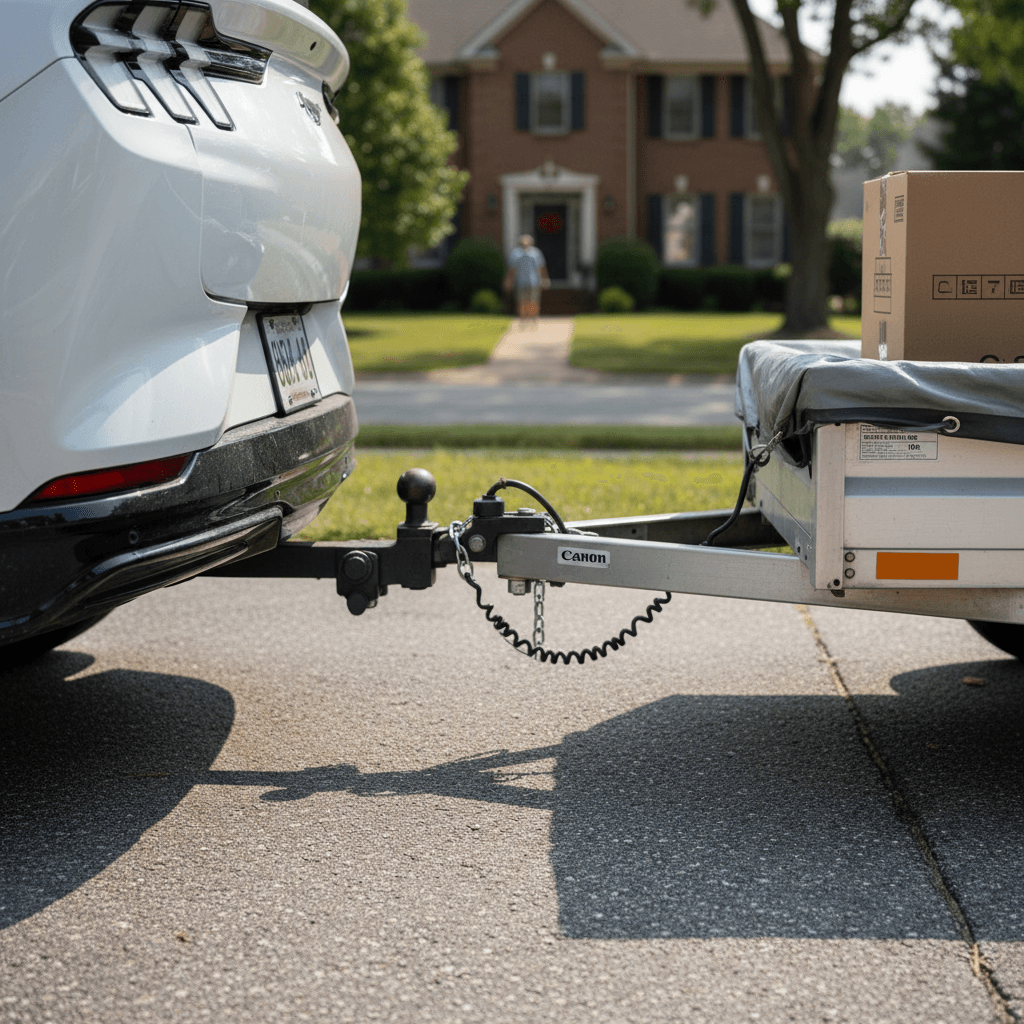
7 ways to minimize range loss when you tow
You can’t cheat physics, but you can stack the odds in your favor. Whether you’re towing within Ford’s official limits in Europe or pulling a light utility trailer on private property, these habits help you squeeze more miles out of your Mach-E’s battery.
- Slow down a little: Dropping from 70 mph to 60 mph can make a surprisingly big dent in aero drag, especially with a tall trailer, and may recover 10–20% of the range you’d otherwise lose.
- Choose the most aerodynamic trailer you can: Rounded-front campers and low, narrow trailers punch a smaller hole in the air than tall, square cargo boxes.
- Keep tires properly inflated: Underinflated tires on either the car or trailer add rolling resistance. Check pressures before long trips, ideally with a quality gauge.
- Use “Eco” or efficient drive modes: Softer throttle response and more conservative climate control trims energy use. On some trims, you can also tweak regen to match your comfort.
- Precondition the cabin while plugged in: Heating or cooling the car from grid power before you leave saves onboard energy for actual driving.
- Pack lighter when possible: Every extra box in the trailer is more weight for the motors and brakes to deal with, especially on grades.
- Plan smart charging stops: Aim for fast chargers near food, restrooms, or parks so the extra stops towing requires still feel like a normal road trip, not a burden.
Turn towing into a predictable routine
Is a Mustang Mach-E right for your towing needs?
If your life involves regularly towing a 4,000–5,000 lb travel trailer across the Rockies, a Mustang Mach-E, especially a North American one, is probably not the right tool for the job. But that doesn’t mean it can’t work for lighter-duty, occasional towing, especially in regions where Ford formally approves it.
When a Mach-E can make sense
- You’re primarily towing light, compact trailers (mowers, small utility, single jet ski).
- You live in a market where Ford publishes a tow rating for your trim and you stay within it.
- Your longest tow legs are under 120 miles, with fast charging available along the route.
- You put more value on quiet, responsive EV driving than on maximum tow numbers.
When to consider a different EV
- You’re towing a big, boxy camper near 5,000–7,500 lb where dedicated electric pickups shine.
- You’re in North America and don’t want to live in a warranty gray area.
- You routinely drive long, remote stretches with limited DC fast charging.
- You need a vehicle that’s explicitly designed and marketed for heavy towing.
If you’re shopping used, this is where a platform like Recharged can simplify the decision. Our Recharged Score reports surface battery health, real-world range expectations, and pricing data across used EVs, so you can compare a Mustang Mach-E against tow-rated alternatives and understand how much usable range you’ll actually have to work with.
Talk through your towing use case
FAQ: Ford Mustang Mach-E towing capacity & range loss
Frequently asked questions
Towing with a Ford Mustang Mach-E comes down to two questions: what your region officially approves, and how much range you’re comfortable giving up. The hardware is capable, but range can shrink fast with a big trailer, and North American manuals don’t back you up. If you match your expectations to your routes, and choose the right EV for the job, an electric SUV like the Mach-E can still cover commuting, family duty, and light recreational towing without drama.