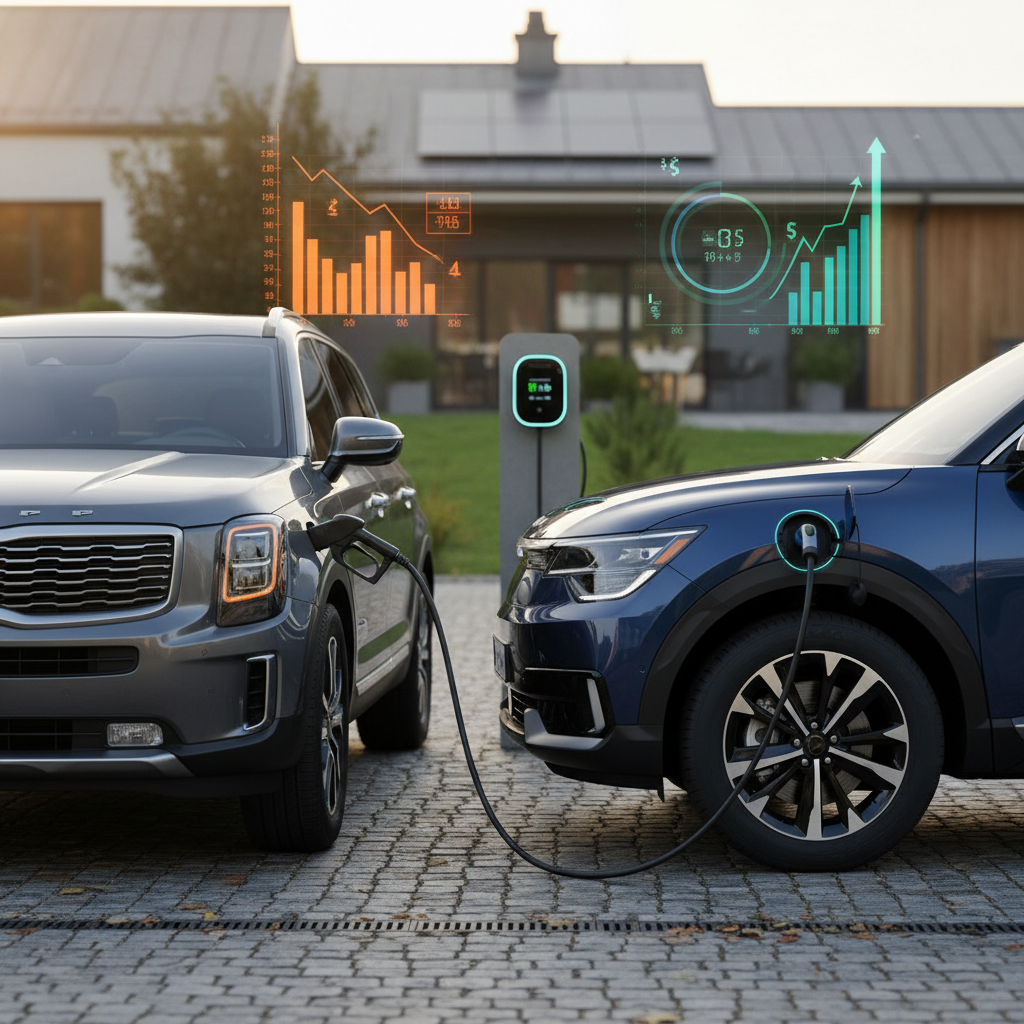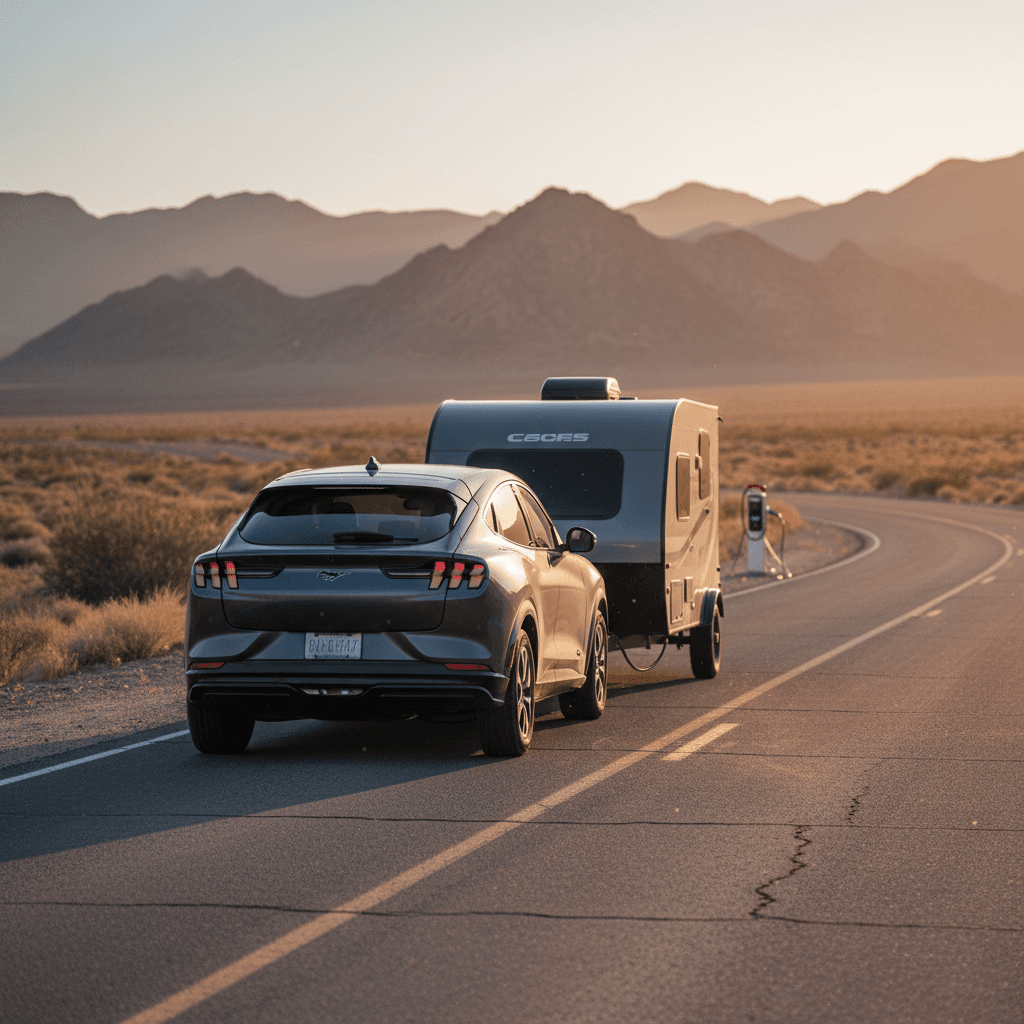
You don’t buy a Ford Mustang Mach-E because you want to tow a fifth-wheel camper. You buy it because you want an electric SUV that still feels like a Mustang on a back road, and has enough range to run your life without drama. But sooner or later, almost every owner wonders the same thing: What can the Mustang Mach-E actually tow, and how far will it go when it does?
Quick answer
Mustang Mach-E towing and range: the short version
- In the U.S., Ford lists the Mustang Mach-E with 0 lb towing capacity for recent model years, including 2025, and does not market it as a tow vehicle.
- In Europe, extended‑range RWD and AWD models gained an official braked tow rating of up to 1,000 kg in 2022, enough for a small boat or lightweight camper.
- EPA‑rated range for 2024–2025 U.S. models runs from roughly 230 to 320 miles on a full charge, depending on battery (standard vs. extended‑range), drivetrain (RWD vs. AWD), and trim.
- Real‑world towing can drop your Mach‑E’s usable range to half of its normal number, especially at highway speeds with a boxy trailer.
- For most U.S. owners, the Mach‑E is best at light utility duty: bike racks, cargo carriers, and the occasional very small trailer, used carefully and at your own risk, since Ford doesn’t rate it for towing here.
- If you’re shopping used, focus on extended‑range battery models and pay attention to verified battery health, this is where Recharged’s Recharged Score and battery diagnostics really earn their keep.
Important safety note
Official Mustang Mach-E towing capacity: US vs. Europe
This is where things get confusing, because Ford talks about towing capacity very differently depending on where the Mustang Mach‑E is sold.
Mustang Mach-E towing ratings by region
Same vehicle, different answers depending on where you live
United States & Canada
Official tow rating: 0 lb
- Ford’s U.S. specs and dealer sites list the Mach‑E with no towing capacity.
- No factory tow package is offered; many dealers won’t install hitches.
- Aftermarket hitches exist, but towing is effectively "at your own risk".
If you plan to tow regularly and live in North America, a different EV (or a hybrid truck/SUV) is usually a better fit.
Europe & some other markets
Official tow rating: up to about 1,000 kg (≈ 2,200 lb) braked
- Ford increased approved braked towing capacity on extended‑range RWD and AWD models in Europe to 1,000 kg.
- That’s enough for a small boat, jet skis, or a very compact camper.
- Ford sells factory tow bars and wiring kits in those markets.
Same basic hardware, but validated and certified differently for regulatory and warranty reasons.
Why the difference?
Ford Mustang Mach-E towing capacity snapshot
High‑level view of what Ford does, and doesn’t, approve for towing with the Mach‑E.
| Market | Powertrain focus | Factory tow rating | Typical real‑world use |
|---|---|---|---|
| U.S. / Canada | All trims | 0 lb (no official towing) | Bike racks, cargo carriers; some owners tow small trailers at their own risk |
| Europe | Extended‑range RWD & AWD | Up to 1,000 kg (≈ 2,200 lb) braked | Light trailers, small boats, tiny campers |
| Other regions | Varies | Often aligned with Europe or U.S. | Check local documentation |
Always verify ratings for your specific model year and market in the owner’s manual.
Ford Mustang Mach-E EPA range by battery and trim
Before you talk about how towing affects range, you need a handle on what the Mustang Mach‑E can do without a trailer. Current U.S. models (2024–2025 and very similar 2026s) cluster into two battery sizes and a handful of drivetrains.
Mustang Mach-E range fundamentals (recent U.S. models)
Approximate EPA range by recent Mach-E trims (U.S.)
These numbers are ballpark figures for 2024–2025 style trims. Always check the window sticker or Ford’s site for your exact vehicle.
| Trim / battery | Drivetrain | EPA‑rated range (approx.) | Best use case |
|---|---|---|---|
| Select – standard‑range | RWD | ~260 miles | Daily driving, commuters who charge at home often |
| Premium – standard‑range | RWD | ~250 miles | Style and comfort with solid, but not max, range |
| Premium – standard‑range | AWD | ~230 miles | All‑weather traction, moderate daily range |
| Premium – extended‑range | RWD | ~320 miles | Longest‑range Mach‑E; great for road trippers without trailers |
| Premium – extended‑range | AWD | ~300 miles | Strong all‑rounder for varied climates and longer trips |
| GT / GT Performance (extended‑range) | AWD | ~280 miles | Performance first, still very usable range |
| Rally / special editions | AWD ER | mid‑250s to high‑270s | Performance and rough‑road fun over max range |
Extended‑range RWD models offer the longest legs; AWD and performance trims trade some range for grip and power.
Shopping used?
How much does towing cut Mustang Mach-E range?
Towing with an EV is a little like driving into a permanent headwind. Even a compact trailer adds frontal area, weight, and rolling resistance, and the Mach‑E’s smooth aerodynamics suddenly have a barn door following them down the highway.
Real-world range hits
- 30–50% range loss is common in owner reports when towing a small camper or 1,000–1,500 kg (2,200–3,300 lb) trailer at highway speeds.
- Light, low trailers, like a single jet ski, small utility trailer, or bike trailer, may see closer to a 20–30% hit at moderate speeds.
- Speed is the killer. Jumping from 55 mph to 70 mph with a trailer can feel like someone chopped a third off your battery.
Why towing hurts EV range
- Aerodynamic drag: A boxy camper ruins the Mach‑E’s sleek airflow, so the motors must work much harder.
- Extra mass: Every hill becomes a bigger battery drain when you’re hauling more weight.
- Thermal limits: Sustained heavy loads can heat up motors and battery, sometimes reducing power or charging speeds to protect components.
- Regen limits: On long descents, the car may limit regenerative braking to keep the battery safe, which changes how you slow down with a trailer.
Don’t just divide by two
What you can (and shouldn’t) tow with a Mach-E
Again, in North America Ford does not rate the Mach‑E for towing at all, so any trailer use is technically outside what the manufacturer supports. That said, owners do tow with these vehicles, and Ford itself endorses modest towing in Europe. Here’s a practical, common‑sense way to think about it.
Matching the Mach-E to the right load
From bike racks to tiny campers, where the line should be
Easy duty
- Hitch‑mounted bike rack with 1–4 bikes
- Cargo carrier for coolers or extra luggage
- Very small utility trailer for yard waste
These loads mainly add weight, not much frontal area. Range hit is modest, especially below highway speeds.
Use real caution
- Small boat on a trailer
- Single jet ski or pair of dirt bikes
- Very compact, low‑profile camper (<1,000 kg in markets where rated)
In Europe, these are what Ford had in mind with the 1,000 kg tow rating. In the U.S., this is unapproved territory, be conservative.
Not a great idea
- Full‑size travel trailers or toy haulers
- Car haulers or big enclosed trailers
- Anything near the weight of the Mach‑E itself
Even if the motors could move it, range, braking, and stability become serious concerns. This is pickup‑truck territory, not Mach‑E territory.
Hitch and wiring basics
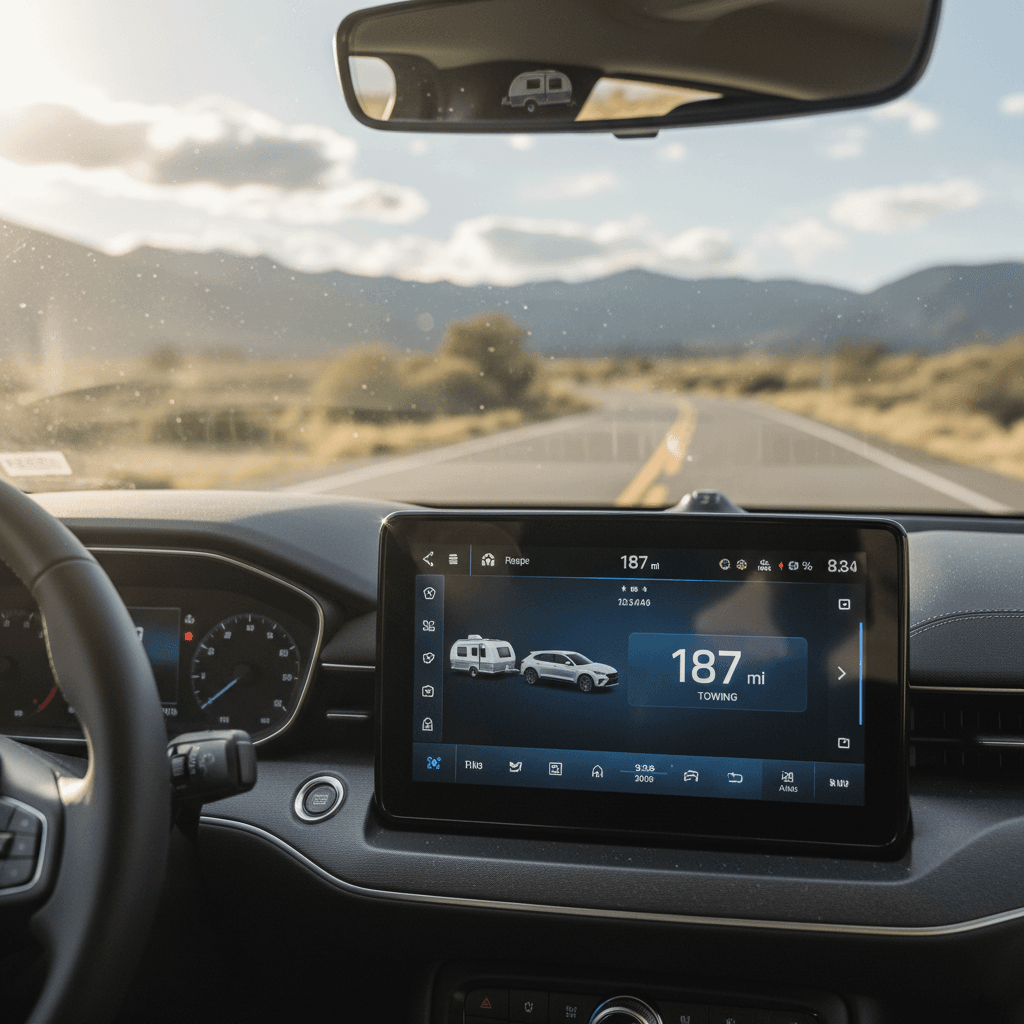
Planning road trips: Mach-E towing vs. not towing
The Mustang Mach‑E shines as a long‑legged road‑trip machine without a trailer, especially in extended‑range form. Add a camper or heavy load and your planning mindset needs to change.
Road‑tripping without a trailer
- Extended‑range RWD trims can realistically cover 200–260 highway miles between comfortable charge stops in good conditions.
- AWD and GT models still handle 180–230 highway miles per leg without stress.
- With NACS ports on 2025+ models and growing access to former Tesla Superchargers, it’s getting easier to find fast chargers right off major routes.
- Pack light, keep speeds around the limit, and use the built‑in trip planner or your favorite app to string stations together.
Road‑tripping while towing
- Plan on 90–150 miles between stops depending on trailer size, weather, and speed.
- Look for chargers where you can either pull through with the trailer attached or disconnect easily without blocking others.
- Expect longer stops, your state of charge will be lower when you arrive, and a hot battery may charge a bit slower.
- Have a Plan B charger in mind; not every station layout works well for cars with trailers.
Use the right tools
Battery health, range loss, and used Mustang Mach-Es
Whether you tow or not, the Mach‑E’s usefulness lives and dies on its real‑world range, and that depends heavily on battery health. As these EVs age, most owners see modest, gradual degradation rather than sudden drops, but if you’re buying used, it pays to look closely.
What really affects Mach-E range over time
Towing is just one piece of the puzzle
Heat & fast charging
Frequent DC fast‑charging, especially in hot climates, can accelerate battery wear. Occasional road‑trip fast‑charging is fine; living at 150 kW every other day is less ideal.
Cold weather use
Cold snaps don’t permanently damage the pack, but they can temporarily slash winter range by 20–40%. Preconditioning the cabin and battery before unplugging helps.
Driving & load patterns
Heavy trailers, constant high‑speed driving, and fully loaded cargo will burn more energy and may add stress over time, but day‑to‑day behavior usually matters more than an occasional big trip.
How Recharged helps with used Mach-E range
Ready to find your next EV?
Browse VehiclesChecklist: Buying a used Mach-E for towing and road trips
Used Mustang Mach-E road-trip & towing checklist
1. Choose the right battery and drivetrain
If you care about range, prioritize <strong>extended‑range</strong> Mach‑E models. Decide whether you truly need AWD for snow or gravel; RWD extended‑range trims usually go the farthest per charge.
2. Review verified battery health
Ask for a <strong>battery health report</strong>, on Recharged, that’s part of the Recharged Score. A pack that’s retained most of its original capacity will give you more flexibility for towing and long trips.
3. Confirm regional towing guidance
Check the owner’s manual or manufacturer information for your specific model year and market. If you’re in the U.S., assume the Mach‑E is <strong>not officially rated</strong> for towing and plan accordingly.
4. Inspect for hitch and wiring quality
If the used Mach‑E already has a hitch, look closely at <strong>installation quality</strong> and ask who did the work. Sloppy wiring or damaged underbody panels are red flags.
5. Test‑drive at highway speed
Take a proper test drive that includes highway miles. Watch how the <strong>estimated range</strong> responds at your normal cruising speed, this is where towing and extra load will hurt most.
6. Think about your real use case
Be honest: will you tow a camper every other weekend, or are you mostly hauling bikes and gear? For serious, regular towing, you may be better served by a different EV or a plug‑in hybrid SUV or truck.
Ford Mustang Mach-E towing & range FAQ
Frequently asked questions about Mustang Mach-E towing and range
Bottom line: Is a Mustang Mach-E good for towing and range?
The Ford Mustang Mach‑E is, first and foremost, an electric performance SUV with solid real‑world range, especially in extended‑range RWD form. In markets where Ford rates it for towing, it makes a capable light‑duty tow vehicle for small trailers and compact campers, as long as you respect the weight limits and plan around a big range hit. In the U.S., where Ford gives it a zero‑pound tow rating, it’s better to think of the Mach‑E as a terrific road‑trip machine that can carry bikes and cargo, not a dedicated tow rig.
If you’re considering a used Mustang Mach‑E, the key is to match the car to your life: choose the battery and drivetrain that fit your routes, understand how towing reshapes your range, and insist on real battery‑health data instead of guesswork. At Recharged, every Mach‑E we list comes with a Recharged Score Report, transparent pricing, EV‑savvy support, and optional nationwide delivery, so you can spend less time worrying about specs and more time planning where that electric Mustang will take you next.