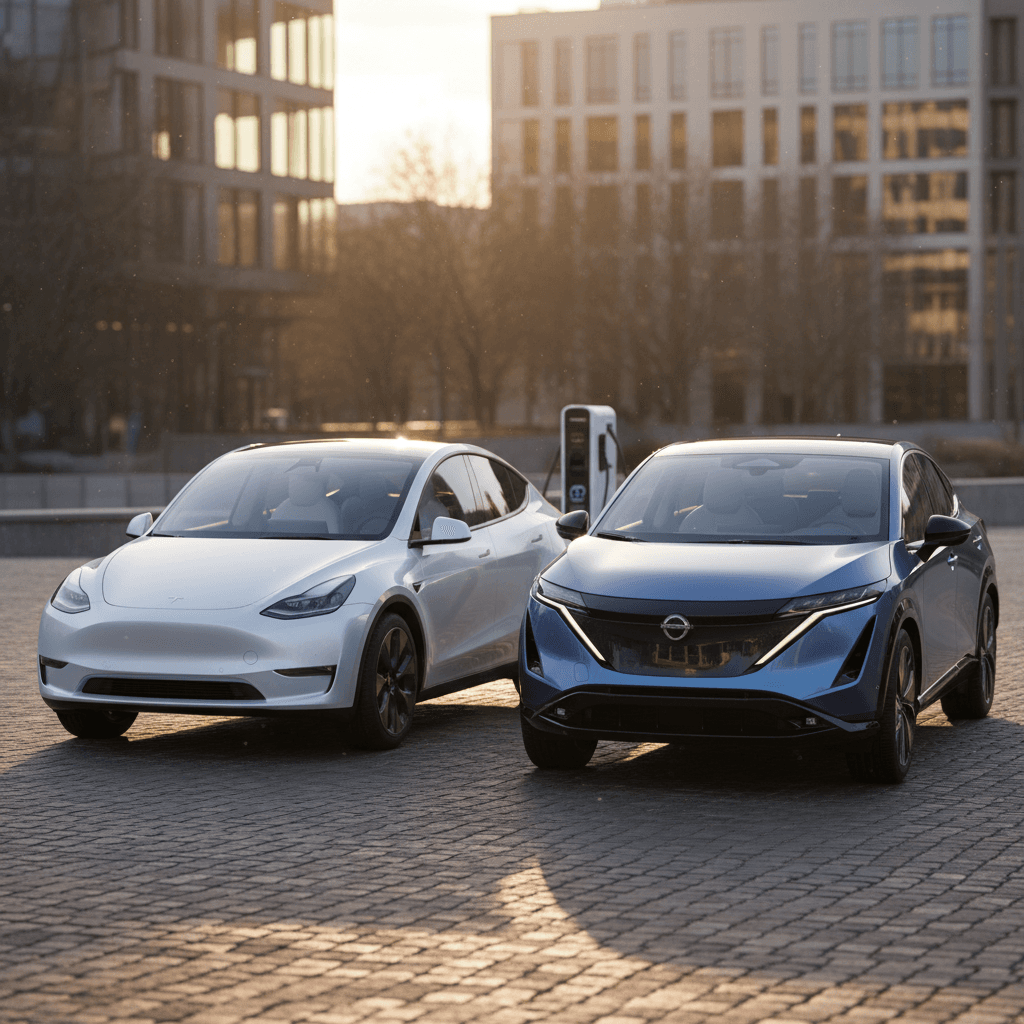
If you’re cross‑shopping the Tesla Model Y vs Nissan Ariya, you’re already looking in the right place: both are practical electric SUVs with solid range and family‑friendly packaging. But they deliver very different experiences. One leans into performance, efficiency, and software; the other focuses on comfort, refinement, and familiar controls. This guide breaks down the real‑world differences, especially for used buyers, so you can pick the EV that actually fits your life.
At a glance
Tesla Model Y vs Nissan Ariya: Quick Overview
How these two EV SUVs are positioned
Same segment, very different personalities
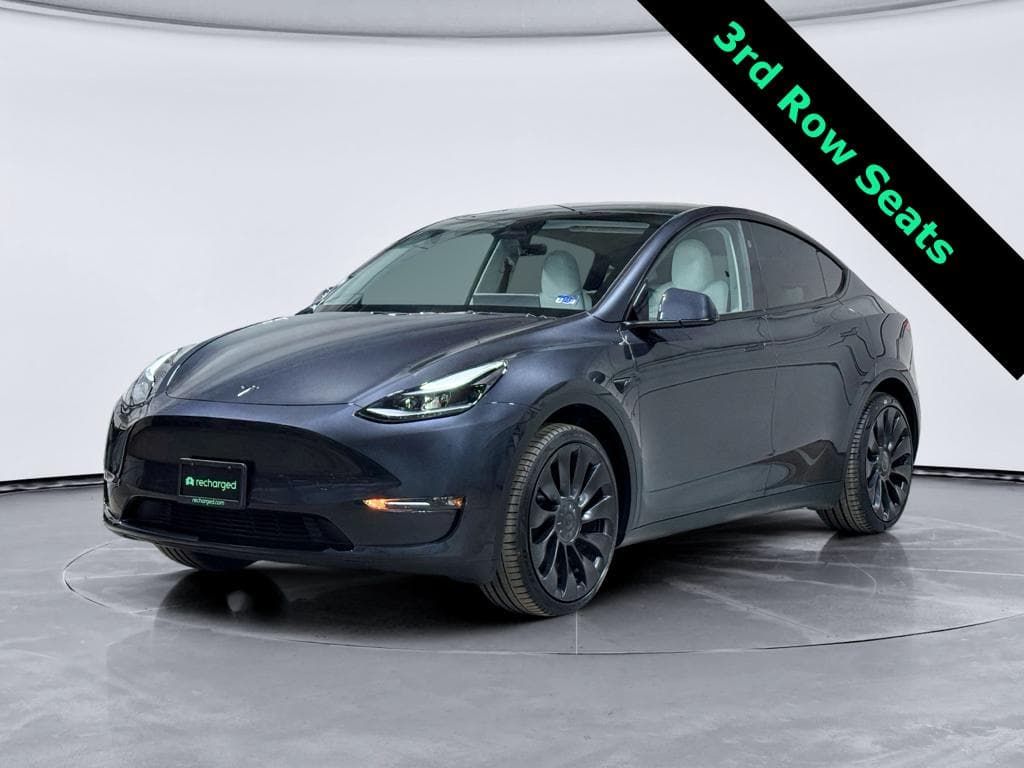
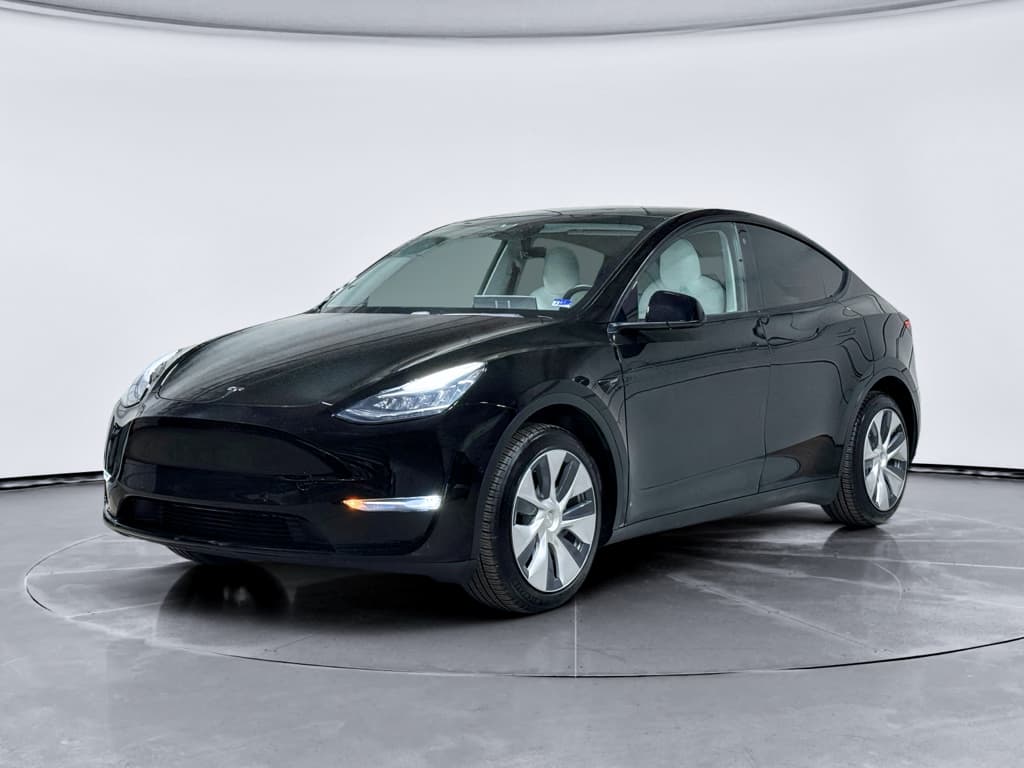
Tesla Model Y
Role: Benchmark compact electric SUV.
- Stronger performance and efficiency.
- Access to the full Tesla Supercharger network.
- Huge cargo space and optional 3rd row.
- Minimalist cabin; no CarPlay/Android Auto.
Nissan Ariya
Role: Comfortable, upscale mainstream alternative.
- Smoother, quieter ride; upscale interior materials.
- Traditional controls plus Apple CarPlay & Android Auto.
- Less range and slower fast‑charging than Model Y.
- U.S. sales ending after 2025, but support continues for owners.
Headline numbers: Model Y vs Ariya
Key Specs: Range, Power, and Space
Core specs: Tesla Model Y vs Nissan Ariya (U.S. market)
Representative figures for common trims; exact numbers vary slightly by model year, wheels, and options.
| Spec | Tesla Model Y RWD / Long Range / Performance | Nissan Ariya FWD long‑range / AWD e‑4ORCE |
|---|---|---|
| Battery (usable, approx.) | ~60–75 kWh | ~63 kWh / ~87 kWh |
| EPA range (best trims) | Up to ~330–337 mi | Up to ~289–304 mi |
| 0–60 mph | ~6.6 s (RWD) / ~4.4 s (Dual Motor) / ~3.5 s (Perf) | Mid‑6s to mid‑5s depending on FWD vs e‑4ORCE |
| Max DC fast‑charge rate | Up to 250 kW | Up to ~130 kW |
| Drive options | RWD or AWD; optional tiny 3rd row | FWD or e‑4ORCE AWD; 2 rows only |
| Cargo volume max | Roughly 76 cu ft (incl. frunk) | Roughly 60 cu ft (no frunk) |
If you’re shopping used, always confirm exact EPA ratings for the specific trim and wheel size you’re considering.
Specs vary by year and wheel size
Pricing, Incentives, and Used Market Value
Both SUVs launched as relatively pricey EVs, but discounts, Tesla’s price cuts, and a softening new‑EV market mean used shoppers now have genuine leverage. Your decision isn’t just about MSRP anymore; it’s about total cost of ownership, how prices have moved over time, and what happens now that Ariya is being pulled from the U.S. market after the 2025 model year.
New & recent pricing snapshot
- Tesla Model Y: New pricing has bounced around with Tesla’s frequent cuts, but broadly, base RWD models tend to land in the mid‑$40Ks, Long Range in the upper‑$40Ks, and Performance in the low‑$50Ks before options and destination.
- Nissan Ariya: 2024–2025 price reductions brought entry trims down around the low‑$40Ks, with well‑equipped long‑range or e‑4ORCE trims typically climbing into the low‑ to mid‑$50Ks including destination.
Because both models have seen pricing volatility and dealer incentives, transaction prices on late‑model used examples can be surprisingly close.
Used market dynamics
- Model Y: Huge production volumes mean abundant supply and more aggressive depreciation than early Teslas, which is good news for used buyers. It’s now one of the most common used EVs on the market.
- Ariya: Much lower volume, plus Nissan’s decision to stop importing the Ariya to the U.S. from the 2026 model year forward. That can cut two ways: potential deals as dealers clear inventory, but also some future‑value uncertainty.
A high‑quality battery health inspection matters for both. At Recharged, every vehicle comes with a Recharged Score Report so you see verified pack health and fair market pricing before you ever click “buy.”
Tax credits and incentives
Real-World Range and Charging Experience
On paper, the Tesla Model Y enjoys a clear advantage in both range and charging speed. In practice, that gap often feels even larger because of how seamlessly the Tesla ecosystem works on the road. The Ariya is competent here, but it’s playing on someone else’s home turf.
- Range: In U.S. trims, most Model Y variants span roughly 260–330+ miles of EPA range, while Ariya configurations generally cluster between about 205 and just over 300 miles. In mixed driving, drivers often see the Tesla come closer to its EPA number, thanks to high efficiency.
- Highway efficiency: The Model Y’s aero and powertrain tuning give it an edge at 70–75 mph cruising, where many EVs fall short of their window‑sticker range more dramatically.
- Cold weather: Both use heat pumps in many trims, but Tesla’s software‑driven preconditioning and pack management tend to mitigate winter losses a bit better on road trips.
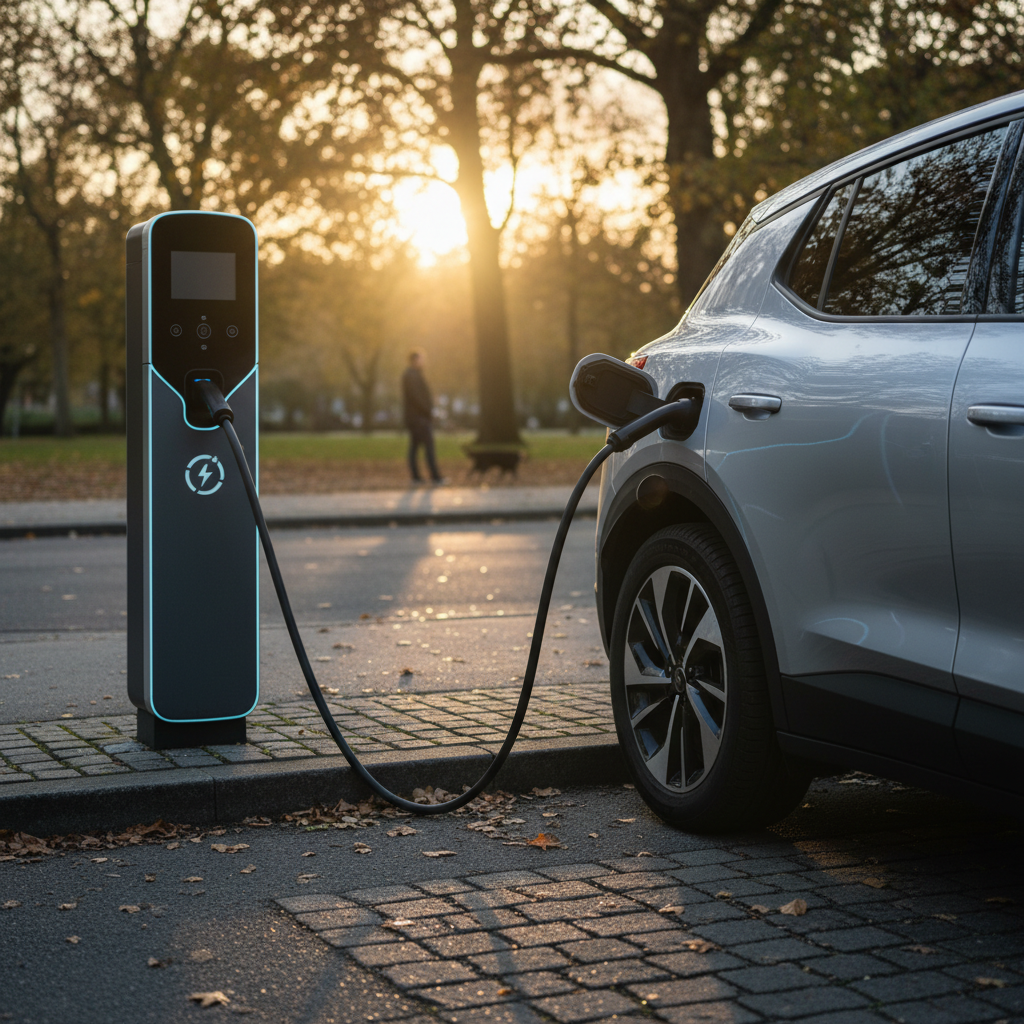
Tesla Model Y charging
- Max DC rate up to ~250 kW at many V3 Superchargers, with reliable taper behavior.
- Charging stops are integrated into the in‑car navigation with state‑of‑charge estimates that adapt in real time.
- By 2026, more non‑Tesla EVs are joining the Supercharger network, but Model Y drivers remain the native users with the simplest experience, no apps or RFID cards required.
For frequent road‑trippers, this combination of speed, density of stations, and reliability is a major reason people default to the Model Y.
Nissan Ariya charging
- Max DC rate around 130 kW, which is fine, but means longer highway stops than a comparable Model Y.
- Ariya owners can now access thousands of Tesla Superchargers via an NACS adapter kit on earlier models, and newer builds are moving to the NACS port directly.
- Nissan’s own apps and partner networks can feel fragmented compared with Tesla’s “it just works” approach, though the situation is improving as networks consolidate.
For daily commuting and occasional regional travel, Ariya’s charging is perfectly adequate. It’s on long cross‑country drives where you’ll most feel the gap.
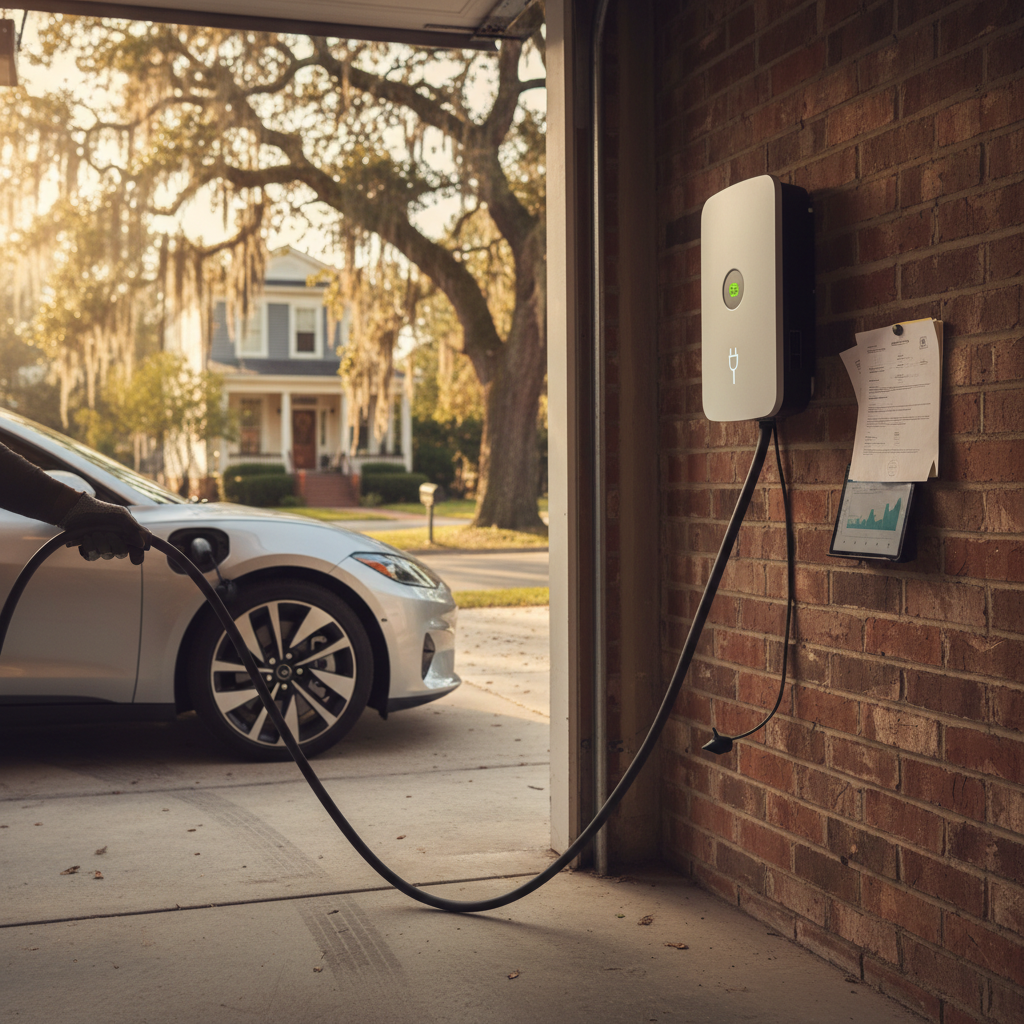
Don’t ignore home charging
Interior Comfort, Space, and Practicality
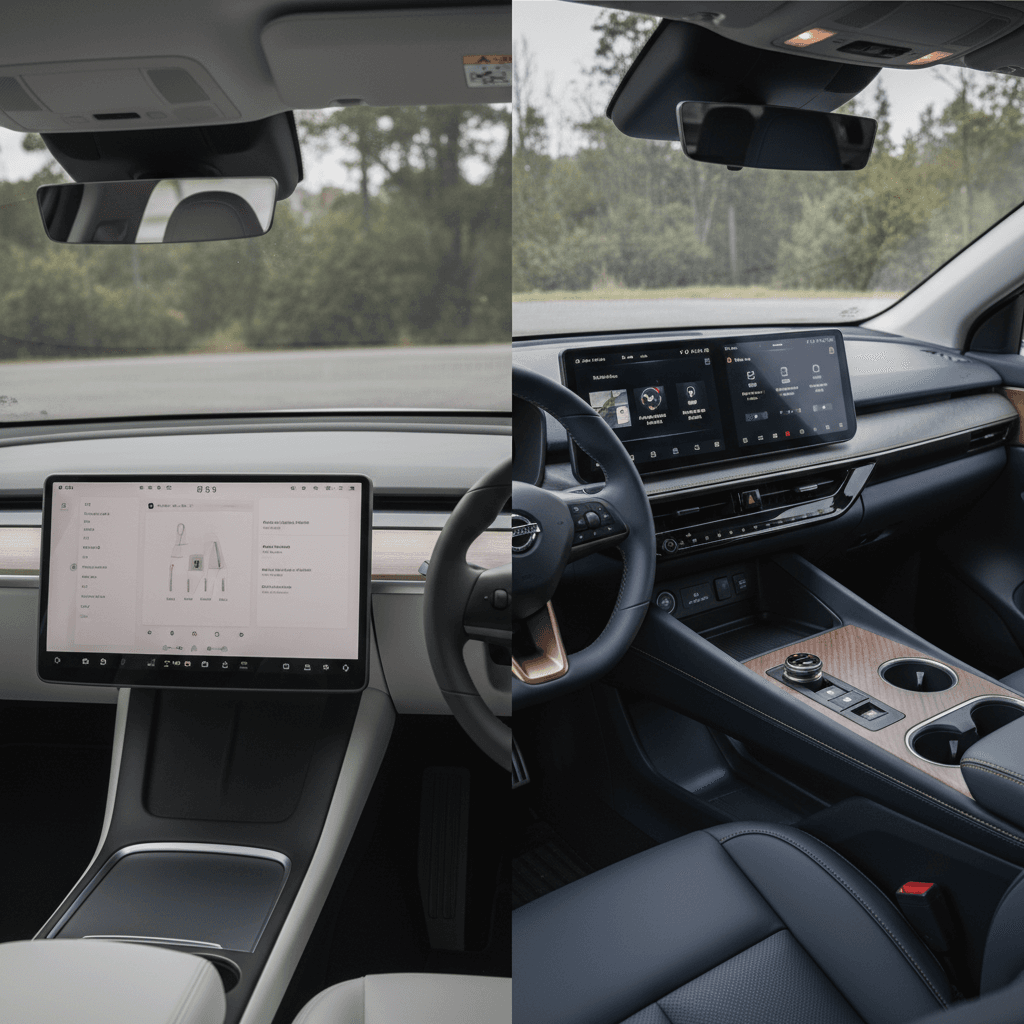
If you step from one cabin straight into the other, you’ll understand this comparison in seconds. The Model Y feels like a device; the Ariya feels like a modern lounge. Neither approach is inherently better, but one is probably more “you” than the other.
Space and versatility: Advantage Tesla
- Model Y: Big hatch opening, a deep under‑floor well, split‑folding seats, and a front trunk add up to roughly 76 cu ft of cargo space. There’s also an optional (very small) 3rd‑row seat that turns it into a 7‑seater in a pinch.
- Ariya: Still a practical two‑row SUV, but with significantly less total cargo volume and no frunk. Rear legroom and headroom are fine for most adults, just not as airy as the Y.
If you regularly haul strollers, sports gear, or big Costco runs, the Model Y’s packaging advantage matters every single weekend.
Ride, noise, and perceived quality: Advantage Nissan
- Ariya: Softer ride tuning, better isolation from road noise, and higher‑end interior materials give it a more traditionally premium feel, especially on longer drives.
- Model Y: Taut suspension and low‑profile tires on larger wheels can feel busy on broken pavement, and interior trim quality can be hit‑or‑miss, especially on earlier build years.
If you prioritize a quiet, comfortable commute over sharp handling, you may find the Ariya a more relaxing place to spend time.
Tech, Infotainment, and Driver Assistance
Both SUVs are packed with tech, but they come from opposite philosophies. Tesla bets that you’ll adapt to its way of doing things. Nissan assumes you want your EV to work like any other modern car, with smartphone mirroring and physical climate controls.
Interface and connectivity differences
Where Tesla feels futuristic and where Nissan feels familiar
Screens & layout
- Model Y: Single 15‑inch central touchscreen controls nearly everything, speedometer, climate, wipers, drive modes.
- Ariya: Dual 12.3‑inch displays with a more traditional instrument cluster plus a central touchscreen.
Smartphone integration
- Model Y: No Apple CarPlay or Android Auto; Tesla wants you in its own navigation, media, and voice system.
- Ariya: Standard Apple CarPlay and Android Auto (often wireless), which many drivers find simpler and safer.
Driver assistance
- Model Y: Autopilot standard; optional enhanced Autopilot and “Full Self‑Driving” features that automate more tasks but still require supervision.
- Ariya: Nissan’s ProPILOT Assist 2.0 offers hands‑on lane centering and adaptive cruise, with some hands‑off functionality on certain highways.
About Tesla “Full Self‑Driving”
Safety Ratings and Reliability Signals
From a crash‑safety standpoint, both SUVs do what they’re supposed to do: protect you and your passengers very effectively. But there are some meaningful differences in ratings, as well as the kind of reliability stories each brand is known for.
- Tesla Model Y safety: The Model Y has earned top marks from both the National Highway Traffic Safety Administration (NHTSA) and the Insurance Institute for Highway Safety (IIHS), including a Top Safety Pick+ designation in recent model years. It pairs strong crash structures with very effective automatic emergency braking and lane‑keeping tech.
- Nissan Ariya safety: The Ariya has also scored well in crash testing, with 5‑star NHTSA ratings and solid IIHS results. Some trims have slightly lower headlight ratings, which can affect Top Safety Pick status in a given year, but the fundamentals are sound.
- Reliability and build quality: Tesla often struggles with fit‑and‑finish consistency and occasional recalls, but its powertrains have generally proven robust. Nissan has a long mainstream reliability track record, though Ariya‑specific parts and service experience are still maturing, especially as U.S. sales wind down after 2025.
Why a battery health report matters
Ownership Experience: Brand, Service, and Daily Living
Living with an EV is about more than range charts. Service access, mobile app quality, over‑the‑air updates, and even brand culture will shape how you feel about the car three years in.
Owning a Tesla Model Y
- Updates: Frequent over‑the‑air software updates add features, tweak range estimates, and sometimes improve charging behavior or driver‑assist performance.
- Service model: Largely built around mobile service and Tesla service centers. This can be extremely convenient if there’s a center near you, but frustrating if you’re far from major metros.
- Ecosystem lock‑in: You’re buying into Tesla’s way of doing things, apps, chargers, navigation, service, and that’s either brilliantly seamless or a bit constraining depending on your expectations.
Owning a Nissan Ariya
- Dealer network: Traditional dealer service network can be an advantage if you prefer face‑to‑face support and loaner cars, though EV‑specific expertise can vary store to store.
- End of U.S. sales: Nissan has announced that the Ariya will be pulled from the U.S. lineup starting with the 2026 model year, but they’ve committed to supporting existing owners for parts and service.
- Software cadence: Fewer high‑profile OTA changes than Tesla; the Ariya experience is more stable and less experimental.
Factor in dealer vs direct sales
Which EV SUV Should You Choose?
Who each EV SUV is best for
Match the vehicle to your real life, not the spec sheet alone
Choose the Tesla Model Y if…
- You road‑trip regularly and want the smoothest, fastest DC‑fast‑charging experience available today.
- You care about performance and efficiency as much as practicality.
- You want maximum cargo space and potentially occasional 3rd‑row seating.
- You’re comfortable with a touchscreen‑centric interface and living inside Tesla’s ecosystem.
Choose the Nissan Ariya if…
- You prioritize a quiet, refined ride and nicer‑feeling materials over raw speed.
- You want Apple CarPlay/Android Auto and more conventional controls.
- Your driving is mostly commuting and regional trips where 200–300 miles of range is plenty.
- You’re value‑oriented and open to deals as new U.S. sales wind down.
Checklist for shopping a used Model Y or Ariya
1. Confirm battery and fast‑charge behavior
Look for data on state of health, DC‑fast‑charge history, and any battery‑related recalls or software updates applied. A structured report like the Recharged Score consolidates this into a single, digestible rating.
2. Match range to your real use
Map your actual routes, commute, weekend trips, seasonal travel, and decide if you truly need the Model Y’s extra range or if an Ariya with ~250 miles is plenty.
3. Sit in both cabins, ideally back‑to‑back
The subjective feel of the seats, controls, and ride quality is hard to convey on a spec sheet. If you can, drive both on the same roads before you decide.
4. Check charging options near home and work
If you live in an apartment or rely on public charging, look at local Superchargers, CCS/NACS sites, and workplace options before you pick a platform.
5. Think about resale horizon
If you swap vehicles every 2–3 years, Tesla’s brand strength and production scale may help with liquidity. If you plan to drive the car for 8–10 years, focus more on comfort, support, and battery health than on short‑term resale projections.
Viewed purely through range, performance, and charging, the Tesla Model Y remains the stronger all‑rounder and the default choice for many American EV households. But the Nissan Ariya isn’t trying to be a Tesla clone. It’s a calmer, more familiar take on the electric SUV idea, and that may be exactly what you, or your family, will live with more happily. If you’re shopping used, the best move is to treat both as serious contenders, lean on objective battery‑health data, and let your daily reality, not just the headlines, decide which one earns a spot in your driveway.