If you’re trying to time the market on a Ford Mustang Mach-E, 2026 is shaping up to be an inflection point. After big MSRP swings, aggressive lease support, and a sharp reset in used EV values, the question isn’t just “what does a Mach-E cost?”, it’s where prices are likely headed next. This guide looks at the Ford Mustang Mach-E price forecast for 2026, based on current MSRPs, used-price data, incentives, and broader EV market trends.
What this forecast is (and isn’t)
Why Mustang Mach-E pricing is so volatile
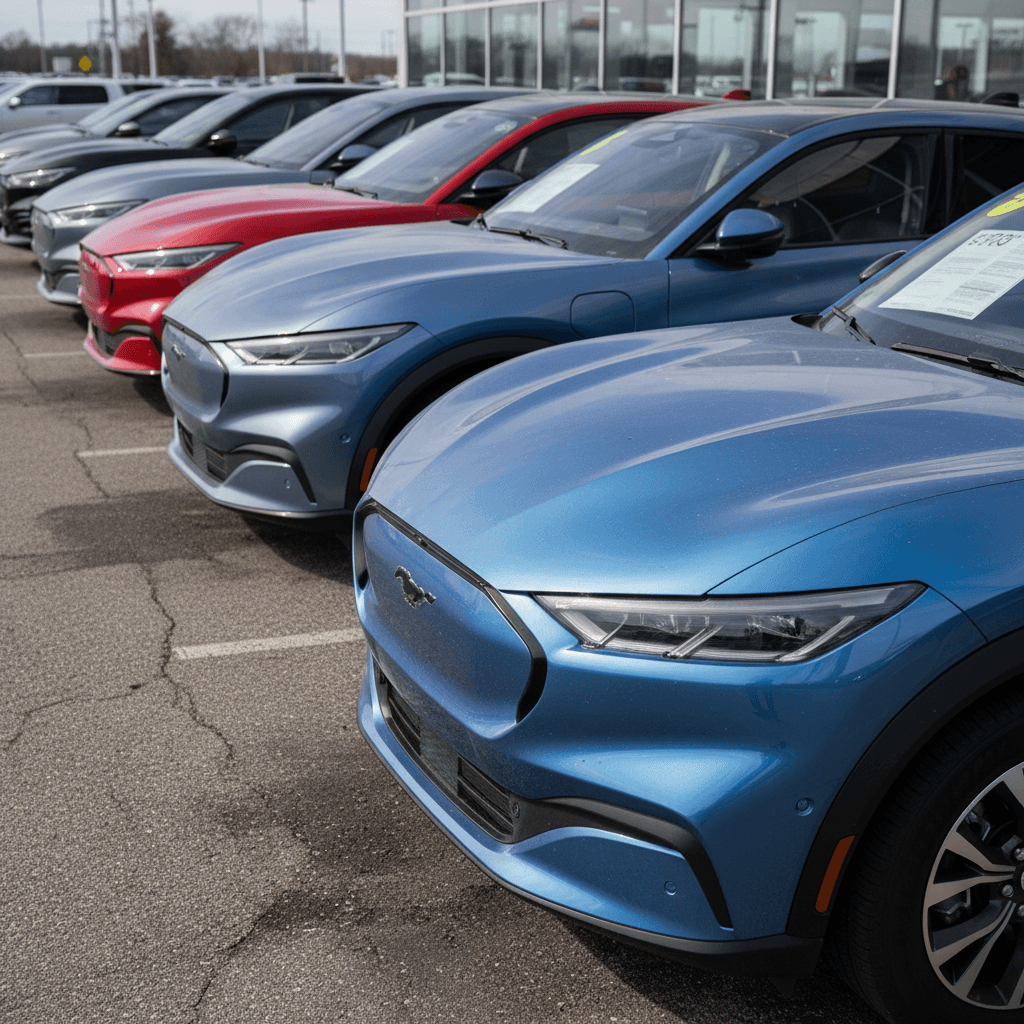
The Mustang Mach-E has gone through more price whiplash than most EVs. Ford hiked prices during the chip shortage, then cut them in 2023 to stay competitive with Tesla and qualify for federal tax credits. At the same time, used EV values corrected hard from their 2022 peaks. That combination leaves 2026 buyers and sellers trying to make sense of a market where a nearly new Mach-E can list tens of thousands below its original MSRP.
Mustang Mach-E pricing snapshot heading into 2026
In other words, the Mach-E is a textbook case of a modern EV whose sticker price, transaction price, and resale value can tell three very different stories. That’s exactly why going into 2026 with a data‑driven view matters, especially if you’re planning a 3–5 year ownership window.
Where prices stand today: 2024–2025 baseline
To forecast 2026, you first need a clean baseline for late‑2024 and 2025 pricing in the U.S. market. Here’s the big picture of where things have landed after Ford’s latest round of adjustments and incentives:
Approximate U.S. Mustang Mach-E price ranges heading into 2026
Representative price bands for context only, individual deals vary by region, incentives, and equipment.
| Model / market | Typical range | Notes |
|---|---|---|
| New 2024–2025 Mach-E Select / base trims | $40,000–$45,000 | MSRP including destination but before tax credits or dealer discounts. |
| New 2024–2025 Mach-E Premium / mid trims | $45,000–$55,000 | Better equipment and larger battery packs push prices higher. |
| New 2024–2025 Mach-E GT / Rally | $55,000–$65,000+ | Performance and off‑road‑oriented trims still command a premium. |
| Recent used (2023–2024) Mach-E, average | Around $31,000 | Based on used‑car price index data for late model years. |
| Early used (2021–2022) Mach-E | Mid‑$20,000s to low‑$30,000s | Higher miles and faster early depreciation create more bargains. |
These bands combine public MSRP data, dealer listings, and used‑market indices to frame a realistic starting point for 2026 forecasting.
MSRP vs what people actually pay
Ford Mustang Mach-E price forecast 2026: new MSRP
Looking at Ford’s recent pricing behavior, battery cost trends, and competitive pressure from Tesla, Hyundai/Kia, and GM, it’s unlikely that Ford will either slash or spike Mach-E MSRPs dramatically for the 2026 model year. The more probable path is a modest upward creep on paper, offset by richer incentives and lease support where needed.
2026 Mustang Mach-E new‑price scenarios
What you can realistically expect to see on the window sticker in 2026 (before incentives).
Base / Select‑type trims
Forecast 2026 MSRP band: roughly $41,000–$46,000.
- Small nominal increases to cover materials, labor, and software content.
- Ford needs an attainable price point to stay IRA‑credit‑competitive.
- Expect more “content shuffling” (features made optional) rather than big price jumps.
Mid / Premium‑type trims
Forecast 2026 MSRP band: about $47,000–$56,000.
- Battery size, AWD, and tech packages keep pushing transaction prices upward.
- Competition from Hyundai Ioniq 5, Kia EV6, and Model Y caps how far Ford can go.
GT, Rally & performance trims
Forecast 2026 MSRP band: roughly $58,000–$68,000+.
- Performance trims retain headroom, buyers here are less price‑sensitive.
- However, Ford can’t ignore Model Y Performance or hot Korean EVs, so huge hikes are unlikely.
What about “feature creep” in 2026?
In practice, the new‑vehicle conversation in 2026 is going to revolve less around MSRP and more around the effective price once you factor in tax credits, Ford’s own programs, and dealer‑level concessions.
Used Ford Mustang Mach-E price forecast for 2026
Used EVs, including the Mach-E, already absorbed a painful depreciation reset in 2023–2024 as supply normalized and demand cooled. Going into 2026, the question is whether they keep falling, flatline, or rebound. The most realistic outcome is a much slower, more traditional depreciation curve from here, think steady, not cliff‑like.
2021–2022 model years in 2026
By calendar‑year 2026, the earliest Mach-E builds will be 4–6 years old with a clear battery‑health track record. Assuming typical mileage and no major accident history:
- Forecast retail asking prices: roughly $22,000–$30,000 for mainstream trims.
- Higher‑mileage units or cars with cosmetic issues can dip into the high teens.
- Clean GT examples should stay toward the top of that band or slightly above.
2023–2024 model years in 2026
These are sweet‑spot used buys: new enough to have current‑generation tech, old enough to have taken the worst of the depreciation.
- Forecast retail asking prices: approximately $26,000–$36,000, depending on trim and mileage.
- Well‑optioned Premium and GT trims will lean toward the upper half of that range.
- Low‑mile one‑owner examples will command premiums, especially with verified battery health.
Why 3–4‑year‑old Mach-Es may be the value sweet spot
One wild card is policy. If used‑EV tax credits expand or become easier to claim at the point of sale, that support can buoy used Mach-E values slightly, especially for lower‑priced trims that fall under price caps. But the core driver will remain simple supply and demand: how many Mach-Es are coming off lease and how many EV shoppers are comfortable buying used.
Mustang Mach-E lease payment outlook for 2026
Leasing has been one of Ford’s sharpest tools with the Mach-E because lenders can claim federal credits even when customers can’t. That flexibility has already produced eye‑catching deals, especially on remaining 2023–2024 inventory, and there’s no sign Ford will abandon that playbook in 2026.
What a 2026 Mach-E lease could look like
High‑level scenarios for well‑qualified U.S. lessees, assuming average mileage allowances and typical incentives.
Scenario 1: Incentive‑rich months
Stacked federal pass‑through credits, Ford lease cash, and dealer discounts can push payments down.
- Likely payments: high‑$300s to low‑$400s/month on base and mid trims with modest drive‑offs.
- Expect these deals around quarter‑ends and model‑year changeovers.
Scenario 2: “Normal” months
With fewer stackable programs, lease math gets less aggressive.
- Likely payments: mid‑$400s to low‑$500s/month on typical builds.
- More money due at signing or longer terms (39–48 months) to hit headline figures.
Scenario 3: Low‑support trims
Some high‑demand GT/Rally builds or limited editions may see lighter support.
- Likely payments: mid‑$500s to $600s/month even for strong credit.
- Residual‑value risk shifts back to you if the market softens further.
Leasing vs. buying in a volatile EV market
Key factors that will move Mach-E prices in 2026
Forecasts are only as good as the assumptions behind them. When you’re planning a Mach-E purchase or sale in 2026, keep your eye on these forces, they’re what will push prices above or below the ranges outlined above.
- Battery and component costs: Continued declines in cell and electronics costs give Ford room to hold or cut effective prices, even if list MSRPs inch up.
- Production footprint: Shifting more Mach-E battery production to North America can both support IRA eligibility and reduce logistics cost over time.
- Competitive pressure: Tesla Model Y pricing and aggressive Korean crossovers (Ioniq 5, EV6) remain the key benchmarks Ford can’t ignore.
- Policy and incentives: Any change to federal or state EV incentives, or how they’re applied to leases vs. purchases, can quickly alter the effective price landscape.
- Used‑EV sentiment: If mainstream buyers become more comfortable with used EVs, and tools for measuring battery health become commonplace, demand can firm up values.
- Recalls and reliability perception: Software‑fixable recalls are one thing; anything that undermines trust in the Mach-E’s drivetrain or battery could widen discounts, especially on older inventory.
Don’t ignore recall history when pricing a Mach-E
Should you buy new or used in 2026?
Why a new 2026 Mach-E might make sense
- You want the latest software, safety features, and battery chemistry.
- Lease programs or captive‑finance rates make effective cost competitive with used.
- You plan to keep the vehicle for 7–10 years, so short‑term depreciation matters less.
- You need specific options or colors that are rare on used inventory.
In this scenario, your job is to grind the effective price down with a smart combination of incentives, trade‑in value, and careful timing.
Why a 3–4‑year‑old Mach-E may be smarter
- The steepest depreciation is already baked in, especially for 2022–2023 builds.
- You can prioritize low‑mileage, clean‑history examples with strong battery‑health scores.
- You’ll often get more equipment for the same monthly payment versus a bare‑bones new lease.
- Shorter ownership horizons (3–5 years) make buying lightly used financially compelling.
Here, your advantage is information: knowing which cars have healthy batteries, clean titles, and no hidden issues is worth more than chasing the absolute lowest advertised price.
How Recharged helps you shop Mach-E prices smarter
Price forecasting is only useful if you can act on it. That’s where a data‑driven used‑EV marketplace like Recharged changes the game for Mach-E shoppers and sellers in 2026.
What Recharged adds to your 2026 Mach-E decision
Beyond the sticker: making sense of value, risk, and total cost of ownership.
Recharged Score battery diagnostics
Every Mach-E listed on Recharged comes with a Recharged Score Report that includes verified battery‑health diagnostics.
That means you’re not guessing about pack degradation, you can compare two similar‑priced Mach-Es on hard data, not just odometer readings and photos.
Fair‑market pricing & financing
Recharged analyzes live market data to keep pricing aligned with real‑world values, not just book numbers.
You can also line up financing, factor in your trade‑in, and even get an instant offer or consignment help if you’re selling a Mach-E into this evolving 2026 market.
Nationwide delivery & EV‑specialist support
Because Recharged operates fully digitally with nationwide delivery and an Experience Center in Richmond, VA, you’re not limited to whatever a single local dealer has in stock.
EV‑specialist advisors can walk you through trims, home‑charging needs, and long‑term cost differences between the options you’re considering.
Ready to find your next EV?
Browse VehiclesUsing the 2026 forecast to your advantage
Checklist: how to evaluate a used Mustang Mach-E in 2026
Step‑by‑step: sanity‑check a 2026 Mach-E price
1. Anchor against realistic price bands
Start by placing the car in the right ballpark: year, trim, mileage, and condition should line up with the 2026 price ranges above. If a 2022 Premium is priced like a 2024 GT, something needs to justify that gap.
2. Pull a detailed battery‑health report
Battery health is the single biggest swing factor in used‑EV pricing. On Recharged, the Recharged Score includes diagnostics; elsewhere, push the seller for documented state‑of‑health data or recent service records.
3. Check for open recalls and software updates
Use the VIN to confirm all recalls, particularly those involving latches or park‑system software, have been resolved. A completed recall isn’t a dealbreaker; an ignored one is a negotiation lever or a reason to walk.
4. Compare total monthly cost, not just price
Fold in interest rate, taxes, insurance, and expected charging costs. A cheaper sticker on a high‑rate loan can cost more per month than a slightly higher‑priced car with better financing or a lower insurance quote.
5. Test real‑world range and charging behavior
On a pre‑purchase inspection or extended test drive, verify that DC fast‑charging speeds, displayed range, and thermal behavior look normal for the age and mileage. Outliers here can foreshadow costly headaches.
6. Weigh depreciation against your time horizon
If you’re likely to sell again in 2–3 years, lean toward cleaner, lower‑mile examples priced at or below market. If you plan to drive the Mach-E into the ground, it may be worth paying a little more for exactly the spec you want.
FAQ: Ford Mustang Mach-E price forecast 2026
Common questions about Mach-E pricing in 2026
Bottom line on the 2026 Mustang Mach-E market
By 2026, the Ford Mustang Mach-E will no longer be a quirky early‑adopter choice; it will be an established EV with a deep used market, a history of software updates and recalls, and a clear competitive set. That makes the price landscape both more predictable and more nuanced. MSRPs are likely to drift up modestly, but real‑world transaction prices, especially on leases and 3–4‑year‑old used examples, will still be heavily shaped by incentives, battery health, and local supply–demand imbalances.
If you anchor your expectations to realistic 2026 price bands, insist on transparent battery‑health data, and compare total cost of ownership rather than just monthly payments, the Mach-E can be one of the most compelling EV buys of the year. And if you want a head start, browsing verified‑battery‑health Mach-Es on Recharged is an easy way to see where the market is actually clearing today, not just what’s printed on the window stickers.