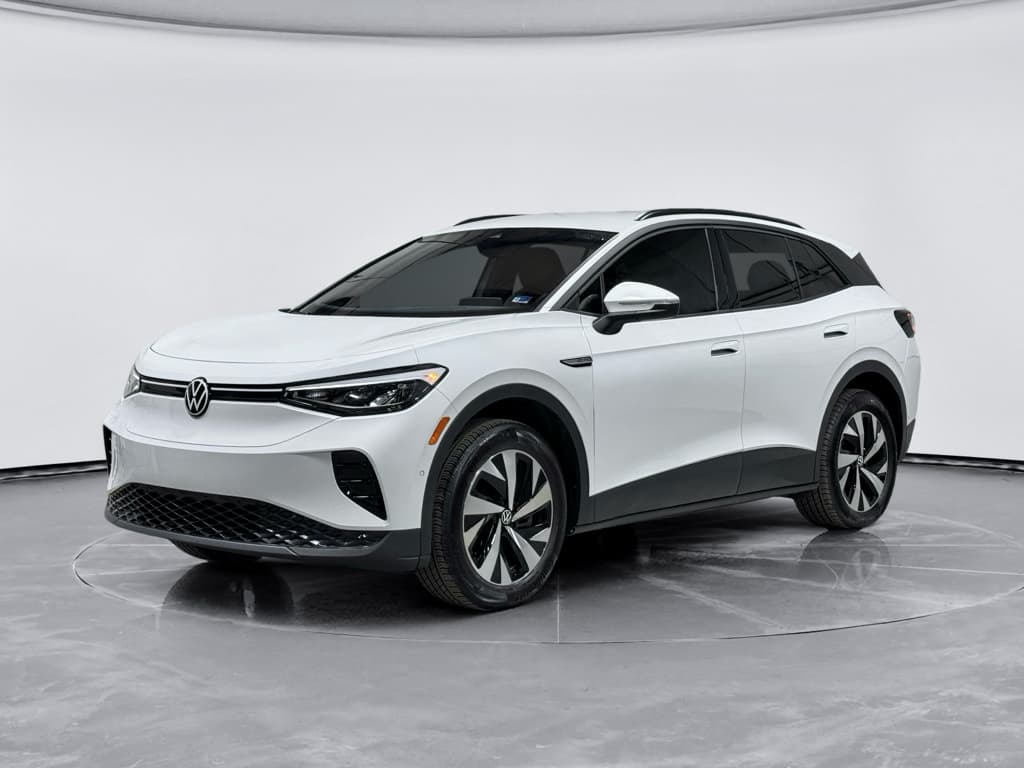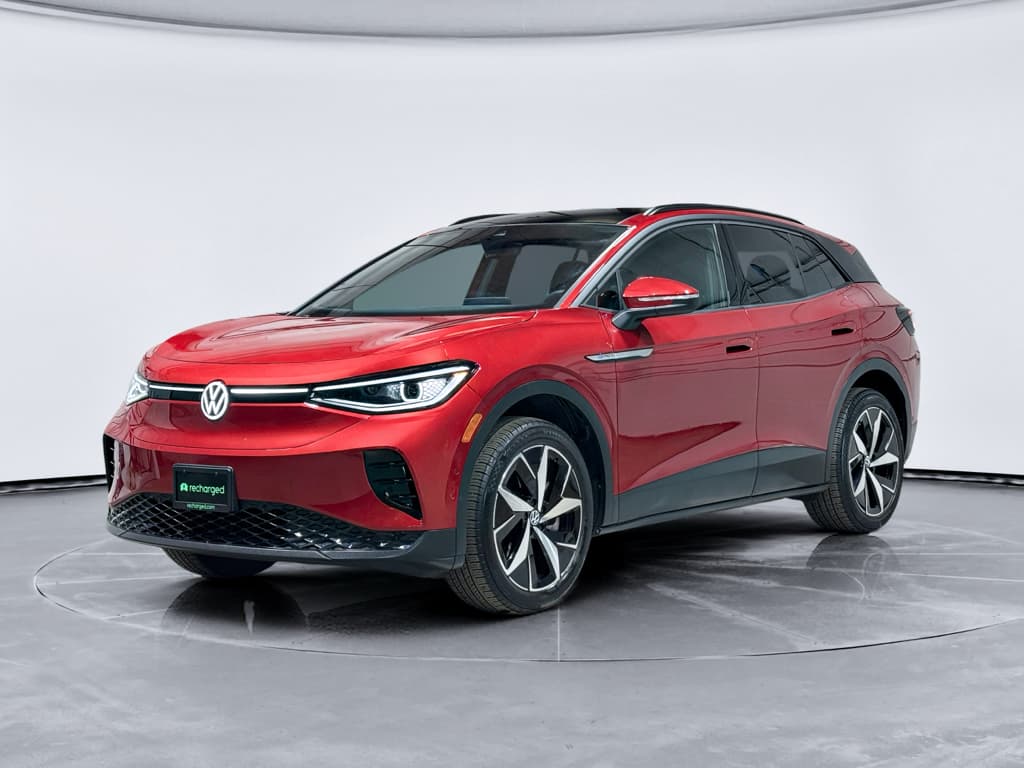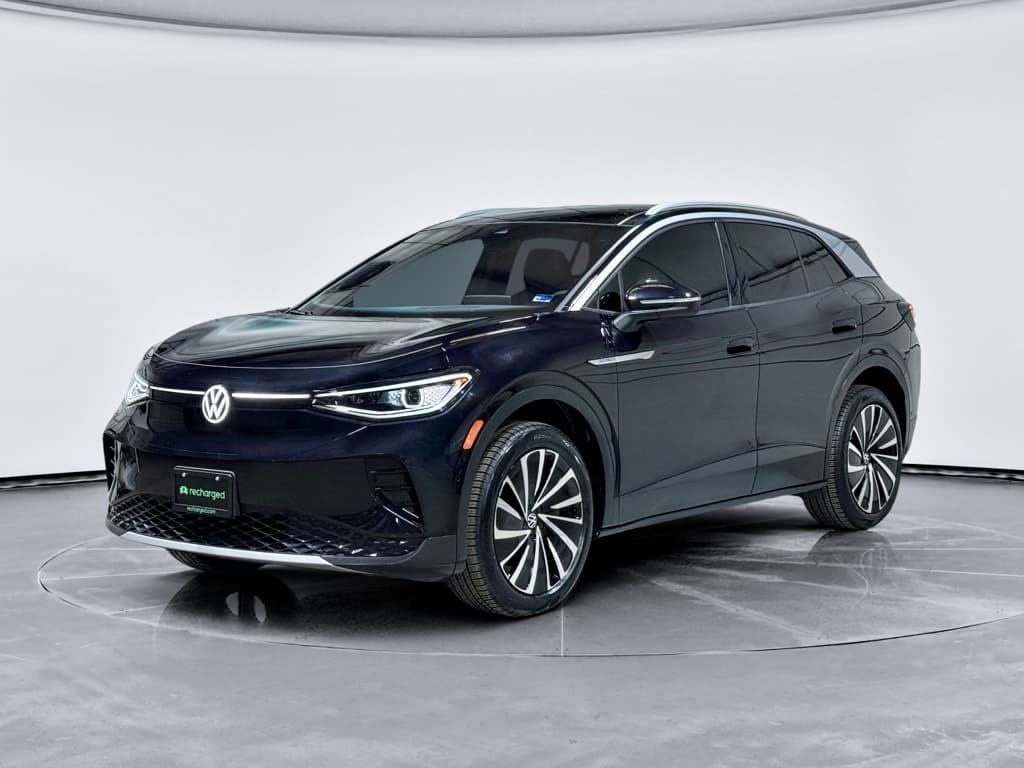
If you’re looking at a 2024 Volkswagen ID.4, you’ve probably heard a mix of praise for its comfortable ride and frustration about lingering bugs. The 2024 Volkswagen ID.4 solves some early‑production headaches but still has a distinct pattern of software, charging, and recall‑related issues you should understand, especially if you’re buying used.
Quick take
2024 Volkswagen ID.4 reliability at a glance
2024 ID.4 reliability snapshot
Volkswagen carried much of the hardware from earlier ID.4 model years into 2024, but added updated software and revised components. That’s good news for range and driving feel, but it also means some old headaches linger, especially around control modules and electronics, while new bugs occasionally appear after software updates.
Why model year matters
Biggest 2024 Volkswagen ID.4 problems owners report
- Persistent software and infotainment glitches (frozen screen, laggy menus, buggy app integration).
- Intermittent charging issues, especially DC fast‑charging sessions ending early or failing to start cleanly.
- High‑voltage battery recall campaigns on certain 2023–2024 builds for potential fire risk or charging malfunctions.
- Driver‑assistance quirks such as false forward‑collision warnings or lane‑keep nudges that feel inconsistent.
- Annoyances with interior build quality: rattles, squeaks, flammable interior fabric recall, loose trim and problematic door handles on some cars.
- Occasional powertrain or "electric drive system" error messages that require software updates or module replacement.
Start with the VIN
Software, infotainment and app glitches
If there’s a single theme that defines modern Volkswagens, and especially the ID.4, it’s software. The 2024 ID.4 has more processing power and newer software than early models, but owners still report quirky and sometimes frustrating behavior from the infotainment and digital controls.
Common 2024 ID.4 software issues
Most are annoying more than dangerous, but they matter for day‑to‑day livability.
Frozen or laggy touchscreen
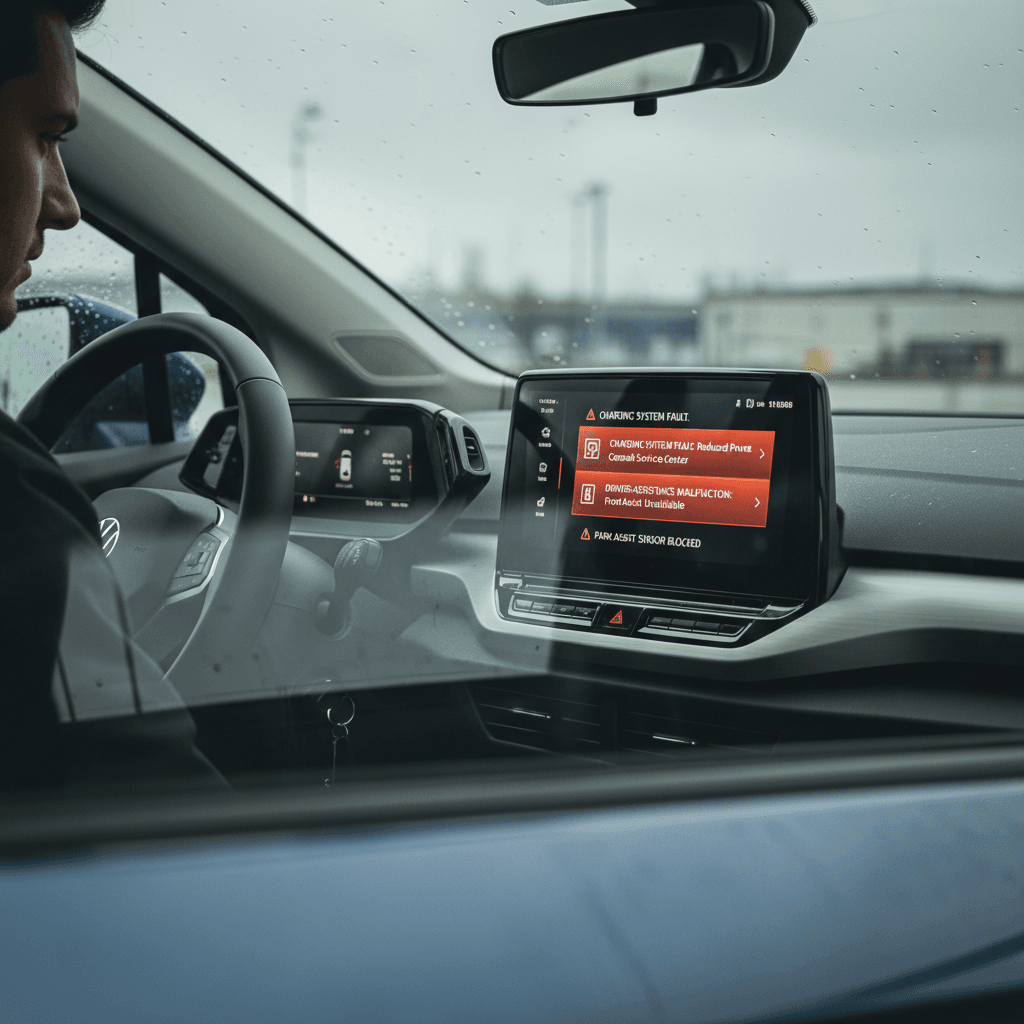
The main screen may freeze, lag badly, or reboot itself mid‑drive. Climate, navigation, and drive‑mode changes can become temporarily unavailable.
VW app connection issues
Some owners struggle with the MyVW app not refreshing state of charge, failing to start pre‑conditioning, or losing the car’s connection after updates.
Random warning messages
Intermittent alerts such as "electric drive malfunction" or sensor errors sometimes clear after a restart but can worry new owners.
Why it happens
How to fix or reduce 2024 ID.4 software headaches
1. Check for the latest software version
In the vehicle settings menu, confirm what software version your ID.4 is running. If it’s behind the latest release, ask the dealer to perform an update or enable OTA updates if applicable.
2. Power‑cycle the vehicle correctly
When the screen locks up, turn the car off, exit, lock it, and wait several minutes before re‑entering. This forces a deeper shutdown than just hitting the start/stop button.
3. Re‑pair your phone and reset app permissions
On both your phone and the car, delete the Bluetooth pairing and remove the vehicle from the app, then set it up again from scratch. Make sure the app has background and location permissions.
4. Document repeatable bugs
If a particular glitch happens often, say, the backup camera goes black, record a short video and note the conditions. Dealers and VW technical support take reproducible problems more seriously.
5. Ask about technical service bulletins (TSBs)
TSBs are factory‑approved fixes for known issues. They’re not recalls, but dealers can often apply them under warranty when you complain about the matching symptom.
Good news on software
Charging issues: home, public, and fast charging
The 2024 ID.4 generally charges as advertised, but a chunk of owner complaints focus on quirky charging behavior, especially with DC fast chargers and certain public networks. These issues can be tricky to diagnose because they sit at the intersection of the car, the charger, and sometimes the app or payment system.
Typical 2024 ID.4 charging complaints
- Fast‑charging sessions that stop early or won’t initiate without several plug/unplug cycles.
- "Charging fault" or "charging station error" messages at certain DC fast‑charging brands.
- AC home charging that intermittently pauses, especially on smart load‑sharing setups.
- Slow ramp‑up to peak DC speeds in cold weather, even after some pre‑conditioning.
What’s usually at fault?
- Software handshake glitches between the ID.4 and specific charging networks.
- Overly sensitive safety logic that shuts the session down over minor power fluctuations.
- Home wiring or breaker sizing that can’t support the amperage you’ve set in the car.
- Battery temperature, cold packs simply won’t accept peak power until warmed up.
Is it the car or the charger?
Step‑by‑step: troubleshooting 2024 ID.4 charging problems
1. Start with the basics
Inspect the charge port and connector for debris or damage. Make sure the connector seats firmly with no visible gap, and that the station cable isn’t under tension.
2. Test multiple stations and cables
Try different stalls at the same site, then a different brand in another location. Note where problems happen, this pattern is invaluable to the dealer and VW support.
3. Verify your home electrical setup
For home Level 2, confirm the outlet, breaker size, and wiring match the charger’s rating. If the breaker trips or the car pauses, ask a licensed electrician to inspect the circuit.
4. Pre‑condition in cold weather
If your 2024 ID.4 supports battery pre‑conditioning, start it before you arrive at the DC fast charger, especially in winter. Warmer packs take higher power and charge more consistently.
5. Request a charging‑system diagnostic
If problems persist across multiple locations, ask the dealer to scan for error codes in the high‑voltage charging system, on‑board charger, and charge‑port control module.
High-voltage battery concerns and recalls
Recent recall campaigns have put the ID.4’s high‑voltage battery system in the spotlight. Certain 2023–2024 ID.4s are included in recalls related to potential battery fire risk or charging malfunctions. In practice, serious incidents are rare, but you absolutely want to know where any specific 2024 ID.4 stands.
Key recall themes affecting 2023–2024 Volkswagen ID.4
Exact coverage depends on production date and VIN, so always verify with an official recall lookup.
| Issue theme | Affected years (general) | Risk if ignored | Typical remedy |
|---|---|---|---|
| High-voltage battery defect / fire risk | 2023–2024 (specific VIN ranges) | Thermal event (fire) in rare cases; more often, failure to charge correctly. | Battery inspection, software update, and in some cases high‑voltage battery replacement. |
| Battery charging module fault | 2024 (with related Audi Q4 e-tron) | Charging stops unexpectedly or won’t start; may strand drivers on trips. | Updated power electronics, charger control module reflash, or hardware replacement. |
| Flammable interior fabrics | 2023–2024 | Certain interior trim pieces may not meet flammability standards. | Dealer replaces affected trim with compliant parts. |
| Door handle / structure issues | Varies by VIN (through 2024) | Water intrusion, battery drain, or unintentional door unlocking. | Door‑handle seal or component replacement; control‑module updates. |
This is a high‑level summary, not a substitute for checking your VIN on an NHTSA or VW recall site.
Don’t ignore battery recalls
Remember that the ID.4’s traction battery is covered by an 8‑year/100,000‑mile warranty (from original in‑service date) against excessive capacity loss or manufacturing defects. That’s a major safety net, but only if prior owners didn’t neglect recall work or skip diagnostic visits when early symptoms popped up.
Driver-assistance and safety system quirks
Volkswagen’s IQ.DRIVE suite on the 2024 ID.4 bundles adaptive cruise control, lane‑keep assist, and automatic emergency braking. When it works, it makes the ID.4 an easy commuter. Owners, however, report quirky and sometimes unnerving behavior from these systems.
- Unexpected beeps or steering nudges from lane‑keep assist on poorly marked roads.
- Forward‑collision warnings that feel oversensitive in stop‑and‑go traffic.
- Momentary disabling of driver‑assist features after a sensor gets obscured by snow, ice, or road grime.
- Rare but serious complaints about unintended acceleration or braking behavior that require immediate investigation.
Treat odd behavior as a safety issue
Making IQ.DRIVE behave better
1. Keep sensors and cameras clean
Front radar and windshield cameras are sensitive to dirt and ice. A quick wipe can resolve many temporary warnings about unavailable driver‑assist features.
2. Adjust assist settings
Within the car’s settings, you can tune how aggressively lane‑keeping and distance control react. Slightly less aggressive settings often feel more natural.
3. Apply relevant software updates
Some driver‑assist quirks are reduced by updated control‑module software. Ask the dealer to check for TSBs related to IQ.DRIVE behavior for your VIN.
4. Know when to turn features off
On construction zones, narrow rural roads, or in heavy snow, it’s reasonable to deactivate lane‑keeping or adaptive cruise temporarily and drive manually.
Interior, trim and build-quality complaints
Compared with some competitors, the 2024 ID.4’s cabin earns mixed reviews. The driving position and space are strong, but owners frequently mention squeaks, rattles, and control frustrations over time.
Common 2024 ID.4 interior and build-quality issues
Most are livability problems rather than safety concerns, but they affect satisfaction.
Rattles and squeaks
Noises from the dash, doors, or cargo area show up on rough roads. Dealers can sometimes chase them down with updated clips or padding.
Piano-black trim wear
Glossy black surfaces on doors and center console scratch easily and highlight fingerprints. It’s mostly cosmetic, but it annoys many owners.
Door handles & seals
Some ID.4s have door‑handle issues or water intrusion, which have been the subject of recall work and TSBs. Make sure any campaigns are complete.
Use the warranty for rattles too
How Volkswagen handles fixes: warranty, TSBs and recalls
Understanding how Volkswagen classifies problems will help you get them fixed with less drama. Issues on the 2024 ID.4 generally fall into three buckets: warranty repairs, technical service bulletins (TSBs), and recalls.
1. Warranty repairs
Any defect on a 2024 ID.4 within 4 years/50,000 miles (from original in‑service date) generally falls under the basic warranty. Dealers are reimbursed by VW for covered repairs, so don’t be shy about asking.
2. Technical Service Bulletins
TSBs tell dealers how to fix known problems, for example, a specific software update for charging faults. They’re not always publicized like recalls, so you may need to ask directly whether any TSBs apply to your symptoms.
3. Recalls
Recalls address safety or regulatory issues, such as high‑voltage battery risks or interior flammability. These repairs are free, regardless of warranty status, but they must be done by an authorized VW dealer.
How used shoppers can protect themselves
Diagnosing and fixing common 2024 ID.4 issues
Most 2024 ID.4 problems can be grouped into a few scenarios. Here’s how I’d approach each one as a shopper or owner.
Real‑world 2024 ID.4 problem scenarios and fixes
Use these as blueprints when you see similar symptoms.
Scenario 1: "Electric drive system" warning
What you feel: Warning appears in the cluster, sometimes with reduced power or the car stuck in Neutral after charging.
First steps: Safely pull over, power the car off, wait several minutes, then restart. If the warning returns quickly, schedule dealer service and avoid long trips.
Likely fix: Software update to the drive‑unit controller or replacement of a control module or related component under warranty.
Scenario 2: Persistent fast-charging failures
What you feel: DC fast‑charging sessions fail to start at multiple locations, or stop within a minute with a fault message.
First steps: Collect photos of the charger screen, car display, and note station brand, stall number, and temperature. Try one more network for comparison.
Likely fix: Dealer charging‑system diagnostic, updated software, and in some cases replacement of the onboard charger, charge‑port hardware, or related wiring.
Scenario 3: App never talks to the car
What you feel: The MyVW app won’t refresh state of charge, remote start fails, or the car disappears from the app.
First steps: Delete and reinstall the app, remove the car, and re‑add it. Re‑pair Bluetooth and confirm cellular data is enabled.
Likely fix: If the issue persists, the dealer may need to reset or replace the telematics module and confirm server‑side provisioning.
Scenario 4: Rattles and trim problems
What you feel: Buzzes from the dash or doors, or misaligned interior panels.
First steps: Reproduce the noise on a specific road and film or record it. Note vehicle speed and temperature.
Likely fix: Dealer applies updated clips, felt tape, or replaces offending trim pieces under warranty. Some owners also use aftermarket felt pads for quick relief.
Buying a used 2024 Volkswagen ID.4: what to check
The 2024 ID.4 can be a smart used EV buy if you separate one‑off headaches from genuine problem cars. Because this model year is still relatively new, many examples are coming off short leases or early trades, some from owners tired of chasing glitches, others simply moving on.
Pre‑purchase checklist for a used 2024 ID.4
1. Run a full VIN recall and campaign check
Use an official recall lookup to confirm that all safety campaigns, including high‑voltage battery and flammable interior trim, are marked as completed. Ask the seller for proof of completion if the records aren’t visible yet.
2. Review service history for repeat complaints
Scan repair orders for repeated mentions of the same issue: charging faults, drive‑system warnings, or module replacements. One fix is normal; three or four visits for the same thing is a red flag.
3. Test charging on both Level 2 and DC fast
Before you sign, plug into a known‑good Level 2 station and at least one DC fast charger. Confirm the car starts charging promptly, ramps up to expected power, and doesn’t throw warnings.
4. Check software level and screen behavior
During the test drive, use navigation, change drive modes, and adjust climate. Watch for lag, reboots, or black screens. Ask the seller when the last software update was performed.
5. Listen for noises on rough pavement
Drive over expansion joints and coarse asphalt with the radio off. Minor sounds can be fixed, but persistent loud rattles may hint at build‑quality issues.
6. Get independent battery health data
Battery condition is the heart of any used EV. At Recharged, every vehicle gets a Recharged Score battery‑health diagnostic so you can see measured capacity and fast‑charge history before you buy.
How Recharged can help
Ready to find your next EV?
Browse VehiclesFAQ: 2024 Volkswagen ID.4 problems and fixes
Frequently asked questions about 2024 ID.4 problems
Bottom line: is the 2024 ID.4 a problem car?
The 2024 Volkswagen ID.4 is not a rolling disaster, but it is a tech‑heavy SUV that demands an informed owner. If you can live with the occasional software quirk and you verify that recalls and updates are current, it delivers comfortable, quiet electric driving with family‑friendly space.
Where shoppers get into trouble is assuming every ID.4 is the same. In reality, individual vehicle history, how often it’s been in for charging faults, whether the battery recall is complete, how up‑to‑date the software is, matters enormously. Do your homework, insist on documentation, and lean on tools like a Recharged Score battery‑health report if you’re buying used.
If you approach a 2024 ID.4 with eyes open, you can filter out the problem children and focus on the solid examples. In that light, the ID.4 becomes what it was meant to be: an approachable, reasonably priced gateway into EV ownership rather than a source of constant anxiety.