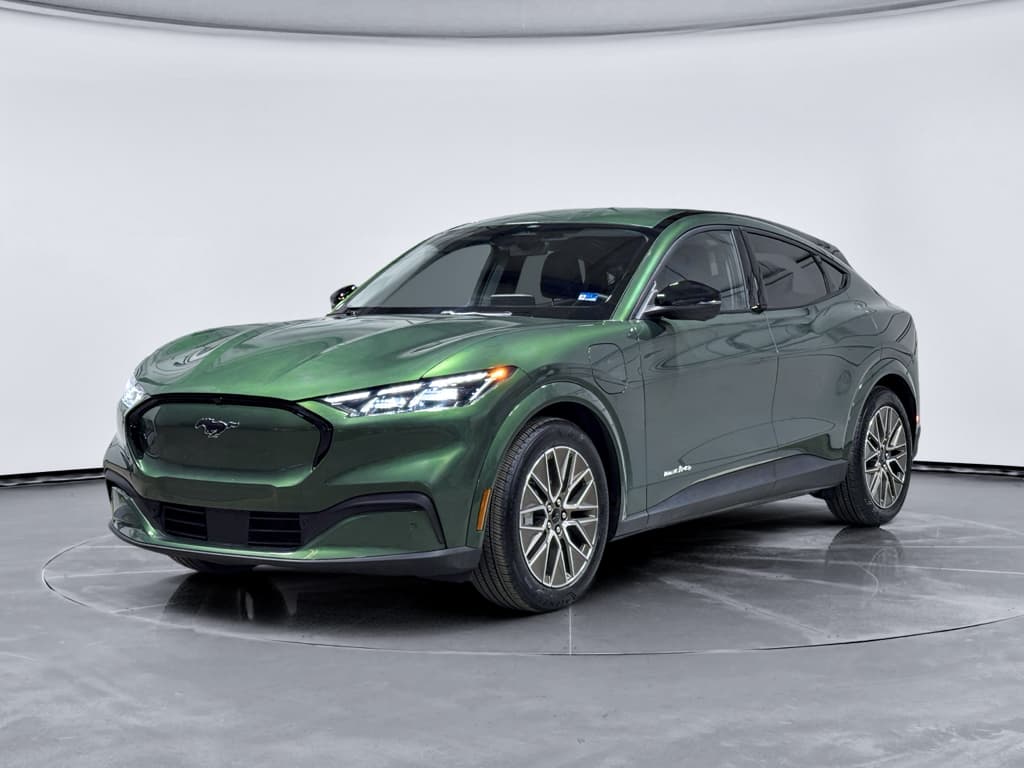
If you’re cross‑shopping a Ford Mustang Mach‑E against a gas SUV, the question that really matters isn’t just “What’s the range?”, it’s **how much it costs per mile to charge and drive**. The good news: once you understand a couple of efficiency numbers and your local electricity rate, you can estimate your Ford Mustang Mach‑E charging cost per mile with surprising accuracy.
Key takeaway up front
Mach‑E charging cost per mile: the short answer
Typical Ford Mustang Mach‑E charging cost per mile (U.S. averages, 2026)
Those ranges are broad on purpose. Your **exact Ford Mustang Mach‑E charging cost per mile** depends on three variables you can mostly control:
- How efficient your specific Mach‑E trim is (kWh used per 100 miles).
- What you pay per kWh at home (and whether you have a time‑of‑use or off‑peak rate).
- How often you rely on **public Level 2 or DC fast charging**, which is usually 2–4× the price of home energy.
The simple formula
The efficiency numbers that drive Mach‑E cost per mile
Ford sells the Mustang Mach‑E in multiple trims (Select, Premium, California Route 1/“Rallye”, GT; standard‑range and extended‑range batteries, RWD or AWD). Official EPA and ENERGY STAR data put **most variants in roughly the 29–35 kWh/100 miles range**, or about **2.9–3.4 miles per kWh** under mixed driving.
Approximate Ford Mustang Mach‑E efficiency by trim
Representative efficiency numbers to use when working out charging cost per mile. These are rounded for simplicity and will vary with driving style, temperature and wheel/tire choice.
| Trim type | Battery | Drive | Approx. kWh/100 mi | Approx. mi/kWh |
|---|---|---|---|---|
| Select / Premium SR | Standard‑range | RWD | 31 | 3.2 |
| Select / Premium SR | Standard‑range | AWD | 33 | 3.0 |
| Premium / California ER | Extended‑range | RWD | 29 | 3.45 |
| Premium / California ER | Extended‑range | AWD | 31–32 | 3.1–3.2 |
| GT / Performance | Extended‑range | AWD | 34–35 | 2.9–3.0 |
If you know your actual mi/kWh from the Mach‑E’s trip computer, use that instead of these rounded EPA‑style figures.
In the real world, many Mach‑E owners report **around 3.0–3.7 mi/kWh in mild weather** and **2.0–3.0 mi/kWh in winter or at high speeds**. For cost planning, it’s reasonable to assume **3.1–3.3 mi/kWh** if you live in a temperate climate and drive a mix of city and highway.
Cold weather penalty is real
Ford Mustang Mach‑E home charging cost per mile
Home is where the Mach‑E really pays off. In 2025–2026, the **average U.S. residential electricity rate** is in the high‑teens cents per kWh, roughly **$0.17–$0.19/kWh nationally**, with plenty of states lower and some coastal markets well above that. Let’s walk through example math using **$0.18/kWh** as a reasonable benchmark.
Home charging cost per mile: Mach‑E example math
Use your own rate and efficiency, but these scenarios show the ballpark.
Average driver
Inputs
- Electricity: $0.18/kWh
- Efficiency: 31 kWh/100 mi (~3.2 mi/kWh)
Math
$0.18 × 31 ÷ 100 ≈ $0.056 per mile
Cheap‑electricity state
Inputs
- Electricity: $0.13/kWh
- Efficiency: 31 kWh/100 mi
Math
$0.13 × 31 ÷ 100 ≈ $0.040 per mile
High‑cost metro
Inputs
- Electricity: $0.25/kWh
- Efficiency: 33 kWh/100 mi (~3.0 mi/kWh)
Math
$0.25 × 33 ÷ 100 ≈ $0.083 per mile
For a typical Mach‑E owner driving **12,000 miles per year** and charging mostly at home at $0.18/kWh, that works out to something like **$670/year in “fuel”** (12,000 × $0.056), or about **$55 per month**. In a cheap‑power state, you can realistically be in the **low‑$40s per month** for the same mileage.
Time‑of‑use rates can cut this further
Public charging: what a Mach‑E costs per mile on the road
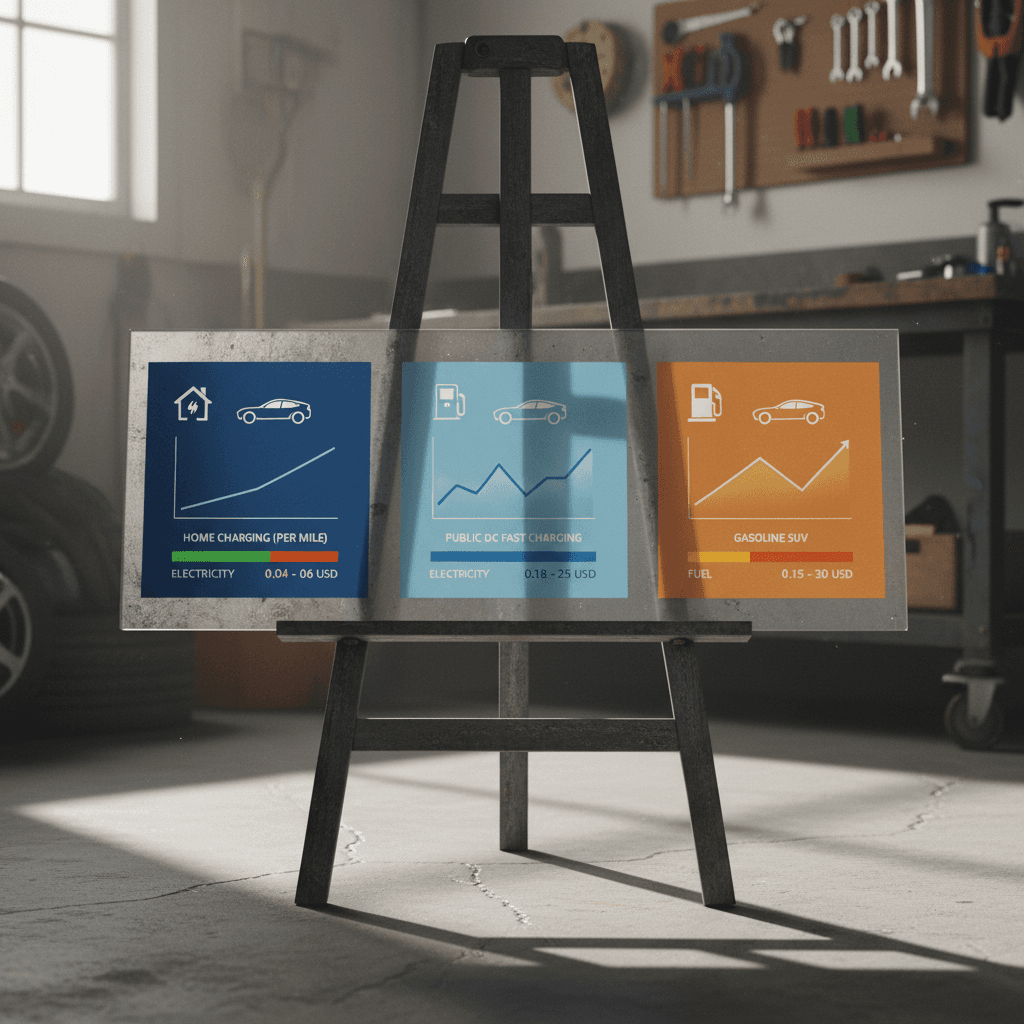
Public charging is where EV economics get more complicated. You’re paying not just for energy, but also for convenience, hardware, and real estate. **Level 2 public stations** often charge more than residential rates, and **DC fast charging** can be 2–4× the cost of home electricity.
Level 2 public charging
At hotels, parking garages, and workplaces, Level 2 public stations are often priced **around $0.20–$0.35/kWh**, or sometimes a flat session fee. Using the same ~31 kWh/100 mi efficiency:
- At $0.25/kWh → $0.25 × 31 ÷ 100 ≈ $0.078 per mile
- At $0.30/kWh → ≈ $0.093 per mile
That’s still usually cheaper per mile than gasoline, just not as cheap as home charging.
DC fast charging
On big U.S. networks like Electrify America and others, **2025–2026 pay‑as‑you‑go DC fast rates** are commonly in the **$0.35–$0.50/kWh** band, with some high‑cost locations higher and membership plans a bit cheaper.
- At $0.40/kWh, 31 kWh/100 mi → $0.124 per mile
- At $0.50/kWh, 33 kWh/100 mi → $0.165 per mile
Membership discounts might knock those numbers down by 15–25%, but DC fast will almost always cost more per mile than plugging in at home.
Don’t road‑trip on DC fast alone if you’re chasing savings
Mach‑E vs gasoline SUV: cost per mile comparison
To understand what your Ford Mustang Mach‑E charging cost per mile really means, you need a baseline. A typical compact/midsize gas SUV today returns **about 25–30 mpg combined**. Let’s assume **28 mpg** and a **$3.75 per gallon** national gasoline price for illustration.
Mach‑E vs gasoline SUV: example fuel cost per mile
Illustrative numbers for an average U.S. driver. Plug in your own rates and mpg to tailor this to your situation.
| Scenario | Energy price | Efficiency | Cost per mile |
|---|---|---|---|
| Mach‑E, home charging (national avg) | $0.18/kWh | 31 kWh/100 mi | $0.056 |
| Mach‑E, home charging (cheap power) | $0.13/kWh | 31 kWh/100 mi | $0.040 |
| Mach‑E, DC fast (typical) | $0.40/kWh | 31 kWh/100 mi | $0.124 |
| Mach‑E, DC fast (expensive) | $0.50/kWh | 33 kWh/100 mi | $0.165 |
| Gas SUV (28 mpg @ $3.75/gal) | $3.75/gal | 28 mpg | $0.134 |
| Gas SUV (28 mpg @ $4.25/gal) | $4.25/gal | 28 mpg | $0.152 |
Even in high‑electricity markets, home‑charged Mach‑E running costs compare well to a gas SUV, especially if you don’t live on DC fast charging.
The pattern is straightforward:
- A Mach‑E **mostly charged at home** is usually **half the cost per mile (or better)** versus a comparable gas SUV.
- A Mach‑E that lives on **DC fast charging** may land **in the same ballpark as gasoline**, or slightly cheaper or more expensive depending on local energy and gas prices.
- Mixing home and public charging, what most owners actually do, tends to keep you comfortably ahead of gas on running costs.
6 factors that change your real‑world cost per mile
What really moves your Mach‑E’s cost per mile
You can’t control the weather, but you can control more than you think.
Driving speed & style
Climate & HVAC use
Where you live
Home vs public split
Tire choice & load
Battery & software updates
Good news for used buyers
How a used Mustang Mach‑E changes your cost per mile
When you’re thinking like an economist rather than a brand‑new‑car shopper, cost per mile isn’t just energy, it’s **energy plus depreciation plus financing plus maintenance**. A used Mach‑E can materially improve that total picture, especially when you buy with **verified battery health**.
Energy cost stays roughly the same
A 3‑year‑old Mach‑E with a healthy battery still uses ballpark **30–34 kWh/100 miles**. So your charging cost per mile is similar to a new car running in the same conditions and on the same electricity rates.
The big lever is what you paid for the vehicle and how long you keep it.
Total cost per mile often improves
Buying used means you’ve let the first owner eat the steep part of depreciation, while you still enjoy low running costs. If you spread the purchase price, insurance, registration, and charging over 5–7 years of ownership, a used Mach‑E can look extremely competitive with both new EVs and late‑model gas SUVs.
Where Recharged fits in
Checklist: simple ways to cut your Mach‑E charging costs
Practical steps to lower your Ford Mustang Mach‑E cost per mile
1. Get on the right home electric rate
Ask your utility about EV or time‑of‑use plans. If you can shift most charging to cheap overnight hours, you can easily shave 20–40% off your per‑mile cost without driving any differently.
2. Use scheduled charging
In the Mach‑E’s settings (or your charger’s app), set charging to start during off‑peak windows. You’ll wake up to a full battery while paying the lowest kWh rate available in your area.
3. Prioritize home and workplace charging
Treat DC fast as a road‑trip tool, not a default. If you can cover your weekly mileage on home or workplace Level 2 charging, your average cost per mile will stay much closer to the $0.04–$0.06 range.
4. Watch your mi/kWh readout
Keep an eye on the Mach‑E’s **mi/kWh** display over weeks, not just a single trip. If it drops significantly, think about what changed, tires, roof box, temperature, or driving style, and adjust if you care about cost.
5. Check tire pressures regularly
Under‑inflated tires sap efficiency and raise cost per mile (and wear faster). A quick monthly check can easily be worth a couple of percent in energy savings, which adds up over tens of thousands of miles.
6. Plan fast‑charge stops strategically
On road trips, aim to arrive at DC fast chargers with a **lower state of charge** (10–30%) and charge only to 60–80% where speeds are highest. You’ll spend less time (and often less money) compared with topping up to 100% at each stop.
7. Consider used instead of new
If you’re cost‑sensitive, look at **used Mustang Mach‑E listings with strong battery health**. Lower depreciation per mile plus low charging costs is where EV economics really shine. Platforms like Recharged simplify this with battery diagnostics and pricing analysis.
Ford Mustang Mach‑E charging cost per mile: FAQ
Frequently asked questions about Mach‑E charging cost per mile
Bottom line: what you should budget per mile
Put simply, if you can plug in at home at anything close to average U.S. electricity rates, a Ford Mustang Mach‑E is **one of the most cost‑effective ways to move a family‑sized vehicle around**. Realistically, you’re looking at **about $0.05–$0.07 per mile at home**, **$0.11–$0.17 per mile on fast chargers**, and a blended number that should comfortably beat a comparable gas SUV, especially over a multi‑year ownership horizon.
Where you gain a further edge is by buying smart. A **used Mustang Mach‑E with verified battery health** lets you combine low charging cost per mile with reduced depreciation. That’s exactly the gap Recharged aims to close: transparent battery diagnostics, fair market pricing, and expert EV support so those spreadsheet‑backed savings actually show up in your real‑world budget.