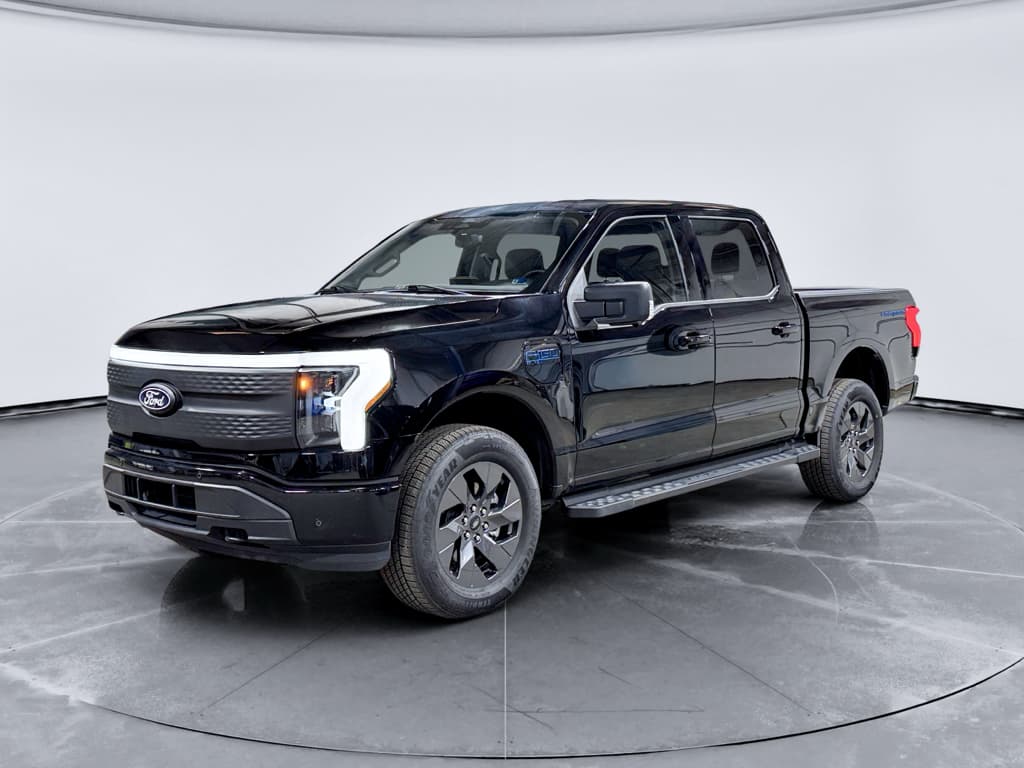
The Ford F-150 Lightning lives and dies by its battery. When you tow, haul, or commute on electrons instead of unleaded, the big question is simple: how long will the battery last, and will Ford stand behind it? The Ford Lightning battery warranty is one of the strongest parts of the truck’s value story, but the fine print matters, especially if you’re buying used.
Headline fact
Ford Lightning battery warranty basics (2025)
As of late 2025, Ford’s official language for its electric truck is straightforward: the F‑150 Lightning’s Electric Vehicle Component Coverage runs for eight years or 100,000 miles, whichever comes first. That coverage sits inside Ford’s New Vehicle Limited Warranty and is separate from the regular bumper‑to‑bumper and powertrain coverage.
Ford F-150 Lightning warranty at a glance
How the high‑voltage battery coverage fits into the rest of the truck’s warranty.
| Coverage type | Term (years/miles) | What it covers |
|---|---|---|
| Electric vehicle component (high-voltage battery & related parts) | 8 years / 100,000 miles | High‑voltage battery pack, drive unit, and EV‑specific components |
| Battery capacity retention | 8 years / 100,000 miles | Retention of at least 70% of original high‑voltage battery capacity |
| Powertrain limited warranty | 5 years / 60,000 miles | Engine-equivalent components, driveline, some electronics |
| Bumper-to-bumper | 3 years / 36,000 miles | Most non‑wear components, paint, interior electronics |
| Corrosion (perforation) | 5 years / unlimited miles | Rust‑through on body panels |
| EV roadside assistance | 5 years / 60,000 miles | Towing if you run out of charge or break down |
Battery coverage is longer than any other major system on the Lightning.
Model years covered
What the 8-year/100,000-mile warranty actually covers
Ford’s high‑voltage battery warranty is not just a promise to swap a pack if it explodes in a puff of lithium smoke. It’s a detailed contract about defects in materials and workmanship on the high‑voltage battery and related EV components. Here’s what that actually looks like on the ground.
Core elements of the Lightning battery warranty
From catastrophic failures to software‑detected defects.
Defects & failures
Capacity retention
Associated EV hardware
In practice, this means if your Lightning suddenly throws high‑voltage errors, refuses to DC fast charge, or loses a chunk of range in a short period without abuse, Ford’s dealer network can diagnose it as a warranty case. You won’t be paying five‑figure money for a new pack in year four because a batch of cells decided to exit the chat early.
Coverage has a clock
Battery degradation: how much loss is covered?
Every lithium‑ion battery loses capacity over time. Ford acknowledges this in writing by guaranteeing that the Lightning’s high‑voltage battery will retain at least 70% of its original capacity during the 8‑year/100,000‑mile coverage period. That’s the line in the sand.
- If your truck started with, say, an extended‑range pack good for around 320 miles EPA, 70% capacity implies roughly 220–230 miles under similar conditions.
- The warranty doesn’t promise a specific range number; it promises usable energy capacity as measured by Ford’s own diagnostics.
- Normal, gradual capacity loss from daily use is expected and not warrantable until it crosses that 70% threshold.
How Ford checks capacity
What counts as warranty-worthy loss
- Substantial, permanent drop in estimated state of health (SoH) confirmed by Ford diagnostics.
- No history of abuse such as extreme over‑heating, tampering, or flood damage.
- Decline that happens even with generally normal charging and driving habits.
What Ford considers "normal" loss
- Gradual range reduction over many years and miles.
- Seasonal swings in range from hot or cold weather.
- Short‑term drops after repeated fast‑charging or heavy towing that recover later.
What isn’t covered by the Lightning battery warranty
If the high‑voltage battery is the Lightning’s heart, Ford’s legal department is its immune system, designed to keep you from blaming the truck for every bad life choice. The warranty is generous, but it’s not a blanket amnesty for abuse or disasters.
Common exclusions in the Ford Lightning battery warranty
Where the line gets drawn between defect and abuse.
Water & flood damage
Accidents & collisions
Tampering or modifications
- Normal wear items (tires, brakes, wiper blades) are never part of the EV component warranty.
- Cosmetic issues with the pack enclosure that don’t affect function are usually excluded.
- Using non‑approved charging hardware that causes damage can complicate or void coverage.
Salvage and branded titles
New vs used F-150 Lightning: how the warranty transfers
Here’s the good news if you’re shopping the used market: Ford’s high‑voltage battery coverage is fully transferable. It stays with the truck, not the first owner. That means a 2023 Lightning sold in 2025 still has six years of battery coverage left, assuming mileage is under 100,000.
Checklist: verifying battery warranty on a used Lightning
1. Confirm the in-service date
Ask for the original sales paperwork or have a Ford dealer look up the Warranty Start Date by VIN. This tells you exactly when the 8‑year clock began.
2. Check the odometer against 100,000 miles
A truck at 82,000 miles has less headroom than one at 28,000. Both may still be covered today, but the first one will age out sooner on mileage.
3. Pull a full vehicle history report
Look for accidents, flood events, and title brands. Any major incident involving water or structural damage is a red flag for potential warranty issues.
4. Ask for battery health data
If you’re buying from a dealer or marketplace like Recharged, request an independent battery health report that shows estimated capacity and DC fast‑charge history.
5. Confirm recall and software update status
Make sure all recalls and relevant software updates, especially those affecting the high‑voltage system, have been completed by an authorized Ford dealer.
How Recharged handles this
Real-world battery life vs warranty promises
The 8‑year/100,000‑mile warranty is Ford’s legal minimum, not its prediction of when the pack turns into a pumpkin. Modern liquid‑cooled lithium‑ion packs, run within their thermal comfort zone, can go far beyond that in normal use. But the Lightning is not a featherweight hatchback; it’s a heavy truck that’s often used hard.
What typically affects Lightning battery life
Ford’s 70% capacity guarantee is essentially a floor: by the time a truck hits that number, most owners would already be annoyed enough to notice the shorter range. The upside is that if you treat the battery reasonably well, there’s a decent chance your pack will still be healthily above that threshold by the time the warranty expires.
How Ford handles a Lightning battery warranty claim
If you suspect your Lightning’s battery is misbehaving, whether it’s sudden range loss, charging issues, or persistent warning lights, the process looks a lot more like a medical work‑up than a quick oil change.
- Schedule an appointment with a certified Ford EV dealer and describe the symptoms in detail, including when they started and how quickly they progressed.
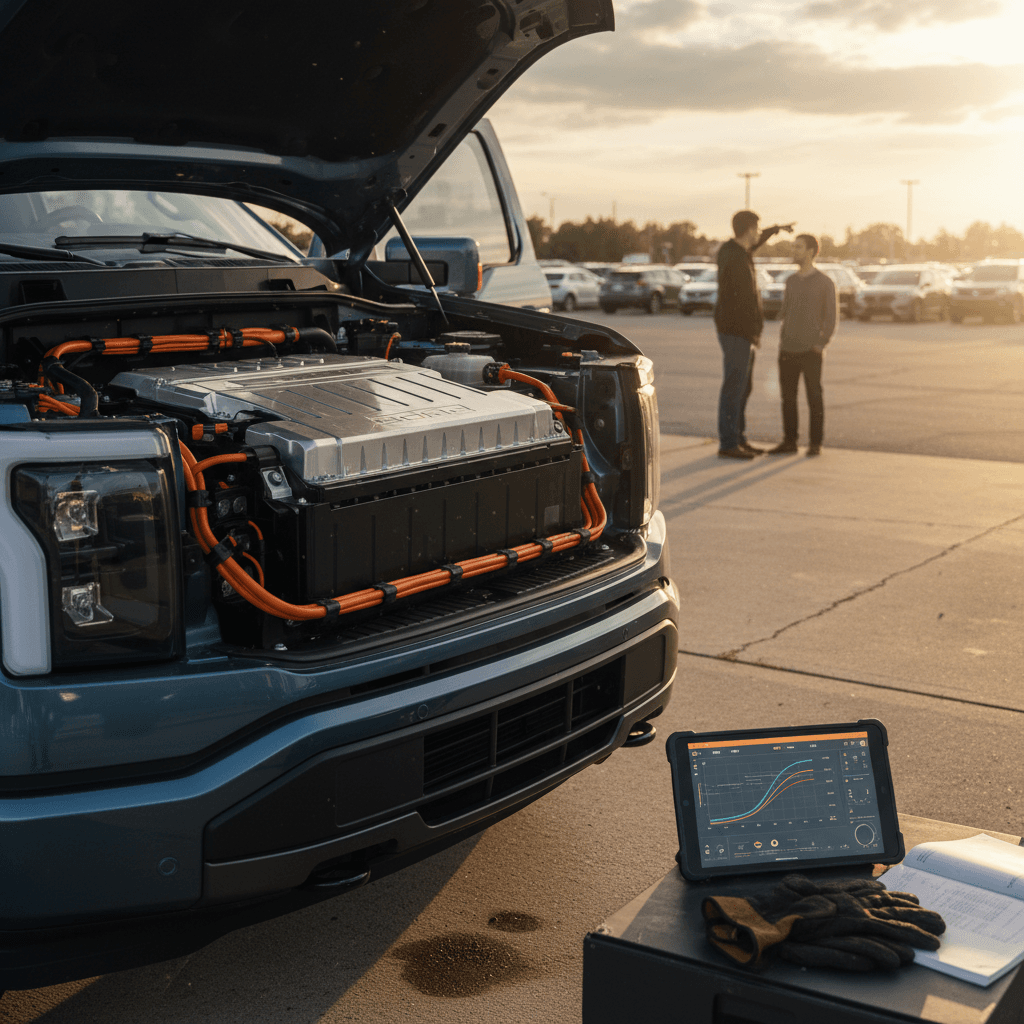
- The dealer will run diagnostics on the high‑voltage system, including state‑of‑health measurements, error codes, and pack temperatures.
- If the data suggests a defect or excessive capacity loss, the dealer opens a case with Ford to confirm eligibility under the 8‑year/100,000‑mile warranty.
- Depending on the issue, Ford may authorize a pack repair, module replacement, or a full pack replacement. In most cases, you don’t get to choose which.
- While the truck is down, Ford may provide a loaner or rental assistance, depending on dealer policy and program availability in your area.
Document everything
Protecting your Lightning battery to avoid claims
Warranty coverage is your safety net, not your plan. The surest way to enjoy a Lightning long‑term, especially if you’re buying used, is to treat the battery the way Ford’s engineers wish everyone would: gently but consistently.
Battery-care habits that pay off later
Simple changes that make a big difference over 8+ years.
Favor Level 2 at home
Avoid extreme heat
Live in the middle
Don’t outsmart the BMS
How Recharged evaluates F-150 Lightning battery health
If you’re cross‑shopping used Lightnings, the spec sheets all look the same: big battery, big torque, big screen. The real story is hidden in the pack’s history, fast‑charge cycles, thermal behavior, and how closely real‑world range matches what the truck thinks it can do. That’s where Recharged’s battery‑centric approach makes a difference.
What goes into a Recharged Score for the Lightning
Beyond a quick test drive around the block.
Battery diagnostics
Range reality check
Title & history verification
Ready to find your next EV?
Browse VehiclesBecause every vehicle on Recharged includes this battery‑focused evaluation plus transparent pricing and EV‑specialist support, you’re not flying blind on the single most expensive component in the truck. You know where the battery stands today, and how much factory safety net is left.
Ford Lightning battery warranty FAQ
Ford Lightning battery warranty: frequently asked questions
The Ford Lightning battery warranty is the quiet hero of the spec sheet: 8 years, 100,000 miles, and a firm line at 70% capacity. Treated well, the pack should outlive the coverage; abused, it’s an expensive lesson in physics and fine print. Whether you’re ordering a new truck or hunting for a used one, make the battery the center of the conversation. And if you’d rather have that homework done for you, a used Lightning with a Recharged Score battery report, verified warranty status, and expert EV support lets you spend less time decoding legalese, and more time using all that electric torque the way Ford intended.