You’re not just shopping for a truck anymore, you’re choosing between two visions of what an electric pickup can be. The Ford F-150 Lightning and Rivian R1T both haul, tow, and sprint like sports cars, but they’re aimed at very different lives. This comparison walks through range, towing, off-road chops, tech, price, and used-market reality so you can decide which electric truck actually fits your day-to-day.
Two Electric Trucks, Two Very Different Personalities
Ford F-150 Lightning vs Rivian R1T: Who Are These Trucks For?
Ford F-150 Lightning: Electric Workhorse
If your truck spends its days commuting, hauling building supplies, towing on weekends, or just doing family duty, the Lightning plays the role of a traditional full-size pickup, just with instant torque and a silent powertrain. It shares much of its cabin and ergonomics with the regular F-150, so if you’ve driven a Ford truck in the last decade, you’ll feel right at home.
- Best for: Contractors, families, fleets, and anyone who wants a familiar full-size pickup experience.
- Strengths: Big cab and bed, excellent front trunk, strong towing with the right setup, broad dealer network.
Rivian R1T: Adventure and Design Statement
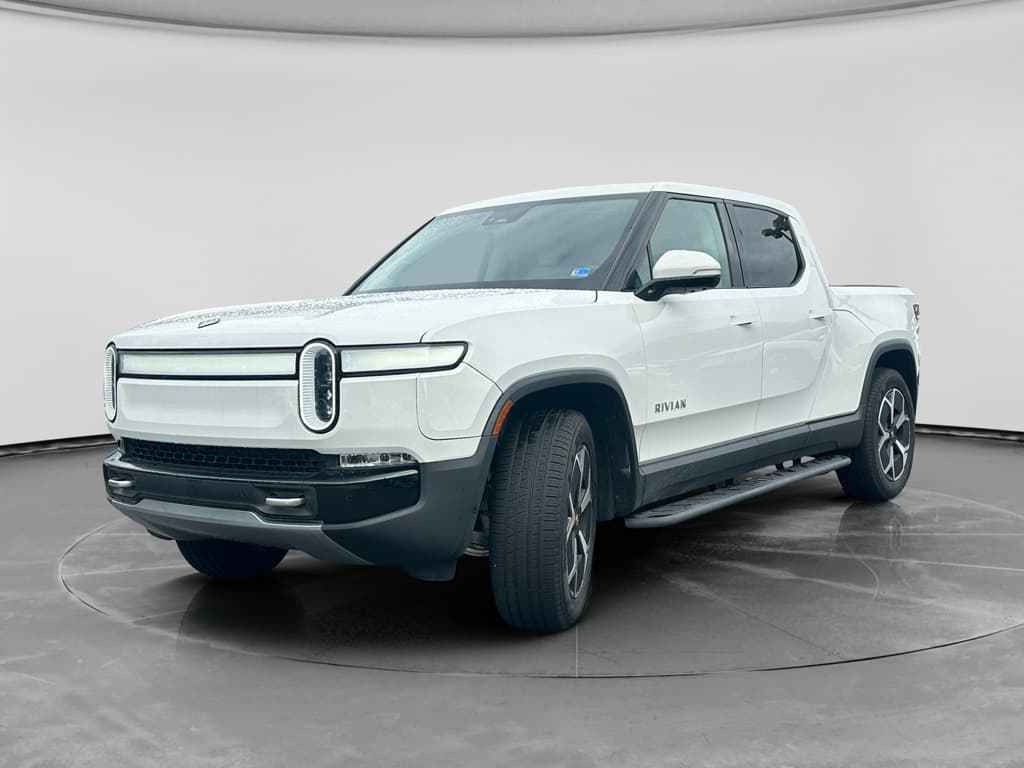
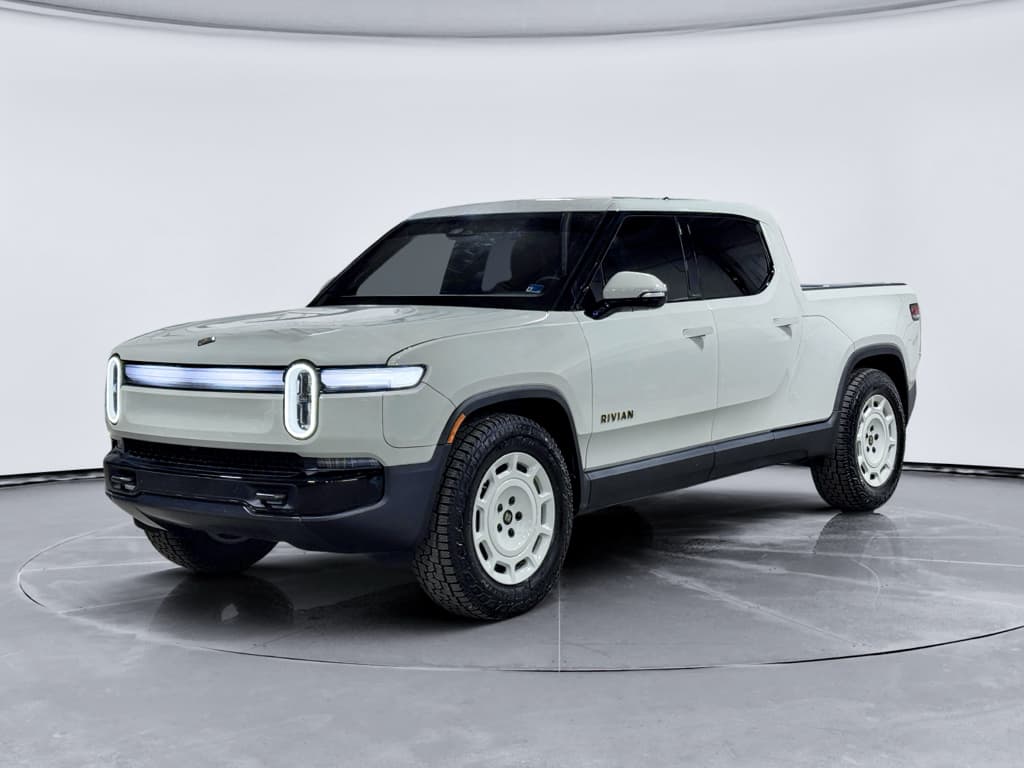
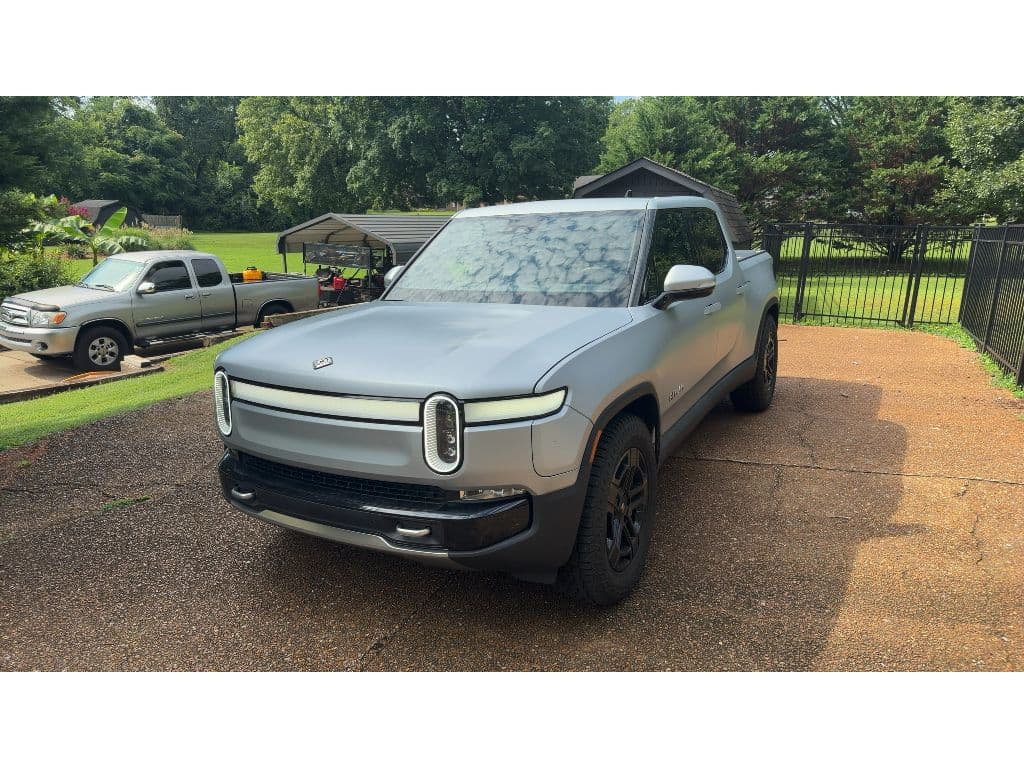
The R1T is smaller than the F-150 but feels more like a high-end outdoor tool crossed with a sport sedan. Think overlanding, mountain-bike weekends, ski trips, and trailheads at the end of rough forest roads. The interior and software are more like a tech startup’s idea of a truck than a Detroit product.
- Best for: Outdoor enthusiasts, design-conscious buyers, and early adopters who value performance and off-road tech.
- Strengths: Huge power, adjustable air suspension, clever storage like the Gear Tunnel, and a premium-feeling cabin.
Headline Numbers: Lightning vs R1T (Popular 2024–2025 Configs)
About the Numbers
Key Specs at a Glance
Ford F-150 Lightning vs Rivian R1T: Core Specs
Representative specs for popular 2024–2025 configurations. Exact numbers vary by trim and options.
| Spec | F-150 Lightning (extended-range dual-motor) | Rivian R1T (dual-motor Large/Max pack) |
|---|---|---|
| Approx. length | ~232 in (full-size) | ~217 in (mid-size-plus) |
| Drive | Dual-motor AWD | Dual-motor AWD (Tri- and Quad-motor available) |
| Battery capacity | ~131 kWh (extended range) | Up to ~149 kWh (Max pack) |
| EPA-est. max range | Up to ~320 mi | Up to ~410 mi (Dual Max) |
| Max DC fast-charge rate | Around 150 kW+ | Around 220 kW |
| Max towing capacity | 10,000 lb (with extended-range) | Up to 11,000 lb (Gen 1 dual/quad) |
| Max payload | ≈1,800–2,000 lb | ≈1,700+ lb |
| Seating | 5 (spacious full-size) | 5 (cozier cab) |
Use this table as a starting point, then confirm specs for the specific VIN you’re considering.
How to Read These Specs
Range, Batteries, and Real-World Efficiency
On paper, the Rivian R1T wins the range game, especially with the available Large and Max battery packs. Dual-motor Max-pack trucks are rated around 410 miles, while popular Lightning extended-range trims land closer to 300–320 miles. That’s a noticeable difference if you live in a rural area or road-trip often.
- F-150 Lightning standard-range batteries are better suited to local use and short commutes.
- Extended-range Lightnings unlock more than 300 miles of EPA-estimated range in many trims, but towing and cold weather can cut that dramatically.
- R1T Large and Max packs offer more range headroom, which helps when you add a roof box, bikes, or highway speeds.
- Both trucks lose range quickly when towing heavy loads at 65–75 mph, think cuts of 40–60% depending on trailer size and conditions.
Cold Weather and Range
Battery and Range: Which Truck Fits Your Pattern?
Match your driving to the right pack rather than just chasing the biggest number.
Choose the F-150 Lightning if…
- You mostly drive short to moderate distances and rarely push 200 miles in a day.
- Most charging happens at home or work where range is predictable.
- You’re okay planning ahead for long trips and towing days, even if it means more frequent fast charges.
Choose the Rivian R1T if…
- You regularly do long highway drives or remote trips where chargers are spread out.
- You carry outdoor gear on the roof or in the bed that adds drag and weight.
- You want maximum buffer so you worry less about weather, hills, and detours.
Towing, Hauling, and Everyday Utility
Both trucks can tow like serious pickups, but they come at it from different angles. The F-150 Lightning leans into its traditional full-size roots, while the R1T mixes strong tow ratings with a more adventure-focused bed and storage layout.
Towing and Payload Highlights
Representative factory ratings for popular configurations; always verify the specific truck you’re buying.
| Capability | F-150 Lightning | Rivian R1T |
|---|---|---|
| Max towing | 10,000 lb (extended-range, tow package) | Up to 11,000 lb (Gen 1 dual/quad) |
| Standard towing | Up to 7,700 lb (standard-range) | Lower on some newer dual-motor Gen 2 configs |
| Max payload | Around 1,800–2,000 lb | Around 1,700+ lb |
| Bed length | 5.5 ft (full-size width) | ~4.5 ft (narrower but deep bed) |
Remember that heavy towing significantly reduces range on any EV truck.
The EV Towing Reality Check
Utility Tradeoffs: Work Truck vs Adventure Rig
How the Lightning and R1T handle daily chores.
Bed & Dimensions
Lightning: Full-size bed width makes hauling plywood, drywall, or landscaping supplies straightforward.
R1T: Shorter bed suits bikes, camping gear, and coolers more than pallets of block.
Frunk & Gear Storage
Lightning: Massive front trunk that can swallow tool bags, groceries, or luggage.
R1T: Smaller frunk but adds the Gear Tunnel behind the cab, perfect for skis, recovery gear, or a camp kitchen.
Power Outlets & Onboard Power
Both trucks offer multiple 120V (and in some trims 240V) outlets, turning the truck into a rolling generator. Ford’s Pro Power Onboard can even power parts of a home with the right setup, while Rivian focuses more on campsite and jobsite power tools.
Off-Road Capability and Performance
If your idea of a good weekend involves mud, rocks, or snow-packed forest roads, the Rivian R1T is the more capable off-roader right out of the box. Its air suspension, available tri- and quad-motor setups, and generous ground clearance give it a serious advantage on technical terrain.
- R1T offers adjustable air suspension with very high ground clearance and impressive approach/departure angles.
- Available tri- and quad-motor setups allow precise torque control at each axle (or wheel), which helps on loose or uneven surfaces.
- The Lightning is competent on dirt and snow, especially with all-terrain tires, but it’s fundamentally tuned as a road and work truck.
- Both deliver instant torque and very quick 0–60 mph times; higher-spec R1Ts feel supercar-fast, while extended-range Lightnings still feel shockingly quick for a full-size pickup.
Trail-Head Takeaway
Tech, Interior Experience, and Clever Storage
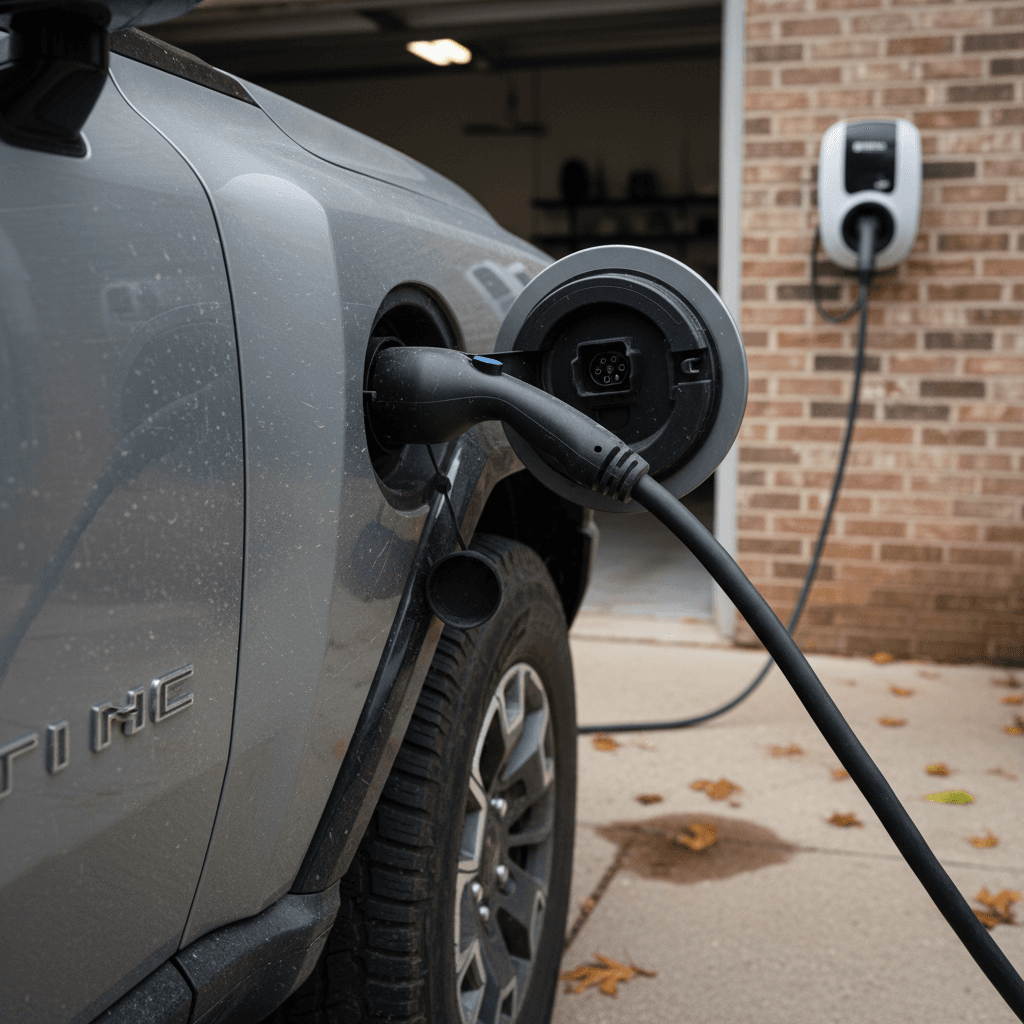
Inside the F-150 Lightning
The Lightning cabin will be instantly familiar to anyone who has driven a modern F-150. Controls are mostly conventional, with physical buttons and knobs for common tasks, plus a large central touchscreen and (on higher trims) a fully digital gauge cluster.
- Pros: Easy learning curve, plenty of storage, roomy back seat, straightforward climate and volume controls.
- Cons: Less "wow" factor than the Rivian, and some materials feel more work-truck than luxury SUV on lower trims.
Inside the Rivian R1T
The R1T interior leans more toward Scandinavian cabin than classic pickup. Big horizontal screens, high-quality materials, and design-forward details like integrated flashlight and Bluetooth speaker make it feel special.
- Pros: Stylish, premium, and unique. Great visibility and comfortable seats for long drives.
- Cons: Fewer physical controls; almost everything lives in Rivian’s software, which some drivers love and others find distracting.
Clever Storage Features You’ll Actually Use
Both trucks hide smart tricks behind their sheet metal.
Mega Power Frunk (Lightning)
One of the largest frunks in any EV, with low lift-over height. Great for tools, groceries, and valuables you don’t want in the bed.
Gear Tunnel (R1T)
A long, lockable compartment behind the cab accessible from both sides. Perfect for skis, fishing rods, or muddy gear you don’t want inside.
Flat Work Surface & Camp Details
Ford offers a fold-flat work surface and plenty of cupholders; Rivian counters with touches like built-in flashlight and available camp kitchen accessories on some builds.
Charging, Road Trips, and Networks
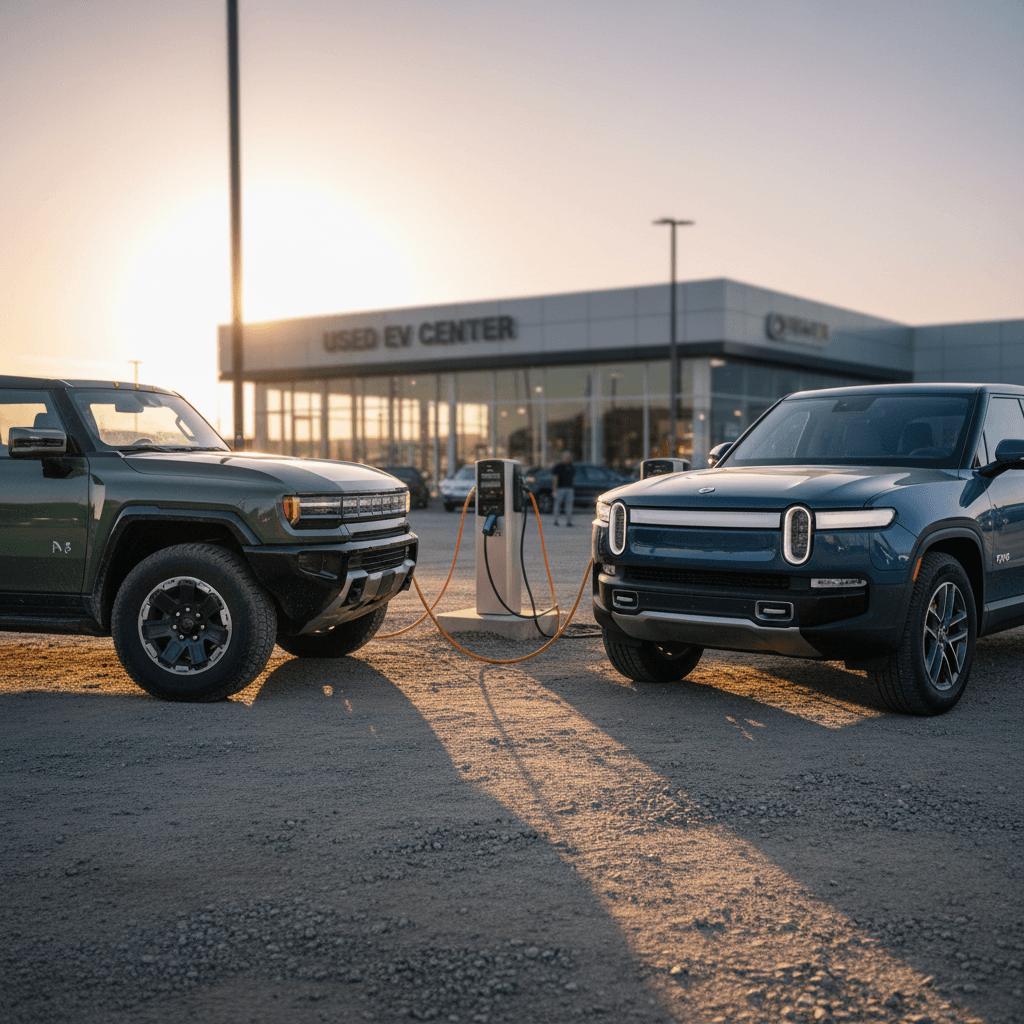
Charging is where the electric-truck ownership story can either feel effortless or frustrating, and the picture is improving quickly for both brands. As of 2025–2026, Ford and Rivian owners increasingly gain access to Tesla’s Supercharger network using adapters and future native NACS ports, alongside existing CCS fast-charging networks.
- Both trucks support DC fast charging, with the R1T generally able to accept higher peak rates than the Lightning, which can shorten some charging stops.
- Most owners do more than 80–90% of their charging at home or work using Level 2 chargers; that’s where both trucks feel easiest to live with.
- Supercharger access is rolling out via adapters, software updates, and new hardware. Check whether the specific Lightning or R1T you’re considering comes with a NACS adapter or has access enabled.
- Planned road trips still require more thought than in a gas truck, especially if you’re towing or traveling through charger-sparse regions.
Road-Trip Strategy for Either Truck
Pricing, Value, and the Used EV Truck Market
Sticker prices move around with every model year and incentive change, but a few patterns are clear. New-for-new, Rivian R1T builds with big batteries and performance motors generally cost more than comparable F-150 Lightning trims. The Ford lineup also spans a wider range of trims, from more basic work-oriented models to luxury-spec trucks.
How Pricing and Value Typically Shake Out
Exact numbers depend on model year, trim, and local incentives.
Ford F-150 Lightning
- Often lower starting price than similarly equipped R1T, especially on mid-level trims.
- More traditional incentives, dealer discounts, and fleet programs.
- Depreciation has been noticeable, which creates attractive deals on the used market.
Rivian R1T
- Higher price for tri- and quad-motor trucks and larger battery packs.
- Well-equipped even in lower trims, with many premium features standard.
- Also depreciates, but demand from adventure-focused buyers helps support used values on certain specs.
Where a Used Electric Truck Marketplace Helps
Used F-150 Lightning or R1T: What to Check Before You Buy
1. Battery health and DC fast-charging history
Ask for a battery health report and how often the truck has fast-charged. Frequent DC fast charging and heavy towing aren’t deal-breakers, but they’re worth pricing in.
2. Towing and payload use
Look for signs the truck regularly hauled at or near its limits, worn tires, hitch wear, or sagging suspension components. Heavy use is fine if it’s been maintained accordingly.
3. Software updates and features
Both Ford and Rivian push major features via over-the-air updates. Confirm the truck is on recent software and that key driver-assistance or charging features are active.
4. Warranty coverage
Battery warranties commonly stretch to 8 years or more from original in-service date. Check how much remains and what’s covered for capacity loss or defects.
5. Charging accessories included
Adapters and mobile chargers can save you hundreds of dollars. Confirm what’s included in the sale, especially any NACS/CCS adapters you’ll rely on for road trips.
Which Electric Truck Should You Buy?
Quick Guide: Which Truck Fits Which Driver?
Start with how you actually use a truck today.
Choose the F-150 Lightning if…
- You want a full-size truck that feels familiar inside and out.
- Most of your miles are commuting, errands, and local hauling.
- You value dealer access and a large service network.
- You tow occasionally and are willing to plan more carefully for those trips.
Choose the Rivian R1T if…
- You prioritize off-road capability and outdoor travel.
- You want standout design and a premium, tech-forward cabin.
- You regularly drive in areas where the extra range of the Large or Max pack truly matters.
- You’re okay living with a smaller bed in exchange for clever storage solutions.
Still not sure?
That’s normal. Electric trucks are new territory for many buyers. Driving both back-to-back and running the numbers on your typical week can make the decision obvious. If you’re exploring the used market, an EV-focused retailer like Recharged can walk you through real-world range, charging options at your home, and total cost of ownership for specific trucks in inventory.
In the end, neither the Ford F-150 Lightning nor the Rivian R1T is "better" in every way, they’re solving slightly different problems. The Lightning is the natural choice if you want a work-ready full-size pickup that happens to be electric. The R1T is the right tool if you’re chasing adventure, design, and off-road performance with a usable bed attached. Decide where your miles really go, then choose the truck that makes those miles easier and more enjoyable. And if you’re ready to explore used examples with verified battery health and transparent pricing, Recharged can help you find a Lightning or R1T that fits your life and your budget.