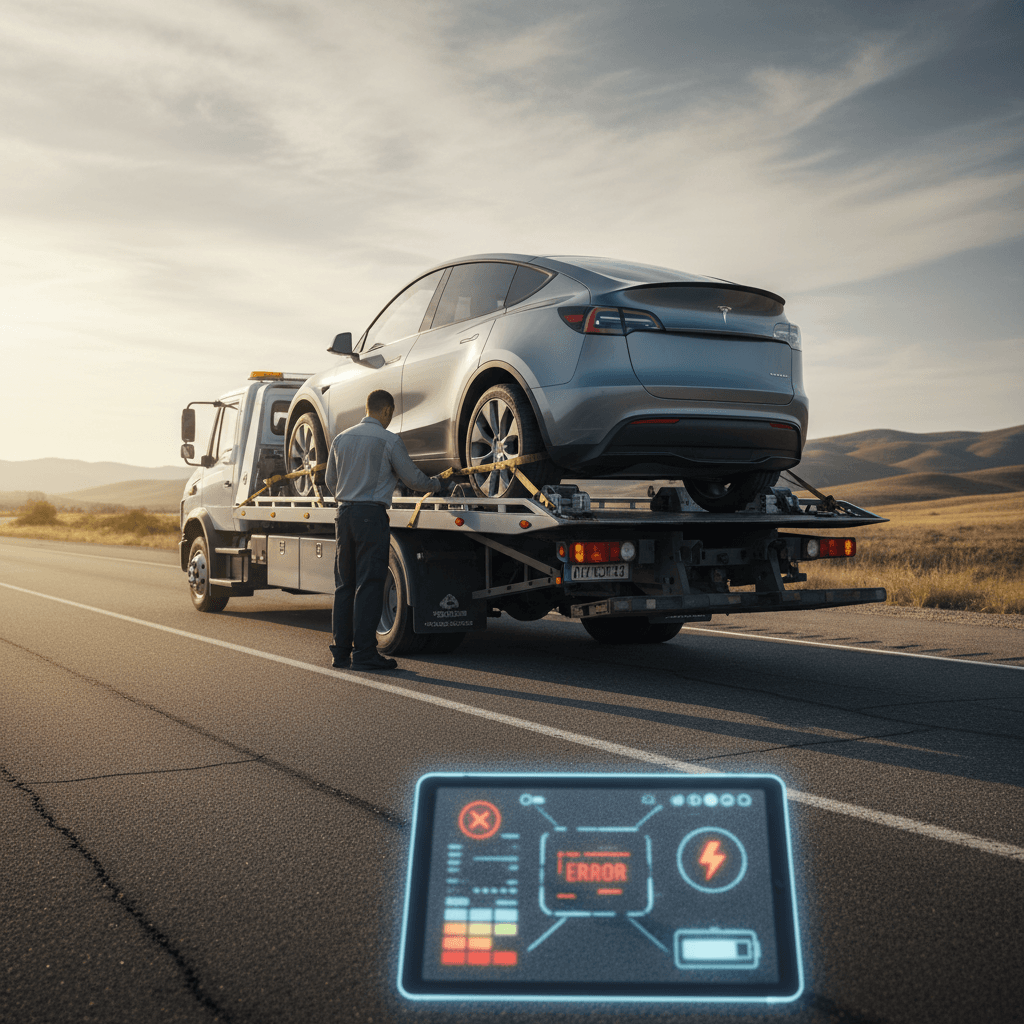
If you’ve just heard a thunk from the back of your EV and the dash lights up like a pinball machine, the last thing you want is a tow truck driver guessing which button to push. Understanding EV tow mode and how to use it can be the difference between a simple flatbed ride and a five‑figure repair bill.
Big picture: tow mode is not cruise control for towing
What EV tow mode actually does (and doesn’t)
Different brands label it differently, Tow Mode (Tesla), Emergency Tow or Temporary Neutral (Ford Mustang Mach‑E), various “transport” or “service” modes on others, but the basic idea is similar. Tow mode temporarily releases the parking brake and allows the wheels to roll freely so the car can be winched or pushed a short distance.
- Lets the wheels turn slowly so the car can be winched onto a flatbed or nudged out of a parking spot.
- Keeps the car in a special neutral state with the parking pawl released and electronic parking brake disengaged.
- Usually requires the key or key card to be present and some 12‑volt power available.
- Typically times out or cancels if speed or distance limits are exceeded, or if you shift back into Park.
What tow mode does NOT do
Why most EVs still must be flatbed towed
In a gasoline car, putting the transmission in neutral usually disconnects the driven wheels from most of the powertrain. In an EV, the drive motor is directly linked to the wheels through a fixed gear reduction. If you tow an EV with the wheels on the ground, that motor can spin at very high speeds without proper lubrication or cooling. That’s how people cook inverters and gearboxes.
Flatbed towing vs. dragging an EV
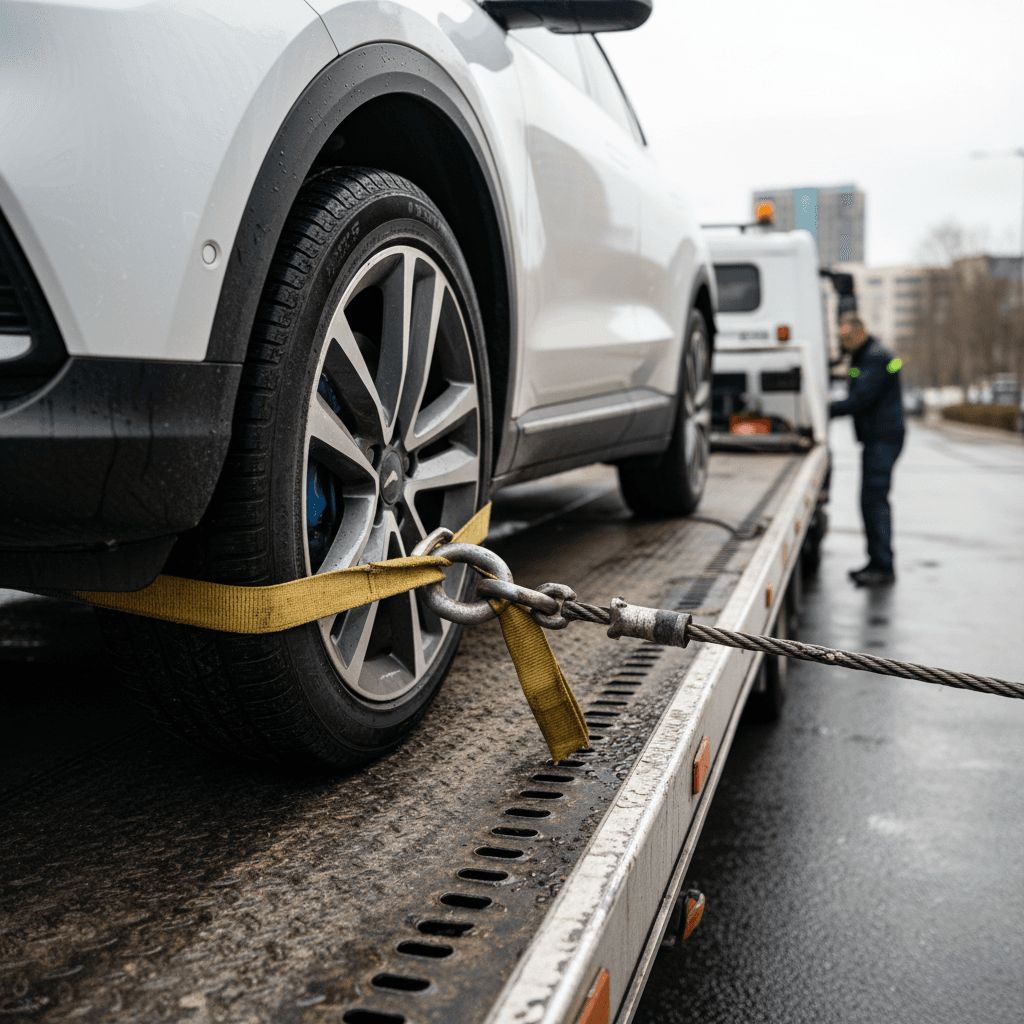
Why reputable tow operators insist on a flatbed for electric vehicles
Protects the drivetrain
Avoids warranty fights
Matches the manual
Never do this
How to use tow mode on a Tesla
Tesla makes tow mode fairly straightforward, but it’s buried in the touchscreen. The process is similar across Model 3, Y, S, and X, with minor menu differences by software version. Here’s the general idea, always double‑check your specific manual for the latest labels and icons.
Tesla tow mode: step‑by‑step
1. Make sure the car is safe to move
Park on the flattest surface you can, and chock the wheels if you’re on any kind of slope. Tow mode releases the parking brake, so you don’t want the car rolling away as soon as it’s enabled.
2. Confirm it’s unplugged
Tow mode won’t engage if the car is charging. Stop charging, unlock the connector, and unplug before you do anything else.
3. Sit in the driver’s seat with a key present
Tow mode requires a detected key, phone key, fob, or card, so the car knows an authorized driver is requesting it.
4. Open the towing menu on the screen
On most recent software, tap <strong>Controls → Service → Towing</strong>. Tesla will show on‑screen reminders about using a flatbed and staying below walking speed when rolling.
5. Press and hold “Enter Tow Mode”
With your foot <strong>on the brake</strong>, press and hold the Tow Mode button. It changes color (often to blue) and a message confirms the parking brake is released. The car is now free‑rolling.
6. Winch slowly onto the flatbed
The tow operator should attach to the front tow eye and slowly winch the car up. Tow mode is only for short, slow movements, think walking pace and a few car lengths, not city blocks.
Practice when everything is working
Mustang Mach‑E tow modes explained
Ford gives the Mustang Mach‑E a few different ways to roll freely, and the names can be confusing. You’ll see terms like Temporary Neutral Mode, Neutral Tow, and Emergency Tow Mode in owner discussions and tow‑operator guides. Here’s how they break down in practice.
Temporary Neutral / Neutral Tow
This mode is mainly for short car‑wash style situations, letting the car roll through a wash tunnel or be nudged a few feet without popping back into Park.
- Usually limited to about 30 minutes.
- Can cancel itself if the 12‑volt battery gets low.
- Manuals and Ford’s own guides say do not tow the car in this mode for distance.
Emergency Tow Mode
On newer Mach‑Es, Ford also offers an Emergency Tow or similar mode for pulling the car onto a flatbed or moving it a short distance when it’s otherwise disabled.
- Accessed through the on‑screen Vehicle > Towing/Emergency Tow menu.
- Keeps the car in a more persistent neutral until you disable it.
- Ford still calls for low speeds and limited distance, and prefers a flatbed for real transport.
Typical steps to put a Mach‑E in Emergency Tow
1. Jump or confirm 12‑volt power
If the car is completely dead, tow mode won’t engage until the 12‑volt system is alive. Tow operators often access jump points behind the front bumper or under the hood.
2. Go into the vehicle settings menu
With the key in the car and your foot on the brake, use the center screen: look for <strong>Vehicle → Settings → Towing</strong> or a similar “Emergency Tow” item, depending on model year.
3. Follow the on‑screen prompts
Ford typically asks you to hold the brake, shift into Neutral, and sometimes press the <strong>L</strong> button on the rotary shifter. A message like “Emergency Tow Engaged” or “Neutral Hold Active” appears in the cluster.
4. Verify the parking brake is off
Check for a parking brake warning light. Owners and tow pros routinely see people forget to release the electric parking brake even after entering tow mode, which drags the rear brakes up the ramp.
5. Winch slowly and re‑engage Park on the flatbed
Once the car is fully loaded and secured, shift back into Park and switch off tow mode if required. The truck should transport the car with all four wheels off the ground.
Car wash mode isn’t tow mode
Other brands: Ioniq 5, VW, others and “stay in neutral” tricks
Non‑Tesla, non‑Ford EVs often skip a dedicated “tow mode” button and instead hide a way to keep the car in neutral when you power it down. The headline still doesn’t change: they want a flatbed. But knowing how to keep an EV in neutral can help your tow operator get it onto the truck safely.
Examples of neutral / transport behaviors by brand
Always verify the exact steps in your owner’s manual, software and features change by model year.
| Brand / model | What it’s usually called | What it’s for | Key limitation |
|---|---|---|---|
| Hyundai Ioniq 5 | Stay in Neutral / Tow Mode (with factory hitch wiring) | Lets the car remain in neutral after you exit so it can be pulled or pushed a short distance. | Generally relies on correct factory tow‑hitch wiring and still expects flatbed towing. |
| Volkswagen ID.4 | Neutral with confirmation | Holding OK on the steering wheel after selecting N keeps the car in neutral with the power off. | Timed behavior; not intended for long‑distance towing on its wheels. |
| Kia EV6 | Neutral hold | Similar to Ioniq 5 and ID.4, keep the car in N and confirm via steering‑wheel button. | Documentation still specifies flatbed as the approved transport method. |
| Legacy PHEVs | “Transport” or “Service” mode | Rolls the car for loading at the factory, dealer, or car wash. | May behave differently from full battery EVs; always follow the specific manual. |
These examples are meant as patterns, not one‑size‑fits‑all instructions.
Why this article stays brand‑agnostic
Step‑by‑step checklist before anyone tows your EV
In the heat of a breakdown, it’s easy for everyone to rush. Slow the situation down with a quick mental checklist so you and the driver are on the same page before anything moves.
Universal EV towing checklist
1. Confirm a flatbed is on the way
When you request roadside help, specify that you have an electric vehicle and you need a flatbed or wheel‑lift with dollies (all wheels off the ground). If a hook‑and‑drag truck shows up, politely send them back.
2. Secure the scene
Turn on hazard lights, set up triangles if you have them, and get everyone away from traffic. No settings screen is worth standing in a live lane for.
3. Grab your keys and phone
Tow or neutral modes almost always require a detected key. Have your phone or fob in your pocket when the driver arrives so you’re not locked out of the very menus you need.
4. Open the manual or in‑car help
Use the glovebox book or your infotainment system’s search to find sections labeled <strong>Towing</strong>, <strong>Transport mode</strong>, <strong>Tow mode</strong>, or <strong>Emergency tow</strong>. Show that page to the operator.
5. Unplug charging cables and accessories
If you broke down at a charger, stop the session, unlock, and unplug before tow mode will engage on most cars. Remove any portable EVSE or adapters hanging from the car.
6. Enable the correct tow or neutral mode
Follow the steps for your car: foot on brake, into N, hold the required button or menu item, and verify that the parking brake and Park are fully released.
7. Watch the hookup points
Confirm the driver is using the tow eye, approved subframe holes, or the spots marked in your manual, not the battery pack, body kit, or control arms.
8. Re‑engage Park and parking brake on the flatbed
Once the car is fully loaded and strapped, switch it back into Park, engage the parking brake, and disable tow mode if needed so it can’t roll on the deck.
Common EV towing mistakes that cause damage
Most tow operators are careful, but EVs are still relatively new territory in some fleets. Knowing the biggest mistakes helps you spot trouble before it turns into a scraped battery pack or fried motor.
Mistakes to avoid when using EV tow mode
These are the ones veteran EV owners and tow techs see over and over.
Using the wrong attachment points
Dragging the car with wheels on the ground
Exceeding tow‑mode limits
Ignoring a weak 12‑volt battery
After a collision, treat the car like it’s energized
Roadside assistance, insurance, and used EV ownership
Whether you bought your EV new or picked up a used one from a marketplace like Recharged, towing is part of the ownership picture. A little planning now can make a breakdown far less stressful later.
Know who you’ll call
Most EVs include some factory roadside coverage when new, and many insurers or auto clubs will tow EVs if you tell them a flatbed is required.
- Save the roadside number in your phone under the car’s name.
- Note your VIN and plate so you’re not hunting in the glovebox on the shoulder.
- Ask specifically for an EV‑trained or flatbed‑equipped operator when possible.
How this ties into buying a used EV
On a used electric car, you’re inheriting the previous owner’s adventures, good and bad. At Recharged, every vehicle gets a Recharged Score that includes verified battery health and a check for accident or damage history, including past insurance claims that could involve botched tows.
Knowing your EV’s history, and how to handle the next tow properly, helps protect both its value and your peace of mind.
Make towing part of your EV readiness plan
EV tow mode FAQ
Frequently asked questions about EV tow mode
Tow mode is one of those EV features you hope you never need, but when the day comes, a little knowledge goes a long way. If you remember just three things, make it these: ask for a flatbed, use tow mode only to load or nudge the car, and follow the exact steps in your owner’s manual. Do that, and the worst part of a breakdown is a boring ride to the shop, not a surprise repair estimate when you get there.