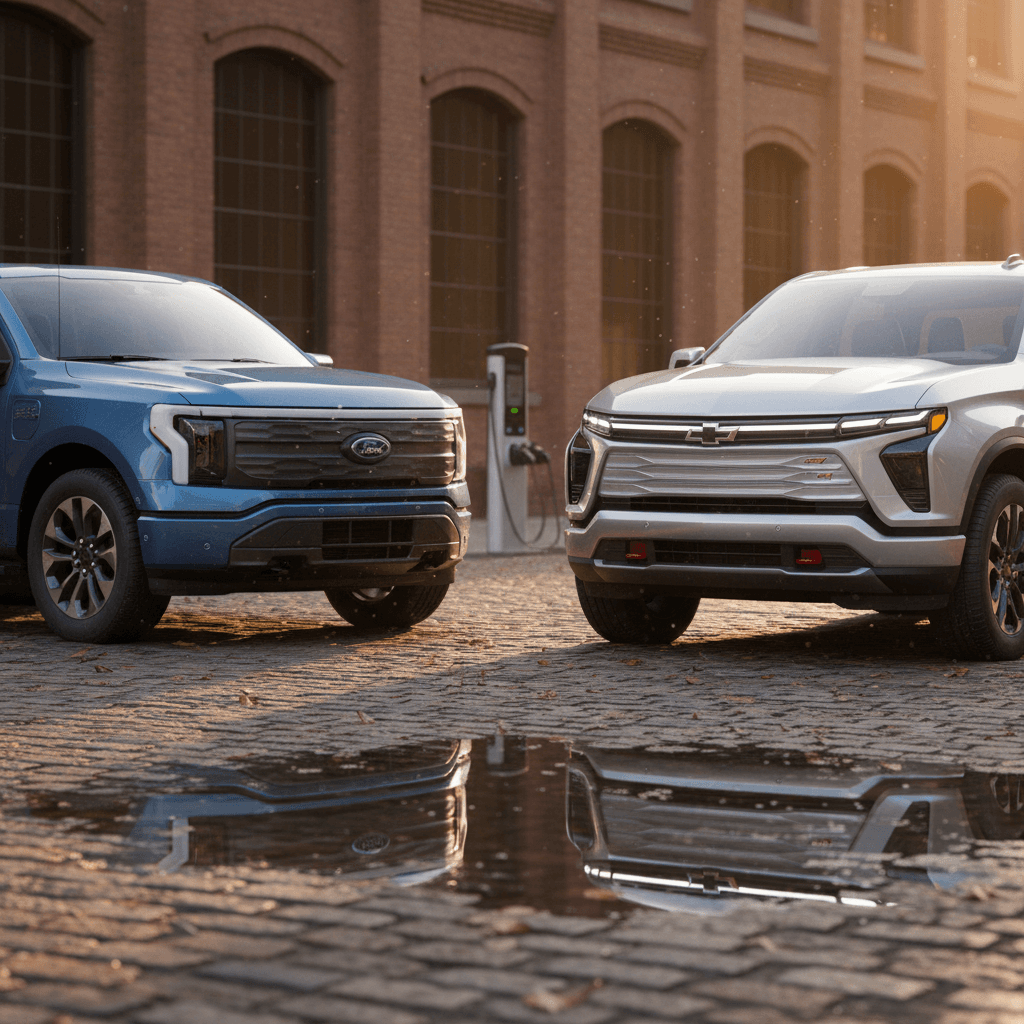
You’re not alone if you’re torn between the Ford F-150 Lightning and the Chevy Silverado EV. They’re the first all-electric full-size pickups from America’s biggest truck brands, and on paper they look similar: huge power, serious towing numbers, and quiet, instant-torque performance. But when you look past the marketing, these two trucks solve very different problems.
Quick Take
Overview: Ford F-150 Lightning vs. Chevy Silverado EV
Both trucks can be compelling, if you match them to the right use case. The F-150 Lightning rides on a heavily modified version of Ford’s traditional F-150 platform, with dual motors, up to around 580 horsepower in earlier trims, and a usable battery up to about 131 kWh in most recent models. The Silverado EV is built on GM’s Ultium skateboard platform, with the battery in the floor, four-wheel steering available, and GM-estimated ranges that can exceed 400 miles on some Work Truck and LT configurations.
- F-150 Lightning strengths: familiar F-150 packaging, excellent ride and handling for a truck, strong support network, and growing availability on the used market.
- Silverado EV strengths: class-leading range, advanced Ultium battery tech, four-wheel steering, and clever cargo solutions like the Multi-Flex Midgate and tailgate.
Market Reality Check
Key Specs at a Glance
Ford F-150 Lightning vs. Chevy Silverado EV: Core Numbers
Approximate specs for popular 2024–2025 configurations. Always confirm exact figures for the specific truck you’re considering.
| Truck | Typical Powertrain | EPA Range (best common trims) | Max Towing (properly equipped) | Max Payload | Fast-Charge Peak | Notable Features |
|---|---|---|---|---|---|---|
| Ford F-150 Lightning | Dual-motor AWD, standard or extended-range battery | ~240–320 miles depending on battery/trim | Up to ~10,000 lb | Around 2,000 lb (varies by trim) | Up to ~150 kW | Mega Power Frunk, Pro Power Onboard, BlueCruise driver assist |
| Chevy Silverado EV | Dual-motor AWD on Ultium platform | ~400+ miles GM-estimated on select WT/LT trims; RST ~390–460 miles depending on battery | Up to ~12,500 lb on some trims | Up to ~2,350 lb on certain WT versions | Up to ~350 kW (on 800V architecture) | Four-wheel steering, Multi-Flex Midgate & tailgate, Super Cruise |
Specs vary by trim and model year, treat this as a directional comparison, not a build sheet.
How to Read These Numbers
Range and Battery Tech: Ultium vs Ford
If you care about range above all else, the Silverado EV has the edge. GM’s Ultium-based Silverado EV WT and LT configurations can reach into the low-to-mid 400-mile territory on a full charge, and certain fleet-oriented WT models are rated up to roughly 492 miles. By comparison, most F-150 Lightning trims land in the roughly 240–320-mile range window depending on battery size and wheel/tire choices.
Battery & Range: How They Differ
On paper, the Silverado EV goes farther. In practice, your usage matters even more.
Chevy Silverado EV (Ultium)
- Ultium battery system with large usable packs and 400V/800V architecture depending on configuration.
- GM-estimated ranges over 400 miles on many WT/LT trims.
- More efficient at highway speeds and long-distance use, especially with the biggest battery packs.
Ford F-150 Lightning (Ford BEV platform)
- Usable battery around 98–131 kWh on most recent standard and extended-range packs.
- Typical EPA range from about 240 to 320 miles, depending on trim and wheels.
- More than enough for daily commuting and jobsite use, but shorter legs on long highway hauls versus Silverado EV.
Practical Range Rule of Thumb
Towing, Hauling, and Work Capability
Both trucks advertise big towing and payload numbers, but real-world capability depends on how often you tow, how far, and what you’re pulling. Electric trucks lose a significant chunk of range when towing heavy, sometimes 40–50% or more, so it’s critical to think beyond the brochure stats.
Ford F-150 Lightning
- Max towing around 10,000 lb when properly equipped with the tow package on select trims like the Flash.
- Max payload typically just under or around 2,000 lb, depending on configuration.
- Feels lighter and more agile than a traditional gas F-150; independent rear suspension helps ride quality.
- Onboard scales and Intelligent Range can adjust range estimates when you hitch a trailer or load the bed.
Chevy Silverado EV
- Max towing ratings up to about 12,500 lb on certain LT and RST setups.
- Payload up to roughly 2,350 lb on some WT trims.
- Four-wheel steering and long wheelbase give surprising stability and tight low-speed maneuvering.
- Multi-Flex Midgate and longer bed floor let you haul long materials without a trailer.
Towing Reality Check
Questions to Clarify Your Work Needs
1. How often do you tow over 5,000 lb?
If that’s weekly, the Silverado EV’s extra towing headroom and range buffer are worth a close look.
2. How long are your typical jobsite runs?
For repeated 50–150 mile days with tools and materials, either truck can work. For 250+ miles, the Silverado EV is more forgiving.
3. Do you need bed length flexibility?
The Silverado EV’s Multi-Flex Midgate lets you carry very long items with the tailgate up. If you haul lumber, piping, or toys often, that’s a real advantage.
4. Do you rely on onboard power?
Ford’s Pro Power Onboard turns the Lightning into a rolling generator. If you routinely run saws, compressors, or jobsite power tools, that may outweigh raw towing numbers.
Charging Speed and Road-Trip Usability
Fast charging is one of the biggest real-world differences. The Silverado EV’s Ultium architecture supports very high DC fast-charge rates on compatible chargers, up to roughly 350 kW, whereas the F-150 Lightning typically peaks around 150 kW. That means, in ideal conditions, the Chevy can add roughly 100 miles of range in about 10 minutes on a 350 kW station, while the Lightning will take longer to add the same distance.
Charging Highlights (Best-Case Conditions)
Network Access Matters
Cab Comfort, Tech, and Driving Experience
From behind the wheel, these trucks feel surprisingly different. The F-150 Lightning looks and sits like a familiar F-150, which many longtime truck owners find comforting. Steering is precise for a big pickup, and the ride is impressively smooth and planted, even unloaded. The cab design and controls will feel instantly recognizable if you’ve ever driven an F-150 before.
Interior & Tech: Traditional vs Futuristic
Which environment do you want to live in every day?
Ford F-150 Lightning
- Cabin largely mirrors the gas F-150, big, simple controls and lots of storage.
- Large central touchscreen, physical buttons for key functions, and a clear digital cluster.
- BlueCruise hands-free driver assist available on many trims for highway driving.
- Excellent front trunk ("frunk") for secure, weatherproof storage.
Chevy Silverado EV
- Clean-sheet EV interior with a more futuristic dash and big center display.
- Super Cruise hands-free driving available, including hands-free towing on some setups.
- Four-wheel steering makes parking lots and tight job sites much easier to navigate.
- Midgate, trick tailgate, and flat floor create flexible interior cargo options.
Both electric trucks are shockingly quick, but the Ford feels lighter and more agile, while the Chevy feels like a long-range freight train with a tech-forward edge.
Pricing, Trims, and Incentives
MSRP has been a moving target for both trucks as manufacturers react to demand and production costs. The important point isn’t the launch price, it’s what you can actually buy or lease one for today, and what kind of truck you get at that price point.
Typical New MSRP Bands (2024–2025 Models)
Approximate starting prices for common configurations; local dealer pricing and incentives can shift these numbers significantly.
| Truck | Configuration Example | Approx. Starting MSRP (New) | Notes |
|---|---|---|---|
| Ford F-150 Lightning | Mid-level trims like Flash, Lariat-equivalent EV trims | Low–mid $60,000s and up | Prices have moved frequently; recent trims balance features and range. |
| Chevy Silverado EV | Retail LT and RST trims | Around mid $70,000s to high $80,000s+ depending on battery | Work Truck (WT) and fleet variants can price differently and may not be widely available retail. |
Always verify current pricing and eligibility for federal or state EV incentives before you buy.
Don’t Forget Incentives
Ownership Costs and the Used EV Truck Market
Here’s where things get particularly interesting for budget-conscious buyers: early F-150 Lightnings have already seen meaningful depreciation, which is normal for new tech and high-MSRP vehicles. That can make a used Lightning a significantly better value than a brand-new electric truck if you’re comfortable being an early adopter. Silverado EVs are newer to the market, so wide used inventory is still ramping up.
What We’re Seeing in the Market
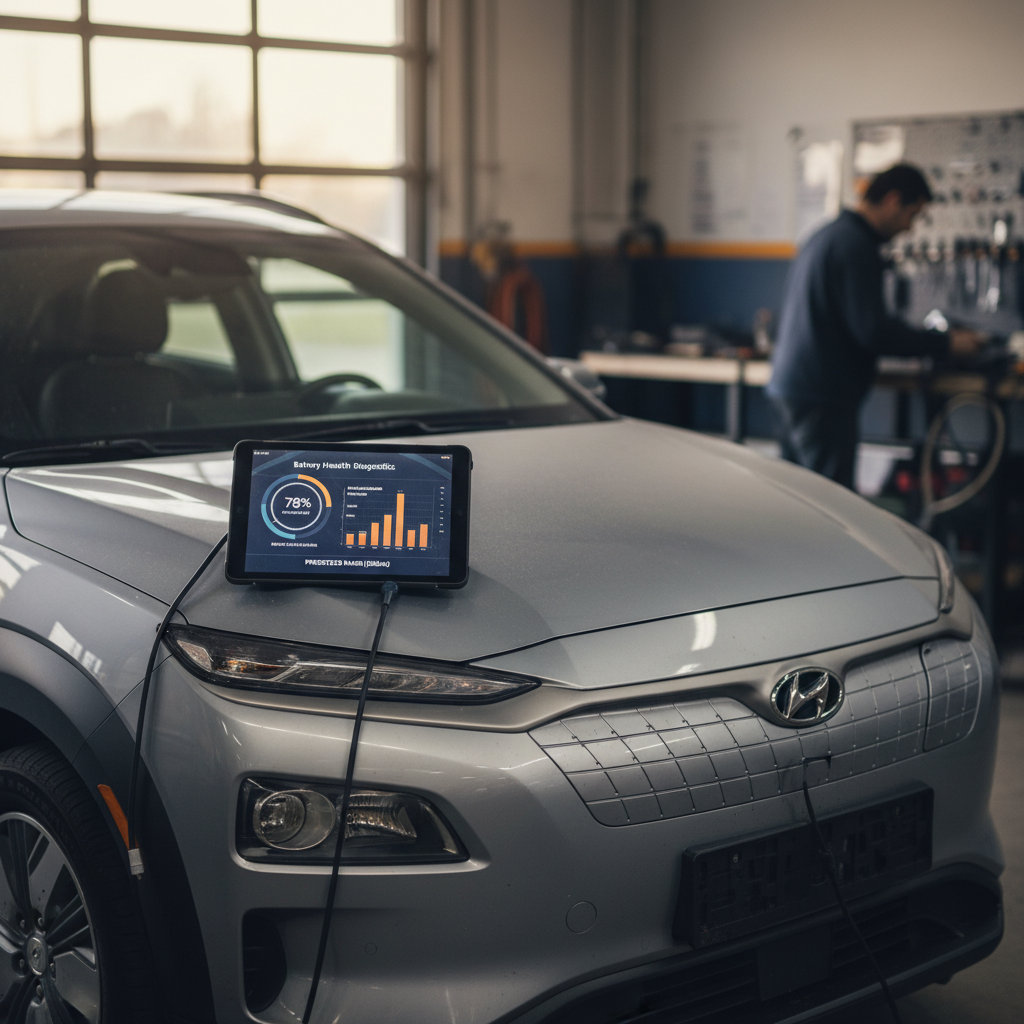
Battery Health Matters Most
This is exactly why Recharged includes a Recharged Score Report with every used EV we sell. That means independently verified battery health, transparent pricing data, and expert guidance on what those numbers actually mean for your daily range and long-term ownership costs. When you’re staring at a used F-150 Lightning or, eventually, a used Silverado EV, that kind of detail takes the guesswork out of a big decision.
Which Electric Truck Fits You Best?
Choose Your Electric Truck Persona
Match how you’ll actually use the truck, not just what looks good on paper.
Local Contractor or Tradesperson
Best fit: Ford F-150 Lightning (especially used)
- Daily routes well under 200 miles.
- High value from Pro Power Onboard and frunk storage.
- Used pricing can make the numbers work better than a new half-ton diesel.
Long-Distance Driver or Road-Tripper
Best fit: Chevy Silverado EV (big-battery trims)
- Regular 250+ mile days on the highway.
- Extra range and faster DC charging relieve planning anxiety.
- Four-wheel steering helps in tight urban garages and trailheads.
Weekend Adventurer & Family Duty
Best fit: Either, depending on deal
- Lightning brings familiar F-150 manners and strong comfort.
- Silverado EV’s midgate and bed tricks are great for bikes, kayaks, and overlanding gear.
- Shop the actual trucks available in your budget and prioritize battery health and real range.
Decision Roadmap: How to Pick Between F-150 Lightning and Silverado EV
If You’re Coming from a Gas F-150 or Silverado
Start by test-driving an F-150 Lightning, it will feel most familiar instantly.
Compare cab space, driving position, and storage with the Silverado EV to see which layout you prefer.
List your top three must-haves (range, towing, onboard power, price) and see which truck actually checks those boxes.
If price is a concern, run the numbers on a used Lightning versus a new electric truck.
If This Is Your First Truck or First EV
Focus on how far you really drive on an average day and week, not how far you think you might.
Map out your regular routes in your preferred charging app to see where DC fast-chargers actually are.
Decide whether you care more about simple, traditional controls (Lightning) or a more futuristic EV interior (Silverado EV).
Talk to an EV specialist, like those at Recharged, who can sanity-check your assumptions and help you avoid overbuying.
How Recharged Can Help You Shop Smarter
Electric trucks are exciting, but they’re also expensive, heavy, and still evolving quickly. That makes it easy to overpay for more capability than you’ll ever use, or to fall in love with a spec sheet that doesn’t match real life. At Recharged, we’re focused on making used EV ownership simple and transparent.
- Every vehicle includes a Recharged Score Report with verified battery health and fair-market pricing data.
- You can trade in your current vehicle, get an instant offer, or use consignment if you want to maximize value.
- Financing, paperwork, and even nationwide delivery can be handled fully online, or you can visit our Experience Center in Richmond, VA.
- Our EV specialists can walk you through whether a used F-150 Lightning or other electric truck actually fits your lifestyle, charging situation, and budget.
If you’re serious about an electric truck, it’s worth taking a step back from the hype. Decide how you’ll really use it, understand how range changes with load and weather, and insist on clear battery-health data before you sign anything. Do that, and either the Ford F-150 Lightning or the Chevy Silverado EV can be a game-changing tool, not just an expensive science project in your driveway.