If you’re looking at a Ford F-150 Lightning in 2026, you’re probably wondering what it actually costs to maintain an electric pickup compared with a regular gas F-150. The headline is simple: Ford F-150 Lightning maintenance costs in 2026 are generally lower than a comparable gas truck, but there are a few EV‑specific quirks, especially tires and long‑term battery care, that you should plan for.
Lightning maintenance in one minute
Why Lightning maintenance costs matter in 2026
By 2026, the Ford F-150 Lightning is no longer a novelty. Early trucks are rolling past 50,000–70,000 miles, fleets have real‑world cost data, and independent shops are starting to see these trucks as regular customers. At the same time, EV maintenance costs overall are now widely documented to be lower than comparable gas vehicles, often by 30–50% over the first several years of ownership. That makes it the right moment to look specifically at what it costs to keep a Lightning on the road.
Ford F-150 Lightning maintenance at a glance (2026)
Remember: these are estimates
How much does F-150 Lightning maintenance cost in 2026?
Third‑party cost‑to‑own analyses for 2024–2025 model‑year F-150 Lightnings suggest that annual maintenance (including wear items but excluding insurance, fuel, and depreciation) typically lands in the mid‑hundreds of dollars per year. Across five years and around 60,000–75,000 miles, that usually adds up to roughly $3,000–$4,500 in maintenance and minor repairs for a Lightning used as a typical daily driver and light work truck.
Illustrative 5‑year Ford F-150 Lightning maintenance budget (2026)
A planning framework for a 2024–2026 F-150 Lightning driven about 12,000 miles per year, used for commuting plus occasional towing.
| Item | Frequency over 5 years | Estimated cost per event | 5‑year estimate |
|---|---|---|---|
| Tire rotations & inspections | Once per 7,500–10,000 mi | $60–$120 (or bundled) | $300–$600 |
| Cabin air filter(s) | 1–2 times | $80–$150 | $80–$300 |
| Brake fluid service | Once around 3–5 years | $150–$250 | $150–$250 |
| Coolant checks (battery/motor) | Inspections; service by time/miles | $250–$500 (if performed) | $0–$500 |
| Wiper blades, bulbs, misc. | As needed | $25–$150 | $100–$300 |
| Tire replacement (all four) | 1–2 sets | $1,200–$1,800/set | $1,200–$3,600 |
| Unplanned repairs | Varies | N/A | $500–$1,000+ (prudence fund) |
These are planning estimates, not quotes. Local labor rates and driving style can shift totals meaningfully.
Add it all up, and a realistic planning range for a Ford F-150 Lightning is about $600–$900 per year in maintenance and wear items if you drive average mileage and budget proactively for tires. If you tow frequently, run larger aftermarket wheels, or pay premium shop rates, costs trend toward the high end of that range.
Use cents‑per‑mile to sanity‑check your budget
Ford F-150 Lightning vs gas F-150 maintenance costs
Where the Lightning saves you money
- No engine oil changes every 5,000–10,000 miles.
- No spark plugs, timing chains, fuel injectors, or exhaust system to service.
- No traditional automatic transmission fluid or filter services.
- Regenerative braking means slower brake pad and rotor wear in most driving.
Where costs can be similar or higher
- Tires wear faster on a heavy, high‑torque electric truck.
- Body and collision repairs on EVs can run higher than on comparable gas vehicles.
- Some specialized EV components (high‑voltage contactors, onboard chargers) can be pricey out of warranty.
- Insurance costs are often higher for EVs and high‑value trucks in general.
For many owners, the Ford F-150 Lightning’s lower routine maintenance costs help offset higher up‑front pricing and potentially higher insurance. Over a typical 5‑year period at average mileage, you’re likely to spend thousands less keeping a Lightning serviced than a similarly capable gas F-150, even once you account for an extra set of tires or two.
Fleet operators are paying attention
Routine Ford F-150 Lightning maintenance items and intervals
Ford’s official maintenance schedule for the F-150 Lightning centers on inspections, tire care, and fluid checks rather than major component service. Here’s how the core items typically break down in 2026 for a privately owned Lightning used in mixed city and highway driving.
Core Lightning maintenance items
The most common service tasks you’ll actually pay for.
Tire rotation & alignment
Rotate every 7,500–10,000 miles, or sooner if you notice uneven wear. Consider an alignment whenever you install new tires or hit a major pothole or curb.
Budget: $60–$150 per visit, depending on whether alignment is included.
Cabin filters & HVAC
Expect a cabin air filter change roughly every 20,000–30,000 miles or every 2–3 years. It keeps HVAC performance and interior air quality in good shape.
Budget: $80–$150, more at high‑labor‑rate dealers.
Brake fluid & system checks
Even with regenerative braking, the Lightning still needs periodic brake fluid replacement to prevent moisture buildup and corrosion, often around the 3–5‑year mark.
Budget: $150–$250 for a full flush at a dealer or specialist.
- High‑voltage battery coolant is long‑life, but Ford may recommend inspection or replacement by time/mileage, often closer to the 8‑year mark for typical drivers.
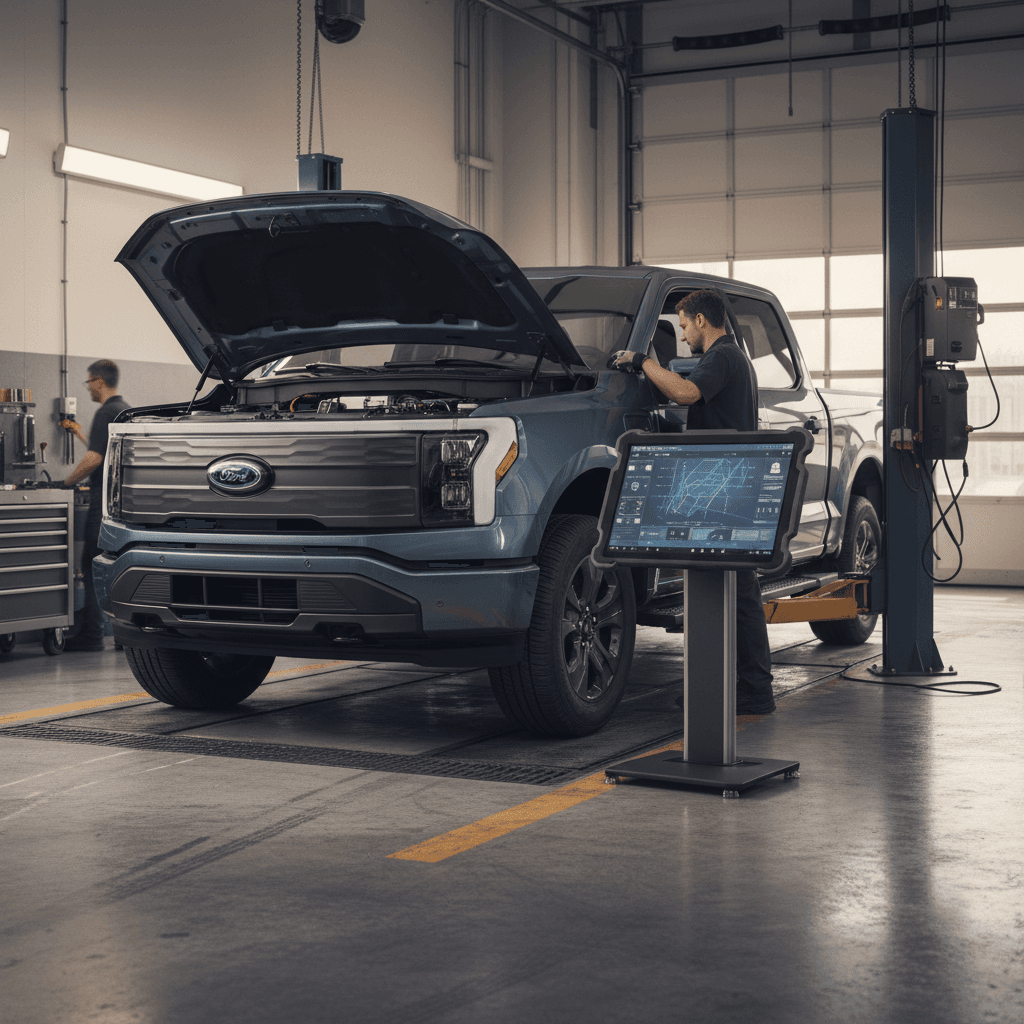
- Software updates are normally handled over‑the‑air, but some may be tied to dealer visits, where technicians also inspect underbody, suspension, and high‑voltage components.
- Standard wear items like wiper blades, cabin bulbs, and key fob batteries follow the same pattern as a gas F-150 and are usually inexpensive.
Follow the truck, not the calendar, if you drive less
The big-ticket items: tires, brakes, battery, and cooling
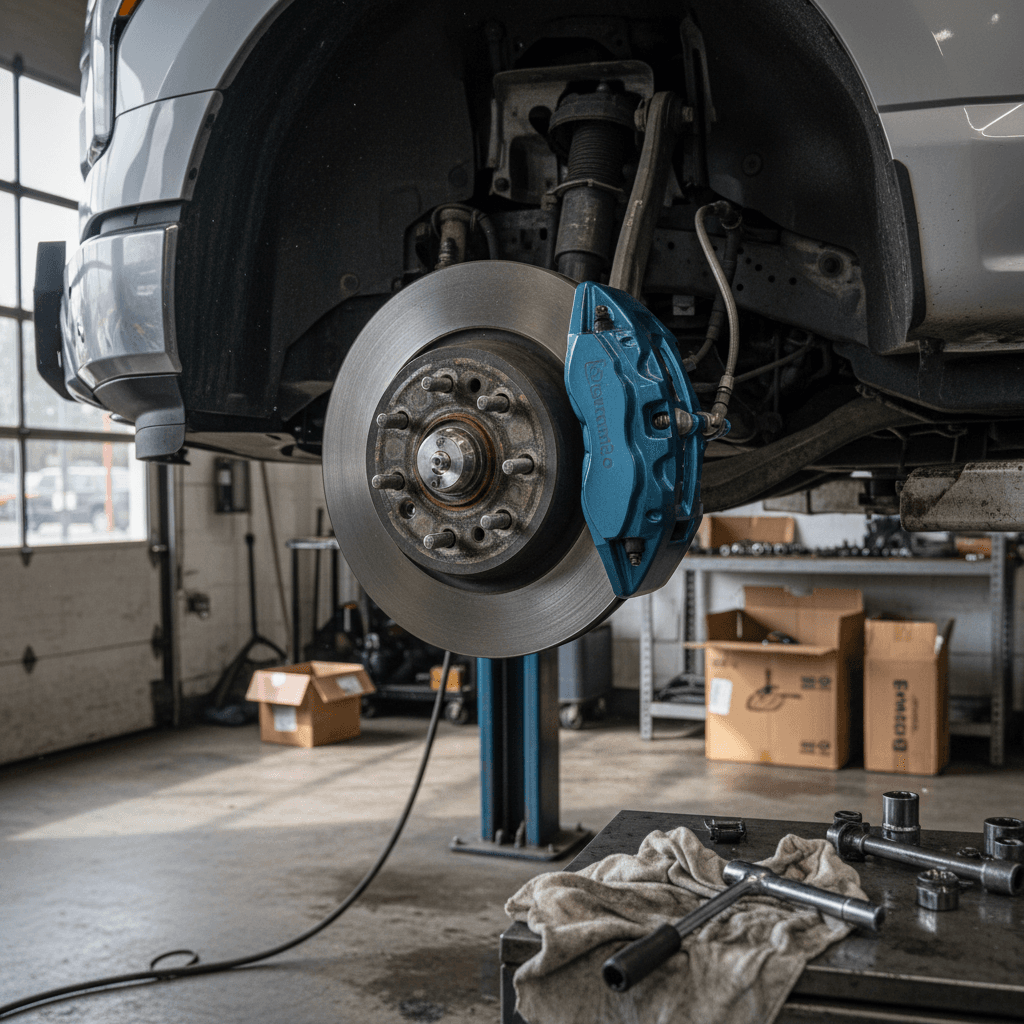
On any modern EV, the real maintenance story lives in a few expensive systems. In the Ford F-150 Lightning, that primarily means tires, brakes, the high‑voltage battery, and the cooling system that keeps everything happy under load. None of these are inherently scary, but they’re where you want to plan ahead.
High‑impact cost drivers on the F-150 Lightning
Plan for these and you’ll avoid most unpleasant surprises.
Tires: the silent budget killer
A Lightning can weigh 1,500–2,000 pounds more than a comparable gas F-150, and it delivers peak torque instantly. That combination is great for acceleration and towing, but rough on rubber. Many owners see 30,000–40,000 miles from OEM tires, less with heavy towing or oversized wheels.
Budget: $1,200–$1,800+ per full set with mounting and balancing; more for specialty all‑terrain or load‑range E tires.
Brakes: lightly used, still critical
Regenerative braking means pads and rotors can last much longer than on a gas truck, often 60,000+ miles for moderate drivers. But the truck’s mass still means high‑quality brake components and proper fluid care are important, especially if you tow in hilly terrain.
Budget: $600–$1,000+ for a full axle’s pads and rotors at dealer rates when they eventually need replacement.
High‑voltage battery & cooling
In 2026, most Lightning packs are still under Ford’s 8‑year / 100,000‑mile battery warranty. True pack failures are rare in the early years, but the cooling system, pumps, lines, valves, must remain healthy. Follow Ford’s coolant service recommendations and address any leaks or warnings early.
Out‑of‑warranty battery repairs can be expensive, but many owners will sell or trade before they’re exposed to that risk.
Towing and thermal stress
Frequent max‑load towing in hot climates puts extra stress on the Lightning’s battery and cooling system. The truck will manage its own power to protect hardware, but you may see more frequent coolant checks and slightly higher long‑term wear on suspension and tires.
Budget: Add a cushion of a few hundred dollars per year if you routinely tow near the truck’s limits.
Don’t skip high‑voltage safety checks
How your driving profile changes Lightning maintenance costs
Two F-150 Lightning owners can see very different maintenance bills in 2026 even if their trucks are the same year and trim. The difference usually comes down to mileage, payload and towing habits, climate, and how carefully they stay on top of inspections and tire care.
Typical Lightning usage patterns and what they mean for maintenance
Suburban commuter with light weekend use
12,000 miles per year, mostly paved roads.
Tires last closer to 40,000 miles with regular rotations.
Brake components age more by time than mileage thanks to regenerative braking.
Maintenance costs stay at the low end of the range, often around $500–$700 per year.
Work truck / light commercial use
15,000–25,000 miles per year with payload and occasional towing.
Faster tire wear; plan for a full set every 25,000–35,000 miles.
More frequent suspension inspections and alignment checks.
Budget more like $800–$1,200 per year, mostly from tires and wear items.
Frequent heavy towing
Regularly pulling near the truck’s rated towing capacity, often in hot or hilly regions.
Tires, brakes, and suspension see heavy loads; replacement intervals tighten.
Thermal management systems work harder; don’t delay coolant or brake fluid service.
Plan for the high end of the range and build in extra margin, $1,000+ per year isn’t unusual.
Your region matters, too
How to save on Ford F-150 Lightning maintenance
Practical ways to keep Lightning maintenance costs in check
1. Prioritize tire care
Check pressures monthly and before towing, rotate on schedule, and consider a mild driving style when you don’t need full torque. Even modestly extending tire life can save hundreds of dollars a year on a heavy EV truck.
2. Leverage mobile service and independents
Ford’s mobile service and emerging EV‑savvy independent shops can handle basic items like rotations, filters, and brake fluid flushes, often at lower labor rates than a main‑line dealer.
3. Keep software and recalls current
Over‑the‑air updates don’t just add features; they can improve efficiency, reliability, and diagnostic capability. Respond quickly to recall notices that address hardware issues before they become out‑of‑warranty problems.
4. Align service with your warranty timeline
Time major inspections before key warranty milestones (for example, around 35,000–40,000 miles and again before the 8‑year battery warranty mark) so that any lurking issues are found while coverage is strongest.
5. Avoid unnecessary upsells
Because the Lightning has fewer traditional service items, you don’t need engine treatments, fuel system flushes, or many of the legacy upsells that still appear on some service menus. Stick to Ford’s EV‑specific schedule.
Where a used Lightning can shine
Used F-150 Lightning maintenance and the role of battery health
By 2026, many early F-150 Lightnings are cycling into the used market. That changes the maintenance equation slightly: the truck may be outside its bumper‑to‑bumper warranty window but still under battery and drive unit coverage. Your biggest questions now become: How has this truck been used? and What shape is the battery and cooling system really in?
What to scrutinize on a used Lightning
- Service history for tire rotations, brake fluid, and coolant checks.
- Tire condition and alignment (uneven wear hints at past neglect or curb impacts).
- Evidence of heavy towing or commercial upfitting.
- Any repaired collision damage near the battery, cooling lines, or charge port.
How Recharged helps you de‑risk maintenance
Every EV sold through Recharged includes a Recharged Score Report with verified battery health and a transparent look at the truck’s condition. For a used F-150 Lightning, that means you’re not guessing about pack health or hiding early‑life abuse behind a shiny detail job. Our EV‑specialist team can also walk you through realistic maintenance expectations for that specific truck based on its age, mileage, and usage.
Because battery degradation and cooling issues can be expensive if they appear outside warranty, front‑loading your homework on a used Lightning pays off. A solid inspection, verified battery health, and a realistic budget for tires and future wear items go a long way toward making ownership boring, in a good way.
FAQ: Ford F-150 Lightning maintenance cost in 2026
Common questions about F-150 Lightning maintenance costs
Bottom line on Ford F-150 Lightning maintenance in 2026
By 2026, the Ford F-150 Lightning has proved that an electric full‑size pickup doesn’t have to be a maintenance gamble. If anything, routine maintenance is simpler and often cheaper than on a similarly capable gas F-150. The trade‑offs show up mostly in higher tire costs and the need to respect the truck’s battery and cooling systems. Go in with realistic expectations, $600–$900 a year for most owners, more if you tow hard, and a plan to stay on top of inspections, and the Lightning can be one of the most predictable workhorses you’ll ever own.
If you’re considering a used F-150 Lightning, pairing this cost picture with verified battery health and transparent pricing is the smartest move you can make. That’s exactly what Recharged was built for: a simpler, more transparent way to buy and own used EVs, backed by data instead of guesswork.