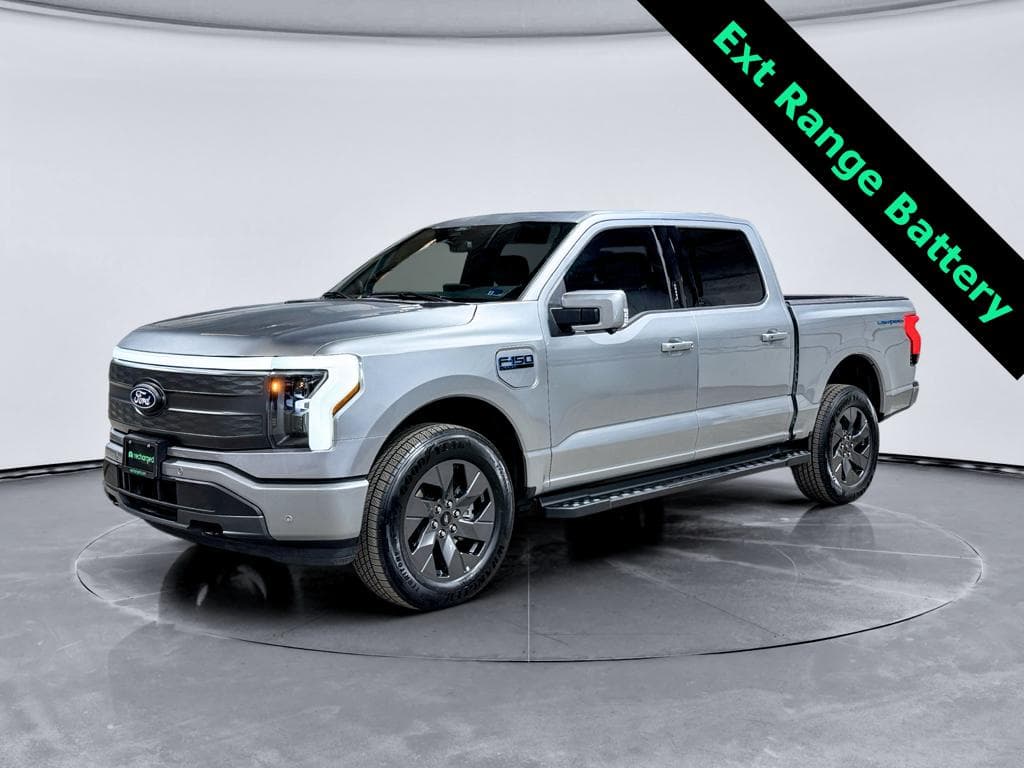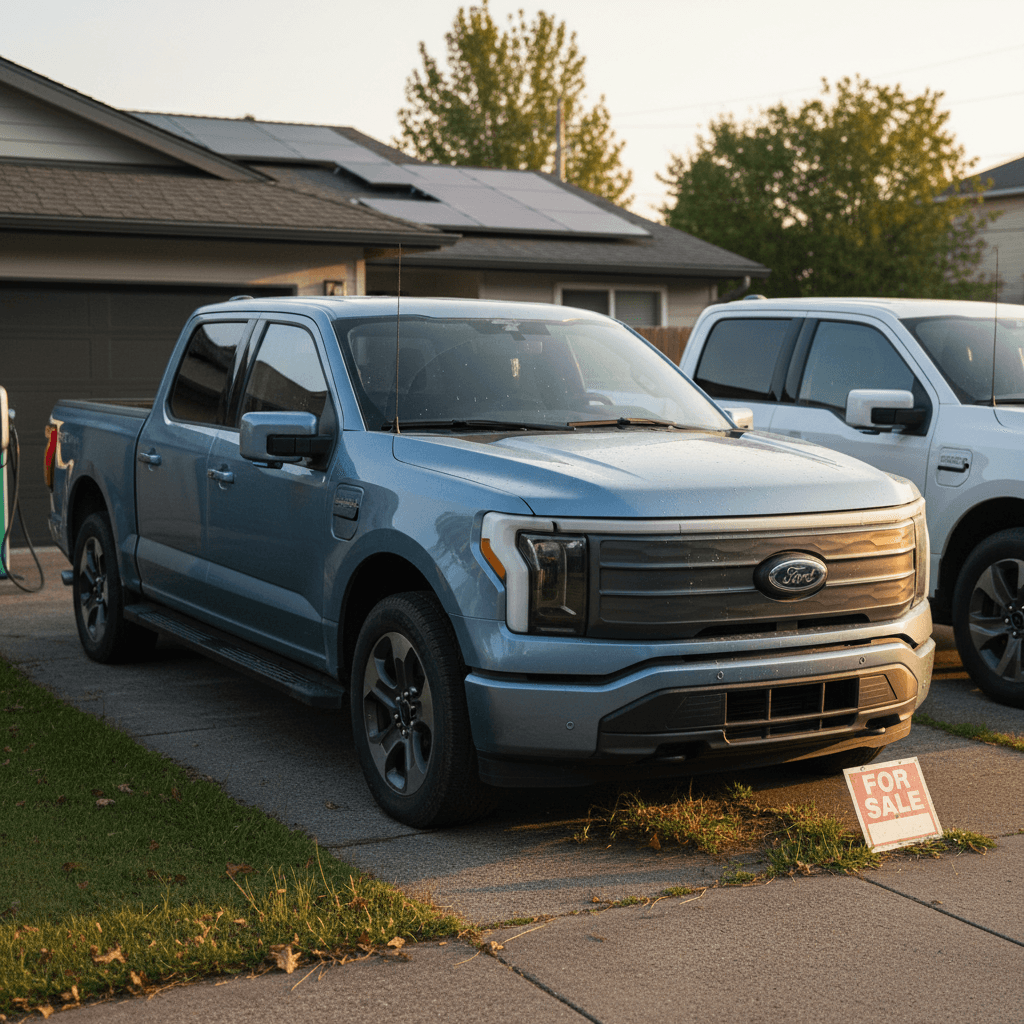
If you own, or are eyeing, a Ford F-150 Lightning, you’ve probably heard the horror stories: big discounts on new trucks, used prices falling fast, headlines about Ford rethinking its EV strategy. So what does that actually mean for Ford F-150 Lightning value after 5 years? Will your electric pickup be a bargain, a liability, or something in between?
Context: A young used market
Why Ford F-150 Lightning 5‑Year Value Matters
Five years is the heart of the truck ownership curve. For many buyers, it’s the point where a new truck leaves warranty, a lease ends, or a business decides whether to rotate fleet vehicles. For an electric truck like the Lightning, five years is also the midpoint of its 8‑year/100,000‑mile high‑voltage battery warranty, which is a huge part of its remaining value.
- Helps current owners decide whether to keep, trade, or sell their Lightning around year five.
- Shows used‑EV shoppers where the value sweet spot might be versus new pricing.
- Matters to business and fleet buyers modeling total cost of ownership.
- Signals how the broader market feels about full‑size electric pickups at scale.
Think in total cost, not just resale
Ford F-150 Lightning depreciation after 5 years
Where 5‑year Lightning values are likely to land
Third‑party valuation tools and remarketing analyses suggest a Ford F-150 Lightning may depreciate on the order of 55–60% over five years, leaving a resale value around the low‑40% range of original MSRP for a typical, non‑abused truck. That’s roughly in line with one widely cited estimate that pegs 5‑year value at about 43% of original price for a Lightning, and close to data suggesting around 56% depreciation over that same period.
Not all 5‑year‑old Lightnings will follow the curve
There’s one more wild card: in late 2025 Ford announced that production of the current F-150 Lightning will end in favor of a different truck strategy. That doesn’t make existing Lightnings worthless, in fact, it could create a cult‑truck effect later, but in the short term it adds uncertainty that keeps used prices under pressure.
What actually drives F-150 Lightning value
The four big levers on Lightning resale
Beyond the sticker price, these factors really move 5‑year value up or down.
1. Battery health
A Lightning is, at heart, a big battery in a very nice aluminum tux. If capacity has taken a hit, so has value. Trucks that still charge close to their original EPA range, with verified battery health reports, command the strongest prices.
2. Charging reality where you live
In regions with robust DC fast‑charging and lots of home‑charging‑friendly housing, buyers are more confident, and that props up values. In rural or charging‑poor areas, Lightning demand, and thus pricing, tends to be softer.
3. How the truck was actually used
A Lightning that spent five years as a suburban commuter is valued very differently from one that spent five years towing near max capacity. Frequent heavy towing and fast‑charge abuse show up as higher battery stress and lower resale.
4. Recalls & maintenance history
These trucks have seen multiple recalls and software updates. A Lightning with documented recall fixes, regular service, and clean diagnostic scans will always sit at the top of the value band for its year and trim.
Where Recharged fits in
Ready to find your next EV?
Browse VehiclesBattery health, warranty and 5‑year value
At five years old, a Ford F-150 Lightning is right in the middle of its 8‑year/100,000‑mile Electric Vehicle Component Coverage. Ford’s wording is simple: if the high‑voltage battery falls below about 70% of its original capacity within that window, it’s eligible for repair or replacement under warranty. That floor matters a lot to a second owner who’s thinking about years six, seven and eight.
What we’re seeing so far
- Owners with 30–45k miles commonly report only a few percent battery degradation when there’s no defect.
- Big range drops tend to be tied to specific battery module issues that Ford has addressed via recalls or warranty work.
- A truck that has already had its pack or modules replaced under warranty can be a strong buy if the work is documented.
How this plays into 5‑year value
- Trucks with proof of good battery health (scan reports, range tests) will sit at the top of the value range for their year and trim.
- Unverified battery health, or obvious range loss, will push a Lightning toward the bottom of the curve, even if the body looks perfect.
- A buyer who understands the remaining warranty is more willing to pay up for a clean, mid‑life truck.
Always get a battery health report
Recalls, reliability and owner confidence
The Lightning is not a boring truck, mechanically or financially. Early owners have lived through software glitches, 12‑volt battery quirks, charging issues, and several high‑profile recalls, including one focused on specific high‑voltage battery modules and another concerning a roll‑away risk tied to the park system. Most of this has been addressed with software updates or targeted hardware fixes, but the headlines leave a mark on resale value.
- If a recall is **open** on a truck, buyers use that as leverage, or simply walk away.
- A Lightning with **complete recall documentation and updated software** will sit at the better end of the 5‑year value range.
- Long service visits or repeated failures (especially high‑voltage battery or drivetrain) can push that individual truck’s value far below the average curve.
Don’t ignore recall status in price
Trims, mileage and how the truck was used
How trims and use case bend the 5‑year value curve
Same model, very different 5‑year stories depending on battery, trim, and duty cycle.
| Truck profile after 5 years | Typical mileage | Likely value vs original MSRP | Why it lands there |
|---|---|---|---|
| Pro work truck, standard battery, lots of city use | 90,000+ miles | 35–45% | High miles bring price down, but lower original MSRP and simple spec keep percentage loss moderate. |
| XLT extended‑range, mixed personal use, light towing | 60,000 miles | 40–50% | Balanced miles and desirable range; solid middle‑of‑the‑road depreciation. |
| Lariat/Platinum, extended‑range, frequent heavy towing | 70,000 miles | 30–40% | Towing stress and higher starting price combine for steeper percentage loss. |
| Low‑mile garage queen, extended‑range, all recalls done | 30,000 miles | 45–55% | Best‑case scenario: low miles, strong battery, full documentation, high trim desirability. |
Illustrative examples assuming similar model years and regions; actual market prices vary.
Put simply, a Lightning that has lived like a luxury family truck will not be valued the same as one that spent five winters towing equipment to job sites. The market already bakes this in. You’ll see two trucks with the same model year and trim split by ten grand or more at retail because of mileage, options and use case.
The trim trap
F-150 Lightning vs gas F-150 after 5 years
Resale value snapshot
- Historically, a well‑equipped gas F‑150 might retain 50–60% of its original value after 5 years, depending on trim and miles.
- Current data suggests the Lightning is more in the 40–45% range at 5 years, reflecting faster early depreciation.
- That gap is widest for the most expensive electric trims bought at peak pricing.
Total cost snapshot
- Electricity is usually cheaper per mile than gasoline, especially if you can charge at home off‑peak.
- Lower routine maintenance (no oil changes, fewer moving parts) also adds up over five years.
- For drivers who put on lots of miles and charge cheaply at home, Lightning’s operating savings can offset some of its extra depreciation.
How to compare Lightning vs gas F‑150 long‑term
How to spot a fairly priced used F-150 Lightning
If you’re shopping for a five‑year‑old Lightning, you’re walking into a market where some sellers are anchored to their original sticker shock, and others are panic‑cutting prices. Here’s a structured way to decide whether a price makes sense.
5‑step checklist for judging Lightning 5‑year value
1. Start with realistic market data
Pull values from multiple sources (KBB, Carfax, regional dealer listings) for the exact year, trim, battery, and mileage. Used Lightning prices can vary by many thousands based on these details, so generic F‑150 valuations won’t cut it.
2. Adjust for battery health and warranty runway
A truck with strong, verified battery health and several years left on the 8‑year/100k‑mile battery warranty deserves a premium. Factor down the price if health is unknown, diagnostics are missing, or the truck is creeping up on the mileage limit.
3. Check recall and software status
Confirm that major recalls, especially battery‑related and roll‑away issues, are already completed, and that the truck is running the latest software. Open recalls and out‑of‑date firmware are both negotiation points and red flags.
4. Look for use‑case red flags
Evidence of heavy towing, commercial wraps, construction damage or over‑the‑road fast‑charging every other day should all pull value down relative to a light‑duty suburban truck with the same odometer reading.
5. Compare to a similar truck on Recharged
Use a comparable Lightning on <strong>Recharged</strong>, with a full Recharged Score battery report and transparent pricing, as a reality check. If a private‑party or dealer truck with missing documentation is priced higher, the value is upside‑down.
Leaning on Recharged when the market is noisy
Who a 5‑year‑old Lightning is (and isn’t) right for
Best and worst use cases for a 5‑year‑old Lightning
Same truck, very different ownership experiences depending on how you use it.
Great fit: Home‑charging commuter
You can plug in at home, drive mostly predictable daily miles, rarely tow heavy, and have other options for multi‑state road trips. For you, a discounted Lightning at 5 years can be a smart, low‑running‑cost workhorse.
Mixed fit: Occasional towing, regional trips
You tow a modest trailer a few times a year and take regional trips where DC fast‑charging exists but isn’t as dense as gas stations. You’ll need to plan more carefully, but the economics can still make sense.
Poor fit: Heavy‑duty tower or remote work
If you tow near max capacity frequently, work far from charging, or rely on your truck for cross‑country driving with tight timelines, a 5‑year‑old Lightning is likely to frustrate you, even at a bargain price.
In the right driveway a five‑year‑old Lightning is less a used truck and more a deeply discounted subscription to cheap, quiet miles, provided you understand its limits and buy the right example.
Ford F-150 Lightning 5‑year value: FAQ
Common questions about 5‑year Lightning value
Bottom line on Ford F-150 Lightning value after 5 years
Five years in, the Ford F-150 Lightning is not the resale hero that its gas sibling is, and that’s exactly why it can be such an interesting buy. For original owners, the news is mixed: you’ve likely absorbed more depreciation than you hoped, especially if you bought an expensive trim early. For used‑truck shoppers, though, that same curve creates an opening to pick up a capable, quiet electric pickup with years of battery warranty left at a deep discount to original MSRP.
If you’re serious about a five‑year‑old Lightning, treat battery health, recall history and charging reality where you live as non‑negotiables. Don’t overpay for cosmetic flash; do pay for documentation and a clean diagnostic bill. And if you’d rather not become a part‑time data analyst just to buy a truck, start your search with Recharged, where every Lightning comes with a Recharged Score, expert EV guidance, and transparent pricing from the first click to the final signature.