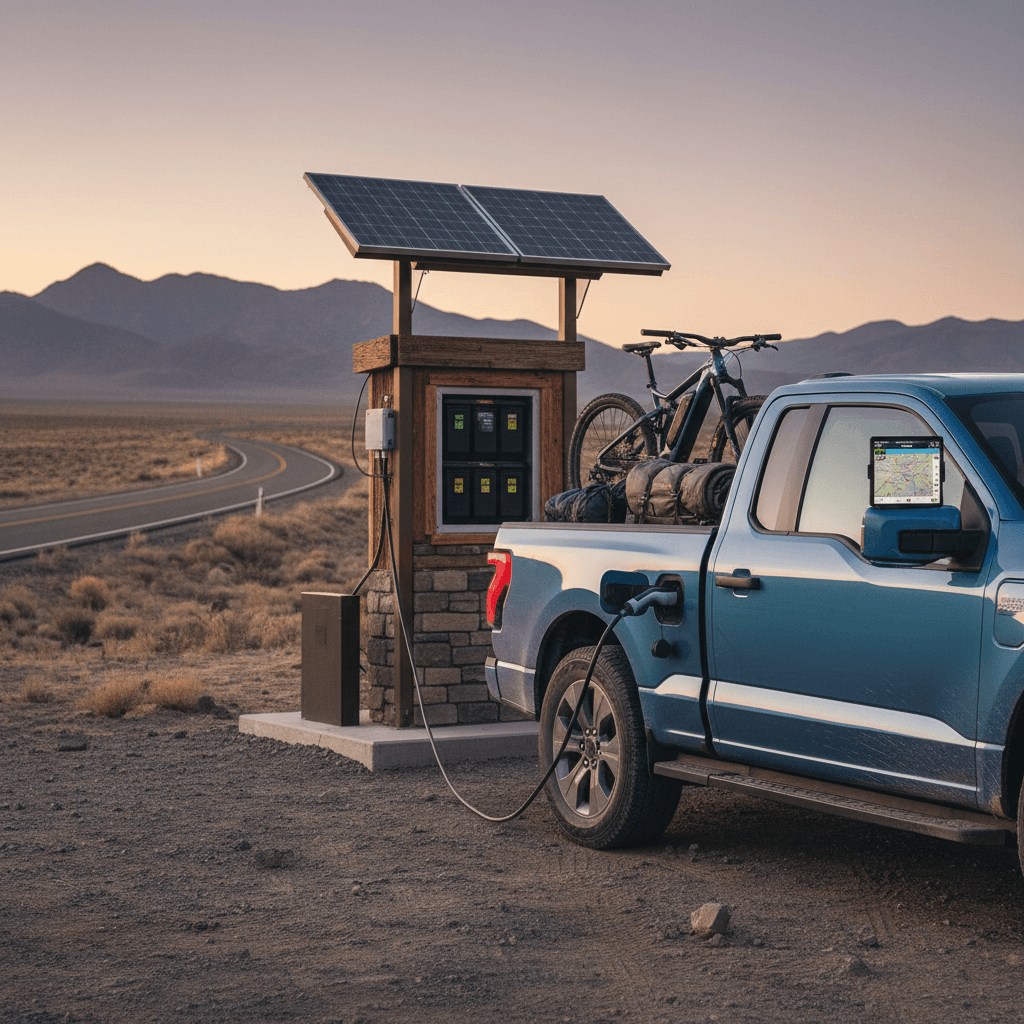
If you’re eyeing a big road trip in your Ford F-150 Lightning, you’ve probably heard every opinion under the sun: “It’s great, just plan your stops” and “You can’t road trip an EV truck” are two of the loudest. The truth sits in the middle. With realistic expectations and some smart planning, the Lightning can be a comfortable, capable long‑distance machine, especially if you understand its real‑world highway range and charging behavior.
Why the Lightning feels different on road trips
Can you road trip a Ford F-150 Lightning?
Yes, people do thousand‑mile trips in F‑150 Lightnings all the time, but it’s not a “gas truck with a plug.” Once you accept that most legs will be in the 120–220 mile range depending on battery, speed, weather, and towing, road tripping an electric F‑150 becomes a planning exercise, not a gamble.
Ford F-150 Lightning long-distance basics
Think in legs, not total range
Know your truck: battery, range, and charging basics
Step 1: Understand which Lightning you have
Battery, trim, and options dramatically change your long-distance experience.
Standard‑range (SR) Lightning
Most SR trucks use a 98 kWh usable battery and have EPA range ratings around the low‑ to mid‑200s in miles.
- Great for: Shorter legs, frequent fast chargers.
- Highway road‑trip legs: Plan on roughly 140–190 miles per hop depending on conditions.
Extended‑range (ER) Lightning
Extended‑range packs are roughly 131 kWh usable and EPA‑rated up to the 300–320 mile range depending on trim.
- Great for: Longer hops, more rural corridors.
- Highway road‑trip legs: Many owners comfortably plan 180–260 miles per hop in good weather.
The Lightning’s big advantage is battery size; its challenge is aero drag and weight. On long highway drives, efficiency tends to cluster around ~2.0–2.3 mi/kWh at 70 mph, and up to the mid‑2s if you’re gentler with speed. That’s why extended‑range trucks feel so much more relaxed on long stretches, especially once you load up the family and gear.
Quick reference: F-150 Lightning road-trip specs (typical)
These are ballpark, real‑world planning numbers, not official EPA ratings. Always use your own truck’s data as the final word.
| Configuration | Usable battery | EPA rating (approx.) | Typical 70 mph efficiency | Comfortable highway leg |
|---|---|---|---|---|
| Standard‑range (SR) | ~98 kWh | ~230 miles | ~2.0 mi/kWh | 140–180 miles |
| Extended‑range (ER) | ~131 kWh | ~300–320 miles | ~2.0–2.3 mi/kWh | 180–230 miles |
| ER, careful driving | ~131 kWh | , | ~2.4–2.6 mi/kWh | 220–260 miles |
Use these figures as planning guides, then refine based on your own experience.
Used truck? Don’t guess on battery health
Plan your route around realistic range
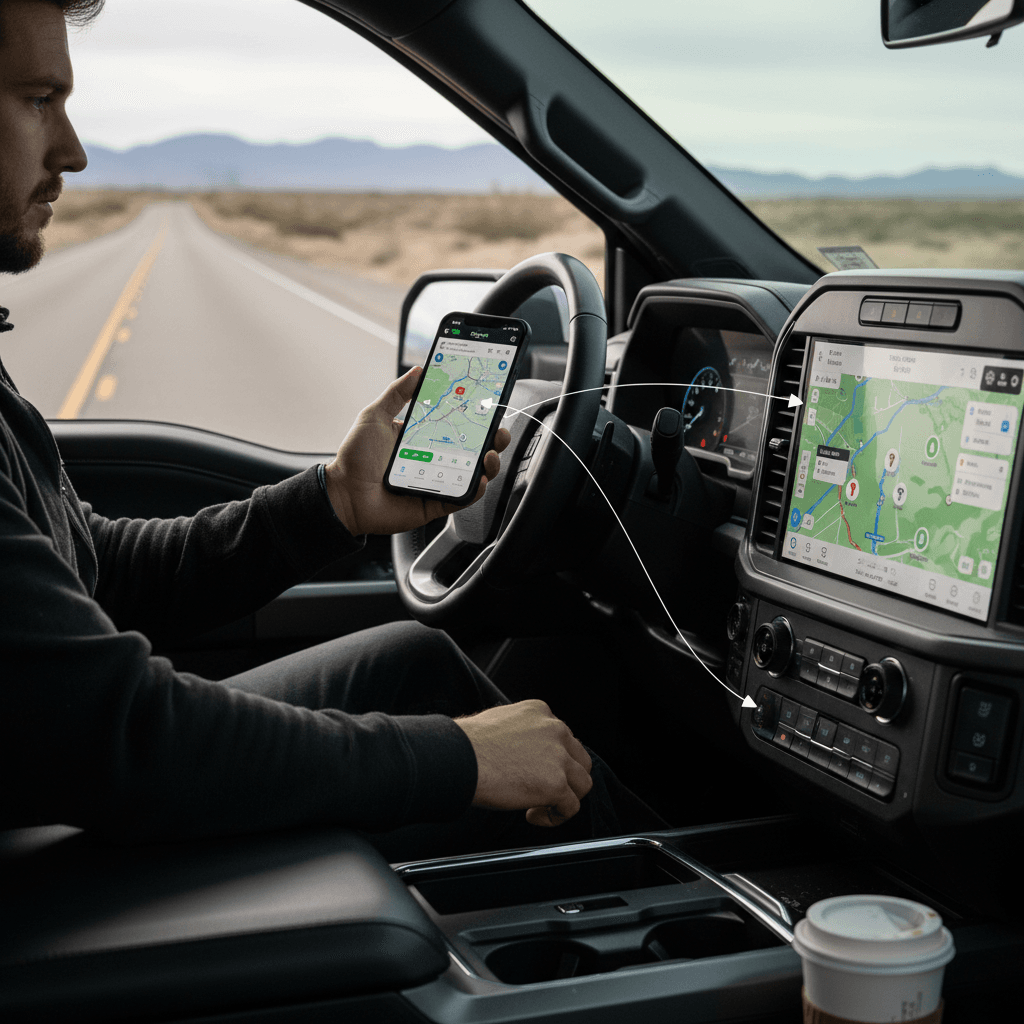
Long‑distance EV driving is about pre‑planning your stops, not hunting for a station when the low‑battery light comes on. The Lightning’s built‑in navigation can route through DC fast chargers, but you’ll get the best results by pairing it with third‑party apps and a bit of old‑school thinking about margins.
Route-planning steps for your first Lightning road trip
1. Start with your realistic leg length
Base this on your battery (SR vs ER), expected efficiency, and comfort margin. For an ER truck, a conservative first trip might assume <strong>180–200 mile</strong> legs at highway speeds without towing.
2. Map DC fast chargers every 100–150 miles
Use a mix of the Ford navigation, PlugShare, Chargeway, or your preferred apps. Look for clusters of stations so you have a Plan B if one site is busy or offline.
3. Prefer chargers near food, restrooms, and safe lighting
Amenities turn charging time into rest time. Favor sites co‑located with major travel plazas or shopping centers over isolated single chargers tucked behind buildings.
4. Build in a 20–30% buffer
Aim to arrive with <strong>10–20% state of charge</strong>, not 1%. Wind, hills, and traffic detours can all eat into your projected range.
5. Check reviews and recent check‑ins
Before you leave, skim recent user reviews for each charging stop. Consistent reports of low power or broken stalls are signals to pick a different location if you can.
6. Identify ‘bailout’ chargers
On long stretches, mark at least one earlier DC fast charger in case conditions (weather, traffic, towing load) are worse than expected.
Use your first leg as a calibration run
Smart charging strategy for long-distance trips
On a road trip, your goal isn’t “100% every time.” It’s minimizing total travel time. The Lightning, like most EVs, charges fastest from roughly 15–20% up to ~70–80%. Beyond that, charge power tapers off to protect the battery, and each extra percent takes longer.
How long should you charge on each stop?
Think in windows, not full charges.
15–60%: Fast and efficient
This is usually the sweet spot. You’ll see the highest kW numbers and add miles quickly.
Use this window if: You’re leapfrogging chargers that are close together and don’t need long legs.
15–80%: Balanced for longer legs
Most Lightning owners doing 180–220 mile legs will routinely charge up to ~75–80%.
Going from 15→80% on a healthy, warm battery often takes around 30–40 minutes on a good DC fast charger.
80–100%: Use sparingly
Above ~80%, charge power drops. The last 20% can take as long as the 20–60% chunk.
Save 90–100% for when you need maximum range between sparse chargers or before a remote segment.
Watch charger power ratings, not just plugs
- Use your home or origin charger to leave with a warm, full battery whenever possible.
- If you’re staying at a hotel, prioritize those with Level 2 charging, even 6–8 hours overnight can restore a big chunk of your pack.
- Try to combine meals with charging stops. A 30‑minute fast charge lines up nicely with a bathroom break and a quick meal.
- In winter, precondition the battery before fast‑charging when your truck supports it, warm packs charge faster and more consistently.
Highway driving techniques to maximize range
The Ford F‑150 Lightning is a brick‑shaped, brutally quick brick. That combination rewards restraint on the highway. Small changes in how you drive can swing your mi/kWh by 20–30%, which translates directly into longer legs or shorter charge stops.
Range-friendly driving techniques
You don’t have to hypermile, just be intentional.
Tame your cruising speed
Around 65 mph, many owners see ~2.2–2.4 mi/kWh on flat ground. Push to 75–80 mph and you can easily drop into the high‑1s.
On a long day, that can be the difference between 2 or 3 charging stops.
Use smoother throttle, not just regen
The Lightning’s instant torque makes it fun to punch it, but those bursts add up. Smooth inputs and steady cruising save more energy than relying on heavy regen to clean up after aggressive driving.
Mind the wind and aero
Headwinds and crosswinds hit a tall truck hard. If the forecast calls for strong winds, shorten your planned legs and expect lower mi/kWh.
Remove roof racks, tonneau covers with crossbars, and tall cargo when you don’t need them.
Use cruise control (or BlueCruise) strategically
Towing with a Lightning on long trips
Towing is where the F‑150 Lightning’s physics tax really shows up. Owners routinely report that towing a large, boxy trailer can cut their highway range by roughly half at 65–70 mph. That doesn’t mean you can’t tow long‑distance, it means you have to plan for shorter legs and more frequent DC fast charges.
How towing affects Lightning road trip planning
Ballpark planning numbers assuming 65 mph, moderate temps, and a well‑behaved trailer. Real‑world results depend heavily on trailer height, weight, and terrain.
| Setup | Typical efficiency | Effective leg length (ER battery) | Trip planning mindset |
|---|---|---|---|
| No trailer, light load | ~2.0–2.3 mi/kWh | 180–230 miles | Baseline, what most non‑towing road trips look like. |
| Small utility / low trailer | ~1.6–1.8 mi/kWh | 140–180 miles | Noticeable hit, but manageable with dense charger coverage. |
| Mid‑size camper / boat | ~1.2–1.4 mi/kWh | 100–150 miles | Plan frequent stops; watch terrain and wind direction closely. |
| Tall travel trailer, heavy | ~1.0–1.2 mi/kWh or less | 80–120 miles | This is advanced mode. Keep speeds down, plan tightly, and be ready to bail out early if efficiency drops. |
When in doubt, plan conservatively for your first towing trip and adjust from real data.
Safety first when towing
- Use the truck’s built‑in towing profiles so it can better estimate range with a trailer attached.
- Do a test loop near home with your trailer to learn typical mi/kWh before committing to a long-distance haul.
- Prefer routes with more frequent chargers, even if they add a few minutes of drive time.
- Consider scheduling more frequent, shorter charge stops to keep the battery in its fastest‑charging window.
Weather and load: how conditions change your range
In an EV pickup, conditions matter more than most gas‑truck drivers are used to. The Lightning is big, so anything that makes it punch harder through air or pull more energy into the cabin or battery shows up quickly in your range.
Cold weather
Below about 40°F, you’ll see range hit from three places at once:
- Battery chemistry – Cold packs can’t accept or deliver energy as efficiently.
- Cabin heat – Electric heaters pull directly from the battery.
- Battery heating – The truck may use energy to warm the pack for performance and charging.
For long winter drives, it’s not unusual to see 20–30% lower effective range at highway speeds compared with mild weather.
Heat, elevation, and load
High heat is generally easier than cold, but constant A/C use still costs some miles. Long, steep grades also hammer efficiency, think of it as towing an invisible trailer uphill.
- On big climbs, plan shorter legs and assume worse mi/kWh.
- On the way down, use regen to recapture some energy but don’t count on it to “pay back” the climb.
Heavy cargo in the bed matters less than a tall, blunt trailer. Aerodynamics hurt more than weight at highway speed.
Cold-weather road trip hacks
Using tech like BlueCruise and trip planners
One of the Lightning’s unsung strengths on long drives is how much work its software can take off your plate. Between Ford’s own trip planning and third‑party tools, you can turn what looks like a complex puzzle into a pretty manageable glide path.
Tech tools that make Lightning road trips easier
Mix Ford’s ecosystem with independent apps for the best results.
Ford navigation with charger routing
When you enter a distant destination, the truck can suggest charging stops and arrival SoC based on its own efficiency models.
Use this as your starting point, then cross‑check with other apps to confirm station quality.
Third‑party apps (PlugShare, etc.)
Community‑driven apps show real‑time status, photos, and reviews of charging locations.
They’re invaluable for spotting chronic problems or better‑than‑average sites that Ford’s built‑in search might not surface well.
BlueCruise and adaptive cruise
Hands‑free systems like BlueCruise on mapped highways can reduce fatigue and help you maintain a steady, efficient pace.
Always stay alert and be ready to take over; think of it as an efficiency aid, not a babysitter.
Don’t forget payment and access
Packing and prep checklist for Lightning road trips
Packing for an EV truck trip isn’t just about snacks and phone chargers. A few EV‑specific items can turn an anxious first road trip into an easy routine.
What to bring (and do) before a long Lightning drive
Confirm charge equipment and adapters
Bring your Ford mobile charge cord, any Level 2 cables you use at home, and <strong>relevant adapters</strong> if you expect to use different outlet types at cabins or relatives’ houses.
Update software and maps
Before departure, check for software updates and be sure your <strong>navigation maps and BlueCruise data</strong> (if equipped) are current. Outdated maps can mean missing or mis‑located chargers.
Download and log in to charging apps
Install apps for at least two major charging networks along your route, add payment methods, and test that you can start a session before you’re on the road.
Set your initial SoC strategy
Decide whether you’ll leave at 90% or 100%, and whether your first leg is a shorter “calibration” or a longer push. Put your <strong>first two charging stops</strong> in the nav before you start driving.
Organize cables and keep them clean
Store charging gear in a dedicated bin or under‑seat compartment so you’re not dragging muddy cables through the cabin. Gloves and a small towel go a long way.
Share the plan with passengers
Let everyone know roughly how often you’ll be stopping and for how long. When the family knows what to expect, the added charging rhythm feels far less disruptive.
Buying a used Lightning specifically for road trips
If your main interest in an F‑150 Lightning is road‑trip comfort, quiet cabin, big frunk, onboard power, shopping used can make a lot of sense. But you’ll want to look past cosmetics and options and focus hard on battery health, charging history, and highway behavior.
Key questions to ask
- Which battery does it have? An extended‑range pack is a big deal if you regularly do 200+ mile legs.
- How was it charged? A mix of home Level 2 and occasional fast charging is ideal. Exclusively DC‑fasted fleet trucks may have harder‑used packs.
- What’s the real‑world range? Ask the seller for their typical highway range at 70 mph in mild weather.
How Recharged helps
Every Lightning sold through Recharged includes a Recharged Score battery health report that quantifies usable capacity, along with fair‑market pricing and expert guidance.
That means you can shop used trucks with a clear sense of how many miles of practical highway range you’re actually buying, not just a trim name on a window sticker.
If you already own a Lightning and are thinking about selling or trading into a different EV, Recharged can also give you an instant offer or help you consign your truck for maximum value.
Ford F-150 Lightning long-distance FAQ
Frequently asked questions about Lightning road trips
Bottom line: how to make your Lightning a great road-trip truck
A Ford F‑150 Lightning will never road trip exactly like a gasoline F‑150, and that’s the point. You’re trading five‑minute fuel stops for quiet torque, low running costs, and a fundamentally more relaxed driving experience. If you go in expecting to slam 500 miles at 85 mph between anonymous gas stations, you’ll be disappointed. If you’re open to structuring your day around well‑planned, 30‑minute charging breaks every 150–220 miles, it can be one of the most comfortable ways to cover serious ground.
The key is to know your truck, plan routes around realistic legs, respect the impact of towing and weather, and use the tech tools at your disposal. Whether you’re buying a new Lightning or shopping used through a marketplace like Recharged, building your expectations around real‑world range and verified battery health turns long‑distance driving from a question mark into a repeatable routine. Do that, and the Lightning stops being “the EV you’re worried about taking on a road trip” and becomes the truck you actually look forward to spending all day in.