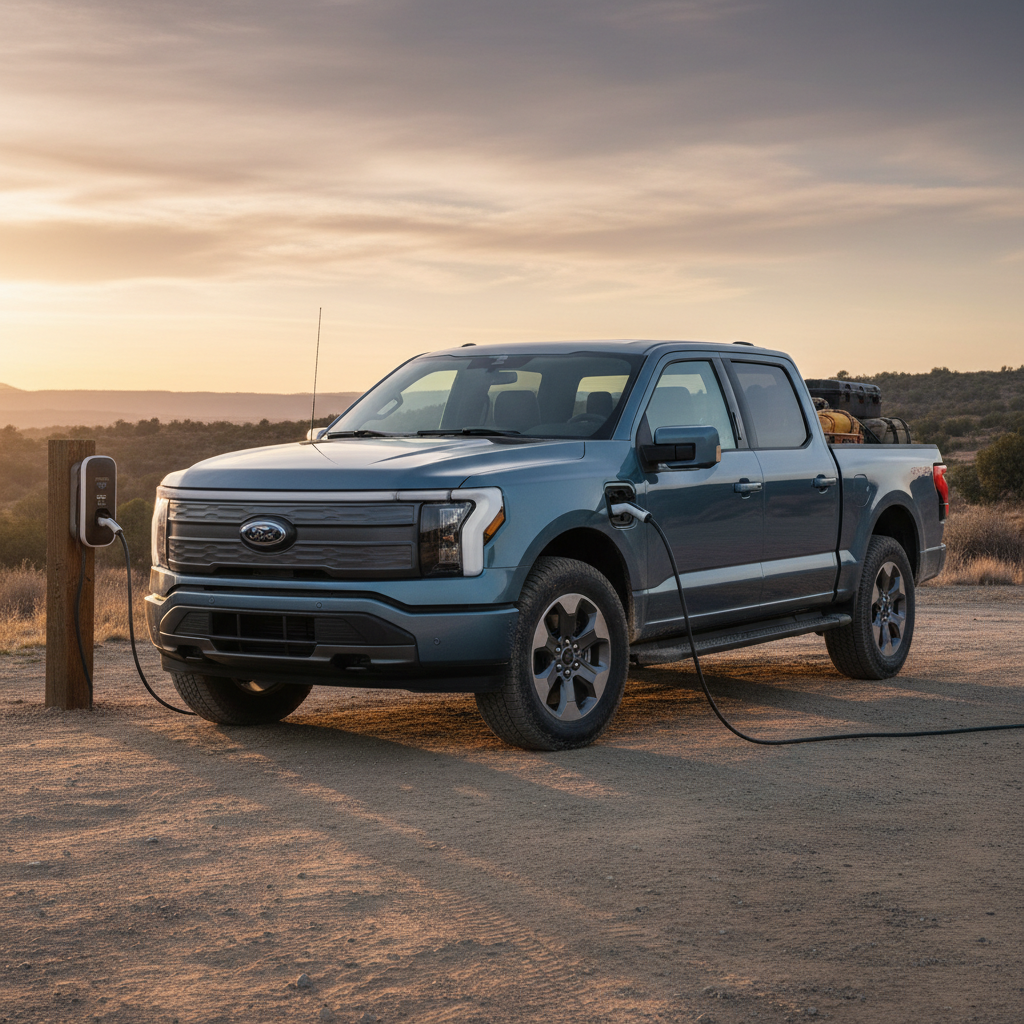
If you own a Ford F-150 Lightning, or you’re shopping for one used, you’ve probably typed "Ford F-150 Lightning KBB value" into a search bar more than once. With new‑truck discounts, EV tax-credit whiplash, and Ford openly rethinking the Lightning’s future, it’s fair to wonder: what is this electric pickup really worth in 2026?
Quick take
Why KBB value matters for the F-150 Lightning
Kelley Blue Book has been the default pricing gospel for gas trucks for decades. With the F-150 Lightning, it still shapes trade‑in offers, private‑party deals, lease buyouts, and insurance payouts. But the Lightning isn’t a normal F‑150. It’s an early‑generation electric truck living through a tough EV market reset, and that makes its KBB value more volatile than your average half‑ton pickup.
- Dealers lean on KBB (and similar tools) to justify trade‑in offers on F-150 Lightnings.
- Private buyers look up KBB values before they wire a very large pile of money for a used electric truck.
- Lenders and insurers often use KBB‑style data to set loan amounts and replacement values.
Why Lightning values feel "all over the place"
How KBB actually prices a Ford F-150 Lightning
KBB doesn’t publish its full recipe, but if you strip away the branding, it’s a data problem: millions of listings in, a probability distribution of values out. For a Ford F-150 Lightning KBB value, the tool blends Lightning‑specific data with its usual truck math.
The main inputs behind Lightning KBB value
Most are familiar from gas trucks, one is very EV‑specific
1. Vehicle details
Year, trim (Pro, XLT/STX, Flash, Lariat, Platinum), options, paint, interior, and whether it’s standard or extended‑range battery. Commercial‑spec Pro work trucks are priced differently than plush Platinums.
2. Usage & condition
Odometer, accident history, title status, service records, and declared condition (excellent / good / fair). A low‑mile, single‑owner Lightning with clean history will almost always price above KBB "typical" value.
3. Market & EV factors
Local supply and demand, regional incentives, new‑truck rebates, plus broader EV trends. When Ford cuts new‑Lightning prices or offers big incentives, KBB values for recent model years tend to sag.
Don’t skip your ZIP code
Real‑world Ford F-150 Lightning prices vs KBB
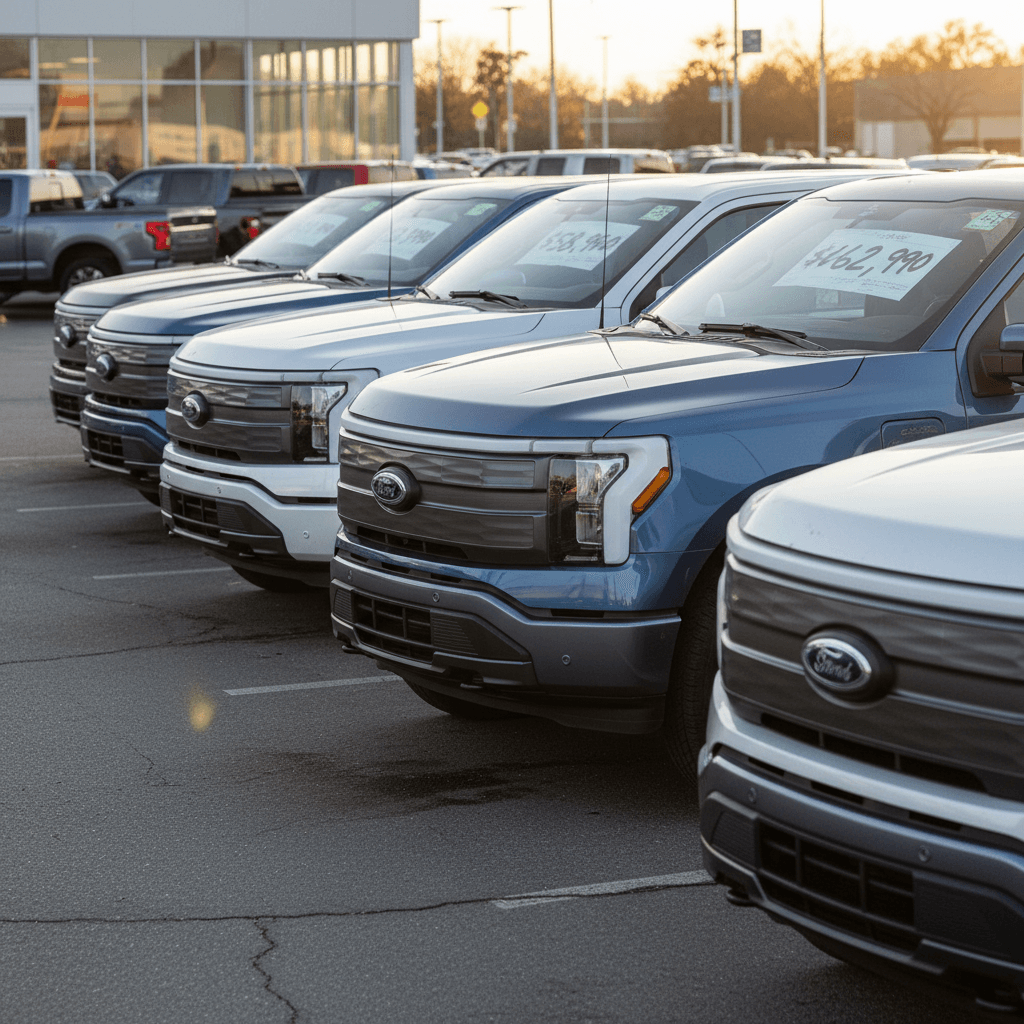
So where do the guidebook numbers land compared with what trucks are actually selling for? In early 2026, data from several valuation sites and listings paint a consistent picture: lightly used 2024 F-150 Lightnings are trading in the high‑$30,000s to high‑$50,000s depending on trim, while history‑based tools and appraisal sites cluster many trucks around the high‑$40,000s to low‑$50,000s for average mileage and condition.
2024 F-150 Lightning value snapshot (early 2026, U.S.)
Those bands line up reasonably well with what you’ll often see from KBB, Edmunds, and CARFAX when you appraise the same truck. The catch: individual trucks swing thousands of dollars up or down based on trim, miles, and, increasingly, documented battery health.
Key factors that move your Lightning’s KBB value
What pushes your Lightning’s value up or down
Model year & trim mix
Newer model years and higher trims (Lariat, Platinum) generally start from a higher KBB baseline, but can also fall faster in dollar terms as incentives pile up on new inventory.
Mileage vs age
EV shoppers are more sensitive to miles than years. A two‑year‑old Lightning with 50,000 miles may appraise below a three‑year‑old truck with 18,000 miles, even if KBB assumes "average" use.
Accident & title history
Any structural damage or branded title can hammer value. A clean Carfax/AutoCheck with consistent service history tends to support the upper end of KBB’s range.
Battery & charging behavior
Frequent DC fast‑charging, lots of towing, or harsh‑climate use can show up as accelerated battery wear. KBB doesn’t see that directly, but savvy buyers and specialized marketplaces do.
Local demand & incentives
States with strong EV incentives and better public charging infrastructure usually support higher transaction prices than regions where EV adoption has cooled.
New‑truck pricing today
Ford’s direct discounts on new Lightnings drag down used prices. If a brand‑new Pro is heavily rebated, a one‑year‑old Pro can’t live in a fantasy world on the used lot.
Where Recharged fits in
Ready to find your next EV?
Browse VehiclesDepreciation: how fast does a Lightning lose value?
Every new truck depreciates; the Lightning just does it more dramatically in the early years. Generous MSRPs, subsequent price cuts, and a cooling EV market have combined to push used values down faster than Ford or early adopters had hoped.
Illustrative 5‑year value curve for a high‑trim 2024 Lightning
Based on recent appraisal data for a 2024 F‑150 Lightning in good condition. Numbers are directional examples, not guarantees.
| Year of ownership | Approx. market value | Typical yearly drop |
|---|---|---|
| 1 year in (2025) | ≈ $63,000 | Large initial hit from MSRP and incentives |
| 2 years in (2026) | ≈ $55,000 | Values begin to stabilize but still drifting down |
| 3 years in (2027) | ≈ $48,000 | More "normal" depreciation as market matures |
| 4 years in (2028) | ≈ $40,000 | EV competition and aging tech weigh more heavily |
| 5 years in (2029) | ≈ $32,000 | Roughly half the original MSRP for a high‑trim truck |
Think of this as a weather forecast, not a contract, local conditions and battery health can move you up or down.
Sticker‑shock warning
Battery health: why KBB is only part of the story
KBB treats the Lightning’s battery as a binary: does the truck run and is it in a broadly defined condition? But in the real world, two identical‑looking Lightnings can have very different remaining battery life and real‑world range, and that should absolutely change what they’re worth.
Truck A: pampered commuter
- Garage‑kept Lariat, 18,000 miles
- Mostly Level 2 charging at home
- Rarely fast‑charged, no heavy towing
- Battery diagnostics show minimal degradation and strong range
Result: Buyers (and smart dealers) will happily pay above mid‑range KBB value.
Truck B: hard‑working hauler
- Pro trim work truck, 60,000 miles
- Frequent DC fast‑charging on the road
- Regular heavy towing in hot and cold climates
- Battery tests show noticeably reduced usable capacity
Result: Real‑world buyers will push for a price below KBB’s midpoint once they see degraded range.
How Recharged handles Lightning battery health
Trim and options: which Lightnings hold value better?
Not all Lightnings are created equal in the eyes of the used market. The KBB value for a base Pro work truck looks very different from a Platinum with every bell and whistle. Buyers have started to sort the market into a few predictable favorites and underdogs.
How F-150 Lightning trims tend to age
General patterns we see in KBB values and real‑world sales
Pro / work‑spec
Cheapest to buy new, quickest to show up in fleets and work duty. Their KBB values slide faster because most are high‑mile, hard‑use trucks, but they can be bargains for buyers who just want an electric workhorse.
XLT / STX / Flash
Where a lot of retail buyers land. These trims often show the strongest demand on the used market because they balance price, range, and comfort. Their KBB values tend to track transaction prices reasonably well.
Lariat / Platinum
Gorgeous, expensive, and initially hit hardest by depreciation in dollars. Once the early plunge is over, clean examples often command noticeably more than KBB mid‑range because equipment and comfort still matter.
How recent market shifts affect KBB value
The Lightning isn’t depreciating in a vacuum. Since 2024, Ford has repeatedly trimmed prices, offered aggressive incentives, paused and restarted production around supply hiccups, and, most recently, publicly reconsidered the truck’s long‑term future as EV demand cooled. All of that washes back onto the Ford F-150 Lightning KBB value you see today.
- MSRP cuts and incentives: When new‑truck prices fall, KBB adjusts used values downward to keep the spread real.
- Production uncertainty: Headlines about pausing or ending Lightning production make some buyers nervous, which can widen the gap between KBB and what a reluctant market will actually pay.
- Tax credit changes: Federal and state EV incentives have changed several times. When buyers lose a $7,500 carrot on new trucks, some migrate to used; when they regain it, used values soften.
KBB reacts to the market, it doesn’t lead it
How to check your own F-150 Lightning KBB value
You don’t need a dealer license or a finance degree, just a VIN, a realistic sense of condition, and five minutes. Here’s how to get a grounded KBB value for your Lightning and sanity‑check it against the real world.
Step‑by‑step: pulling a useful KBB value
1. Gather the truck’s details
VIN, exact trim, major options (extended‑range battery, tow packages, Pro Power Onboard, tech packages), mileage, and your ZIP code. The more accurate your inputs, the more meaningful the output.
2. Be brutally honest about condition
If the truck has curb‑rashed wheels, bed dings, or a scuffed interior, it’s not "excellent." KBB assumes a bell curve of condition; over‑rating yours just sets you up for disappointment at trade‑in time.
3. Run multiple value types
Check trade‑in, private‑party, and dealer retail numbers. Dealers will aim near the trade‑in figure; private‑party deals often split the difference between trade‑in and retail.
4. Cross‑check with live listings
Search for similar F-150 Lightnings by year, trim, and mileage on major listing sites. If KBB says $52,000 but dozens of comparable trucks sit at $47,000, the market is giving you a hint.
5. Layer in battery information
If you have battery‑health documentation, or you can get a report like the Recharged Score, use that to position your truck above or below KBB averages.
6. Use it as a negotiation anchor, not a hill to die on
KBB is a tool, not a verdict. Expect dealers and buyers to come in below the number, then use your homework to pull them closer to a fair middle ground.
Tips to boost your Lightning’s value before selling
You can’t rewrite Ford’s pricing history, but you can present your truck as the best version of itself. A few targeted moves can easily swing value by thousands compared with a neglected Lightning with the same VIN and miles.
- Get a professional detail: Clean wheels, decontaminated paint, and a spotless cabin photograph better and signal careful ownership.
- Service and software up to date: Documented maintenance, completed recalls, and current software reassure buyers in a tech‑heavy truck.
- Battery‑friendly habits: If you have logs or app data showing limited fast‑charging and balanced use, that’s credibility in an EV sale.
- Fix obvious cosmetic scars: Small repairs (paintless dent removal, wheel refinishing) often cost less than the discount buyers will demand.
- Gather your paperwork: Window sticker, purchase docs, charging equipment, bed accessories, and tonneau covers all help support a stronger price.
Selling a Lightning through Recharged
Using KBB value when you buy a used Lightning
On the buy side, KBB is less about finding a "deal of the century" and more about avoiding a truly bad deal. Electric trucks are still new territory for a lot of sellers; some are pricing from hope rather than data.
Smart ways to use KBB as a buyer
- Spot outliers: If an asking price is 10–15% over KBB dealer retail with nothing to justify it, you know to negotiate or walk.
- Compare trims: See how much extra Lariat or Platinum content is actually worth in dollars versus a mid‑trim truck.
- Anchor your offer: For private‑party deals, KBB plus live listings give you a data‑backed starting point that feels fair to both sides.
But don’t forget the EV‑specific homework
- Battery health report: Ask for diagnostics or buy from a marketplace like Recharged that includes them.
- Charging reality check: Make sure your home and regional charging situation makes a Lightning practical, especially if you tow.
- Total cost of ownership: Factor in electricity vs fuel, maintenance, and potential incentives for buying used.
Beware the "too‑cheap" Lightning
FAQ: F-150 Lightning KBB value and resale
Common questions about Ford F-150 Lightning KBB value
Bottom line: treat KBB as a compass, not gospel
The Ford F-150 Lightning KBB value you see on your screen is the product of a messy moment in the EV story: fast‑evolving pricing, shifting incentives, and a market still deciding what it really wants from an electric truck. KBB is indispensable, but it’s only the start.
To know what a Lightning is truly worth, whether you’re buying or selling, you have to layer in battery health, real‑time listing data, and the specific way that truck has been used. That’s exactly the gap Recharged is built to close with its battery‑first inspections, Recharged Score pricing, and EV‑specialist support.
Use KBB to orient yourself, then look at how real trucks like yours are actually changing hands. If the number on your phone and the number on the window sticker don’t match, the market is talking. Listen to it, and use every tool at your disposal to make that conversation end in your favor.