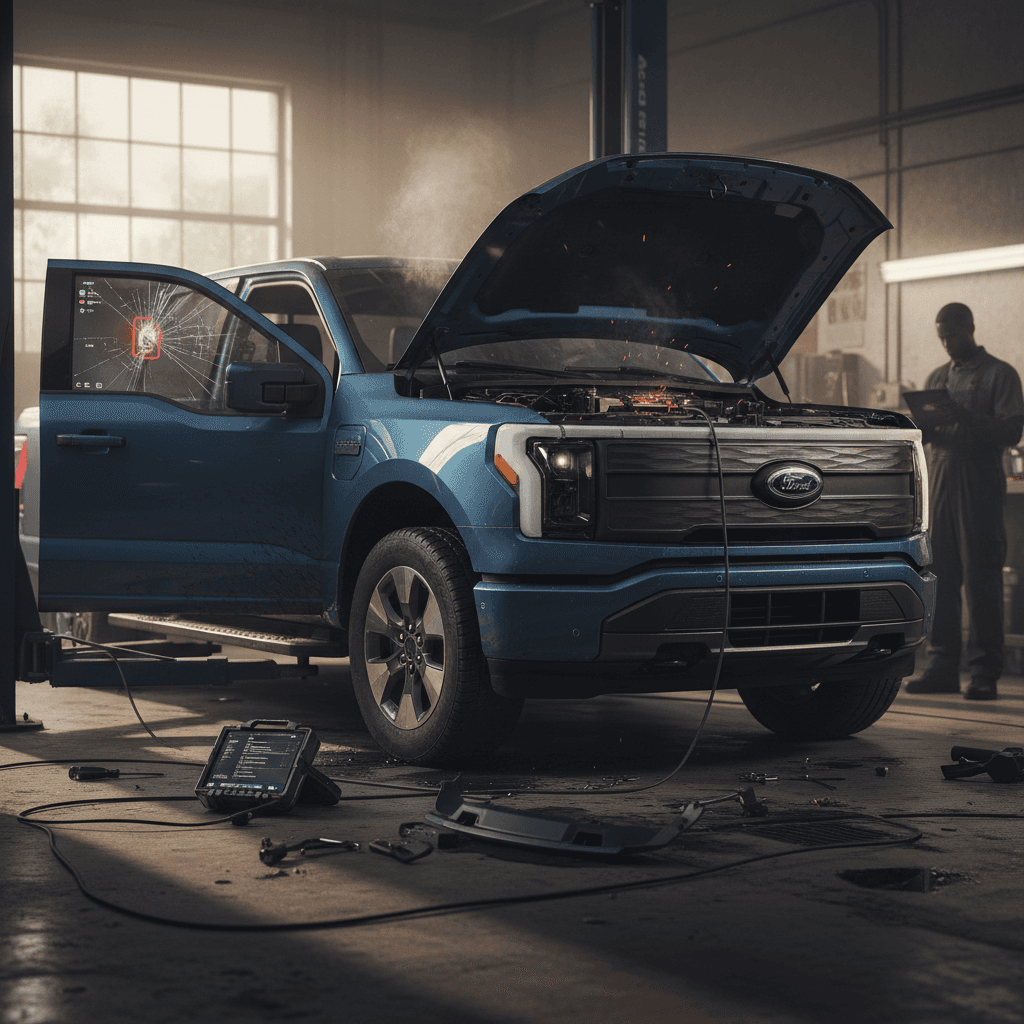
By 2026, the Ford F-150 Lightning is no longer the shiny new moonshot, Ford has already announced the end of the current full‑EV Lightning in favor of an extended‑range successor. But tens of thousands of these trucks are on the road, and a growing number are hitting the used market. If you’re eyeing one, you’re probably wondering: what are the Ford F-150 Lightning common problems in 2026, and which ones actually matter?
Quick take
Ford F-150 Lightning in 2026: Context Matters
Before we catalog every rattle and recall, it helps to understand where the F-150 Lightning sits in 2026. Production of the current full‑electric Lightning ends this year, with Ford shifting resources toward an extended‑range version built around a generator and twin motors. That doesn’t mean your 2022–2025 Lightning is obsolete; it means the truck you’re considering is a first‑generation experiment that the company is quietly moving past.
- Model years on the road now: primarily 2022–2025 F-150 Lightning BEVs
- Batteries: all NCM chemistry packs (no LFP Lightning ever made it to customers, despite rumors)
- Typical EPA range when new: roughly 240–320 miles depending on battery and trim
- Warranty: 8 years/100,000 miles on the high‑voltage battery, usually with a 70% capacity guarantee
Why this matters for problems
Is the F-150 Lightning Reliable Overall?
Owner surveys and reliability ratings paint a mixed picture. Statistically, the Lightning lands in the middle of the EV pack: not a disaster, not a Toyota Camry either. The pattern is familiar to anyone who’s lived through Gen‑1 tech: lots of small electronic annoyances, a few expensive but rare failures, and an underlying powertrain that’s tougher than the headlines suggest.
F-150 Lightning Reliability in One Glance
What owners actually experience by 2026
Powertrain & Battery
High‑voltage battery and motors are holding up well in most trucks, with low documented degradation and few outright pack failures relative to volume.
Electronics & Software
Most reported problems are software glitches, warning lights, and failed modules that require dealer visits or updates, not tow‑truck‑worthy failures.
Range & Usability
The perception of “unreliable” often comes from unrealistic range expectations, especially when towing or in cold weather, more than from broken hardware.
Smart shopper move
Battery Health, Range Drop & Degradation Myths
If you only read the comments section, you’d assume every early Lightning is a ticking battery time bomb. Real‑world data says otherwise. High‑mileage owners routinely report single‑digit capacity loss even past 40,000–90,000 miles, and Ford’s thermal management seems to be doing its job. At Recharged, our own testing on used Lightnings echoes that pattern: modest wear, not falling‑off‑a‑cliff degradation.
- Many 2022–2023 trucks with 35,000–50,000 miles show roughly 1–3% usable capacity loss based on charge‑from‑empty testing and owner reports.
- Outliers exist, trucks with bad battery modules or skewed state‑of‑charge reporting, but they’re not the norm.
- Ford’s battery warranty (usually 8 years/100,000 miles to ~70% capacity) has caught some early module failures, especially on 2024 trucks.
The range display problem
Real-World Range Problems: Cold, Speed & Towing
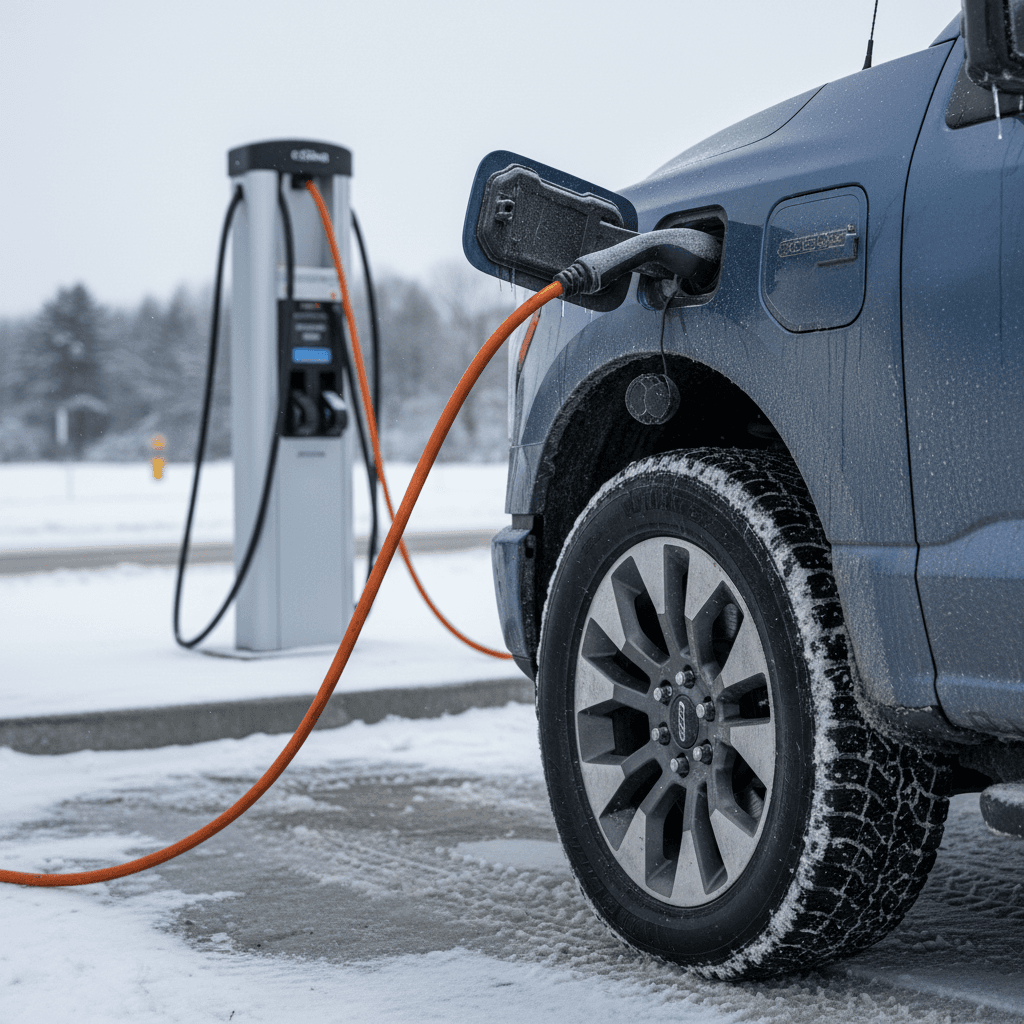
If there’s one theme in F-150 Lightning complaints, it’s this: the truck will do almost anything you ask of it, but it keeps sending you back to the charger to pay for your enthusiasm. Owners coming out of gas F‑150s routinely underestimate how hard aerodynamics, temperature, and speed hit an upright, brick‑shaped EV truck.
Biggest F-150 Lightning Range Killers
These are the “problems” owners most often misread as a bad battery.
| Scenario | What Owners Expect | What Often Happens | Why It Feels Like a Problem |
|---|---|---|---|
| 65–70 mph, empty bed, mild weather | Close to EPA range | 15–25% under EPA | High drag from a tall, heavy truck; EPA tests are gentler than I‑95 reality. |
| Winter highway, no trailer | Slight drop | 25–40% drop | Cold soaks the pack and cabin heating is energy‑intensive. |
| Towing a tall camper | “Maybe 30% hit” | 40–60% hit | Trailer frontal area murders efficiency; weight is secondary to aerodynamics. |
| Mountain grades + fast driving | A bit less range | 20–40% less range | Climbing and descending at high speeds amplifies energy use and cooling loads. |
Actual numbers vary by configuration and conditions, but the pattern is brutally consistent.
The cold‑weather wake‑up call
How to Keep Range “Problems” From Ruining Ownership
1. Start with realistic use cases
If your life is 20–60 miles of daily driving, the Lightning is easy. If it’s 300‑mile towing days, you’re choosing the wrong tool, or you’ll need to plan like a freight dispatcher.
2. Learn your truck’s winter behavior
Do a couple of controlled winter trips early on. Log highway efficiency at your normal speed so you know your real‑world numbers before you commit to big journeys.
3. Respect trailer aerodynamics
A low, enclosed car hauler is a very different story from a tall RV brick. When in doubt, assume a <strong>50% range hit</strong> with a big camper until you’ve tested it.
4. Use preconditioning and scheduled charging
Preheat the cabin and battery while plugged in, especially in cold climates. It reduces early‑drive energy spikes and makes the range gauge less dramatic.
Charging Problems: DC Fast Charging, Home Charging & Scheduling
Charging is where the F-150 Lightning feels least like an ordinary F‑150 and most like a rolling software project. The hardware, the onboard charger and DC fast‑charge capability, is solid on paper. In practice, owners report a constellation of charging annoyances that range from mild to trip‑ruining.
Most Common Lightning Charging Complaints
What owners describe again and again
Unstable DC Fast Charging
Some trucks fail to initiate sessions or ramp up slowly at certain public fast chargers. Sometimes it’s the station; sometimes the truck is picky about the handshake.
Slower Than Expected Speeds
Published peak rates look great, but many owners see conservative curves, especially above ~60–70% state of charge or in cold weather.
Charge Scheduling Glitches
Home charging schedules set in FordPass or the truck occasionally don’t stick. Trucks may charge outside off‑peak windows or ignore target‑charge limits until updated or reset.
When charging quirks become red flags
Home charging issues
- Misconfigured or lost schedules after software updates.
- Truck “forgetting” preferred charge level and topping to 100%.
- GFCI trips or breaker issues on marginal home wiring.
Most of these are solved with proper 240V installation, a hard reset, or a software update. They’re annoying, not terminal.
Public DC fast‑charge issues
- Handshake failures with certain networks or specific stations.
- Charging stalls well below advertised peak kW and won’t ramp up.
- Sessions that abruptly stop mid‑charge, especially in extreme heat or cold.
Here you’re at the mercy of both Ford’s software and the charging network’s competence. Keep apps updated, know multiple networks along your route, and avoid planning “arrive at 1%” hero runs.
Software Glitches, Infotainment & Driver-Assist Issues
Electrification didn’t turn Ford into Apple overnight. The Lightning’s SYNC 4 infotainment and driver‑assist stack come with their own grab bag of complaints, some carried over from gas F‑150s, others unique to the EV packaging.
- Random system reboots or frozen center screen, especially in early‑build trucks before multiple over‑the‑air updates.
- Occasional wireless Apple CarPlay/Android Auto dropouts or lag, sometimes fixed only by a full power cycle or 12‑volt battery reset.
- Driver‑assist features (lane‑keeping, BlueCruise on equipped trims) that feel inconsistent or drop out unexpectedly, often after map or software changes.
- Connectivity problems with the truck’s modem affecting FordPass remote commands, charging control, and OTA update reliability.
Low‑tech fix that still works
“The truck is brilliant when it’s doing truck things. It’s the software that sometimes behaves like it was copy‑pasted from three different future products and given a Red Bull.”
Known Recalls & Safety Concerns Through 2026
Because the F-150 Lightning shares so much with the broader F‑Series and Ford’s software ecosystem, some of its “problems” show up as big, multi‑model recalls rather than Lightning‑only flaws. By 2026, Lightning owners have seen several waves of recalls and service campaigns.
What Recalls Mean for a Used F-150 Lightning
Typical Lightning-Related Issues You’ll See in Recall/Service Records
Exact campaigns change over time, always run a fresh VIN check, but this is the general flavor through 2026.
| Issue Type | How It Shows Up | Why It Matters to You |
|---|---|---|
| Rear camera software glitches | Frozen or delayed reverse camera image | Safety concern when backing; usually fixed via software update. |
| Trailer module communication bugs | Trailer lights/controls not recognized or intermittent | Annoying and potentially unsafe if you tow frequently. |
| Battery module manufacturing defects (subset of trucks) | Warning lights, reduced power, or truck in limp mode; sometimes early in life | Can lead to pack or module replacement under warranty, big repair you want handled before you buy. |
| Range‑projection and state‑of‑charge anomalies | Range estimate drops sharply from 100%, even though pack is fine | Confusing, undermines trust; typically addressed via updated software or TSB. |
Ask the seller for documentation of recall and program completion before you fall in love with the paint color.
Good news on serious safety issues
Everyday Ownership Nuisances Owners Complain About
Not every “problem” makes a service bulletin. Some are just the day‑to‑day irritations you only notice once you live with the truck. If you’re coming from a gas F‑150, these are the bits that may surprise, or annoy, you.
- Frunk latches or seals that need adjustment to close smoothly, especially after heavy use.
- Door and window seals that pick up wind noise at highway speeds more than owners expect in a near‑silent EV.
- Ride quality that can feel busy or choppy on broken pavement thanks to the truck’s immense battery weight and traditional pickup suspension tuning.
- Range and efficiency hit from big wheel/tire packages, roof racks, and bolt‑on accessories, amplified compared to a gas truck because you see every lost mile on the screen.
- The learning curve around charging etiquette and trip planning, which many owners misdiagnose as “the truck isn’t practical” rather than “I’m trying to use it like a gas F‑150.”
EV truck reality check
Shopping a Used F-150 Lightning in 2026: What to Check
By 2026, the sweet spot for a used F-150 Lightning is typically a 2022–2024 truck where the first owner absorbed the sticker shock and the early software growing pains. Your job as a buyer is to separate a normal early‑EV learning curve from a truck that’s been a problem child.
Used F-150 Lightning Inspection Checklist
1. Pull a full service & recall history
Look for repeated visits for the <strong>same charging or electronic fault</strong>. A laundry list of resolved recalls is fine; a pattern of unresolved gremlins is not.
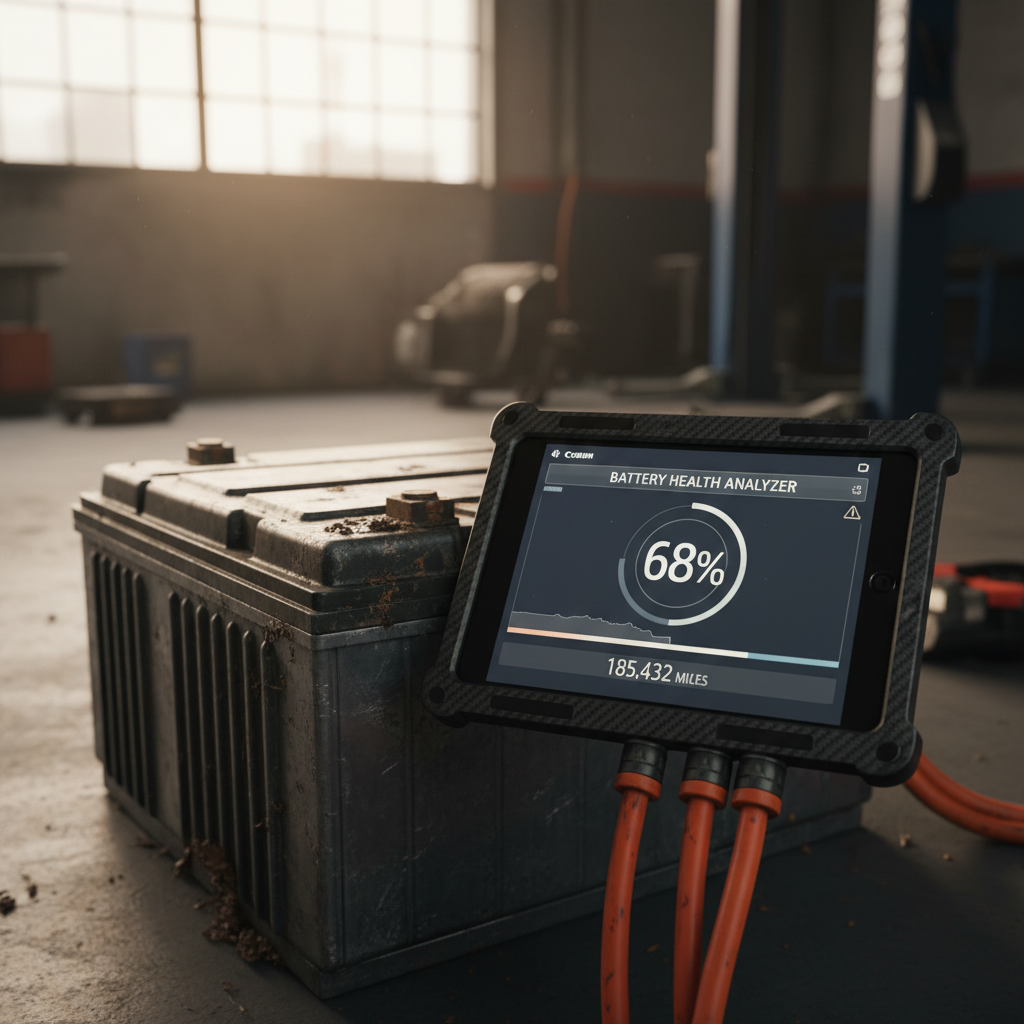
2. Get an objective battery health report
Ask for a recent <strong>battery health test</strong> that measures usable capacity, not just what the dash claims. Capacity well above 70% with consistent behavior is what you want to see.
3. Test DC fast charging before you buy
If possible, take the truck to a public DC fast charger and run a session from ~20% to ~60%. Watch for handshake failures, repeated charge faults, or painfully low speeds that don’t improve as the session continues.
4. Drive it like you actually will
Do a proper highway loop at your real cruising speed, ideally in the climate you live in. Note efficiency, road noise, and any steering or driver‑assist weirdness.
5. Inspect tires, suspension and underbody
A heavy EV truck is hard on rubber and bushings. Uneven tire wear or suspension clunks hint at abuse or alignment issues, not a Lightning‑specific curse, but they still cost money.
6. Verify charging equipment & settings
Confirm that any included home charging gear works, that the truck accepts a sensible charge schedule, and that FordPass (if you’ll use it) actually connects and controls the truck.
Earlier builds (2022–early 2023)
- More likely to have seen multiple software campaigns and TSBs.
- Great candidates if they’ve had recall work and updates completed.
- Pay close attention to any history of battery module or HV system work.
Later builds (late 2023–2025)
- Benefit from later software and running‑change fixes from the factory.
- Some 2024 trucks have seen increased reports of individual module faults, verify warranty status and any battery‑related repairs.
- Equipment deletions and cost‑cutting on some trims; check that you’re getting the features you think you are.
How Recharged De-Risks a Used F-150 Lightning
A used F-150 Lightning can be a brilliant buy in 2026, but only if you know exactly what you’re getting. That’s where Recharged comes in. We built our process around the questions Lightning shoppers actually have: How healthy is the battery? Has this truck been a software nightmare? What am I really giving up on long trips?
Buying a Used Lightning Through Recharged
How we turn unknowns into data points
Recharged Score Battery Diagnostics
Every Lightning on Recharged includes a Recharged Score Report with verified battery health, recent charging behavior, and notes on any range anomalies we see during testing.
VIN, Recall & Service Review
We pull history to confirm major recalls, TSBs, and high‑voltage repairs have been addressed, and flag trucks with repeated charging or module issues.
EV-Specialist Guidance
Our EV specialists walk you through what Lightning life actually looks like in your climate and driving pattern, so you’re not learning about 50% towing range loss the hard way.
Ready to find your next EV?
Browse VehiclesYou can shop fully online, explore financing, or bring your trade‑in, and we’ll deliver nationwide. If you’re near Richmond, VA, you can also visit our Experience Center and compare the Lightning with other used EV trucks in person.
FAQ: Ford F-150 Lightning Common Problems in 2026
Frequently Asked Questions
The Ford F-150 Lightning is not the apocalypse, and it isn’t the Second Coming either. It’s a bold first‑generation electric truck with a stout battery and powertrain, wrapped in software and expectations that are still catching up to reality. If you walk in blind, the range swings, charging quirks, and recall letters will feel like chaos. If you walk in with your eyes open, and a solid inspection, you can end up with a quick, quiet, deeply useful truck that fits your real life beautifully. In 2026, the difference between those two stories is less about the Lightning itself and more about how carefully you choose the one you bring home.