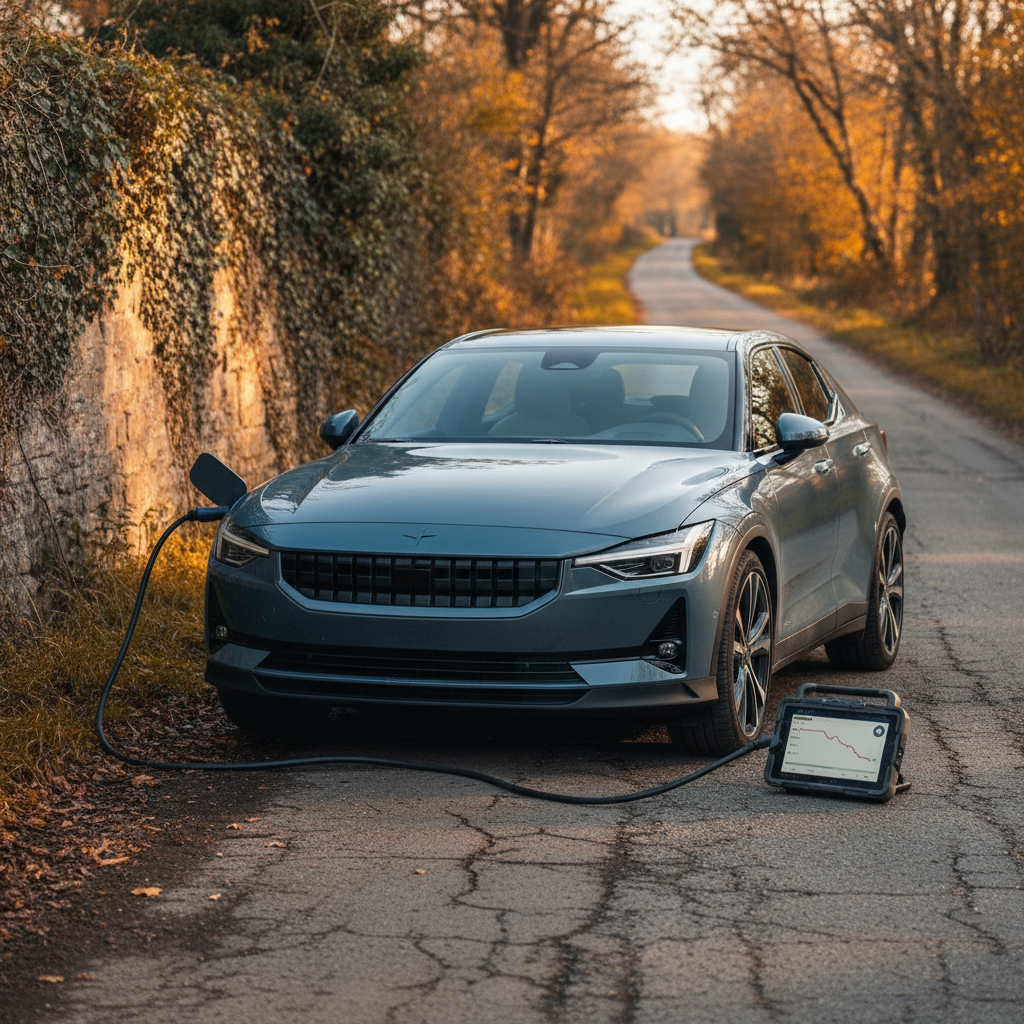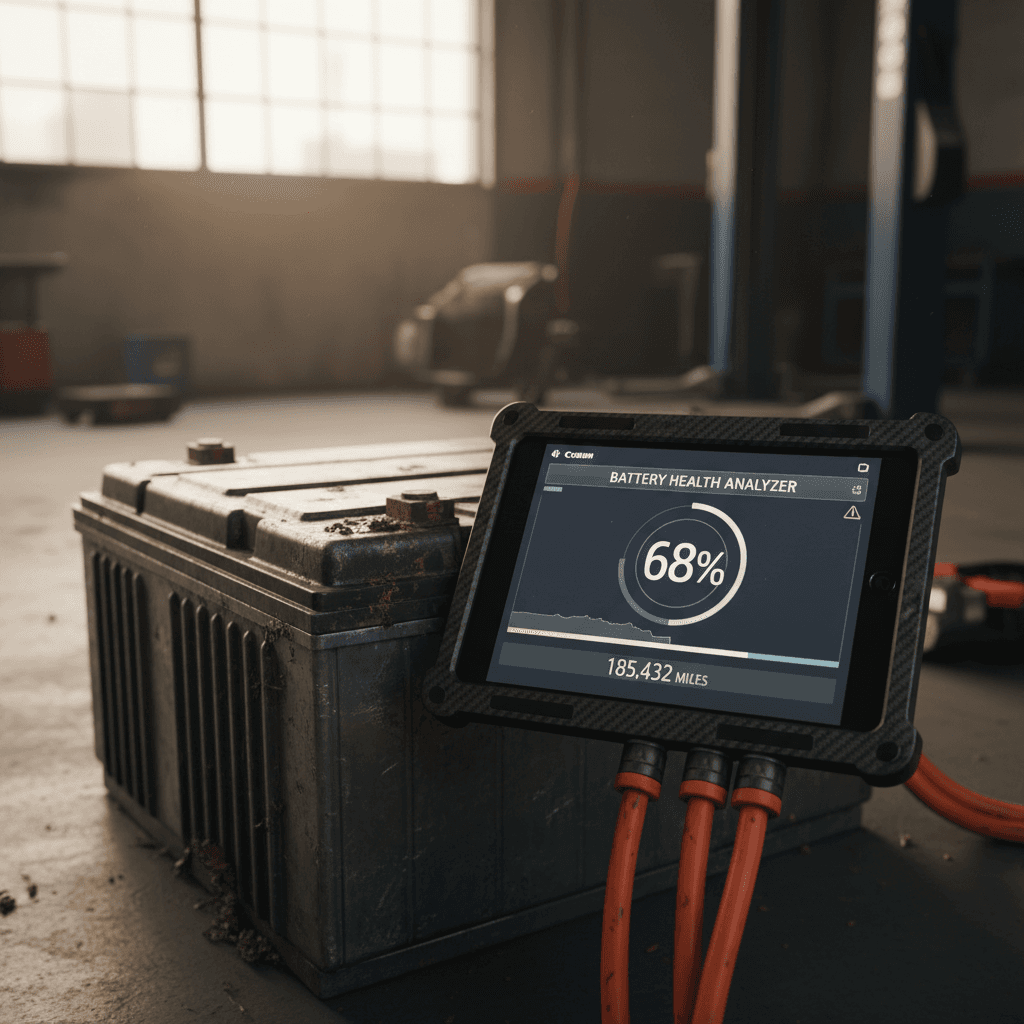
If you’re scrolling used listings and wondering how many miles is too many for a used electric car, you’re not alone. With gas cars, many shoppers flinch at anything over 100,000 miles. With EVs, the rules are different: the battery, thermal management, and charging history matter as much as the odometer. This guide breaks down what mileage actually means for a used EV in 2026, and when a high‑mile electric car can still be a smart buy.
Key idea
Why mileage on a used EV feels so confusing
On a gasoline car, high mileage usually means one thing: more wear on hundreds of moving parts, engine, transmission, exhaust, fuel system. With a battery electric vehicle (BEV), the drivetrain is far simpler. The big long‑term question is the battery pack, which gradually loses capacity over time. That’s why two EVs with the same mileage can feel totally different: one might still deliver near‑new range, while another has lost 30%+ and feels tired.
It doesn’t help that the used market is still young. Most three‑year‑old used EVs in the U.S. today show well under 40,000 miles, and many are ex‑leases, so you see a lot of relatively low‑mile examples. At the same time, taxi services, commuters, and early adopters have pushed some Teslas and other models well past 150,000 or even 200,000 miles with usable range left. That wide spread makes it hard to know what “too many” miles actually is.
Short answer: How many miles is too many for a used electric car?
EV mileage: quick rules of thumb
There is no single magic mileage number that makes a used EV “too many miles” for everyone. Instead, think of three questions:
- Does the current usable range still cover my real‑world driving?
- How many years and miles of battery warranty are left, if any?
- Does independent data (a battery health report) suggest the pack is aging normally, or poorly?
As a rough guideline for 2026:
- For most liquid‑cooled EVs from Tesla, Hyundai, Kia, VW, Ford, and GM, up to about 120,000 miles is usually reasonable if the battery checks out and the price reflects the mileage.
- Beyond roughly 150,000–180,000 miles, you should demand a clear battery‑health report, recent range test, and a meaningful discount versus lower‑mile examples.
- On older, air‑cooled models like early Nissan Leafs and some city EVs, even 60,000–80,000 miles can be “high” if the car lived in hot climates or fast‑charged heavily.
Think in range, not miles
How EV batteries actually wear out
It’s cycles, heat, and time
EV packs are built from lithium‑ion cells. Instead of sudden failure at a fixed mileage, they lose capacity gradually as the car accumulates charge–discharge cycles, experiences heat, and simply ages.
- Every full discharge and recharge is one “cycle.” Lots of shallow charges are easier on the pack than deep 0–100% swings.
- High temperatures accelerate chemical aging inside the battery.
- Time matters: a lightly driven EV in Phoenix can age faster than a high‑mileage car in Seattle.
Real‑world degradation so far
Field data from fleets, independent testers, and early EV owners shows a pattern:
- Many modern EVs lose around 10–15% of capacity by roughly 150,000–200,000 miles when cared for reasonably well.
- Cars with robust liquid cooling (Tesla, Hyundai/Kia, VW, Ford, GM) generally hold up better than early air‑cooled designs.
- Frequent DC fast charging, constant 100% charging, and very hot storage conditions can make the same mileage much harder on the pack.
Heat is the silent battery killer
Mileage bands: What to expect from 20k to 200k miles
Typical EV mileage bands and what they mean
Use this as a starting point, then verify with a battery report.
Under 40,000 miles
What it usually means: Ex‑lease or lightly used EV, often 2–4 years old.
- Battery degradation is typically modest (single‑digit percent for most modern EVs).
- Usually well within the original 8‑year/100,000‑mile battery warranty by both time and miles.
- Pricing tends to be higher, but so is remaining life.
40,000–80,000 miles
What it usually means: Everyday commuter car.
- Still normal territory for most EVs, especially 4–7 years old.
- Mild range loss is common but rarely deal‑breaking.
- For shorter‑range EVs (EPA 150–170 miles new), check that current range still fits your needs.
80,000–130,000 miles
What it usually means: High‑use commuter, road‑trip duty, or rideshare work.
- Mileage is no longer “low,” but not necessarily bad.
- Battery condition depends heavily on fast‑charging habits and climate.
- These cars can offer excellent value if a health report shows normal degradation.
130,000–200,000+ miles
What it usually means: Long‑distance warrior.
- Expect noticeable capacity loss, especially on smaller‑pack cars.
- Teslas and other well‑cooled EVs can still hold 80–90% capacity in this range, but you need proof.
- Price should reflect reduced remaining life and possible out‑of‑warranty repairs.
When high mileage is a red flag vs. a smart deal
When mileage should worry you
- Small original battery + high miles: An early Nissan Leaf or similar city EV with 24–40 kWh pack and 80,000+ miles may have lost a big chunk of range, especially from hot regions.
- Out of battery warranty: A 9‑year‑old EV with 120,000 miles gives you little protection if the pack needs work.
- No battery data: Seller can’t or won’t provide state‑of‑health (SOH) reports or recent range tests, even at high mileage.
- Fast‑charge abuse: DC fast charged multiple times daily for years, particularly in heat, without any price discount.
When high mileage can be a bargain
- Large, liquid‑cooled pack: A Tesla Model 3, Hyundai Kona Electric, Kia Niro EV, VW ID.4, or similar with 100,000+ miles and only modest range loss can still have a long useful life ahead.
- Documented battery health: A third‑party report or OEM diagnostic tool shows 80–90% capacity remaining at 120,000–150,000 miles.
- Discounted pricing: Meaningful savings compared with similar lower‑mile examples, ideally several thousand dollars, so your total cost per remaining mile is attractive.
- Gentle use case: Mostly highway miles in a mild climate, charged to 70–80% at home, fast‑charged only on road trips.
Where Recharged fits in
Ready to find your next EV?
Browse VehiclesBattery warranties and why mileage matters
Most modern EVs sold in the U.S. include an 8‑year / 100,000‑mile (or better) battery warranty against excessive capacity loss, sometimes with higher mileage caps in states that follow California rules. That doesn’t mean the battery dies at 8 years or 100,000 miles; it’s simply the minimum performance the automaker is willing to back with its own money.
Typical EV battery warranty baselines
Always confirm the exact terms for the model and year you’re shopping, these are common examples, not legal guarantees.
| Brand (typical modern EVs) | Years | Mileage limit | Capacity threshold |
|---|---|---|---|
| Tesla | 8 | 100,000–120,000 | Usually ~70% capacity |
| Hyundai / Kia | 10 | 100,000 | Around 70% capacity in many markets |
| GM (Bolt EV/EUV) | 8 | 100,000 | Around 60–70% capacity |
| VW ID.4 | 8 | 100,000 | About 70% capacity |
| Nissan Leaf (recent) | 8 | 100,000 | Down to 8 of 12 capacity bars |
Mileage is only one side of the warranty coin; the calendar age matters just as much.
If you’re looking at a used EV with 90,000 miles that’s 5 years old, you may have several years and a few thousand miles of battery coverage left. A similar car with 120,000 miles and 9 years on the clock may be completely out of battery warranty, even though the odometer difference is only 30,000 miles. That’s why age and in‑service date matter alongside mileage.
Don’t assume a new warranty after pack replacement
How to check a used EV battery beyond the odometer
7 steps to evaluate a used EV’s battery
1. Look up original EPA range and battery size
Before a test drive, find the EV’s original EPA range and battery capacity in kWh. Knowing that a car started at 258 miles versus 150 miles makes it much easier to judge current performance. Recharged listings include this info up front.
2. Ask for a recent battery health report
Ideally you’ll see a <strong>state‑of‑health (SOH)</strong> reading from the manufacturer’s diagnostic tool or a trusted third‑party scan. This gives a percentage of remaining capacity, far more useful than just age and miles.
3. Check displayed range at a known state of charge
On a full or nearly full charge, compare the displayed range to the original EPA rating. A 200‑mile rating showing 170 miles at 100% suggests around 15% degradation, which is generally normal for a well‑used EV.
4. Review charging history and habits
Ask how the previous owner charged: mostly Level 1/2 at home to 70–80%, or daily DC fast charging to 100%? Occasional fast charging is fine; daily fast charging in heat is harder on the pack, especially over 100,000 miles.
5. Consider climate and storage
Find out where the EV spent its life. Milder climates with covered or garage parking are ideal. Hot, sun‑baked environments accelerate aging, especially for air‑cooled batteries and smaller packs.
6. Do a real‑world range test
On a test drive, note energy use (mi/kWh) and how quickly the state of charge drops over a familiar route. You don’t need to drain it to 0%, even watching the first 10–20% can tell you a lot.
7. Get a third‑party inspection if you’re unsure
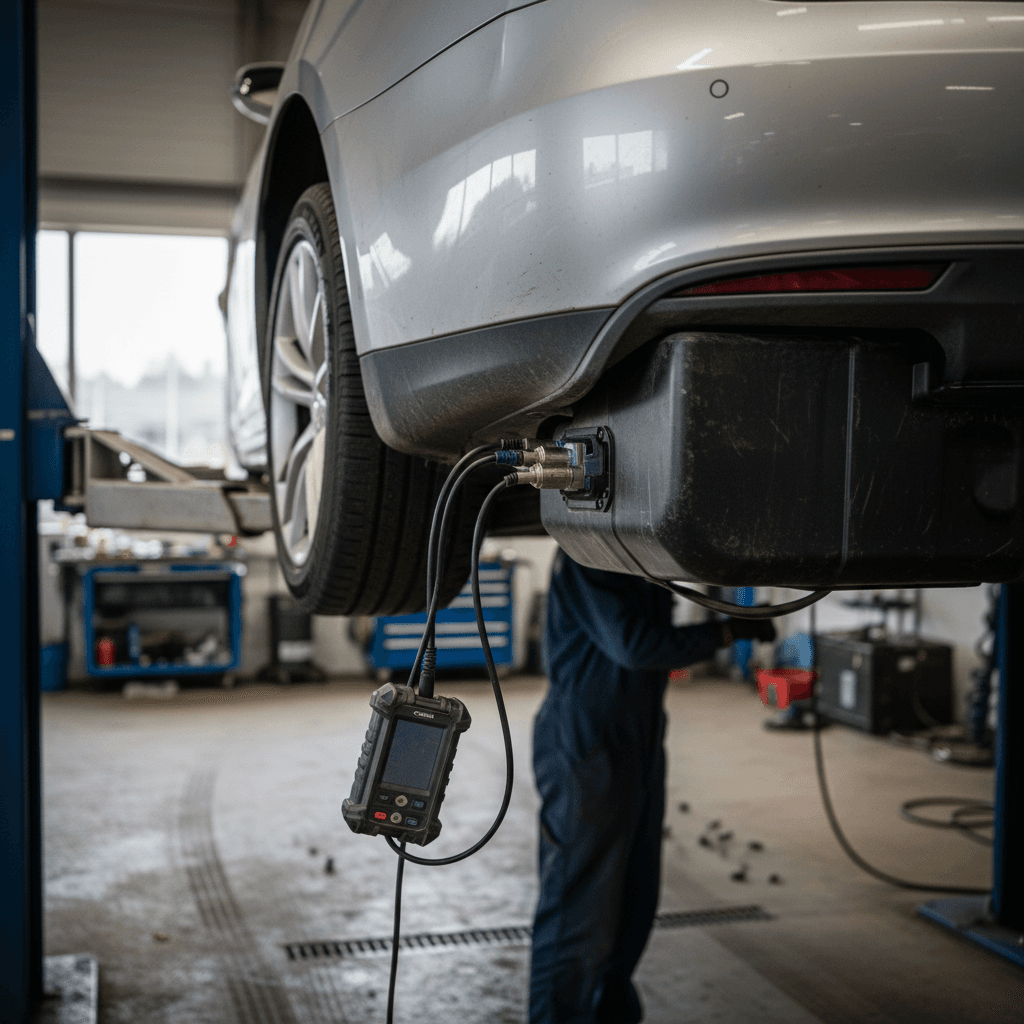
For high‑mileage or older EVs, consider a pre‑purchase inspection with EV‑specific diagnostics. On Recharged vehicles, the <strong>Recharged Score Report</strong> bundles this kind of testing so you don’t have to arrange it yourself.
Example scenarios: Is this used EV too many miles?
To make all of this more concrete, here are a few realistic scenarios and how to think about them. These aren’t hard rules, but they’ll help you decide when high mileage is acceptable, and when to walk away.
Sample used EV scenarios
How the same mileage number can mean very different things depending on the car and its history.
| Scenario | Good buy or too many miles? | Why |
|---|---|---|
| 2019 Tesla Model 3 Long Range, 120,000 miles, SOH ~88%, mostly highway in mild climate | Often a smart buy if priced right | Robust liquid‑cooled pack, normal degradation, strong remaining utility even past 150k miles for many drivers. |
| 2017 Nissan Leaf 30 kWh, 70,000 miles, hot climate, down to 9 capacity bars | Potentially too many miles for daily highway use | Small, air‑cooled pack plus heat equals faster degradation; usable range may be under 80–90 miles. |
| 2021 Hyundai Kona Electric, 65,000 miles, one‑owner commuter, still in 10‑year/100k warranty | Generally safe territory | Modern liquid‑cooled pack, strong warranty coverage left, mileage aligns with normal use. |
| 2018 Chevy Bolt EV, 155,000 miles, mostly DC fast‑charged as rideshare car | High risk without very strong proof of battery health | Even with recalls addressed, heavy fast‑charging and rideshare duty can make this mileage challenging unless the price and data are excellent. |
| 2020 VW ID.4, 95,000 miles, detailed service and charging records, battery SOH 90% | Worth a close look | Mileage is high but normal for age; good SOH and documentation can make this a compelling value. |
Always combine mileage with battery data, climate history, and your own range needs.
Use cost per remaining mile
FAQs: How many miles is too many for a used EV?
Frequently asked questions about used EV mileage
Bottom line: Don’t shop the odometer, shop the battery
So, how many miles is too many for a used electric car? For most modern EVs, the answer isn’t a fixed number like “100,000 miles.” Instead, it’s the point where the car’s remaining range, battery warranty, and price no longer line up with how you actually drive. A 130,000‑mile hatchback with a healthy pack in a mild climate can be a far better buy than a 60,000‑mile city EV that’s already lost a third of its capacity.
If you treat the odometer as just one data point, and insist on real battery health information, you’ll unlock a lot more value in the used EV market. That’s exactly why Recharged includes a Recharged Score Report with verified battery diagnostics, transparent pricing, and EV‑specialist guidance on every car. Whether you’re considering a low‑mile lease return or a high‑mile commuter, you can shop used EVs with a clear picture of what those miles actually mean.