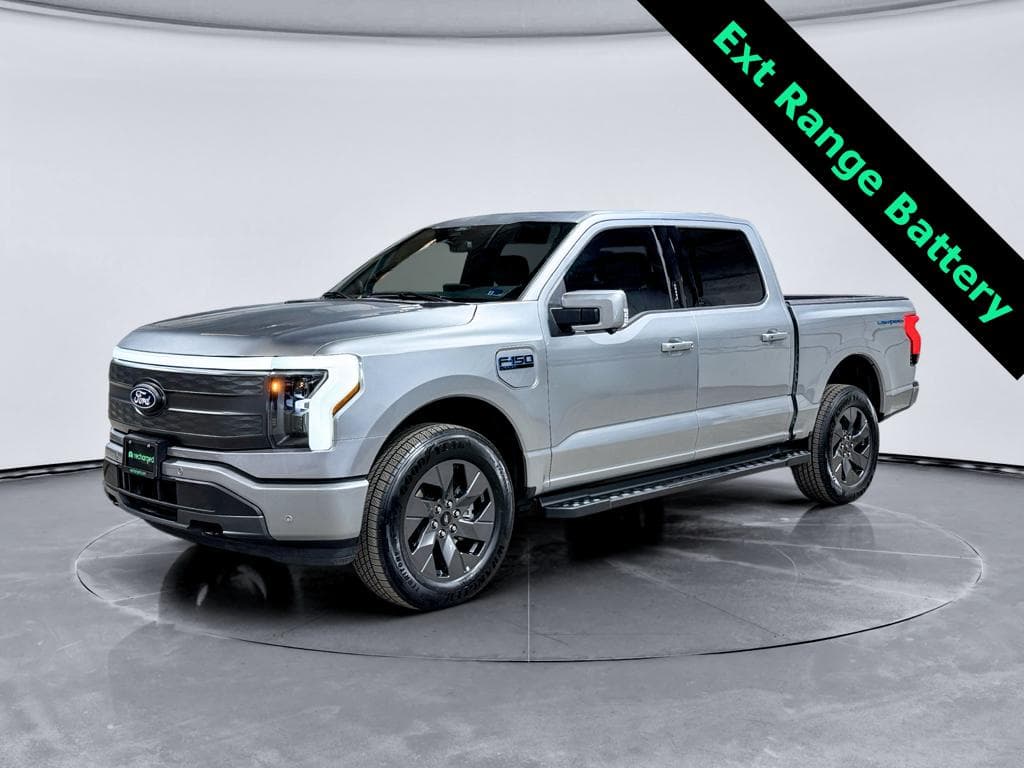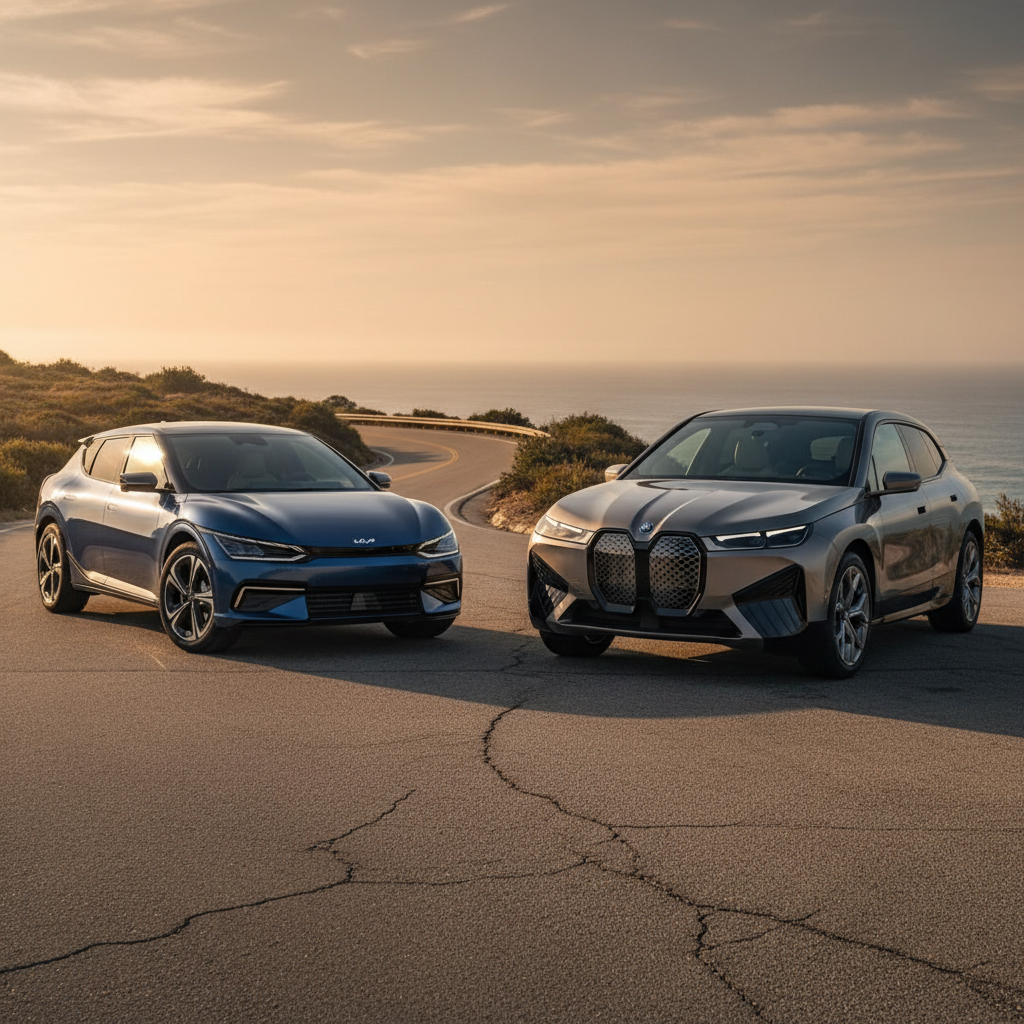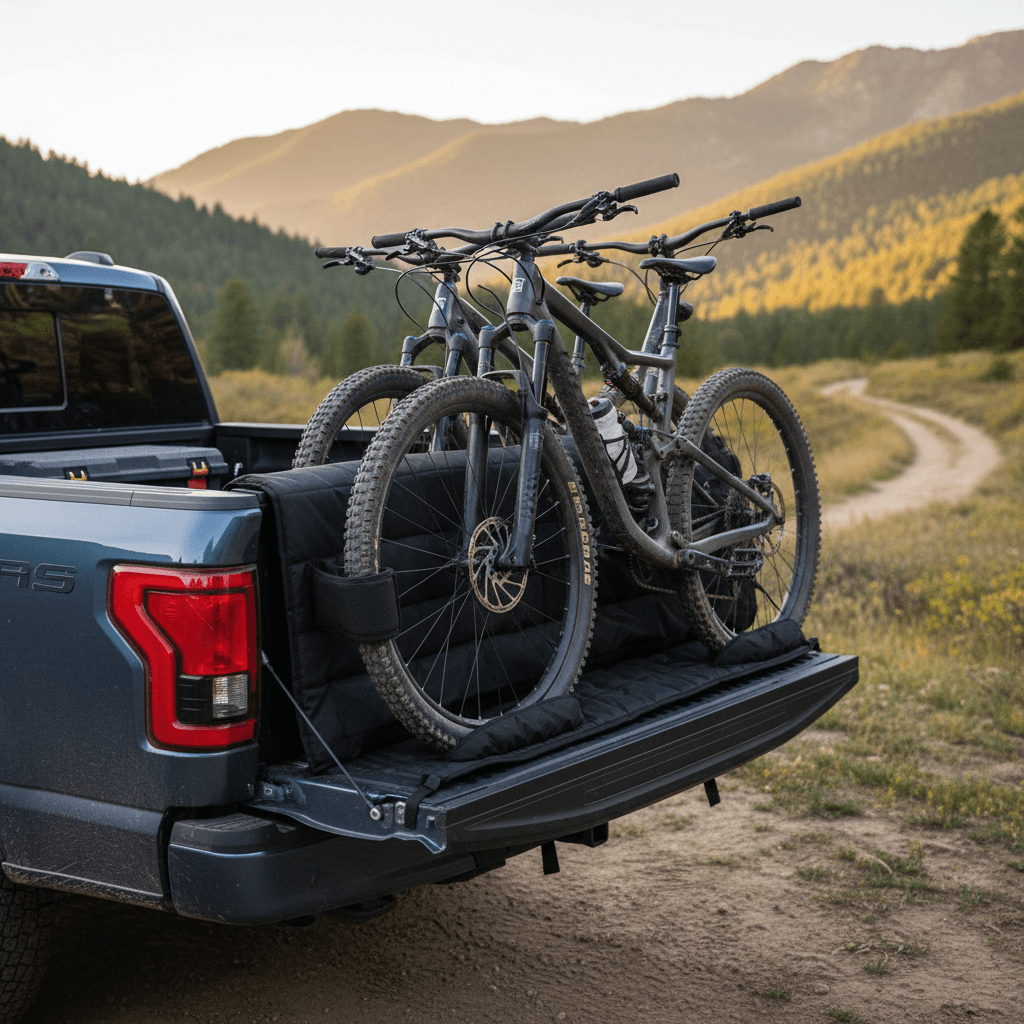
If you bought a Ford F-150 Lightning, chances are you’re dreaming about quiet, torque-rich drives to the trailhead with a pile of bikes in tow. The good news is there are excellent Ford F-150 Lightning bike rack options, from hitch racks to tailgate pads, that work beautifully with this electric truck. The trick is picking a setup that plays nicely with the Lightning’s hitch ratings, tailgate design, tonneau covers, and aero-sensitive range.
What’s different on an EV truck?
Why the F-150 Lightning makes a great bike truck
EV torque, truck utility
The Lightning keeps everything that made the gas F-150 a great bike hauler, big bed, strong frame, available factory hitch, then adds instant torque and one-pedal driving. That makes steep gravel access roads, loaded on bikes and gear, feel almost effortless.
Bike-hauler friendly features
- Mega Power Frunk for helmets, shoes, and muddy gear instead of the cab.
- Pro Power Onboard to run e-bike chargers, pumps, or lights at the trailhead.
- Wide, flat bed that works with nearly every major truck-bed bike system and tailgate pad.
F-150 Lightning capability basics for bike owners
Key weight and towing limits to know first
Before you bolt on a monster platform rack and five e-bikes, spend a minute with the numbers. The F-150 Lightning is massively capable, but it’s also heavy, and EVs are picky about payload and balance.
- Hitch receiver rating: Most factory Lightning receivers are rated around 5,000 lbs trailer / 500 lbs tongue in weight-carrying mode, and up to 10,000 lbs / 1,000 lbs tongue with a weight-distribution hitch. That rating is usually printed on a sticker on the receiver.
- Payload rating: Check the yellow sticker on your driver’s door jamb. Every pound of bikes, racks, passengers, and cooler counts against that number.
- Tongue vs. payload: Tongue weight (the downward load of your rack and bikes on the hitch) also counts as payload. A heavy platform rack plus four e-bikes can easily land in the 250–300 lb range.
- Axle ratings: If you load everything on the tail, you can run into rear-axle limits long before payload on the sticker. Keep heavy gear forward in the bed whenever you can.
Always verify your own truck’s sticker
Hitch-mounted bike racks for F-150 Lightning
For most F-150 Lightning owners, a hitch-mounted bike rack is the cleanest, most flexible solution. It keeps the bed open for camping gear or a cargo box, and it doesn’t care whether you’re running a tonneau cover or cap.
Main hitch rack styles for the F-150 Lightning
Think about bike weight, tailgate access, and e-bike compatibility
Tray-style platform racks
These support bikes by the wheels on trays. They’re ideal for modern mountain bikes and e-bikes because they’re stable and avoid frame contact.
- Often rated for 2–4 bikes.
- Many are e-bike compatible (60–80 lbs per tray).
- Look for tilt-away function so you can drop the Lightning’s tailgate.
Hanging-style racks
Bikes hang by the top tube. They’re lighter and cheaper, but not as friendly to carbon frames or step-through bikes.
- Great for lighter hardtails and kids’ bikes.
- Watch for frame rub; use frame protectors.
- Check that the arm can clear the Lightning’s sculpted tailgate when folded.
Swing-away systems
Some premium platform racks and adapters swing completely out of the way, giving full access to the tailgate and bumper.
- Heavier and more expensive.
- Fantastic if you’re in and out of the bed at trailheads.
- Add up the weight of rack + bikes carefully vs. tongue rating.
Check tilt and tailgate clearance
Tailgate pads for the Lightning
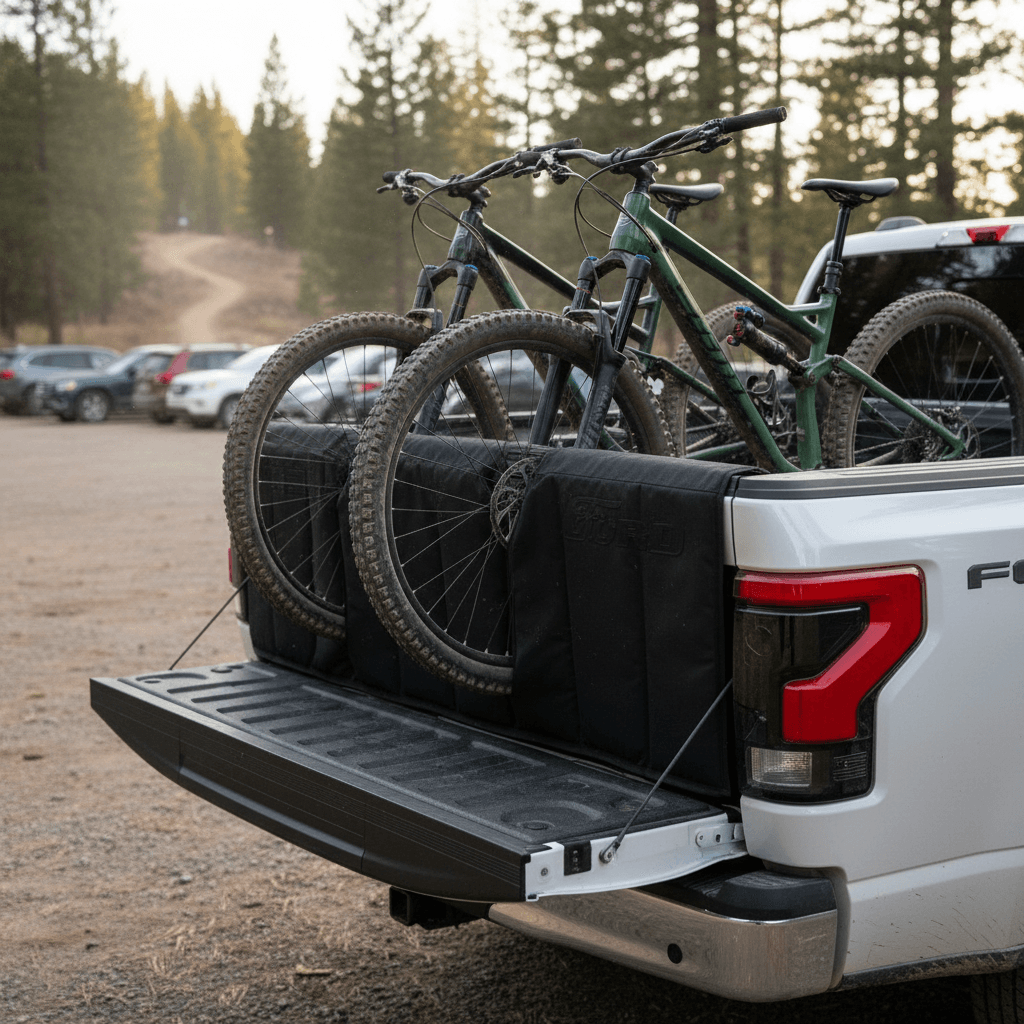
If you’re hauling a group of mountain bikes a short distance, a tailgate pad can be the simplest, most budget-friendly answer. You toss the pad over the Lightning’s tailgate, strap it down, and hang bikes by their front wheels over the back.
What to look for in an F-150 Lightning tailgate pad
The Lightning’s sculpted tailgate and cameras change the game a bit
Fit and frame protection
- Choose a pad sized for full-size trucks (often 60–62" wide).
- Look for extra-thick padding and soft lining where frames contact the tailgate.
- Curved-tailgate pads can fit the Lightning’s styling better and reduce shifting.
Cameras, sensors, and access
- Make sure the pad has a backup camera window and doesn’t fully cover your latch handle.
- Secure loose straps so they don’t flap and confuse parking sensors.
- If you tow or use a hitch rack sometimes, choose a pad that removes quickly.
When a tailgate pad shines
Truck-bed and fork-mount bike systems
If you want your bikes locked down inside the bed, out of the worst of the weather and wind, bed-mounted systems are hard to beat. The Lightning’s 5.5-foot bed accepts many of the same rail, fork-mount, and wheel-on systems that fit a gas F-150.
Common bed-mounted bike systems for the F-150 Lightning
Compare the major styles that work with the Lightning’s short bed and tonneau covers
| System type | Works with tonneau? | Best for | Pros | Considerations |
|---|---|---|---|---|
| Fork-mount rail system | Often, if low profile | Road, gravel, MTB | Very stable, easy to lock, keeps height low | Requires removing front wheels; mind e-bike weight when lifting |
| Clamp-on bed rail mounts | Usually | Mixed bikes, frequent on/off | No drilling, flexible positioning | Check for interference with bed step and tie-downs |
| Wheel-on vertical bed racks | Sometimes | Multiple MTBs | Fast loading, no wheel removal | Can get tall; check clearance to any bed cap |
| DIY track + fork mounts | Yes, if kept low | Budget-friendly setups | Customizable, can be removed quickly | Requires careful layout to avoid power outlets and bed lighting |
Remember that any bed rack plus bikes still count against payload, even if they’re not on the hitch.
Use the frunk and bed outlets
Roof rack bike options and aero considerations
Yes, you can run bikes on the Lightning’s roof, especially if you have crossbars or a full rack system already installed. For some riders it’s the safest feeling option because the bikes are out of the way of traffic and parking mishaps. But on an EV, roof bikes are the least efficient way to haul them.
- Pros: Keeps hitch and bed free; works with tailgate open or camper shells; no frame contact with fork-mount trays.
- Cons: Big aero penalty on highway range, especially with wide MTB tires; loading is high and awkward; watch for garage doors and branches.
- Best use case: Occasional trips with 1–2 lighter bikes when you absolutely need the bed and hitch for other gear.
Mind your height
Front hitch and frunk-friendly ideas
One quieter trend among Lightning owners is adding a front-mounted receiver hitch. Some aftermarket hitches for 2015–2026 F-150 and Lightning models are rated around 750 lbs of tongue weight and are marketed as e-bike–ready. That opens the door to running a 2-bike rack up front, leaving the rear hitch for a trailer or cargo basket.
Why consider a front hitch?
- Carry e-bikes up front and leave your rear hitch for a camper, small trailer, or cargo box.
- Reduce rear-axle load if your trailer tongue weight is already high.
- Keep an eye on your bikes through the windshield in traffic.
Things to watch out for
- Check that the hitch is Lightning-specific and preserves ground clearance and cooling airflow.
- Confirm its tongue-weight rating is adequate for your chosen rack and bikes.
- Be cautious about blocking front parking sensors and the BlueCruise sensor suite if your truck has it.
Frunk storage, not frunk racks
Range and efficiency tips when hauling bikes
Bikes aren’t heavy enough to crush the Lightning’s range by themselves, but racks and airflow absolutely matter, especially on longer highway drives to trail networks.
Simple ways to protect range with bikes on your Lightning
1. Keep bikes out of the airflow when you can
A tailgate pad or low bed system usually has less aero drag than tall hitch or roof racks. If you’re planning a big interstate drive, that can noticeably reduce your energy use.
2. Remove front wheels or drop seatposts
For hitch and roof setups, lowering the bike’s profile by pulling the front wheel or dropping the post cuts the “sail effect” and noise, and can save a bit of range.
3. Slow down 5–10 mph on the highway
Wind resistance grows quickly with speed. Cruising at 65 mph instead of 75 mph with bikes on the truck can make the difference between one and two charging stops on a long trip.
4. Use one-pedal driving on descents
On hilly routes to trailheads, maximize regen when you’re coming back down with a full load of bikes. It’s satisfying to recharge a few miles after a day of riding.
5. Plan charging near your trails
Use apps or Ford’s trip planner to identify DC fast chargers near your riding areas. If you’re taking a long weekend with a bed full of bikes and camping gear, plan to arrive with a comfortable buffer.
How to choose the right bike-carry setup
You’ve got four main ways to move bikes with a Lightning: hitch rack, tailgate pad, bed system, or roof rack. Most owners end up mixing two of them depending on the trip. Here’s how to narrow it down.
Match your Lightning bike setup to your riding style
Pick the scenario that sounds most like you
Weekend warrior with 1–2 bikes
Best bet: 2-bike tray-style hitch rack.
- Easy to load, tilt-down tailgate access.
- Works with mixed wheel sizes and frame shapes.
- Leaves bed free for camping gear and coolers.
Shuttle crew with 3–6 bikes
Best bet: Quality tailgate pad or bed rail + vertical system.
- Fast loading/unloading for multiple runs.
- Lower profile than roof racks for better aero.
- Keep heaviest bikes closest to the cab.
Family trips & towing a camper
Best bet: Lightweight hitch rack (2–3 bikes) or front hitch solution, plus a tailgate pad as backup.
- Leave enough tongue and payload margin for the trailer.
- Use the frunk for lighter bike gear to balance weight.
- A swing-away rack can make campground maneuvering easier.
Do a quick weight audit
FAQ: F-150 Lightning bike rack questions
Frequently asked questions about F-150 Lightning bike racks
Final thoughts: Turning your Lightning into the perfect bike hauler
The Ford F-150 Lightning is already one of the best adventure trucks on sale; with the right bike rack setup, it becomes a quiet, zero-tailpipe-emissions shuttle rig. Start by understanding your hitch and payload limits, then choose between a hitch rack, tailgate pad, bed system, or roof rack based on how many bikes you carry and how far you travel. Protect your range by keeping bikes low and out of the wind when you can, and always give yourself a margin under the published weight ratings.
If you’re still shopping for a Lightning, or you’re ready to upgrade from your current EV to something more trailhead-friendly, Recharged can help you find a used F-150 Lightning with verified battery health, fair market pricing, and expert EV guidance. From trade-ins and financing to nationwide delivery, we make it simple to end up with the truck, and the bike-hauling setup, that matches the way you actually ride.