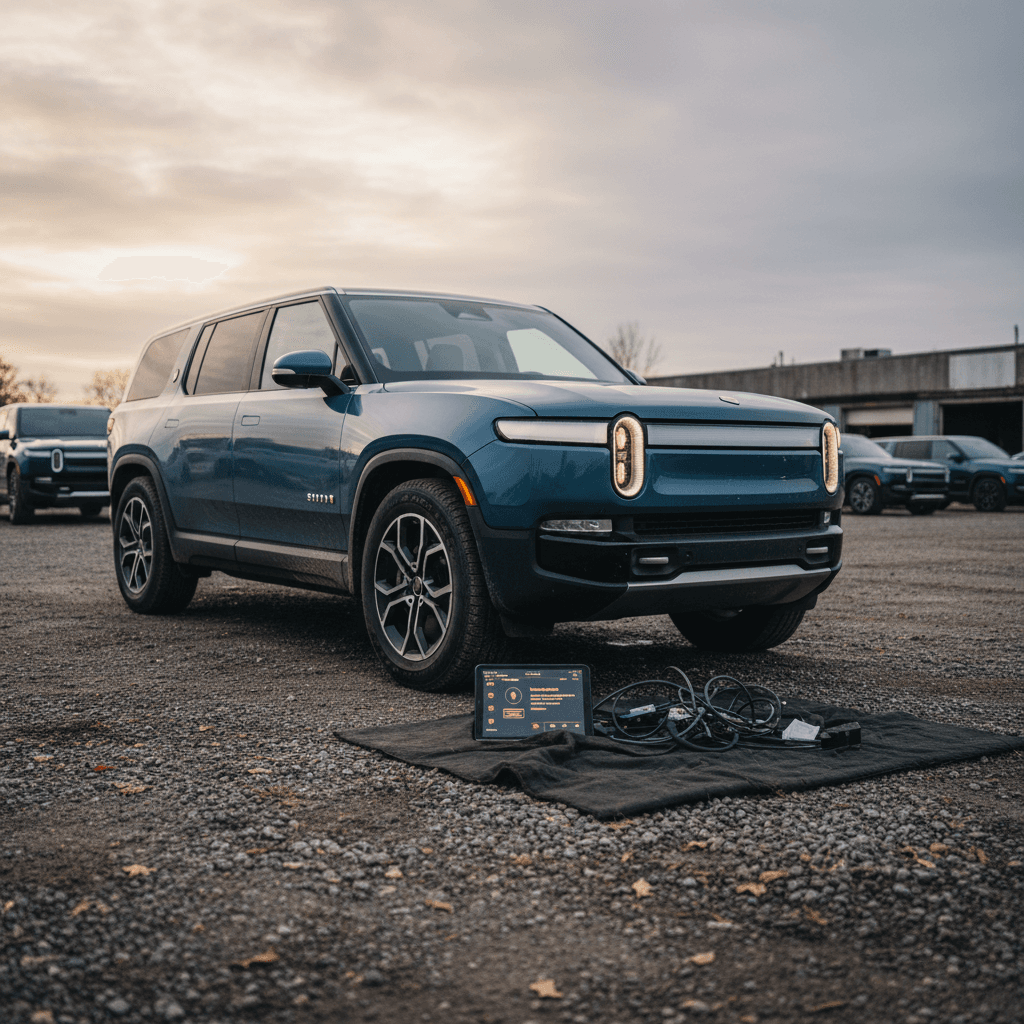
If you’re eyeing the three‑row 2024 Rivian R1S, you’ve probably heard two very different stories: owners who say it’s the best vehicle they’ve ever driven, and others who’ve memorized the decor of their local service center. Reliability for a young EV brand is never boring, and the R1S is no exception.
Short answer
Overview: How Reliable Is the 2024 Rivian R1S?
Start with the context: Rivian is a relatively new automaker mass‑producing an aluminum‑intensive, air‑suspended, quad‑motor (or dual‑motor) off‑road EV with bleeding‑edge software. That’s a recipe for magic and mischief. For 2024 R1S models, the pattern looks like this:
- Drivetrain & battery: Generally solid. Few reports of catastrophic motor or pack failures on 2024s, and high‑mileage owners from earlier years are not seeing runaway degradation yet.
- Fit, finish & NVH: Squeaks, wind noise, misaligned trim and interior rattles are common complaints, especially as mileage climbs.
- Software: The number‑one owner gripe. Slow or buggy UI, occasional crashes, sensor glitches that sideline Driver+ or wipers, odd behavior that requires a reboot.
- Recalls: A growing list, mostly addressed via software or quick hardware campaigns, but they’re frequent enough to matter.
- Service experience: When it’s good, it’s very good. When it’s bad, it’s infuriating, especially if you’re far from a service center.
Rivian R1S Reliability Snapshot (Across Early Years)
Big picture
How Rivian Is Scoring on Reliability So Far
Formal reliability scores lag reality by a year or two, but the direction of travel for Rivian is pretty clear: owners love the vehicles and complain loudly about the rough edges. Owners posting about 2024 and early‑2025 R1S models describe a wide quality band, from “flawless for 9,000 km” to “in service more days than at home” in the first few weeks.
“It did make me a little nervous when reading the low reliability rating for Rivian, but after learning more… a good portion of the ‘reliability’ issues were complaints about paint, trim, minor software glitches, and inconvenient charging experiences.”
That nuance matters. A harsh reliability score often lumps together cosmetic and usability irritations, too much wind noise, wobbly panel gaps, glitchy voice assistant, with truly consequential failures like suspension components, steering links or safety‑critical electronics. With the 2024 R1S, most pain points are still in the former category, with a few serious exceptions we’ll cover next.
2024 Rivian R1S Common Issues & Quirks
Most-Reported 2024 R1S Issues
From owner forums, service reports, and early long‑term experiences
Wind & Cabin Noise
Rattles & Trim Gremlins
Software & Infotainment Bugs
Suspension & Half‑Shaft Noise
Water Leaks & Weather Sealing
Dash Warnings & Sensor Glitches
When you test-drive
Recalls Affecting 2024 R1S Models
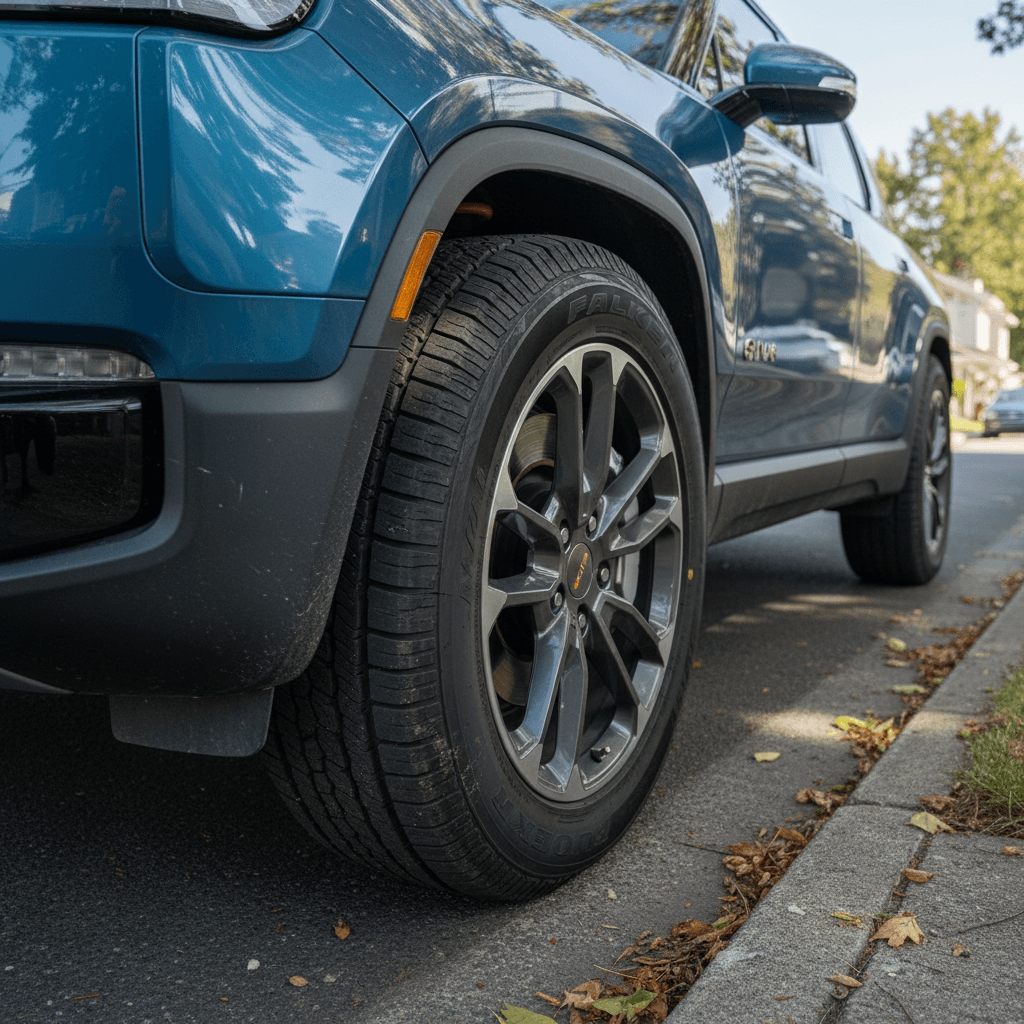
Every new automaker goes through a recall adolescence, and Rivian is deep into it. By early 2026, the R1S had accumulated nine or more recalls since launch, a number that sounds scary until you realize many are proactive, software‑fixable, or affect a small production window. For 2024‑build R1S models, three categories matter most:
Key Recalls You’ll See on a 2024 R1S Carfax Report
Exact campaigns vary by build date and configuration; always run the VIN through NHTSA and Rivian’s own recall page.
| Recall focus | What can happen | How it’s fixed | What to ask on a used R1S |
|---|---|---|---|
| Rear toe-link bolts | Improperly torqued or re‑used bolts can loosen, causing rear‑wheel misalignment and potential loss of control. | Free bolt replacement and updated torque/installation procedure at a Rivian service center. | “Has the rear toe‑link recall been completed? Can I see the service record?” |
| Driver safety belt cabling | Defective cable can prevent the driver’s belt from functioning correctly in a crash. | Inspection and, if needed, replacement of affected belt assemblies. | “Was this safety‑belt recall applicable to this VIN, and is it closed?” |
| Driver-assistance / Highway Assist | Software defect in certain builds may misidentify lead vehicles and not slow adequately when using hands‑free Highway Assist. | Over‑the‑air software update to the latest stable version. | “Is the vehicle running the latest firmware, and are there any open software‑related recalls?” |
Use recall history as a negotiation tool, not a panic button, what matters is whether fixes have been completed.
Don’t ignore the toe-link recall
Software vs. Hardware: What Actually Goes Wrong
Where software bites you
- UI & UX glitches: Frozen screens, slow responses to taps, CarPlay‑envy from owners used to simpler interfaces.
- Driver+ and sensor weirdness: Wipers that don’t wake up for rain, cameras that temporarily drop out, Driver+ refusing to engage until you reboot.
- Updates that move the cheese: OTA updates can subtly change ride feel, throttle mapping, or interface layouts. Some owners love it; others feel like beta testers.
Most of these are annoying, not dangerous, and Rivian has been reasonably aggressive about shipping fixes and improvements over the air.
Where hardware really matters
- Suspension & half‑shafts: If you hear persistent clicking, clunks on takeoff, or feel vibration in the wheel, that’s real hardware wear and worth immediate service.
- Steering / toe‑links: Any sense of the rear stepping out strangely or instability over bumps should trigger a check for recall compliance and alignment.
- Water intrusion: Moisture under floor mats or in the cargo area can lead to corrosion and electrical gremlins if ignored.
These are the issues that separate “quirky tech product” from actual reliability concern. On a used 2024 R1S, they deserve a careful pre‑purchase inspection.
Ownership Experience: Service, Downtime & Support
Rivian’s service story is uneven. Many owners praise responsive mobile technicians, quick fixes for rattles and wind noise, and warranty work turned around in 24 hours. Others describe brand‑new R1S SUVs lit up with every warning light at 200 miles, then vanishing into service limbo for a week and a half, with no clear communication.
Rivian Service: The Two Realities
Same truck, very different days at the office
When it works
- Mobile service comes to you for trim and minor fixes.
- Service centers handle wind noise, panel gaps and rattles with decent turnaround.
- Software bugs get patched via OTA without a visit.
- Used buyers often get treated like original owners for warranty and support.
When it doesn’t
- Long tows to the nearest service center if you’re outside major metros.
- Owners stuck in phone trees instead of talking to a specific advisor.
- Conflicting updates on parts availability and timelines.
- Loaner availability can be hit‑or‑miss, leading to real disruption if the truck is your family hauler.
Reality check if you live far from service
2024 Rivian R1S vs. Rivals on Reliability
How the 2024 R1S Stacks Up on Reliability
Broad strokes comparison with other three‑row electrified SUVs.
| Model | Powertrain type | Reliability reputation (2024) | Typical pain points |
|---|---|---|---|
| Rivian R1S | All‑electric | Below average, improving slowly | Trim and wind noise, software bugs, recall churn, occasional suspension / half‑shaft issues. |
| Tesla Model X | All‑electric | Below average | Door and latch failures, air suspension issues, electronics glitches, service variability. |
| Kia EV9 | All‑electric | Too new; early signs decent | Minor software quirks, some first‑year trim issues, but fewer reports of major hardware failures so far. |
| Volvo EX90 (late 2024+) | All‑electric | Too new; cautious optimism | Software launch delays, some early bugs; Volvo’s ICE history suggests better long‑term durability than most startups. |
| Toyota Grand Highlander Hybrid | Hybrid | Above average | Conservative hybrid tech tends to be bulletproof; fewer tech features and no full EV complexity. |
Rivian still looks like a classic first‑generation premium EV: huge capability, middling polish.
If bulletproof reliability is your absolute top priority, you’re still better served by a mainstream hybrid people‑mover. If you want serious off‑road talent, outrageous performance, and a clean conscience, every fully electric three‑row SUV in 2024 brings some reliability compromise, and Rivian’s is mostly in the realm of fit/finish and software, not exploding drivetrains.
Buying a Used 2024 Rivian R1S: What To Check
Shopping used is where R1S reliability really matters, because you’re inheriting someone else’s honeymoon, or their heartbreak. The goal isn’t to find a truck with no issues (that’s rare); it’s to find one whose issues have already been sorted and documented.
Pre‑Purchase Reliability Checklist for a 2024 R1S
1. Pull full recall & service history
Run the VIN through NHTSA and Rivian’s recall page, and ask for service records. You want to see the <strong>toe‑link, seat‑belt, and any software recalls</strong> marked as completed, not just “open.”
2. Inspect for wind noise & rattles
On the test drive, hit 65–75 mph and listen around the A‑pillars, mirrors and panoramic glass. Over broken pavement, note any roof, dash, or seat squeaks. A few noises are fixable; a chorus suggests deeper assembly issues.
3. Cycle the suspension & drive modes
Raise and lower the air suspension several times, and swap drive modes (All‑Purpose, Sport, Off‑Road). Watch for errors, harsh clunks, or uneven ride height, these can flag <strong>compressor, damper, or control‑arm problems</strong> before they strand you.
4. Check for water intrusion
Lift floor mats, especially under the driver, and look for damp insulation or staining. Inspect door sills and cargo area after a wash. Water leaks are still repairable, but they’re non‑negotiable on a vehicle this new and expensive.
5. Stress-test the software
Start the truck cold. Does the main screen wake promptly? Any dead pixels or laggy menus? Test climate, audio, cameras and Driver+ (where legal). A 2024 R1S should feel like a modern tablet, not a frozen Windows 98 box.
6. Verify warranty & any extended coverage
Confirm remaining factory warranty based on in‑service date and mileage. If you’re nervous about long‑term reliability, pricing in an extended warranty can be cheaper than a surprise suspension or electronics bill later.
Pro move for used shoppers
How Recharged Evaluates a Used R1S
Because the 2024 R1S is such a high‑complexity EV, it’s exactly the kind of vehicle that benefits from a structured, data‑driven inspection instead of “the test drive felt fine.” That’s where Recharged comes in.
What Recharged Looks At On Every Rivian R1S
Beyond a quick spin around the block
Battery & drivetrain health
Suspension, steering & underbody
Body, seals & NVH
Software & feature audit
Recall & service verification
Real-world road test
Ready to find your next EV?
Browse VehiclesWhy this matters for reliability
FAQ: 2024 Rivian R1S Reliability
Frequently Asked Questions About 2024 R1S Reliability
Bottom Line: Should You Trust a 2024 R1S?
The 2024 Rivian R1S is not a paragon of low‑drama reliability. It is, however, one of the most interesting and capable family vehicles on sale: an electric Land Cruiser from the near future, built by a company still figuring out how to be boring. You trade some squeaks, software oddities and recall notices for genuine adventure capability and EV performance.
If you want an appliance, buy a hybrid crossover. If you want an electric overlanding rig that can haul kids and kayaks through a blizzard, the R1S remains compelling, as long as you go in with open eyes, a plan for service, and a clean bill of health on the specific truck you’re buying.
Recharged exists for exactly this kind of decision. Our Recharged Score battery and drivetrain diagnostics, expert inspections and transparent pricing are designed to make shopping for a used Rivian R1S feel less like a leap of faith and more like a well‑planned trip. If the R1S matches your life, and your appetite for a little adventure, you can absolutely make the reliability equation work in your favor.