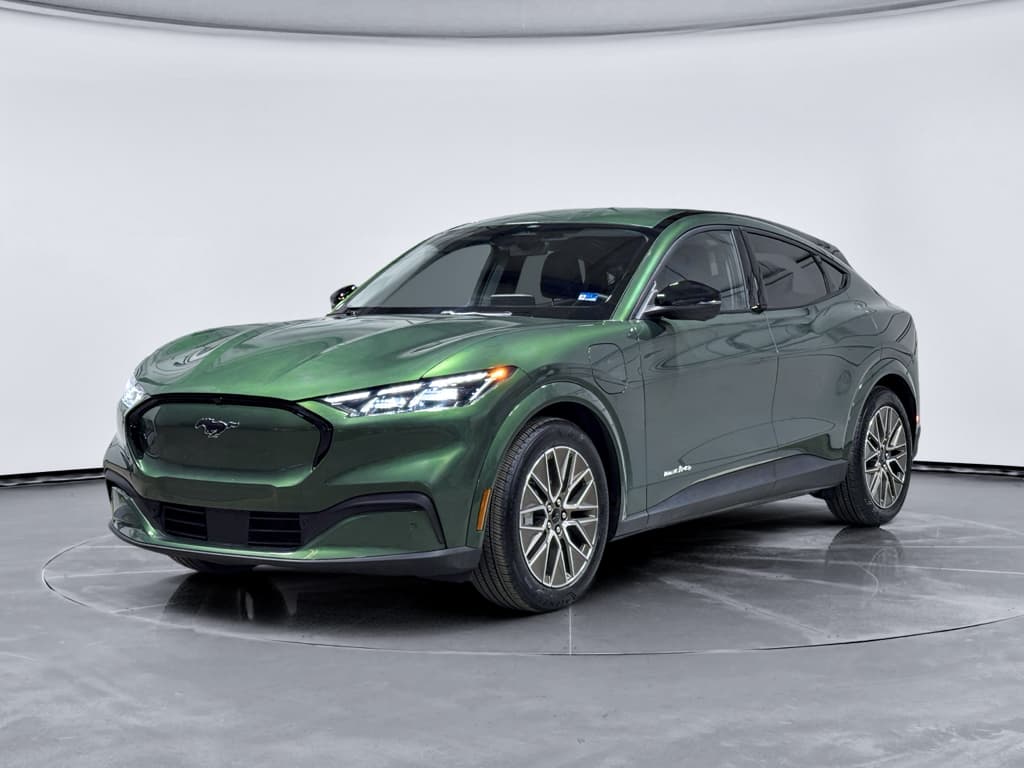
If you own or are shopping for a Mustang Mach‑E, F‑150 Lightning, or E‑Transit, **Ford EV battery warranty coverage** is not some fine-print curiosity. It’s the safety net under the single most expensive component in the vehicle, the high‑voltage battery pack. Understanding where that net begins and ends will tell you how confident you can be 100,000 miles from now.
Quick answer
Why Ford EV battery warranty coverage matters
In a gas car, you can replace the engine and still be roughly on speaking terms with your bank account. In an EV, a full battery pack replacement can run into five figures. That’s why Ford, like most mainstream automakers, wraps its electric vehicles in **longer, separate coverage specifically for the battery and electric drivetrain**.
If you’re considering a used Ford EV, this coverage is even more important. The vehicle’s age and mileage determine whether you still have factory protection, or whether you’re on your own for any serious battery issue. At Recharged, every used EV we list comes with a Recharged Score battery health report, so you can see how the pack is doing long before a warranty claim is ever on the table.
Ford EV warranty coverage at a glance
Ford EV battery warranty coverage: the basics
For its modern battery electric and hybrid models in the U.S., Ford splits warranty coverage into two buckets: the standard new‑vehicle warranties that apply to any Ford, and an **extra layer of coverage for EV‑unique components**, including the high‑voltage battery.
Core Ford EV warranty coverage (U.S., recent model years)
Typical factory coverage for recent Mustang Mach‑E, F‑150 Lightning, and E‑Transit models. Always confirm details in the Warranty Guide for your specific model year.
| Coverage type | What it covers (high level) | Duration |
|---|---|---|
| Bumper‑to‑Bumper | Most vehicle components, defects in materials/workmanship | 3 years / 36,000 miles |
| Powertrain | Electric drive unit / transmission equivalent | 5 years / 60,000 miles |
| Safety Restraint System | Airbags, seatbelts, related components | 5 years / 60,000 miles |
| Corrosion (perforation) | Rust‑through of sheet metal | 5 years / unlimited miles |
| EV Unique Component Coverage | High‑voltage battery, drive electronics, other EV‑specific parts | 8 years / 100,000 miles |
| High‑Voltage Battery Capacity | Excessive loss of usable capacity vs. spec | Within the 8‑year / 100,000‑mile EV coverage window |
Years / miles are whichever comes first.
That 8‑year / 100,000‑mile figure is the one most shoppers latch onto, and rightly so, it’s effectively Ford saying, **“We’re confident enough in this pack to stand behind it for roughly a decade of typical driving.”** But what’s actually under that umbrella? And what can quietly void your claim before you ever get to the service bay?
What components are actually covered on a Ford EV?
In Ford’s language, this is the **“Hybrid/Electric Unique Component”** or **“Electric Vehicle Component”** warranty. The exact parts list varies by model, but in plain English it covers the big‑ticket items that make the vehicle electric rather than gasoline‑powered.
Key EV components Ford’s 8‑year / 100,000‑mile coverage is designed to protect
Exact lists vary by model year, this is the high‑level picture.
High‑voltage battery pack
The pack under the floor or in the chassis, including battery modules, pack casing, and internal electronics. This is the single most expensive component in your Mach‑E, Lightning, or E‑Transit.
Electric drive units
Electric motors and associated gearboxes that actually move the wheels. On dual‑motor Mach‑E and Lightning models, coverage typically applies to both front and rear units.
Power electronics
Inverters, onboard chargers, DC‑DC converters, junction boxes, and other high‑voltage electronics unique to the EV drivetrain.
Onboard charging hardware
Hardware that manages AC and DC charging into the battery, including the onboard AC charger. (Public charging stations themselves are not covered.)
Thermal management
EV‑specific cooling components that keep the battery and drive units in their happy temperature zone, like dedicated pumps, lines, and valves.
High‑voltage control systems
Selected controllers, sensors, and safety interlocks required for safe operation of the high‑voltage system.
Check your Warranty Guide
Battery capacity loss and Ford’s 70% guarantee
EV batteries age. Some capacity loss is expected, just like your phone, but there’s a line where “normal wear” becomes “defect.” Ford’s warranty tries to draw that line with a **capacity guarantee, usually framed around 70% of the original usable capacity** within the 8‑year / 100,000‑mile window.
What the capacity guarantee means
- When new, your battery has a rated usable capacity (for example, roughly mid‑70s kWh on many Mach‑E trims).
- Ford expects that pack to hold at least about 70% of that usable capacity through the 8‑year / 100,000‑mile period.
- If it drops dramatically below that threshold under normal use, Ford may repair or replace modules or the entire pack under warranty.
How it’s actually tested
- A Ford EV‑certified dealer will run diagnostic tests on the pack using factory tools.
- The test looks at state of health, not just the guess‑o‑meter range on your dash.
- If results show excessive degradation beyond what Ford considers normal, that can trigger warranty coverage.
Note: Ford doesn’t publish a simple “XX miles of range lost = new pack” rule. It’s about internal battery metrics, not just your road‑trip story.
Range vs. capacity
What’s not covered: common Ford EV battery warranty pitfalls
Automakers are very clear about what they will not pay for, and Ford is no exception. Plenty of nightmare battery stories online trace back to behaviors and conditions that sit squarely in the exclusions column.
Situations that can leave your Ford EV battery <em>out</em> of warranty
Damage from accidents or road hazards
Collision damage, underbody impacts, flood damage, or punctures from debris are typically an insurance claim, not a warranty issue, even if the battery is what gets hurt.
Improper storage or neglect
Letting an EV sit for months with a full or near‑empty battery, or in extreme heat without following Ford’s storage guidance, can void coverage for resulting battery damage.
Unauthorized modifications
Aftermarket battery heaters, hacked charging hardware, or non‑approved repairs to the high‑voltage system can give Ford a clear reason to deny a claim.
Normal, gradual capacity loss
Some range loss over years is expected and isn’t automatically considered a defect. Only <strong>excessive</strong> loss, as defined by Ford’s diagnostics, is covered.
Using the wrong charging equipment
Consistently charging with damaged cables, non‑certified equipment, or ignoring fault codes can be interpreted as misuse rather than normal operation.
Commercial or extreme duty use (sometimes limited)
Certain uses, like ride‑hail fleets, high‑mileage delivery, or upfits, may have different or more limited coverage. Always check the guide if you’re using the vehicle for business.
Read the “improper storage” clause
New vs. used Ford EV warranty: how it transfers
Ford’s EV battery and unique component warranties are **tied to the vehicle, not the first owner**. That means if you buy a 3‑year‑old Mustang Mach‑E with 30,000 miles, you typically inherit the remaining chunk of that 8‑year / 100,000‑mile coverage window.
How Ford EV battery coverage plays out over time
Example timeline for a hypothetical Mustang Mach‑E originally sold in 2023.
| Owner | Ownership window | Approx. mileage | EV battery coverage status |
|---|---|---|---|
| Original owner | 2023–2027 | 0–60,000 miles | Full coverage under 8‑year / 100,000‑mile EV warranty |
| Second owner (used buyer) | 2027–2031 | 60,000–110,000 miles | Coverage remains until either 8 years from in‑service date or 100,000 miles, whichever comes first |
| Third owner | 2031+ | 110,000+ miles | EV battery warranty expired; pack issues are out‑of‑pocket unless covered by separate policies |
All dates and mileages are illustrative, always verify with the VIN and Ford’s systems.
Where things get tricky is documentation. A dealer may not have dug into the warranty status, and private sellers often assume, optimistically, that “it’s all still under warranty.” At Recharged, we pull factory records, confirm warranty start dates and mileage, and surface that clearly in the listing so you know exactly how much runway is left.
How Ford’s EV battery warranty compares to other brands
Ford’s 8‑year / 100,000‑mile EV battery coverage lands squarely in the industry mainstream. It’s the same basic term you’ll see from Chevrolet, Nissan, BMW, and many others. Hyundai and Kia sometimes stretch to 10 years on select models, while Tesla splits coverage by battery size and model but usually matches the 8‑year term with varying mileage caps or unlimited miles on some trims.
Ford vs. key competitors on EV battery coverage
High‑level comparison for recent model years in the U.S. (always check per‑model details).
Ford (Mach‑E, Lightning, E‑Transit)
- 8 years / 100,000 miles
- Capacity guarantee around 70%
- Standard among legacy brands
Tesla
- 8 years, 100k–150k+ miles or unlimited (model‑dependent)
- Capacity retention targets typically 70%
- Longer mileage on some packs
Hyundai / Kia
- Up to 10 years / 100,000 miles on many EVs
- Strong capacity guarantees
- Often marketed as a differentiator
Chevrolet (Bolt EV/EUV)
- 8 years / 100,000 miles
- Similar to Ford in scope
Nissan (Leaf, Ariya)
- 8 years / 100,000 miles
- Includes capacity loss provisions
Bottom line
Ford isn’t the most generous, but it’s not stingy either. You’re getting **solid, middle‑of‑the‑pack coverage** from a mainstream brand with a huge dealer network.
How to protect your Ford EV battery, and its warranty
You can’t drive an EV like a stolen rental car and then expect the battery warranty to swoop in and fix everything. The way you charge, store, and generally treat your Ford EV has a measurable impact on long‑term battery health, and on how straightforward any future warranty claim will be.
Practical habits that keep your Ford EV battery (and warranty) in the happy zone
Keep daily charge between ~20% and 80%
Use Ford’s charge‑limit settings so your Mach‑E or Lightning doesn’t sit at 100% state of charge every night. Save full charges for road trips.
Avoid chronic deep discharges
Occasionally running down into the single digits is fine; living there is not. Consistently letting the pack hit 0% before charging is hard on battery chemistry.
Don’t abuse DC fast charging
Fast charging is there to be used, but making every session a 10–100% DC blast, especially in hot weather, isn’t doing your pack any favors over the long term.
Mind long‑term storage
If you’ll park for weeks, aim for roughly 40–60% state of charge, park in a cool, shaded or indoor location, and follow Ford’s storage instructions. Document it if the vehicle will sit for months.
Fix charging issues promptly
If your EV throws charging or battery warnings, don’t just reboot the app and hope. Get the issue diagnosed while any potential coverage is still in force.
Keep good records
Service invoices, screenshots from the FordPass app, and any dealer diagnostics become valuable evidence if a battery claim ever gets complicated.
Used buyer advantage
How Recharged evaluates Ford EV battery health
Warranty coverage is the parachute; battery health is the altitude. At Recharged, we care deeply about both. A Ford EV can still be technically “under warranty” yet already show signs of an unhappy pack that will become your problem the day that coverage expires.
What the Recharged Score looks at
- Battery health metrics: We measure usable capacity and other pack data, not just the dash range estimate.
- Charging history patterns: Where possible, we look for signs of heavy DC fast‑charging or long periods of inactivity.
- Warranty runway: How many years and miles of Ford factory coverage are realistically left.
- Diagnostic trouble codes: We scan for historic or current EV‑system fault codes.
Why it matters more than ever
As Mach‑E and Lightning models pile into the used market, you’ll see the full spectrum: pampered commuter cars, hard‑worked tow rigs, and everything in between. A clean Carfax doesn’t tell you how the battery was treated.
Every Ford EV we list comes with a Recharged Score battery health report, along with transparent pricing, financing options, and available nationwide delivery. The goal is simple: you should never have to guess about the pack you’re buying.
FAQ: Ford EV battery warranty coverage
Frequently asked questions about Ford EV battery coverage
The bottom line on Ford EV battery coverage
Ford’s EV battery warranty coverage is, in many ways, the industry’s median: **8 years / 100,000 miles on the battery and unique electric components, with a capacity guarantee hovering around 70%**. It’s not an outlier, but it’s also not a gamble, assuming the car has been treated reasonably and serviced when it asks for attention.
Where owners and shoppers get into trouble is in the assumptions: assuming any range loss is a warranty claim, assuming abuse won’t matter, or assuming a used Ford EV still has years of coverage left just because the seller says so. The smart play is to verify the Warranty Guide for your exact model year, pull the in‑service date, and look hard at real battery health data before you sign anything.
That’s exactly the gap Recharged is built to close. With transparent listings, Recharged Score battery diagnostics, expert EV support, and flexible options like financing, trade‑in, and nationwide delivery, you can choose a Ford EV that fits your life, and know precisely how well its most important component is protected for the road ahead.