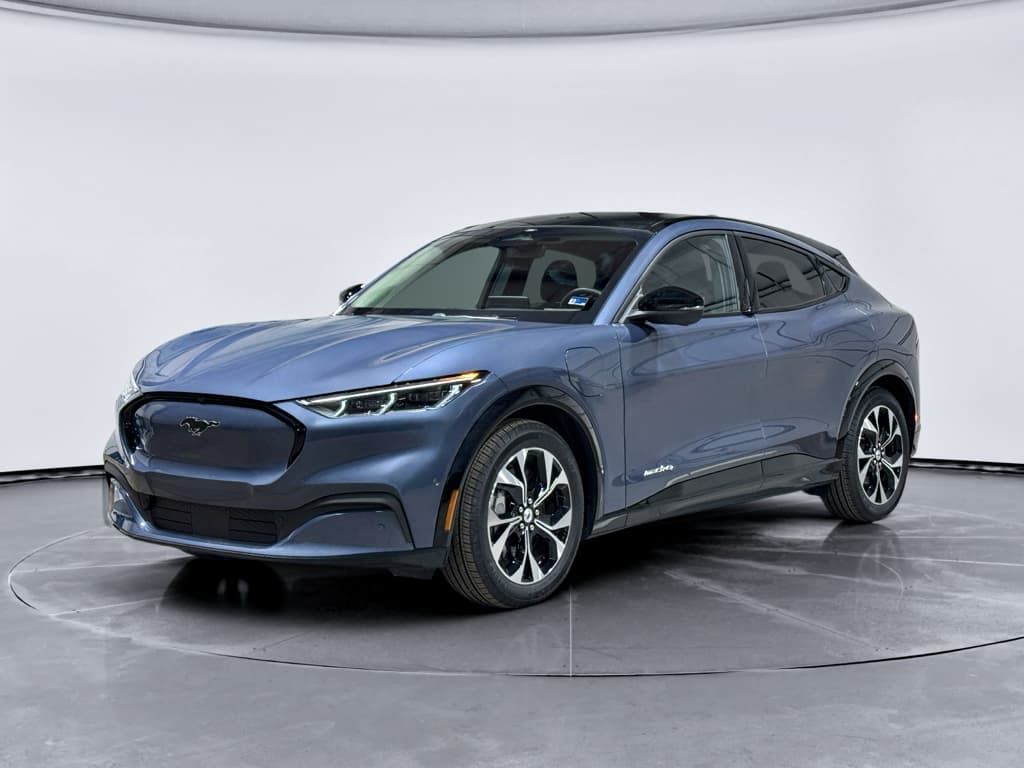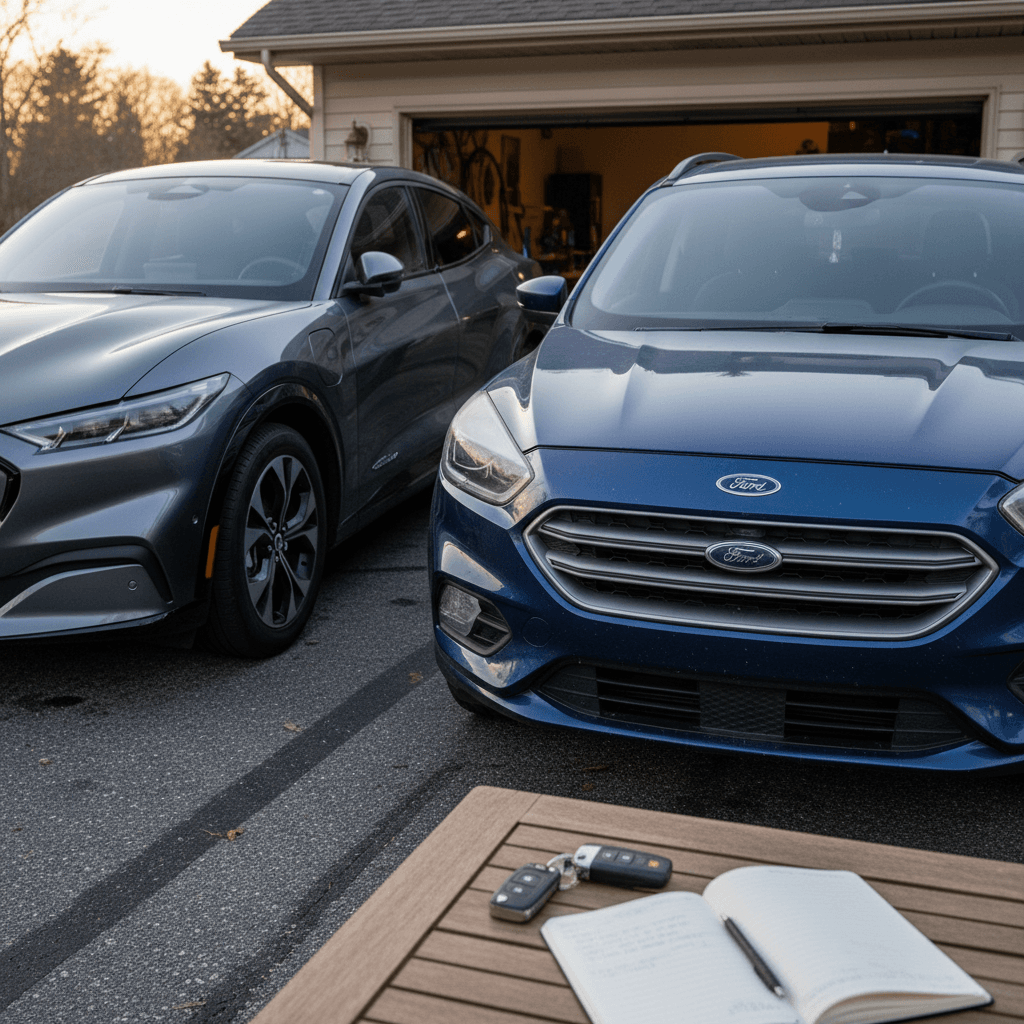
If you’ve spent the last few years in a Ford Escape, school runs, Costco trips, holiday traffic, and now you’re eyeing a Ford Mustang Mach‑E, you’re not alone. Ford is quietly steering a whole generation of Escape owners toward its electric future. This owner-style review looks at what actually changes when a practical gas crossover driver jumps into a Mustang Mach‑E: comfort, range, running costs, family duty and whether the EV really works better in everyday American life.
Same bones, very different personalities
Who this Escape-to-Mach‑E review is for
- Current Ford Escape owners, gas or hybrid, wondering if their next family car should be electric.
- Drivers cross-shopping a used Escape against a used Mustang Mach‑E and trying to understand real-world tradeoffs.
- Commuters who like the Escape’s size and upright seating, but want to ditch gas, oil changes, and rising fuel bills.
- Shoppers who keep hearing that a Mustang Mach‑E is “basically an electric Escape in a superhero costume” and want to know how true that is.
We’ll frame this like a long-term owner talking to another owner: what you’ll miss, what you’ll love immediately, and a few things that might drive you crazy until you adapt. Along the way, we’ll point out how buying a used Mustang Mach‑E through Recharged can de‑risk the jump from gas to electric.
Big picture: Ford Escape vs Ford Mustang Mach‑E
Escape vs Mustang Mach‑E at a glance
Same size class, totally different powertrains
Ford Escape (gas / hybrid)
- Powertrain: Gas 4‑cyl or hybrid
- Fuel economy: low‑20s to mid‑30s mpg depending on trim
- Refueling: 3–5 minutes at any gas station
- Personality: Quiet, anonymous, functional
- Strengths: Familiar, easy highway cruiser, decent cargo
Ford Mustang Mach‑E (EV)
- Powertrain: Fully electric, RWD or AWD
- Range: roughly 230–320 miles EPA depending on battery and year
- Charging: Home Level 2 + DC fast charging on road trips
- Personality: Quicker, sharper, more premium inside
- Strengths: Instant torque, lower running costs, high-tech cabin
Dimensionally, these are cousins: both are 2‑row crossovers with similar exterior footprints and very usable cabins. The real break is philosophical. The Escape is about low drama, low friction; the Mach‑E is about quiet speed and tech-forward commuting. If your Escape mostly blends into the background of your life, the Mach‑E will not.
Typical daily-use differences for a U.S. driver
Driving experience: from soft crossover to electric sport SUV
How the Escape feels
- Light steering, tuned for ease, not feedback.
- Conventional automatic or CVT behavior; kicks down for passing.
- Reasonably quiet but engine noise rises when you ask for power.
- On ramps and quick lane changes feel secure but not sporty.
How the Mustang Mach‑E feels
- Instant torque, even base models surge in city traffic.
- RWD and AWD versions feel planted, especially off the line and in the rain.
- Single-gear EV drive means no shifting; it just pulls cleanly.
- Available one-pedal driving makes stop‑and‑go almost fun once you adapt.
Coming out of an Escape, the first three Mach‑E test‑drive impressions are usually the same: it’s quicker than you expected, quieter than you expected, and the steering feels more precise. In city traffic, that makes it feel like a size smaller than it is. On a back road, the extra weight of the battery keeps it composed over mid‑corner bumps in a way most crossovers can’t match.
If you love relaxed cruising, choose your trim carefully
Comfort, noise, and ride quality
The Escape’s great virtue is that it disappears under you. It soaks up potholes reasonably well, the seats are agreeable, and apart from wind and engine noise at highway speeds, it doesn’t call attention to itself. The Mustang Mach‑E, in contrast, feels like Ford nudged the sliders toward sporty and premium.
- Seats: Mach‑E seats tend to offer better bolstering and longer thigh support. If your Escape leaves you shifting around on long drives, the Mach‑E will likely feel like an upgrade.
- Noise: With no engine, low‑speed silence is a revelation. You’ll hear tires and wind more, especially on coarse pavement, but city driving is dramatically calmer.
- Ride: Versus an Escape, the Mach‑E can feel a touch firmer over sharp edges. Big bumps are well controlled, but broken pavement will remind you you’re in a sport‑branded SUV, not a marshmallow.
Space, practicality, and family duty
Here’s where Escape owners worry: “Will my stroller, dogs, hockey gear, and everything else still fit?” In most day‑to‑day scenarios, the answer is yes, with some caveats around vertical cargo and towing.
Living with each as a family car
Car seats and kids
Both vehicles handle rear‑facing seats fine. The Mach‑E’s rear doors open wide and the flat floor helps with buckling. Tall teens may find the Mach‑E’s sloping roof a bit closer to their heads than in the boxier Escape, but it’s far from cramped.
Cargo and hauling
The Escape’s more upright cargo area can be friendlier for bulky boxes and tall items. The Mach‑E fights back with a front trunk (frunk) for messy stuff, sports gear, grocery bags, sandy beach gear, that you’d rather keep separate.
Towing and adventure gear
Many Escapes are rated to tow light trailers; the Mach‑E’s towing capacity is more limited by trim and market, and many U.S. owners simply don’t tow. If you regularly tow, you’ll want to dig carefully into specs, or keep a gas vehicle in the household.
Check your cargo habits
Range vs fuel economy: what really changes
In an Escape, you think in miles per gallon and gas station visits. In a Mustang Mach‑E, you learn to think in miles of range, percentage of battery, and where you’ll charge. The mental model changes, but daily life may not, especially if you have a driveway or garage.
Escape fuel vs Mach‑E range: daily reality
How typical commuting feels when you swap a tank for a battery.
| Scenario | In a Ford Escape | In a Mustang Mach‑E |
|---|---|---|
| Daily commute (under 50 miles round‑trip) | Fuel gauge barely moves. You fill up every week or two. | Battery percentage dips modestly. You plug in at home every night or two and simply leave each morning effectively "full." |
| Weekend errands (5–6 short trips) | Cold starts and idling hurt fuel economy; you watch mpg drop. | Short trips use more energy too, but there’s no warm‑up penalty. One overnight charge erases the weekend’s driving. |
| Road trip, 400+ miles in a day | One or two 5‑minute fuel stops, any exit. | Plan 1–3 DC fast‑charge stops of 25–40 minutes each; best experience if you pair them with meals and breaks. |
Assumes a U.S. driver doing 12,000–15,000 miles per year.
Range anxiety fades with routine
Charging vs gas stations: day-to-day living
For an Escape owner, the biggest lifestyle shift isn’t the car, it’s the refueling ritual. You trade five‑minute gas stops for cords, charge apps, and a bit of planning. Done right, it can actually make your life easier, not harder.
What an Escape owner should line up before switching
1. A realistic home charging plan
Ideally, you’ll install a 240‑volt Level 2 charger in your garage or driveway, which can fully charge a Mach‑E overnight. If that’s not immediately possible, understand what charging at 120 volts looks like for your mileage.
2. Access to public fast charging
Pull up PlugShare or your favorite charging app and map the DC fast chargers near your regular routes, work, kids’ activities, weekend destinations. Occasional use is fine, but you don’t want to rely on highway chargers for daily life.
3. Electricity rates and off‑peak options
Check your utility’s time‑of‑use plans. Many Mach‑E owners set the car to charge after midnight, cutting "fuel" cost dramatically compared to an Escape’s gas bill.
4. Apps and payment accounts
Sign up ahead of time for a couple of major charging networks you’ll actually use. It’s the EV equivalent of keeping loyalty cards for your favorite gas stations.
5. A backup plan for road trips
If you do occasional long hauls, decide whether renting a gas car or using another household vehicle might make sense for the once‑a‑year mega‑road‑trip while you get comfortable with EV routing.
Don’t buy a Mach‑E if you have zero reliable charging
Ownership costs: Escape gas vs Mach‑E electric
On paper, a Mustang Mach‑E usually costs more to buy than a same‑year Escape, especially when new. But over a typical 5‑year window, the EV starts to claw back money through cheaper energy and lower maintenance, especially if you’re buying pre‑owned after the steepest depreciation has already hit.
Where the Escape hits your wallet
- Fuel: Even a reasonably efficient Escape burns through a meaningful monthly gas budget, especially with highway miles or city traffic.
- Maintenance: Oil changes, transmission service, cooling systems, exhaust, and more, normal for a gas SUV, but they add up as the miles climb.
- Repairs: As the Escape ages, items like turbos, fuel systems, and emissions equipment can turn into four‑figure surprises.
Where the Mach‑E saves (and spends)
- Energy: Charging mainly at home, many owners see hundreds, even thousands, of dollars saved over 5 years compared with gas.
- Maintenance: Fewer moving parts. No oil changes, no timing belts, no exhaust. Brake wear is low thanks to regenerative braking.
- Depreciation: The EV takes its big hit in the first few years. Shopping used shifts that pain to the first owner while you enjoy lower running costs.
Used Mach‑E sweet spot
Tech, safety and features: where the Mach‑E leaps ahead
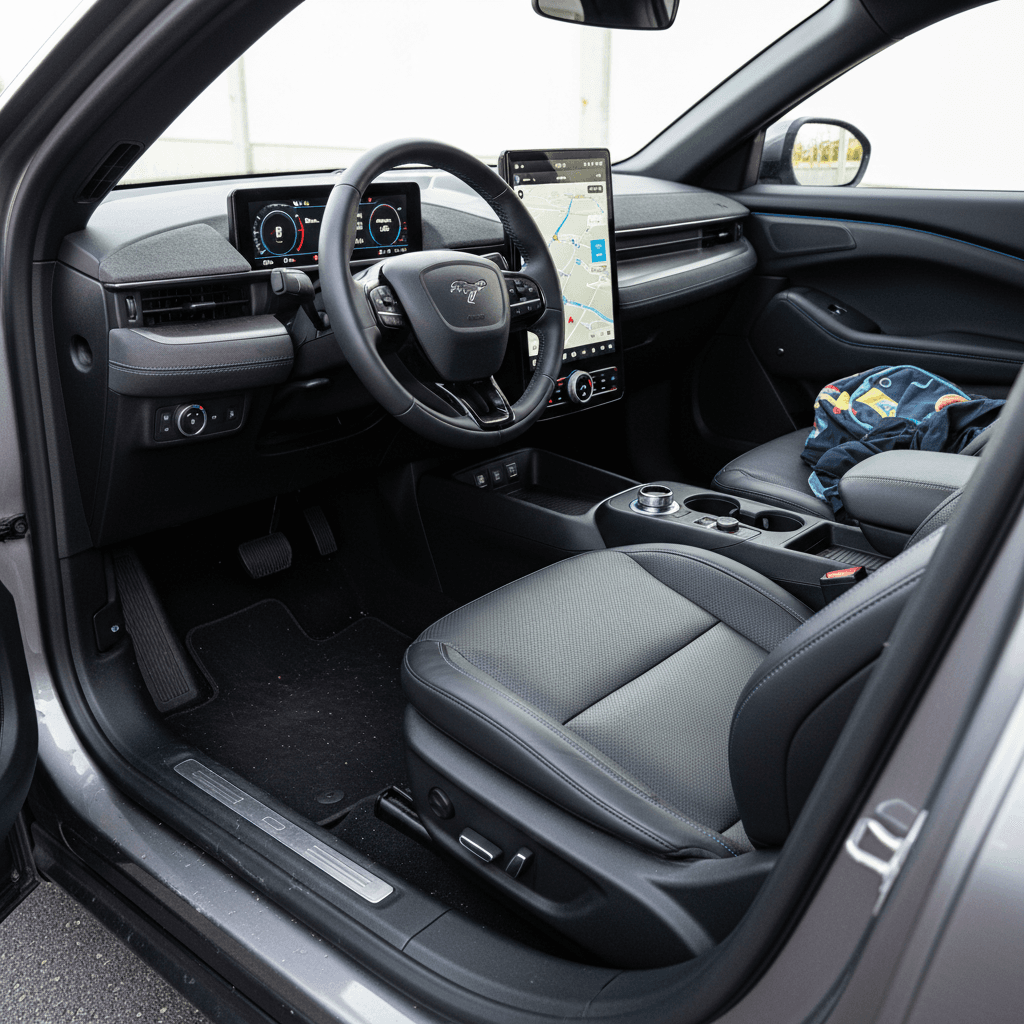
If your Escape is even a few years old, the first time you slide into a Mach‑E you’ll feel like you’ve skipped a whole generation of interior design. Giant touchscreen, slick digital gauge cluster, cleaner lines: this is Ford selling the future.
Feature upgrades Escape owners will notice immediately
Digital cockpit and infotainment
A large central screen and a crisp digital driver display give the Mach‑E a more premium feel. Over‑the‑air software updates add features and refine behavior, something your Escape simply doesn’t do.
Advanced driver assistance
Depending on year and trim, the Mach‑E can offer more advanced lane‑keeping, adaptive cruise, and hands‑free assistance on mapped highways. For long commutes, it’s a genuine quality‑of‑life upgrade over most older Escapes.
Climate and comfort touches
Quiet electric heat and available features like heated steering wheels, seat memories, and refined cabin materials make daily use feel more like a near‑luxury SUV than a basic family crossover.
App connectivity
Remote pre‑conditioning, charge scheduling, and basic telematics through Ford’s app change how you interact with the car. Pre‑heating a cold Mach‑E while it’s plugged in is a joy you’ll never get in an Escape.
Reliability, recalls, and battery health
Escape owners are rightly suspicious of first‑generation tech. The Escape is a mature product; the Mach‑E, especially in its early years, was Ford learning in public. There have been software bugs, recalls, and teething issues, but the story isn’t simply "new tech bad, old tech good."
- Mechanical simplicity: An EV powertrain has fewer wear items than a turbocharged gas engine and multi‑gear transmission. Over the long haul, that’s an asset.
- Software and electronics: The Mach‑E leans heavily on software. Early models saw infotainment glitches and charging quirks that later updates largely addressed.
- Recalls: Both Escape and Mach‑E have had their share of recalls over the years, for everything from fuel systems to door latches. The key is ensuring any used example you consider has had recall work completed.
- Battery health: Properly managed, modern EV packs hold up well. Most Mach‑E owners report only small real‑world range changes in the first several years, with climate and driving style mattering more day‑to‑day than degradation.
Used EVs live and die by battery condition
Who should switch, and who should stick with an Escape
Escape owner profiles: how the Mach‑E fits
Daily suburban commuter
30–60 miles per day, predictable routes.
Garage or driveway with at least 120V, ideally 240V.
Occasional road trips, but mostly regional driving.
<strong>Verdict:</strong> You’re the Mach‑E bullseye. You’ll see the biggest quality‑of‑life and cost benefits.
Rural driver, long distances
Frequent 150–250‑mile days, limited public charging nearby.
May not have easy home charging if you rent or share parking.
Weather can be extreme, which impacts EV range more visibly.
<strong>Verdict:</strong> The switch can work, but only if you lock in home charging and feel comfortable planning long days carefully.
Heavy tower or adventure hauler
Regularly tow boats, campers, or heavy utility trailers.
Carry tall or awkward cargo that fills the Escape to the roof.
Often drive far from major highways and infrastructure.
<strong>Verdict:</strong> Keep a capable gas vehicle in the mix. A Mach‑E can replace your Escape for commuting, but not necessarily for every weekend duty.
Urban apartment dweller
Street parking or complex lot, no guaranteed plug.
Public fast chargers frequently blocked or broken.
Short trips but inconsistent access to charging infrastructure.
<strong>Verdict:</strong> This is the hardest use case. Unless your building or employer adds dependable charging, a switch from Escape to Mach‑E can feel like a gamble.
How Recharged helps if you’re shopping used
If you’re stepping out of a familiar Ford Escape and into your first EV, you don’t need extra uncertainty. This is where buying a used Mustang Mach‑E through Recharged can steady the landing.
Why Escape owners like buying a Mach‑E through Recharged
Recharged Score battery report
Every Mach‑E on Recharged comes with a Recharged Score that includes verified battery health and charging behavior. You’re not guessing how much real‑world range remains, you can see it.
Fair pricing and trade‑in support
You can trade in your Escape, get an instant offer, or consign it while you shop. Transparent, fair‑market pricing on the Mach‑E side helps you understand the total cost of switching, not just the monthly payment.
Nationwide, EV‑savvy experience
From EV‑specialist support to nationwide delivery and an Experience Center in Richmond, VA, Recharged is set up for first‑time EV buyers. You can handle the entire process digitally or get hands‑on guidance.
Ready to find your next EV?
Browse VehiclesFord Escape to Mustang Mach‑E FAQ
Common questions from Escape owners
Bottom line: should an Escape owner buy a Mustang Mach‑E?
If your Ford Escape is starting to feel like yesterday’s answer to today’s commute, the Ford Mustang Mach‑E is a logical, if slightly audacious, next step. You’ll gain quiet speed, a leap in tech and refinement, and the satisfaction of skipping gas stations in favor of waking up topped off at home. You’ll give up some towing flexibility, some vertical cargo space, and the simplicity of five‑minute refuels anywhere.
For the typical suburban Escape owner with a driveway, a predictable daily route, and an appetite for newer tech, the Mach‑E is not only livable, it’s an upgrade in almost every way that matters. If you sit in that camp, exploring a used Mustang Mach‑E with a verified Recharged Score is a smart way to bring Ford’s electric future into your driveway without gambling on the unknowns.