If you’re eyeing an Audi e-tron GT, you’re probably thinking fast, stylish grand tourer first, tow rig second. But road trips, bike racks, and small trailers all raise the same question: what’s the real story on Audi e-tron GT towing capacity and range? Let’s unpack what Audi rates officially, what owners actually do, and how far you can expect to go on a charge, especially if you’re shopping used.
Quick answer
Audi e-tron GT towing basics
The first thing to understand is philosophical: the e-tron GT is a grand tourer, not a work truck. Audi built it to bomb interstates in quiet, blistering comfort, not drag a horse trailer up the Rockies. That design brief shows up everywhere, from the slinky aero profile and low ride height to the performance tires and limited underbody hardware for hitches.
What the e-tron GT is, and isn’t
Know the role before you hitch anything up
Electric grand tourer
Serious performance
Light-duty tow potential
US vs. Europe
Official towing capacity vs real-world use
Warranty & liability
Audi e-tron GT range figures by model year
Range is where the e-tron GT really starts to make sense as a long-distance car, at least unladen. Audi has steadily improved the drivetrain and battery over time, so the numbers you’ll see on a used 2022 car differ meaningfully from a refreshed 2025 S or RS e-tron GT.
Headline e-tron GT range numbers
Audi e-tron GT range by generation (high level)
Approximate range figures for key model years. Always check the specific wheels and trim of the car you’re looking at.
| Model year & trim | Battery (usable) | Official range | Typical highway at 70–75 mph | Notes |
|---|---|---|---|---|
| 2023 e-tron GT | ~83–85 kWh | ~238 mi EPA | ~180–200 mi | First US cars, dual-motor AWD |
| 2023 RS e-tron GT | ~83–85 kWh | ~232 mi EPA | ~170–190 mi | More power, slightly less range |
| 2024 e-tron GT | ~83–85 kWh | 249 mi EPA | ~190–210 mi | Efficiency tweaks and software updates |
| 2024 RS e-tron GT | ~83–85 kWh | 249 mi EPA | ~185–205 mi | Same EPA label as non-RS on 20" wheels |
| 2025+ S e-tron GT | ~97 kWh | ~300 mi (preview) | ~220–240 mi | New larger pack and more power |
| 2025+ RS e-tron GT | ~97 kWh | High-200s (preview) | ~210–235 mi | Big power, still GT-focused |
Real-world range depends heavily on temperature, speed, wheel size, and elevation changes.
Used-car tip
How towing impacts e-tron GT range
Now the uncomfortable part: towing is like turning your sleek GT into a brick with a parachute. Even a modest trailer adds rolling resistance and, more importantly, frontal area and turbulence. That hurts every EV, but low-slung performance sedans like the e-tron GT feel it more than tall SUVs designed with hitch life in mind.
- Aerodynamic drag from the trailer can easily eat 30–40% of your efficient cruising range at highway speeds.
- Additional mass means more energy to get up to speed and climb hills, another 10–20% hit depending on grade and weight.
- Many EVs (and some charging stations) derate or reduce charging power when the pack is hot from towing in high temps.
Rule-of-thumb range hit
Light, aero trailer
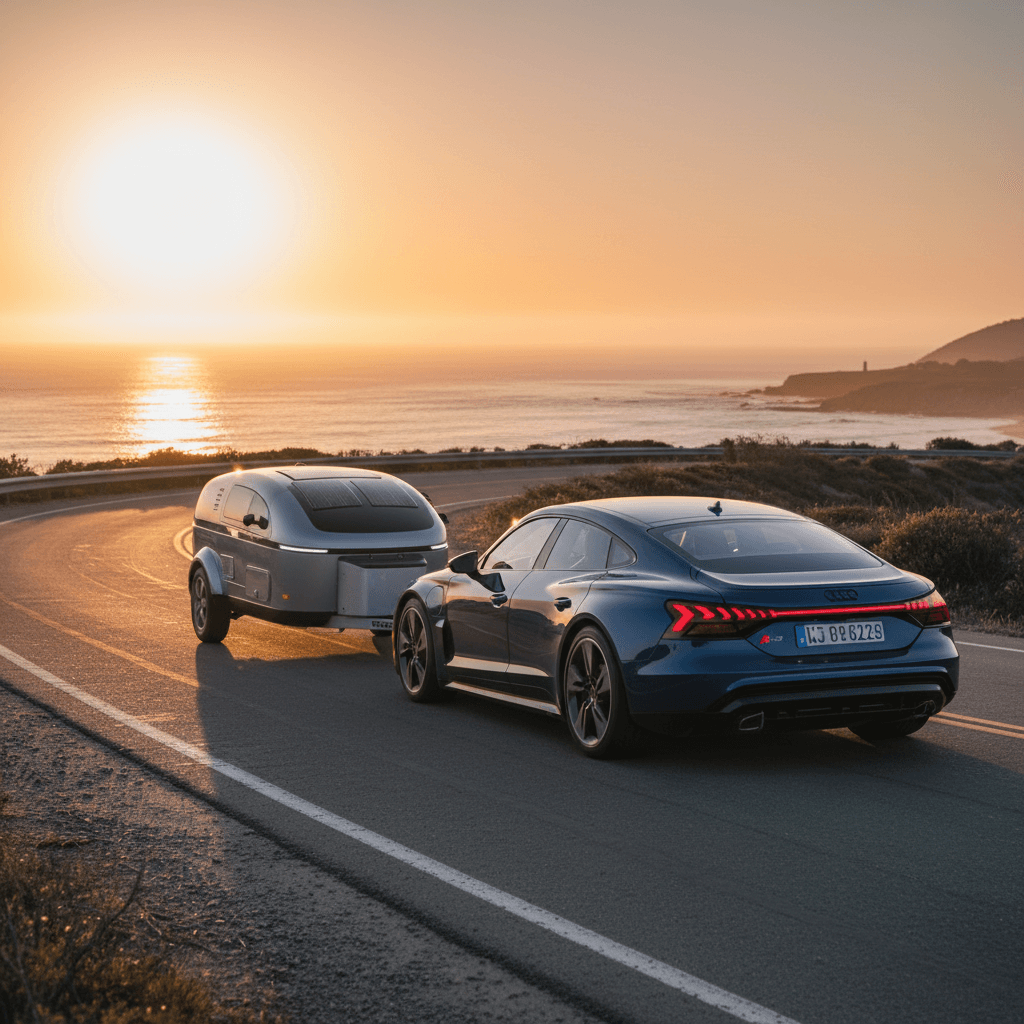
Imagine a European-spec e-tron GT with a small, low teardrop camper rated well within its allowed tow capacity.
- Solo highway range: ~210 miles on a 2024 car
- With trailer: ~110–130 miles between fast charges
- Practical planning window: 80–100 miles to keep buffers
You’ll be stopping more often, but with the GT’s strong DC charging, those stops can be fairly short.
Tall box or overloading
Hanging a tall, flat-front trailer off the back of an e-tron GT is like wearing a down parka in Death Valley.
- Range losses of 50–60% are not unusual.
- Crosswinds can make energy use unpredictable.
- Stress on the rear structure and suspension climbs quickly.
This is where you’re better off in a dedicated towing EV SUV or truck instead of trying to turn the e-tron GT into something it isn’t.
Charging strategy when you tow with an EV
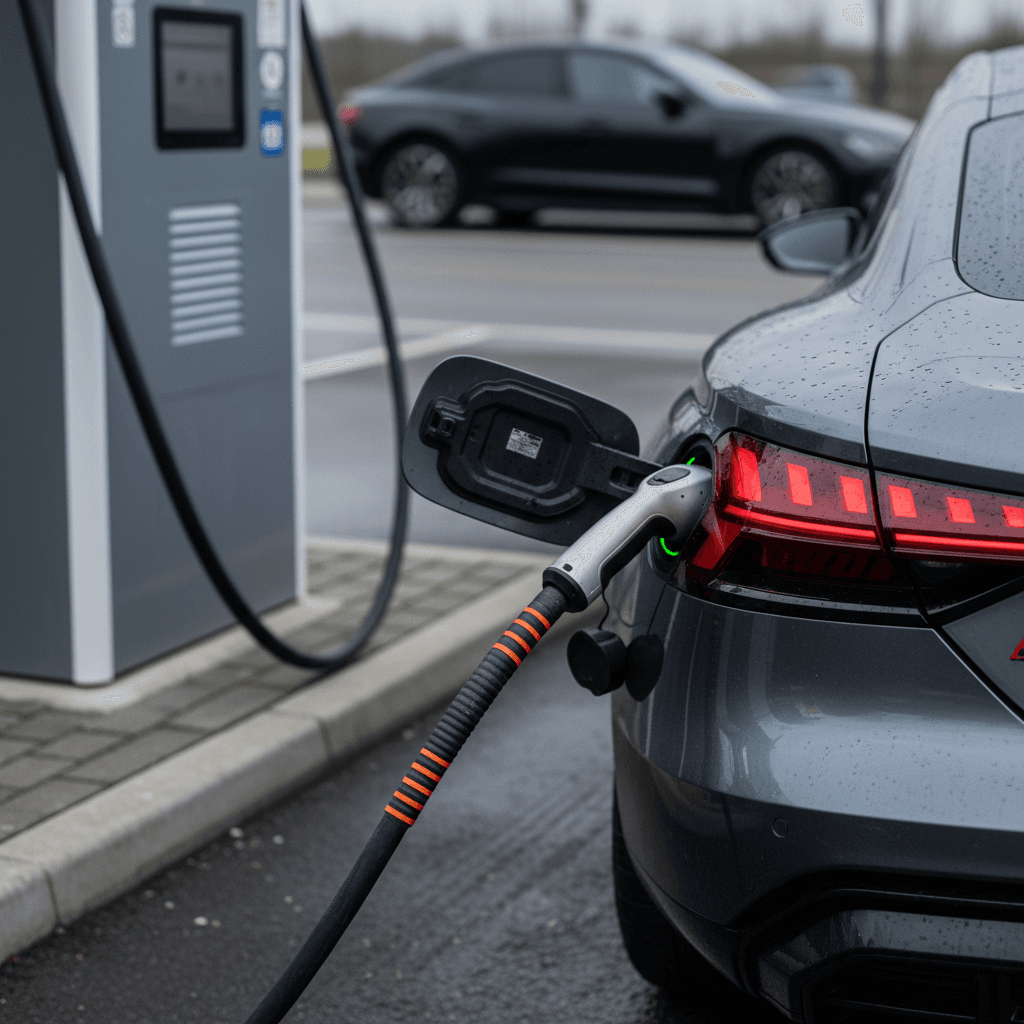
If you do decide to tow occasionally with an e-tron GT, your charging strategy matters more than the trailer color or the brand of hitch. The good news is that the Audi’s 800-volt system and hefty pack make it one of the better EVs for quick, repeat fast-charging, provided you don’t abuse the battery in high heat.
Smart charging tactics while towing
Range matters, but so does how you refill it
Shorter hops, more stops
Aim for high-power stations
Watch temps and grades
Plan like a pilot, not a commuter
Is the e-tron GT a good EV for towing?
This is where the critic in me has to be blunt: the Audi e-tron GT is a phenomenal long-distance car but a mediocre tow vehicle, at least in US-market form. That’s not a flaw so much as a choice. Audi built a continent-crushing grand tourer, and then lawyers and packaging engineers quietly removed most of the pathways to hitch abuse.
Where it shines
- Effortless, quiet cross-country speed with no trailer.
- Quick DC fast-charging that makes 300-mile days very doable.
- All-wheel drive traction for poor-weather trips.
- Plenty of torque to move weight if you absolutely must tow light loads.
Where it falls short as a tow rig
- No official tow rating on most US cars.
- Low ground clearance and long overhangs are bad for hitch angles and driveways.
- Performance tires and big wheels hate pothole-and-trailer life.
- Cabin and trunk space are GT-sized, not SUV-sized.
Best use case match
Buying a used Audi e-tron GT for long trips
If you’re shopping the used market, the big questions are less about the theoretical tow rating and more about how the battery has aged, what wheels and tires are on the car, and whether the previous owner treated it like a GT or a pack mule.
Key checks for a road-trip-ready used e-tron GT
1. Verify battery health
Ask for a <strong>battery health report</strong> or diagnostic like the Recharged Score, which measures real pack capacity vs. original. Even a few percent loss matters when you’re stretching legs between chargers.
2. Look at wheel and tire setup
Twenty-one-inch wheels look incredible but cost range. If you care about long trips, a car on 20" wheels with touring tires will be more efficient and more comfortable when loaded.
3. Check for hitch or rear-structure mods
Inspect the rear underside for any signs of aftermarket hitches, wiring, or repairs. A clean, unmodified rear structure is ideal if you value long-term durability.
4. Review fast-charging history
Heavy DC fast-charging isn’t automatically bad, but if the car’s life story is nothing but hot-weather fast-charging and towing, be extra picky about battery health and cooling performance.
5. Confirm software updates
Later software updates can improve efficiency, charging behavior, and thermal management. Make sure the car has received relevant Audi updates before you set off on ambitious trips.
How Recharged can help
Checklist: Planning a trip with an e-tron GT
Whether you’re towing a small trailer in a market where it’s allowed or just loading the trunk and back seat for a long holiday, a little planning makes the e-tron GT feel far more relaxed on the open road.
Trip-planning checklist for the Audi e-tron GT
Map your charging spine first
Before you worry about lunch stops, plot the <strong>DC fast chargers</strong> that define your route. Work backward from those locations to decide where you’ll sleep and eat.
Dial in a realistic range figure
Base your trip plan on a <strong>conservative highway range</strong>, for many e-tron GTs, that’s 180–220 miles solo, or 90–120 miles when towing something small and aerodynamic.
Leave buffer for weather and traffic
Headwinds, rain, or a surprise detour can chew up range. Aim to arrive at chargers with at least <strong>10–15% battery</strong> remaining, not single digits.
Precondition before fast-charging
Use the navigation to a fast charger so the car can precondition the battery. You’ll arrive with a warmer pack and see higher charge rates sooner.
Pack smart and low
Keep heavy items low and forward in the cabin or trunk. A sagging rear end with tongue weight and cargo hurts both stability and efficiency.
Have a Plan B charger
For each critical stop, identify an alternate charger within 20–30 miles. Apps occasionally lie, and stations go offline.
FAQ: Audi e-tron GT towing capacity and range
Frequently asked questions
Bottom line: Know your use case first
The Audi e-tron GT is an astonishingly capable long-distance EV, with real-world range that, when driven sensibly, supports relaxed 300-mile days thanks to its fast-charging backbone. But when it comes to towing, it’s a specialist, not a generalist: light-duty at best, in the few markets that allow it, and effectively no-tow in much of the US.
If your mental picture of ownership is more grand tours than grand design on your next camper, the e-tron GT makes a compelling used buy, especially when you have independent battery-health data and expert guidance on your side. That’s where platforms like Recharged come in, pairing verified battery diagnostics, transparent pricing, and EV-specialist support so you can choose the right GT for the kind of miles, and trailers, you actually plan to pull.