If you’re registering or buying an electric car in Florida, you’ll quickly discover a confusing mix of rumors about inspections, emissions testing, and special EV rules. The good news is that Florida’s electric car inspection requirements are relatively light, but there are a few situations where you absolutely do need an inspection or VIN verification, especially with rebuilt or out‑of‑state vehicles.
Quick answer
Overview: Do electric cars need inspections in Florida?
Florida electric car rules at a glance (2026)
Historically, Florida has taken a very light‑touch approach to inspections. The state ended its regular emissions testing program years ago, and as of 2026, no county or city has its own mandatory annual inspection program. That applies to gas, hybrid, and electric vehicles alike.
Don’t confuse “no state inspection” with “no inspection needed”
What Florida requires for any vehicle (EV or gas)
Before we zoom in on EVs, it helps to understand Florida’s baseline rules that apply to all vehicles. Whether your car burns gas or electrons, you must:
- Register the vehicle with the Florida Department of Highway Safety and Motor Vehicles (FLHSMV).
- Carry Florida‑compliant insurance before you get a plate.
- Pay registration and, in some cases, additional fees tied to your vehicle type (including proposed road‑usage fees for EVs).
- Ensure the car meets basic equipment requirements, working lights, mirrors, tires, and so on, even though the state doesn’t require a periodic safety inspection station to sign off.
For electric cars, those general requirements are paired with a few EV‑specific wrinkles: no emissions testing, potential HOV lane decals, and increasingly, extra registration fees designed to replace lost gas‑tax revenue.
Florida electric car inspection requirements by scenario
When inspections and verifications matter for Florida EVs
Different situations trigger different requirements (or best practices).
Registering a new EV from a Florida dealer
Legal requirement: No inspection. The dealer handles title and registration paperwork for you in most cases.
Smart move: Review the purchase agreement and make sure any dealer‑promised inspection or battery warranty is in writing.
Buying a used EV already titled in Florida
Legal requirement: No state inspection.
Smart move: Arrange a third‑party EV inspection focusing on battery health, charging hardware, and signs of flood or crash damage.
Bringing an out‑of‑state EV into Florida
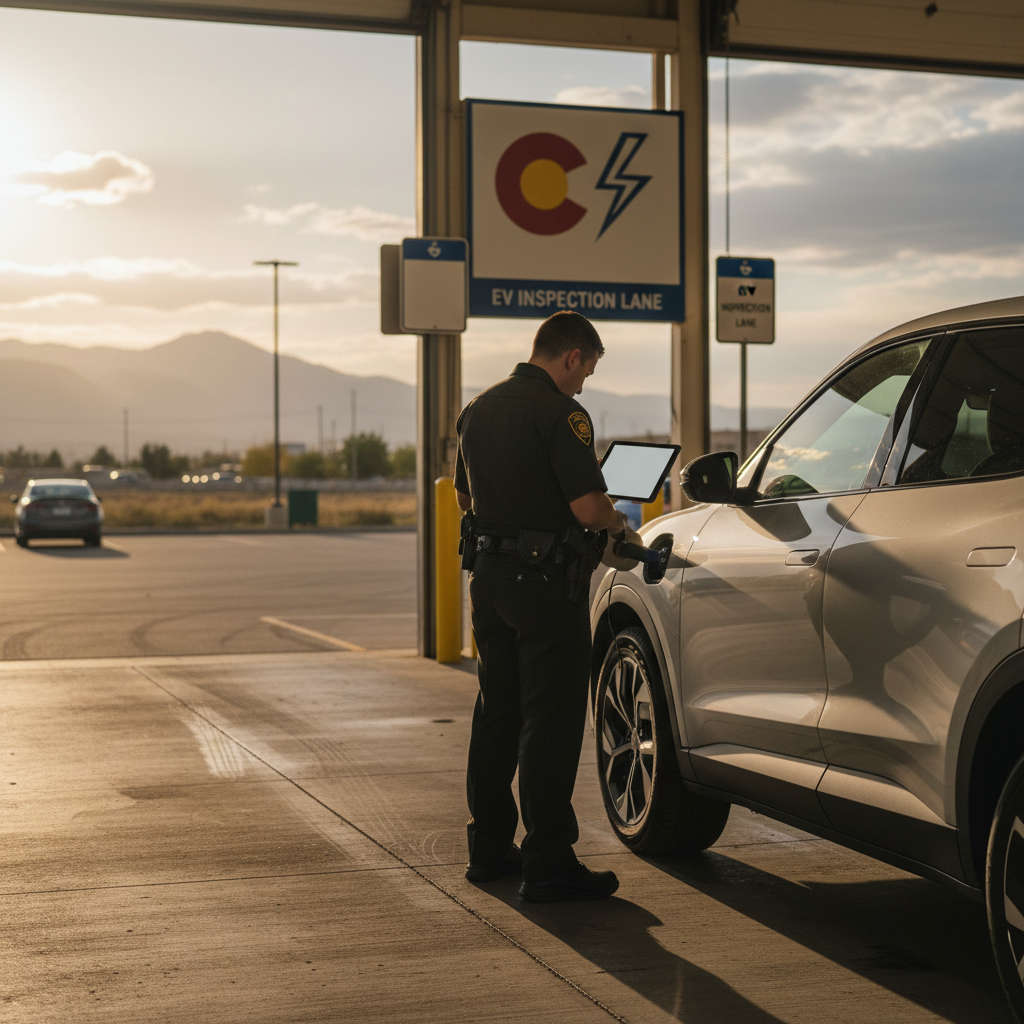
Legal requirement: Often a VIN verification at the tax collector or by a law‑enforcement officer when you first title/register the car in Florida.
Smart move: Combine the VIN check with a full used‑EV inspection if you bought sight‑unseen.
When a formal inspection is unavoidable
Certain title histories always raise the bar.
Salvage or rebuilt EV
If an electric car has a salvage or rebuilt title, Florida requires a rebuilt motor vehicle inspection before you can get a rebuilt title and plate.
Inspectors will check for proper repairs, receipts for major components, and verify the VIN isn’t tied to theft or fraud.
Flood‑damaged EV
Florida’s storms and coastal floods mean some EVs are totaled for water damage. Those vehicles follow the same salvage/rebuilt process, but the risk is much higher.
Even if a flood‑damaged EV passes a structural inspection, lingering high‑voltage corrosion can be a serious safety and cost concern.
High‑voltage systems change the inspection stakes
VIN inspections for electric vehicles in Florida
A VIN inspection (also called VIN verification) is one of the few times most Florida EV owners will encounter any kind of “inspection.” It’s not a roadworthiness check; it’s simply confirming that the car’s identity matches the paperwork.
When Florida may require a VIN verification for your EV
Common scenarios where electric car owners encounter VIN inspections.
| Scenario | VIN verification required? | Who can verify | What they check |
|---|---|---|---|
| New EV bought from a Florida dealer | Usually no (dealer submits paperwork) | Dealer & FLHSMV | Title, odometer, lien info |
| Used EV bought from a private seller in Florida | Sometimes, depending on paperwork | Tax collector staff, notary, or law enforcement | VIN on car vs. title/registration |
| Out‑of‑state EV titled for the first time in Florida | Commonly required | Law enforcement officer, DMV/tax office, or certain notaries | VIN, odometer, basic vehicle details |
| Salvage/rebuilt EV | Yes, as part of rebuilt inspection | State‑authorized rebuilt inspection agency | VIN, parts documentation, repair quality |
Always verify current requirements with your county tax collector or FLHSMV office; procedures can vary slightly by county.
For most EV owners, VIN verification is quick and simple. The official compares the VIN plate on your dash or door jamb to your out‑of‑state title and completes a short form. There’s no test drive, no emissions probe, and no lift involved.
Bring the right documents to your VIN check
Rebuilt, salvage, and flooded EVs: special inspection rules
Where Florida gets strict is with salvage and rebuilt titles. If an insurer has previously written an EV off as a total loss, whether for collision, flood, or other damage, the title is branded. Before that car can legally return to the road with a rebuilt title, it must pass a state‑authorized rebuilt inspection.
What a rebuilt inspection checks
- Correct VIN and title history (no cloning or stolen parts).
- Receipts for major components replaced (such as battery pack, airbags, body panels, or high‑voltage wiring).
- Evidence that structural and safety systems have been repaired to a roadworthy standard.
- Basic operational checks: lights, brakes, windows, and other essentials.
This process is focused on fraud prevention and basic safety, not fine‑grained EV diagnostics.
Why it’s riskier with EVs
- Battery packs can be damaged internally even when the case looks fine.
- Improperly repaired high‑voltage components can pose fire and shock hazards.
- Flood‑damaged EVs may pass inspection today but suffer hidden corrosion later.
- Aftermarket or junkyard battery swaps can complicate future service and resale value.
A rebuilt inspection is not a guarantee that the EV is a good long‑term buy, it just means it meets Florida’s minimum standard to be titled and driven.
Be extra cautious with cheap rebuilt EVs
Emissions testing and EVs in Florida
Florida has no statewide emissions inspection program for passenger vehicles, and that includes electric cars. There are no tailpipe emissions tests, no OBD plug‑ins, and no county‑by‑county smog checks in 2026.
One less hassle for EV owners
You may still see references online to “emissions test exemptions” for EVs in Florida. Those are often leftovers from older articles describing programs that no longer exist. As of 2026, the simplest way to think about it is: nobody gets tested, so nobody needs an exemption.
How to get a used EV inspected in Florida (even when it’s not required)
Florida law may not force you to inspect a used EV before buying it, but your wallet will thank you if you behave as if it does. EVs bundle together traditional used‑car concerns, accident damage, rust, worn suspension, with new, high‑stakes failure points like battery degradation and DC fast‑charging abuse.
How to line up a smart used-EV inspection in Florida
1. Choose an EV‑literate inspector
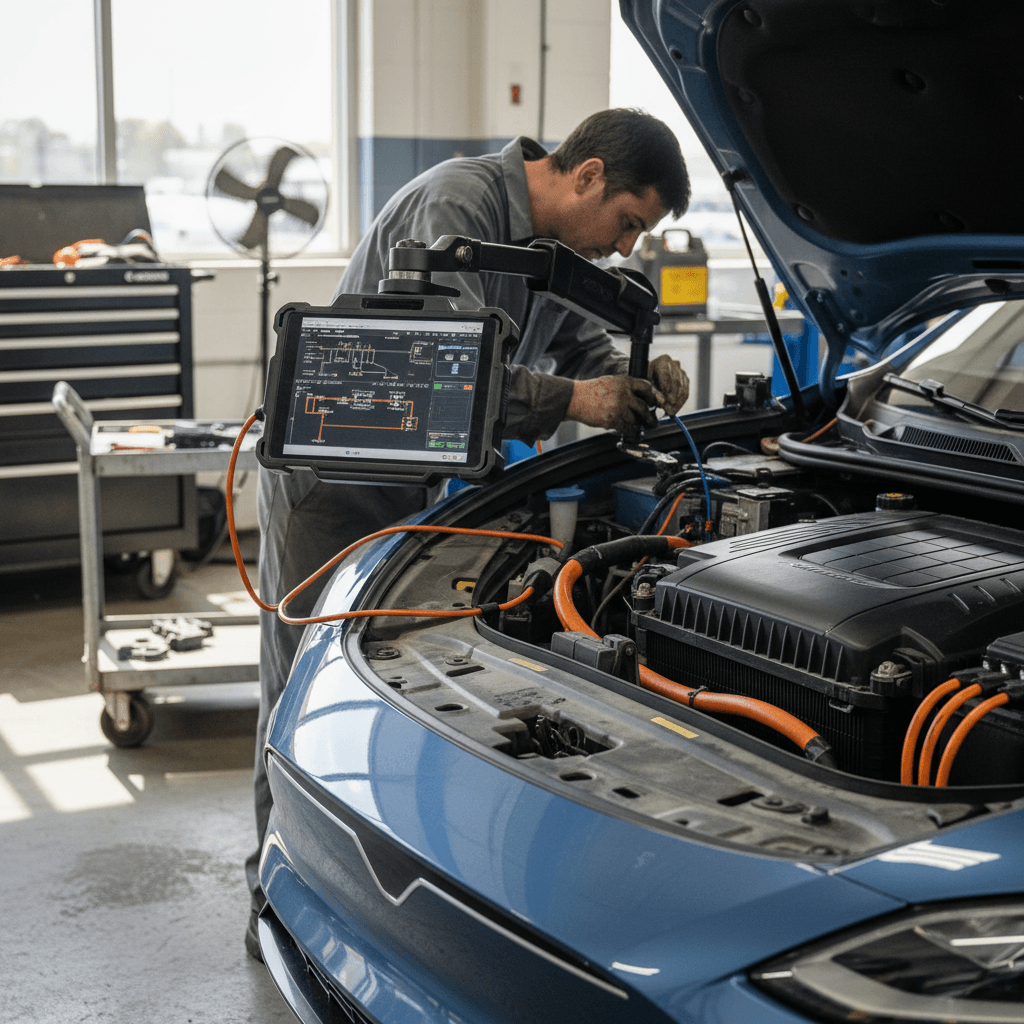
Look for shops or mobile mechanics who specifically mention <strong>electric vehicles</strong>, not just hybrids. Ask what scan tools they use and whether they’ve inspected your model before.
2. Focus on battery and charging data
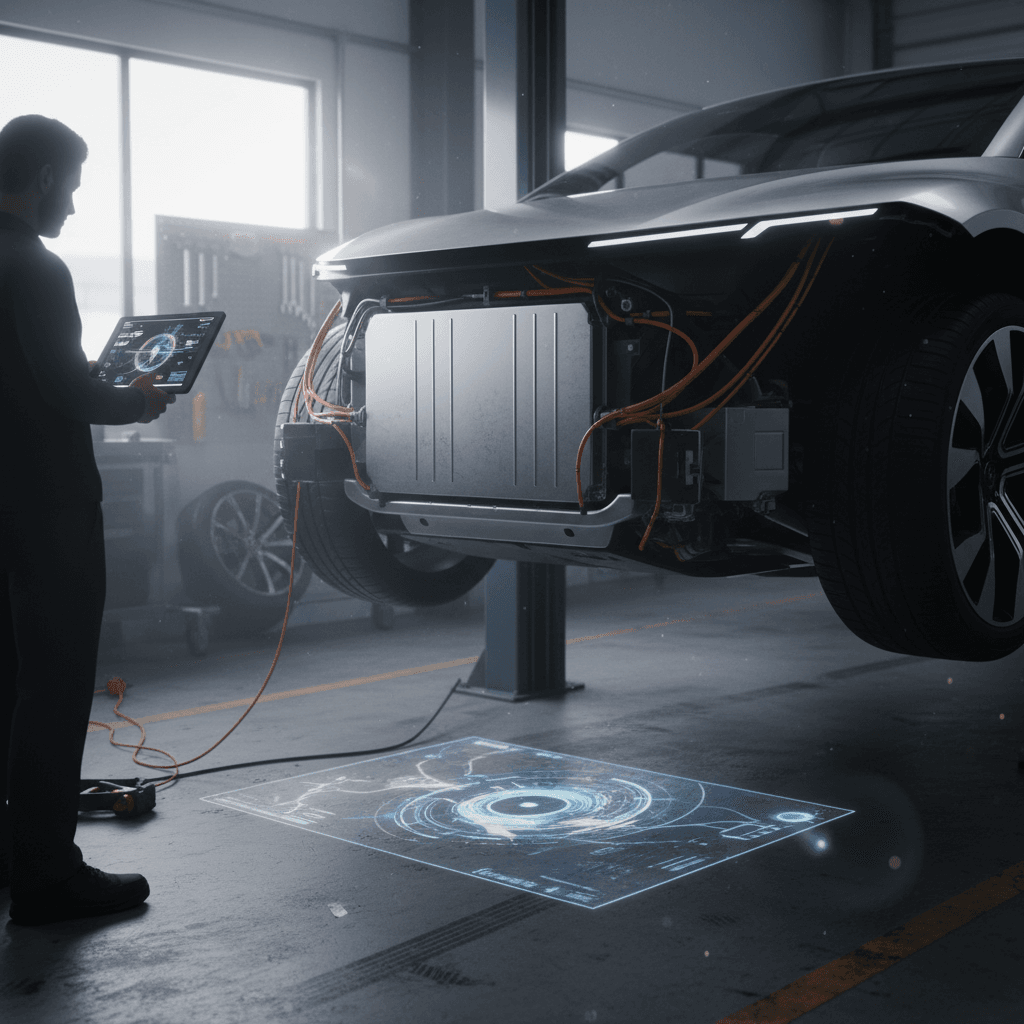
A proper EV inspection pulls <strong>state‑of‑health (SOH)</strong>, cell‑balance information where available, and DC fast‑charge history. Generic code readers won’t tell you what you need to know.
3. Check for flood or hurricane damage
In Florida, make flood checks non‑negotiable. Inspect under carpets, inside connectors, and around the battery enclosure for corrosion or silt, especially if the car’s history reports mention coastal regions or storm dates.
4. Inspect charging hardware and ports
Have the inspector test the charge port door, locking mechanism, and charge rate on both Level 2 and DC fast charging if possible. Loose, corroded, or damaged connectors can be costly to fix.
5. Review title and recall history
Run a full vehicle history report, check for <strong>open safety recalls</strong>, and confirm the title is clean unless you’re knowingly buying a rebuilt EV with an appropriate discount.
Where Recharged fits in
Battery health: the most important inspection item for a used EV
In a gasoline car, engine and transmission problems are the big-ticket items. In an EV, it’s overwhelmingly the traction battery. Replacing a degraded or damaged pack can easily wipe out years of fuel and maintenance savings.
What a real battery inspection should include
- State of health (SOH): A percentage estimate of remaining usable capacity vs. original.
- Cell balance: Are individual cells or modules drifting out of spec?
- Charge history: How often has the car used DC fast charging vs. Level 2 home charging?
- Temperature behavior: Is the thermal management system working correctly under load?
How Recharged approaches battery health
At Recharged, battery health isn’t an afterthought, it’s central to the Recharged Score. Our diagnostics go beyond basic OBD data to evaluate pack health, charging behavior, and how they stack up against similar EVs in the market. That way, when you buy digitally or from our Richmond, VA Experience Center, you know whether you’re getting a solid pack or a discount that truly compensates for degradation.
Rule of thumb for Florida commuters
Registration fees, plates, and decals for EVs in Florida
Inspection is only half the story; the other half is what you pay at the counter. Florida has been debating and, in some cases, implementing additional registration fees for EVs to make up for lost gas‑tax revenue. The exact amounts and timing can change, so always confirm current figures with FLHSMV or your county tax collector.
Typical EV‑related registration items in Florida
High‑level overview of costs and perks associated with electric vehicles.
| Item | Applies to | What it does |
|---|---|---|
| Base registration fee | All passenger vehicles, including EVs | Standard annual plate and registration cost based on weight and class. |
| Additional EV or plug‑in hybrid fee | Battery‑electric and sometimes plug‑in hybrids | Helps replace gas‑tax revenue; added on top of the base registration. |
| HOV lane decal | Qualifying EVs and some hybrids | Lets you use certain HOV or express lanes even when driving solo. |
| Specialty or “green” plates | Optional | Purely cosmetic or cause‑related; doesn’t change inspection requirements. |
Dollar figures are examples only; check current Florida statutes and your county tax collector for up‑to‑date amounts.
Save time with complete paperwork
Checklist: Before you register or buy an EV in Florida
Florida EV inspection & registration prep list
1. Confirm the title status
Is the EV’s title clean, rebuilt, or salvage? Title branding affects whether you’ll face a <strong>mandatory rebuilt inspection</strong> and what insurance companies will offer.
2. Check whether a VIN verification is needed
If the car is coming from out of state or the paperwork is messy, plan for a quick <strong>VIN check</strong> at your tax collector’s office or with law enforcement.
3. Arrange an independent EV inspection
Even though Florida doesn’t require it, schedule a <strong>pre‑purchase inspection</strong> that includes battery diagnostics, flood checks, and charging hardware tests, especially for private‑party or auction purchases.
4. Budget for registration and EV fees
Ask your county tax collector about current <strong>base registration</strong> and any <strong>additional EV fees</strong> so you’re not surprised at the counter.
5. Decide where you’ll charge
Before you buy, map out home charging (outlet or Level 2 charger) and local public options. This matters more in Florida condos and older homes where electrical upgrades may be needed.
6. Consider buying through an EV specialist
If you don’t want to manage inspections yourself, use an EV‑focused retailer like <strong>Recharged</strong>, where each used EV includes a <strong>Recharged Score Report</strong>, expert guidance, and the option for nationwide delivery.
Florida EV inspection FAQ
Common questions about Florida electric car inspections
Bottom line on Florida EV inspections
Florida makes life relatively easy on electric‑car owners: no annual safety inspections, no emissions tests, and only occasional VIN checks. But that low regulatory burden puts more responsibility on you, especially when you’re buying used. A smart EV buyer in Florida treats inspections as a financial safeguard rather than a bureaucratic box to tick.
If you’re comfortable managing the process yourself, line up an EV‑savvy inspector, pay close attention to battery health and flood risk, and verify the title and VIN before you hand over cash. If you’d rather offload that complexity, consider buying through Recharged, where every used EV comes with a Recharged Score Report, expert guidance, and a streamlined digital experience, from evaluation to financing, trade‑in, and delivery. Either way, understanding Florida’s electric car inspection requirements puts you in control of the transaction instead of hoping the system will protect you.