If you own a Rivian pickup or you’re shopping used, you’ve probably heard about Rivian R1T suspension problems, everything from clunks over speed bumps to rare but serious component failures. The R1T’s sophisticated air suspension is a big part of what makes it so capable off-road and comfortable on the highway, but that complexity also means more to understand when it comes to noise, maintenance, and long‑term durability.
Quick take
Overview: R1T suspension and why it matters
The Rivian R1T uses an adaptive air suspension with adjustable ride height and damping, paired with powerful electric drive units and a heavy battery pack. This combination gives you huge capability, up to roughly a foot of ground clearance in off-road modes and a low, planted feel in sportier settings, but it also puts a lot of stress on bushings, control arms, half shafts, and air struts, especially if the truck is driven hard or used off‑road.
From a buyer’s standpoint, suspension health is just as important as battery health. Sloppy, noisy, or failing suspension components can turn a premium electric truck into something that feels old before its time, and neglected repairs can get expensive. The good news is that most issues show clear warning signs long before anything becomes dangerous, if you know what to look and listen for.
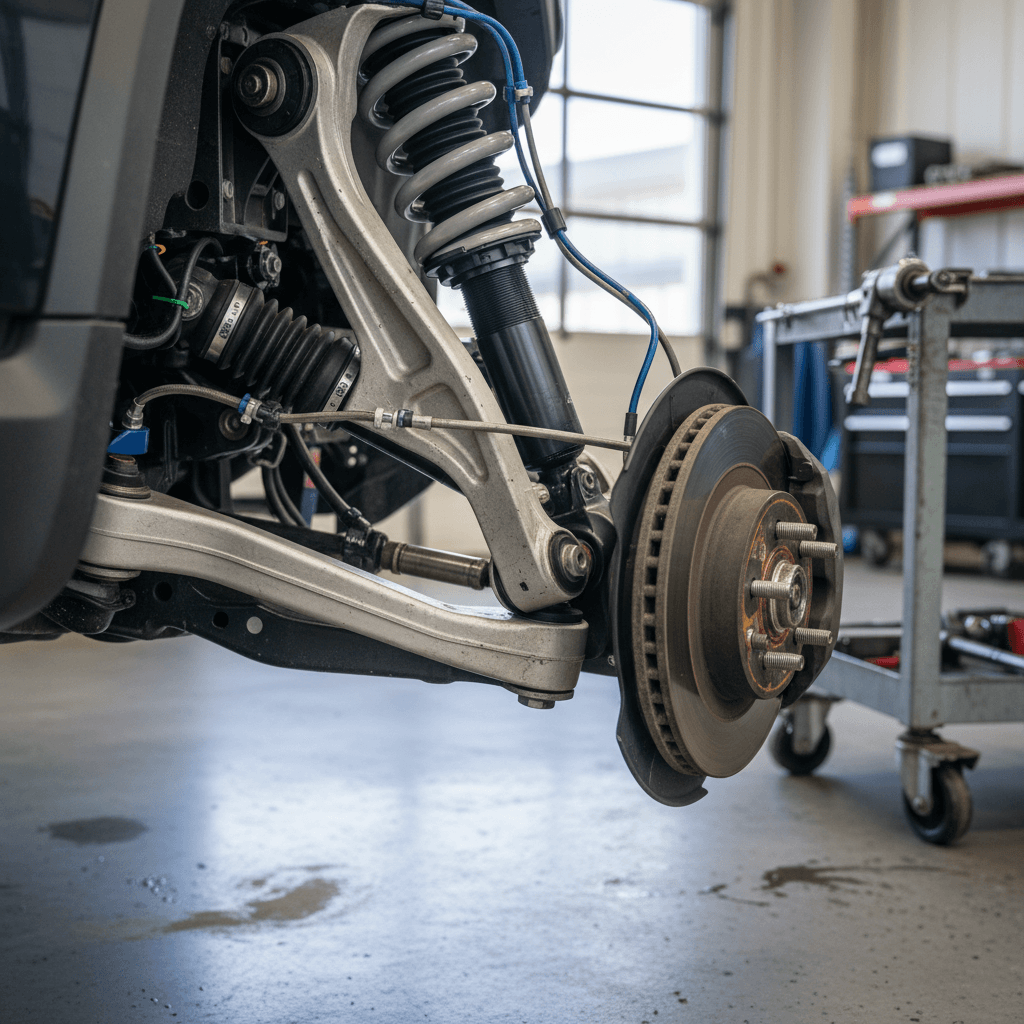
How the Rivian R1T suspension works
- Air springs and adaptive dampers: Instead of coil springs, the R1T rides on air bags that can raise or lower the truck. Electronically controlled dampers (struts/shocks) adjust firmness based on drive mode and conditions.
- Multiple ride heights and modes: All‑Purpose, Sport, Off‑Road, and other modes change ride height, damper firmness, and stability control. High off-road settings increase suspension travel and stress on joints and half shafts.
- Subframes, control arms, and toe links: Like other modern trucks, the R1T uses front and rear subframes with aluminum control arms, ball joints, sway bars, and toe links to manage alignment and wheel motion.
- Computer control: Ride height sensors, valves, and a central manifold move air around the system. Software updates can change how the suspension feels, and, occasionally, can introduce new quirks that require further updates or service.
Tip for owners
Common Rivian R1T suspension problems
Because Rivian continually updates hardware (Gen 1 vs. Gen 2 suspension) and software, not every truck behaves the same. But certain issues show up again and again in owner reports and service histories. Here are the big buckets, roughly ordered from most common to most serious.
Most-reported Rivian R1T suspension complaints
From everyday clunks to rare failures
Clunks & rattles over bumps
Squeaks & chirps
Air system faults or collapse
- Front-end clunk in low-speed turns or over bumps: Often traced to front control arms, jounce bumpers/lines, or half shafts. Rivian has revised some parts and procedures over time to address these noises.
- General "normal" noise: Rivian service has told many owners that some clunks and rattles are characteristic of the design, especially with hard-mounted subframes and air struts. That means not every noise equals a defect, but persistent or worsening sounds deserve documentation and inspection.
- Gen 2 damper rattle: Some newer Gen 2 trucks use a revised damper/strut design that can make a light rattle over small bumps even on very low‑mileage vehicles. Service centers have sometimes labeled this "normal" behavior tied to the new damper fluid design.
- Clicking or ticking when turning: A rhythmic tick‑tick when accelerating with the steering turned can indicate half‑shaft or CV joint concerns. In some cases, owners have had half shafts or related components replaced under warranty.
- Air suspension warnings and harsh ride: A truck that suddenly feels much harsher, won’t change ride height, or shows an air-suspension overheat or fault message may have a leak, a stuck valve, or internal damage in the manifold or struts. In rare cases, owners have reported a corner effectively collapsing or bottoming out.
Noise vs. real failure
R1T suspension recalls and service campaigns
As of early 2026, most Rivian recalls have focused on software and specific hardware issues, but there is one recent campaign that R1T shoppers should pay close attention to because it involves the rear suspension.
Recent Rivian R1 suspension-related recall snapshot
In early 2026, Rivian announced a recall for roughly 19,600 R1T and R1S models from model years 2022–2025 that had a specific rear suspension service performed. An outdated service procedure may have led to improper reassembly of the rear toe link joint. If the toe link separates, the rear wheel can toe out dramatically and increase the risk of a crash.
Rivian’s fix is to inspect and replace affected parts using an updated procedure. This is performed at no cost to owners, and notification letters are scheduled to go out starting February 24, 2026. If you’re shopping used, verify whether the truck had any rear suspension work done and whether this recall has been completed once VIN lookups are active.
Other R1T recalls are mostly software
Warning signs your R1T suspension needs attention
Electric trucks are quiet, which makes suspension noises much more obvious than in a gas pickup. Use that silence to your advantage, your ears often give you the first clue that something’s changing.
Pay attention to these R1T suspension red flags
New or worsening clunks over bumps
A single light thump that’s always been there may be normal for your truck; a <strong>new, sharper clunk</strong> over speed bumps or driveway entries deserves a service ticket and test drive with a technician.
Persistent creaks, squeaks, or chirps
Creaks when you start, stop, or turn the wheel at low speed can indicate <strong>dried bushings, hardware movement, or half‑shaft issues</strong>. Some may be cosmetic; some are early signs of wear.
Clicking when turning and accelerating
A rhythmic click when accelerating out of a turn can point to <strong>CV joints or half shafts</strong>. On any heavy, high‑torque EV truck, this is something to address while under warranty.
Truck sits unevenly or changes height slowly
If one corner looks low, the truck takes an unusually long time to raise/lower, or you see repeated <strong>air-suspension warnings</strong>, there may be a leak or valve/manifold issue.
Steering pull or instability
If the truck suddenly pulls to one side, feels like it "wanders," or the steering wheel is off-center after a bump or pothole, get the <strong>alignment and suspension hardware</strong> checked immediately.
Dashboard alerts or ride‑height faults
Any <strong>suspension, ride‑height, or chassis warning</strong> should be treated seriously, especially if paired with harsh ride, bottoming-out, or unusual body motions.
When to stop driving
Diagnosing and fixing R1T suspension issues
Pinpointing the exact source of a noise on any modern truck is tricky, and the R1T is no exception. The key is to document symptoms clearly and work methodically with a service center, Rivian’s or a qualified EV‑savvy shop.
Step 1: Capture when and how it happens
- Note the drive mode and ride height (All‑Purpose, Sport, Off‑Road, etc.).
- Record speed, steering input, and road type when the noise appears.
- Use your phone to record audio or video of the sound if you can do it safely.
- Check for any simultaneous dash warnings or changes in ride height.
Step 2: Simple owner checks
- Make sure the noise isn’t from cargo areas (gear tunnel, under‑hood storage, bed accessories) or loose panels.
- Visually inspect for obvious leaks, damaged boots, or a sagging corner.
- Cycle through ride heights and modes in a safe area to see if the behavior changes.
- Check tire pressures and look for irregular wear that might indicate alignment or toe‑link problems.
If the noise persists after basic checks, it’s time for professional diagnosis. On the R1T, that often involves listening tests with a technician, inspection of control arms, half shafts, bushings, and mounts, and, when needed, pressure and leak checks on the air suspension system.
Typical R1T suspension complaints and likely fixes
Every truck is different, but these patterns show up frequently in owner reports and service documentation.
| Symptom | Most likely area | Typical resolution | Urgency |
|---|---|---|---|
| Light clunk over speed bumps since new | Normal design / subframe noise | Document and monitor; compare to another R1T | Low |
| New, sharper clunk in front over bumps | Control arms, jounce components, bushings | Inspect and replace worn components; alignment check | Medium |
| Clicking when accelerating with wheel turned | Front half shafts or CV joints | Inspect, lubricate or replace affected half shafts | Medium |
| Creaks or bird‑chirp at low speeds | Bushings, half shafts, or damper internals | Lubrication, hardware updates, or damper replacement | Medium |
| Truck sags at one corner or won’t change height | Air strut, line, or manifold/valve issue | Leak test, repair/replace affected parts; recalibrate | High |
| Sudden instability or severe rear toe change | Rear toe link or control-arm issue | Immediate tow to service; replace affected hardware | Critical |
Use this as a directional guide, not a substitute for professional diagnosis.
Good news for owners
Costs, warranty, and extended coverage
The R1T’s factory warranty covers most suspension components for the first years of ownership, but out‑of‑warranty repairs, especially involving air struts or major hardware, can get expensive. That’s why shopping carefully for a used R1T (and understanding its service history) is so important.
How suspension coverage typically breaks down
Always confirm exact terms for the truck you’re considering
Within factory warranty
- Most noises, failed struts, or leaking lines are covered if they’re judged to be defects, not abuse.
- Recall-related rear toe-link repairs are performed at no cost.
- Rivian can often provide mobile or service-center support and, in some cases, loaner vehicles.
Out of warranty
- Air strut or damper replacement can run into the four-figure range per corner at retail rates.
- Control-arm, half-shaft, and bushing work is typically less, but can still add up with alignment and labor.
- A high-quality extended warranty or service contract that covers suspension and air-suspension components can be worth considering on a used R1T.
Budgeting rule of thumb
Used Rivian R1T buying guide: suspension checklist
If you’re looking at a used Rivian R1T, you don’t need to be a suspension engineer, but you do need a plan. A short, focused test drive plus a careful visual inspection will tell you most of what you need to know.
R1T suspension checklist for test drives
1. Start in All‑Purpose at standard height
Use the default mode and height on relatively smooth pavement first. Listen for <strong>baseline noises</strong> and how the truck reacts to small bumps.
2. Drive over speed bumps at low speed
Pay attention to <strong>front and rear clunks</strong>. A muted thump may be normal; sharp metallic hits, double clunks, or a sense of bottoming out are not.
3. Make tight, slow turns in a parking lot
With the windows cracked, listen for <strong>clicking or knocking</strong> as you accelerate out of tight turns. That can hint at half‑shaft or CV joint issues.
4. Cycle ride heights and modes
Raise and lower the truck from the center screen where allowed. The R1T should <strong>respond promptly and evenly</strong> without warnings, sagging, or hissing from one corner.
5. Check stance and tire wear
Park on level ground and visually confirm the <strong>truck sits level</strong>. Look for abnormal tire wear on one wheel that might suggest alignment or toe‑link problems.
6. Ask for service records and recall status
Request documentation for any <strong>suspension repairs, software updates, and recall work</strong>, especially involving rear toe links or air-suspension components.
Pro tip for private-party purchases
How Recharged evaluates R1T suspension and battery health
Because Recharged focuses on used electric vehicles, Rivian R1T and R1S models get a two‑track inspection: mechanical condition, including suspension, and high‑voltage health. That’s wrapped into every vehicle’s Recharged Score Report, so you aren’t left guessing about how the truck was used or maintained.
Suspension & chassis checks
- Road test to listen for clunks, rattles, and clicks in multiple drive modes and heights.
- Visual inspection of control arms, bushings, toe links, half shafts, and air struts for leaks or damage.
- Verification of ride-height function, warning-light history, and alignment where appropriate.
- Confirmation of open or completed recalls, including the 2026 rear suspension service recall when applicable.
Battery & ownership transparency
- Recharged’s battery diagnostics feed into a Recharged Score, giving you a clear picture of usable range and pack health.
- Pricing is benchmarked against the broader used EV market, including known issues like suspension updates, so you aren’t overpaying.
- You can shop fully online, arrange financing, trade‑in, or consignment, and get nationwide delivery without dealership games.
Why this matters for Rivian shoppers
FAQ: Rivian R1T suspension problems
Frequently asked questions about R1T suspension issues
Bottom line: are Rivian R1T suspension problems a dealbreaker?
The Rivian R1T’s suspension is part of what makes it so appealing, a quiet electric truck that can slam out of corners in Sport mode one day and crawl a rocky trail the next. That versatility comes with complexity, and complex systems sometimes make noises drivers aren’t used to from traditional pickups. A fair number of owners have documented clunks, clicks, and rattles, but widespread structural failures are not the norm, and Rivian has begun to address the more serious issues through updated parts, procedures, and recalls.
If you’re considering a used R1T, suspension concerns shouldn’t automatically scare you away, they should motivate you to buy intelligently. Listen carefully on the test drive, confirm recall status, and insist on clear documentation of suspension and alignment work. Buying through Recharged adds another layer of confidence, with independent suspension checks, verified battery health via the Recharged Score, fair market pricing, and EV‑specialist support from the first click through delivery. That’s how you enjoy everything the R1T can do, without letting suspension worries drive the experience.