If you’re driving, or thinking about buying, an electric car in Colorado, the rules around inspections can be confusing. You’ll hear that EVs are exempt from emissions testing, but you’ll also run into VIN inspections, roadworthiness checks, and change‑of‑ownership requirements. This guide breaks down the actual Colorado electric car inspection requirements so you know exactly what you do (and don’t) have to do as an EV owner.
Quick answer
Overview: How Colorado Treats Electric Car Inspections
Colorado’s rules are written primarily around gasoline and diesel vehicles, but they carve out clear exceptions for all‑electric vehicles (battery electric vehicles, or BEVs). In practice, there are three different kinds of inspections you may encounter as an EV owner:
- Emissions inspections – Required for many gasoline and diesel vehicles; battery electric vehicles are specifically listed as not needing a test.
- VIN verification (Form DR 2698) – A simple identity check that the vehicle identification number on the car matches its paperwork, often required when you bring a vehicle in from out of state.
- Certified VIN Inspection – A more detailed inspection reserved for vehicles with title issues (salvage, missing VIN, assembled vehicles, etc.).
Understanding which of these applies to your EV depends on where the car came from, how it’s titled, and whether you’re buying, selling, or just renewing registration. Let’s start with emissions, since that’s where most drivers have questions.
Do Electric Cars Need Emissions Tests in Colorado?
Colorado’s Department of Revenue lists “All‑Electric Vehicles and Street Rods – No test needed” in its gas emissions requirements. In plain language: if your car is powered solely by a battery and electric motor, no gasoline engine at all, it is exempt from periodic emissions testing, even in the Denver–Front Range emissions program area.
Good news for EV owners
That said, the emissions program still matters to you indirectly. For example, many VIN verifications for all fuel types, including EVs, can be performed at emissions testing locations, and the same anti‑tampering rules that apply to gas vehicles also prohibit disabling emissions‑related equipment on plug‑in hybrids.
Hybrids and plug‑in hybrids are different
When Electric Cars Still Need Inspections in Colorado
Even though your electric car is exempt from emissions testing, there are several situations where you’ll still deal with an inspection of some kind. The most common are related to registration, title issues, and law‑enforcement safety checks.
Common Inspection Scenarios for Colorado EV Owners
When an electric car may still have to be inspected
Registering an out‑of‑state EV
Title or branding issues
Roadworthiness concerns
Anti‑tampering laws still apply
VIN Verification Rules for Electric Vehicles
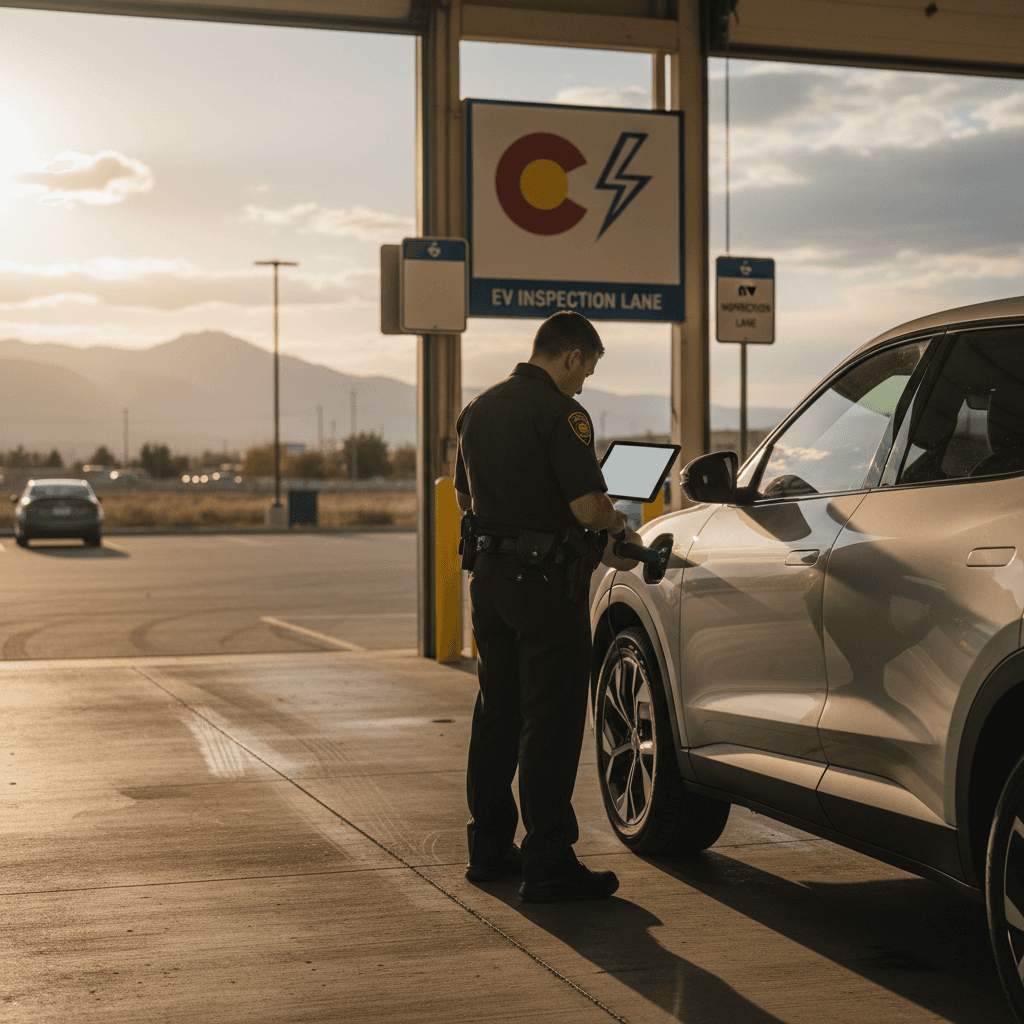
A VIN verification is exactly what it sounds like: a quick physical check that the vehicle identification number stamped on the car matches the number on its title or registration. Colorado uses Form DR 2698 for this, and the inspection can be performed by:
- A Colorado licensed auto dealer
- A Colorado licensed emissions inspection station (such as Air Care Colorado)
- A Colorado law enforcement officer
For many new vehicles, VIN verification is no longer required if you have a Manufacturer’s Certificate of Origin (MSO) or qualifying title paperwork. But VIN verification often comes into play for EVs when:
- You’re moving to Colorado and bringing an EV titled in another state, and your paperwork doesn’t meet the MSO exception.
- You bought a used EV from out of state and are registering it in Colorado for the first time.
- There are small mismatches or questions about the VIN that the DMV wants resolved before issuing a new title.
Where VIN verification fits in the process
Colorado VIN Inspection Fast Facts
Safety and Roadworthiness Checks for EVs
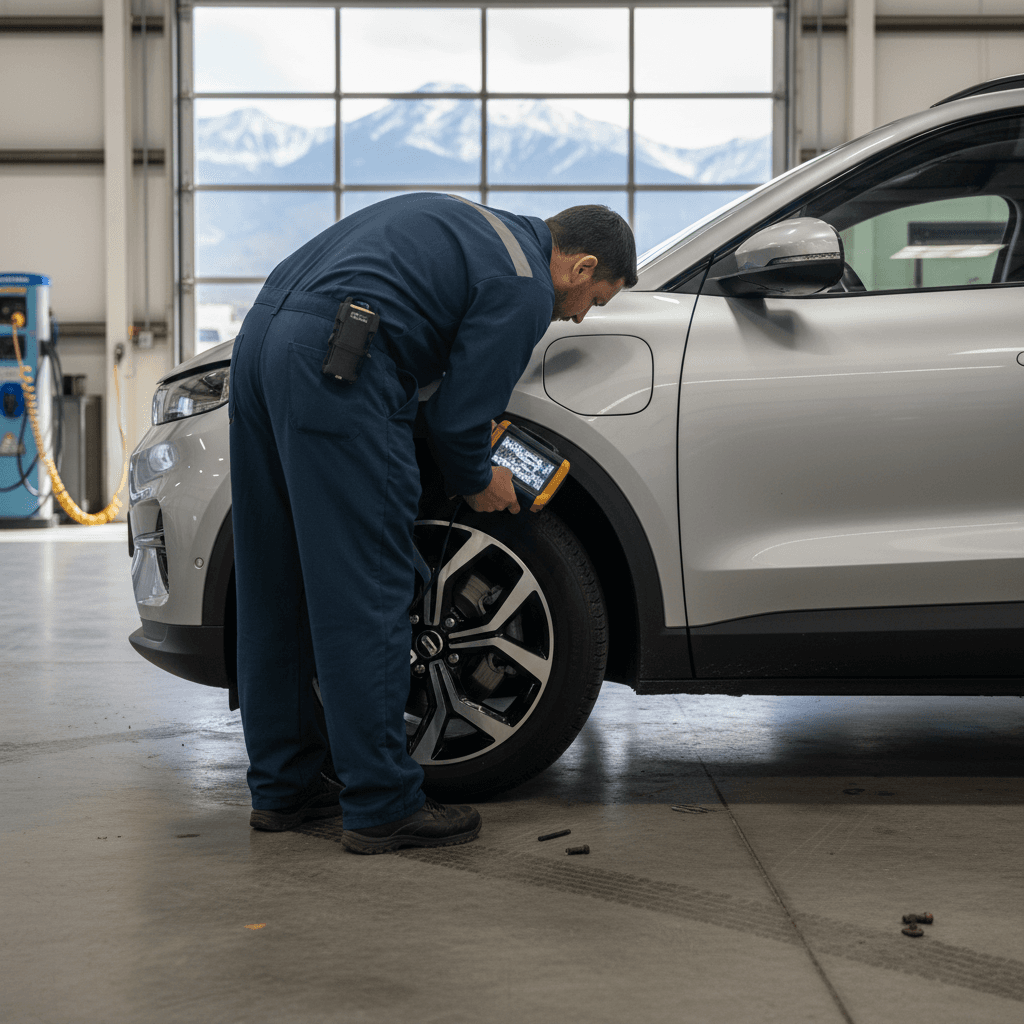
Colorado doesn’t have a separate annual mechanical inspection program like some states, but roadworthiness is still part of the picture. When you go through a Certified VIN Inspection or some law‑enforcement inspections, the officer or inspector is expected to confirm that the vehicle appears safe to operate on public roads.
That doesn’t mean they’re performing a deep‑dive EV health report, but they’re looking at basics like:
- Brakes and steering that appear to function correctly
- No obvious frame or structural damage that would make the car unsafe
- Working headlights, taillights, and turn signals
- Legal tires with sufficient tread and no severe damage
- No missing critical body parts that would expose occupants in a crash
Why this matters when you buy used
Buying or Selling a Used EV in Colorado
For gasoline vehicles in Colorado’s emissions area, a passing emissions certificate is typically required at change of ownership, and the seller is responsible for providing it. For all‑electric vehicles, that requirement drops away because no emissions test is required, but that doesn’t mean you should skip inspections altogether.
As a buyer
- Confirm that the EV is a pure battery electric so you’re not surprised by future emissions requirements if it’s actually a PHEV.
- Ask for a copy of the current Colorado title or out‑of‑state title and check for salvage or rebuilt branding.
- Request a battery health report or have the car evaluated by an EV‑focused service like Recharged that can measure usable battery capacity.
- Budget time for any required VIN verification if the vehicle is coming from out of state.
As a seller
- Be clear in your listing that the vehicle is an all‑electric EV and exempt from emissions testing under current rules.
- Disclose any salvage, rebuilt, or flood history; those will trigger additional inspection requirements.
- Have records ready, service history, recall repairs, and any third‑party battery tests.
- If you trade the vehicle to a dealer or sell through a marketplace like Recharged, many of the paperwork and inspection steps can be handled for you.
How a Recharged Score helps in Colorado
Bringing an Electric Car Into Colorado
If you’re relocating to Colorado with an electric car, your main questions usually boil down to two things: “Do I need an emissions test?” and “Will I need a VIN inspection?” For a pure EV, the emissions answer is simple: no test is needed. VIN requirements are a little more nuanced.
Steps if You’re Moving to Colorado With an EV
1. Confirm your vehicle type
Verify that your car is a <strong>battery electric vehicle</strong> (no gasoline engine). Plug‑in hybrids play by different emissions rules in Front Range counties.
2. Gather your current title and paperwork
Have your out‑of‑state title, registration, and loan documents (if applicable) ready. If your title traces directly back to a Manufacturer’s Certificate of Origin (MSO), you may be exempt from VIN verification.
3. Ask your county DMV about VIN verification
Contact your county motor vehicle office or check their website. Explain that you’re bringing an all‑electric vehicle into Colorado and ask if a <strong>DR 2698 VIN verification</strong> is required for your situation.
4. Schedule VIN verification if needed
If required, schedule the VIN verification through a licensed dealer, emissions station, or law enforcement. For unusual title situations, they may refer you to a <strong>Certified VIN Inspector</strong> through the Colorado State Patrol.
5. Register your EV and apply for plates
Bring your completed VIN form (if applicable), title, proof of insurance, and ID to your county DMV. Emissions paperwork won’t be necessary for an all‑electric vehicle.
You can get inspected in any county
Front Range vs. Other Counties: What Changes for EVs?
Colorado’s emissions testing program focuses on the Denver–Front Range area, including parts of Adams, Arapahoe, Boulder, Broomfield, Denver, Douglas, Jefferson, Larimer, and Weld counties. Gasoline vehicles in these counties often need periodic emissions tests and change‑of‑ownership tests, but again, all‑electric vehicles are exempt.
How Location Affects Inspection Requirements
Where you live matters a lot if you drive a gasoline car, but much less if you drive a pure EV.
| Vehicle type | Region | Routine emissions test? | Special notes |
|---|---|---|---|
| All‑electric EV (BEV) | Front Range emissions area | No | No periodic emissions test; may still need VIN or Certified VIN Inspection in special cases. |
| All‑electric EV (BEV) | Non‑emissions counties | No | Same as Front Range, no emissions testing requirement for BEVs. |
| Hybrid / Plug‑in Hybrid | Front Range emissions area | Usually yes | Subject to emissions inspections on the gasoline side of the powertrain. |
| Gasoline or diesel | Front Range emissions area | Yes | Must follow biennial or annual testing schedules and change‑of‑ownership rules. |
Remember: these rules can change over time, so confirm details with your local county DMV when you register or renew.
Always double‑check before renewal
How Recharged Simplifies Used EV Inspections
State inspections, VIN checks, Certified VIN Inspections, and emissions tests, exist to protect the public and the title system, not to guarantee that a specific used EV is a great purchase. That’s where a specialized EV marketplace like Recharged comes in.
What You Get With a Recharged Used EV
Beyond the minimum Colorado inspection requirements
Recharged Score battery health
Transparent history & pricing
Financing, trade‑ins & delivery
If you’re considering an EV with a prior accident, out‑of‑state history, or complicated title, working with Recharged can help you avoid surprises that a simple VIN inspection won’t catch, especially around battery life and high‑voltage safety.
Checklist: Registering an Electric Car in Colorado
Colorado EV Registration Checklist
Confirm your EV qualifies as all‑electric
Check your owner’s manual or manufacturer site to make sure your vehicle is a <strong>battery electric vehicle</strong>, not a plug‑in hybrid, if you’re expecting to skip emissions testing.
Collect title, ID, and insurance
Bring your current <strong>title or Manufacturer’s Certificate of Origin</strong>, government‑issued ID, and proof of Colorado‑compliant insurance to the DMV.
Ask about VIN verification
Before you go, call or check your county’s DMV site to see if they require a <strong>DR 2698 VIN verification</strong> for your registration scenario.
Handle any VIN or Certified VIN Inspections
If required, schedule a VIN verification or Certified VIN Inspection. Make sure the inspector fills out all fields clearly so the DMV can process your title without delays.
Register and get plates
Submit your documents in person (or by mail where allowed). For an all‑electric EV, you shouldn’t be asked for an emissions certificate under current rules.
Document battery health for resale value
Even though the state doesn’t require it, getting a <strong>battery health report</strong>, for example via a Recharged Score, can protect your investment and boost resale later.
FAQ: Colorado Electric Car Inspection Requirements
Frequently Asked Questions About Colorado EV Inspections
Key Takeaways for Colorado EV Drivers
Owning an electric car in Colorado is simpler than many drivers expect. Battery electric vehicles are exempt from routine emissions testing, and while you may still encounter VIN verifications or Certified VIN Inspections, those are primarily about identity and paperwork, not about battery health or long‑term reliability.
As you buy, sell, or move with an EV in Colorado, your best strategy is to separate legal requirements from smart due diligence. The DMV and Colorado State Patrol make sure the car is titled correctly and safe to drive; a specialized partner like Recharged helps you understand the real condition of the vehicle, especially the battery. Combine both, and you’ll be well‑positioned to enjoy the benefits of electric driving in Colorado with fewer surprises and more confidence.