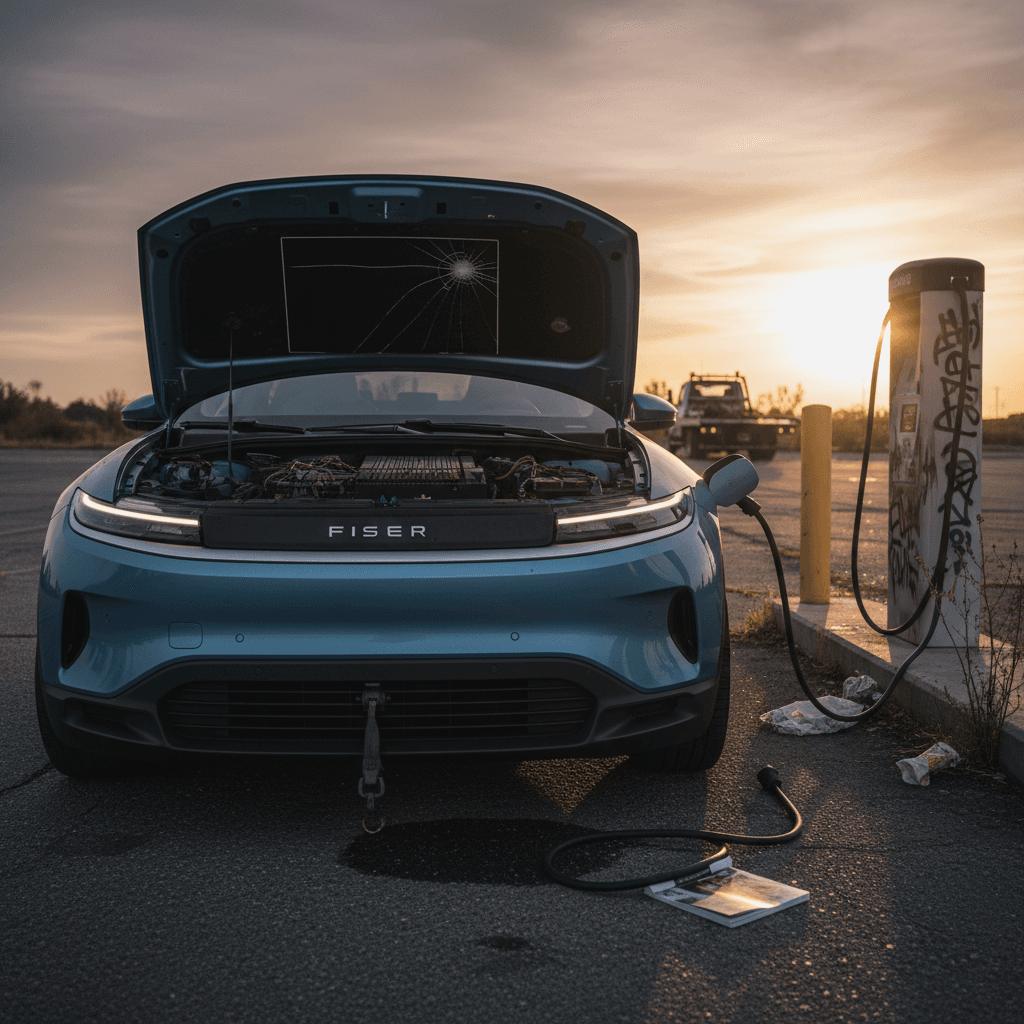
If you’ve seen the Fisker Ocean’s slick design, long-range specs, and bargain used prices, it’s natural to wonder whether you’re looking at a hidden gem, or a rolling headache. The phrase “Fisker Ocean problems why avoid” has exploded in search for a reason: this is one of the clearest examples of how an EV can look fantastic on paper and still be a terrible bet in your driveway.
Quick take
Should you avoid the Fisker Ocean in 2026?
Based on everything we know as of early 2026, owner reports, recall history, safety investigations, and the fallout from Fisker’s 2024 bankruptcy, the cautious answer is: yes, most buyers should avoid the Fisker Ocean. You’re not just buying a used EV with a few quirks; you’re buying an orphaned vehicle whose maker is gone, whose software remains buggy, and whose long‑term service and parts situation is uncertain at best.
That doesn’t mean every Ocean is undrivable. Some owners are happy, and there’s a passionate grassroots community trying to keep these SUVs alive. But from a risk–reward perspective, especially if this is your first EV, there are many other used electric SUVs that deliver similar range and performance without the same level of drama.
Fisker Ocean risk snapshot
The biggest Fisker Ocean problems at a glance
Why many experts advise avoiding the Fisker Ocean
Seven intertwined issues that go way beyond typical new‑car teething pains
1. Unreliable software
2. Safety investigations
3. Repeated recalls
4. Bankruptcy fallout
5. Parts & service gaps
6. Collapsing resale value
7. Murky long-term future
Not just “early adopter issues”
Software bugs, power loss, and safety investigations
Modern EVs are software on wheels, and that’s where many of the Fisker Ocean’s most troubling problems have shown up. Internal documents and owner complaints from the early launch period describe incidents of sudden power loss while driving, sometimes at highway speeds, with the vehicle entering a “Safe Mode” that left drivers scrambling to limp to the shoulder.
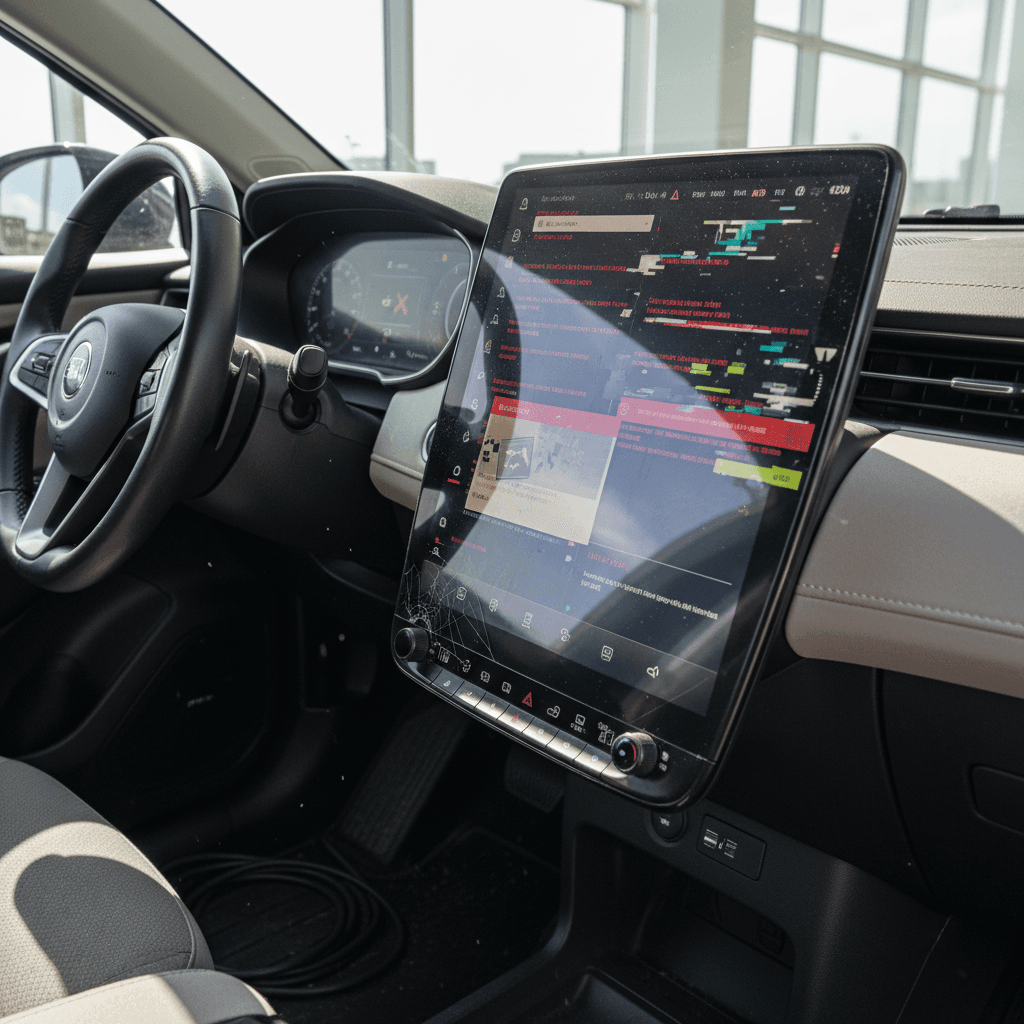
Beyond power loss, owners have reported software problems with key systems: glitchy key fobs that leave drivers locked inside or outside the vehicle; center screens freezing or rebooting; driver‑assistance features behaving unpredictably; and phantom warnings or mode changes. Updates have fixed some issues, but the pattern is clear: the Ocean shipped before its software was truly ready, and it never fully caught up before Fisker ran out of road.
High stakes when software fails
- Powertrain control: Software governs how the inverter, motors, and battery interact. A bug here isn’t just annoying, it can mean the car won’t move, or suddenly loses power mid‑drive.
- Brake blending: EVs mix regen and friction braking using software. If the balance is off, stopping distances can change in ways drivers don’t expect.
- Driver info: If the cluster or center display freezes, you may lose speed, gear, and warning information right when you need it.
Why the Ocean is riskier than most
- Small fleet, thin resources: A startup with limited engineering and testing bandwidth simply can’t iterate as quickly as established automakers.
- Bankruptcy stops the clock: Once the company filed for Chapter 11, over‑the‑air updates and structured field fixes became much harder to deliver.
- Owner workarounds: The fact that volunteer groups are reverse‑engineering functions should be a signal: your basic car functions depend on a fragile patchwork, not a robust OEM support system.
Braking and regenerative brake issues
The Ocean has been the subject of multiple concerns around braking behavior. Complaints filed with U.S. regulators described situations where drivers experienced partial loss of braking on slick or uneven surfaces, or inconsistent hand‑off between regenerative and friction braking that made it hard to predict stopping distance.
Fisker responded with software updates aimed at smoothing out brake feel and improving behavior over bumps, and later rolled out a formal recall campaign requiring a brake software update on all affected models. That’s standard practice, except that, post‑bankruptcy, the normal pattern of recall, dealer visit, and documented fix has broken down.
Why brake issues are a deal‑breaker
Fisker’s bankruptcy: what it really means for owners
Fisker filed for Chapter 11 bankruptcy protection in 2024 after struggling with cash burn, quality problems, and a delayed go‑to‑market plan. For existing owners, that shifted the Ocean overnight from a quirky new EV to what the industry calls an orphaned vehicle, a model whose manufacturer, and often its dealer and parts network, no longer function in a normal way.
In the wake of the filing, a remarkable community of owners formed independent groups to keep the Ocean usable. They’ve negotiated temporary access to cloud services, built third‑party apps to restore basic remote functions, and even started sourcing parts and reverse‑engineering software. It’s inspiring, but it’s also a red flag: your basic mobility shouldn’t depend on volunteer reverse‑engineering.
- Warranty coverage is uncertain and in many cases effectively gone, aside from whatever limited obligations survive the bankruptcy process.
- Official software updates are limited; long‑term over‑the‑air support is not guaranteed.
- There is no traditional nationwide dealer network invested in keeping these vehicles on the road for a decade or more.
- Any future safety defect may be much harder, or impossible, to address through a normal recall process.
Repairs, parts, and service are an uphill battle
Even before the bankruptcy, Ocean owners reported long waits and confusion around service: mobile techs who couldn’t get parts, service tickets that lingered unresolved, and local shops that simply didn’t know what to do with a low‑volume, software‑heavy EV from a tiny brand.
Post‑bankruptcy, those issues have intensified. Parts inventories are scattered, some vehicles have been stranded at shops or temporary depots, and independent mechanics often lack the specialized tools or documentation to safely work on high‑voltage systems in a Fisker Ocean. A few third‑party operations are stepping in, but access is patchy and tends to cluster near major coastal metros.
How this compares to mainstream used EVs
Recalls, owner costs, and legal gray areas
Most of the Ocean’s early recalls were software‑centric: fixing power‑loss modes, instrument‑cluster compliance, and brake‑blending behavior. That’s not unusual in itself, modern cars are recall‑driven development programs. The difference is who pays and who coordinates when the manufacturer is in financial distress.
By late 2024, Fisker was already warning owners it might only be able to cover parts for certain recall repairs, not labor. That’s the opposite of how recalls normally work, where the automaker foots the full bill. In practice, this left some owners stuck: they had a safety‑related recall notice, but would need to pay out of pocket for a fix to a problem they didn’t cause.
The recall safety net is fraying
Resale value: why the Ocean is a financial landmine
On the surface, collapsing prices make the Fisker Ocean look tempting. Nearly new examples that stickered close to luxury‑EV money have surfaced at auction and on dealer lots for a fraction of their original price. Some U.K. auction listings in 2024 showed brand‑new Oceans expected to fetch only a small slice of their launch MSRPs.
But that “deal” cuts both ways. Those price drops reflect a market that doesn’t trust the product or its future. Dealers struggle to move Oceans even at steep discounts. Online listings linger. Owners interviewed by financial outlets have described the purchase as one of the worst financial decisions they’ve ever made.
Key financial risks if you buy a Fisker Ocean now
1. Extreme depreciation
Values have already fallen dramatically, yet there’s no clear floor. If you need to sell in a year or two, you may find very few buyers and steep losses.
2. Limited lending and insurance appetite
Some lenders and insurers shy away from orphaned vehicles or price them conservatively. You may face higher rates, restrictions, or outright denials compared with mainstream EVs.
3. Unknown long‑term parts costs
If third‑party suppliers end up reverse‑engineering key components, prices could be unpredictable. A single out‑of‑warranty failure might wipe out any savings from buying cheap.
4. Higher risk of being “stuck”
In the worst case, major failure, no parts, no buyer, you could be left with a stranded asset: a vehicle you can’t drive, can’t fix, and can’t sell for meaningful money.
Who might still consider a Fisker Ocean?
Despite everything above, there are a few narrow cases where a Fisker Ocean could make sense, but they’re the exception, not the rule. Think of these as edge cases for high‑risk, high‑tolerance buyers, not a green light for typical used‑car shoppers.
When an Ocean might be viable
- You’re technically savvy and comfortable troubleshooting software, working with high‑voltage systems by proxy, and collaborating with DIY owner groups.
- You have backup transportation, so a breakdown or long parts delay won’t derail your life.
- The purchase price is extremely low, low enough that you could walk away if the vehicle became unrepairable.
- You live near a cluster of Ocean owners and emerging independent support hubs, increasing your odds of finding help.
When you should walk away
- This is your only vehicle or your household’s primary transportation.
- You’re looking for a low‑stress, low‑maintenance EV experience.
- You’re stretching financially to buy, meaning a major repair or valuation shock would hurt.
- You’re not interested in joining online forums, Discords, or volunteer repair networks just to keep your car reliable.
Rule of thumb
Smarter used EV alternatives to the Fisker Ocean
The good news is that you don’t need to tolerate this level of risk to get a capable, reasonably priced electric SUV or crossover. The used EV market in 2026 offers plenty of models with better reliability records, active manufacturers, and normal recall support.
Used EVs that offer Ocean‑like benefits without Ocean‑level risk
These are the kinds of models we typically recommend to shoppers who were initially drawn to the Fisker Ocean.
Hyundai Ioniq 5 / Kia EV6
Tesla Model Y
Ford Mustang Mach‑E
Volkswagen ID.4
How to cross‑shop effectively
How Recharged helps you avoid a bad EV purchase
At Recharged, our entire model is built around avoiding precisely this kind of situation: a vehicle whose paper specs look great but whose real‑world ownership story is a minefield. We focus on used EVs from manufacturers with active support networks, clear recall processes, and strong parts availability.
- Every vehicle we list includes a Recharged Score Report with verified battery health, detailed range expectations, and market‑correct pricing.
- Our EV specialists can walk you through model‑by‑model trade‑offs if you’re currently considering a Fisker Ocean versus, say, an Ioniq 5 or Model Y.
- If you already own an Ocean and want out, we can help you value your trade‑in or explore an instant offer or consignment route into a more supportable EV.
- We offer nationwide delivery and a fully digital buying experience, backed by a physical Experience Center in Richmond, VA if you prefer to talk in person.
Fisker Ocean problems: FAQ
Common questions about Fisker Ocean problems and risks
Bottom line: why most shoppers should avoid the Ocean
The Fisker Ocean is a case study in how not to launch an electric vehicle. On paper, it promised range, style, and sustainability. In practice, it delivered a rare combination of software instability, safety concerns, financial collapse, and orphaned‑vehicle risk that you almost never see bundled into a single nameplate.
If you’re simply looking for a dependable, reasonably priced used EV, there is no compelling reason to accept those risks. The used market is full of alternatives that offer similar capability with far stronger support, clearer recall pathways, and much more predictable resale values.
Use the attention around “Fisker Ocean problems why avoid” as a reminder of what really matters when you buy an EV: support, serviceability, and transparency, not just range numbers and renderings. Whether you shop with Recharged or elsewhere, prioritize vehicles with strong backing from active manufacturers, and treat the Ocean, for most buyers, as an instructive cautionary tale rather than a bargain waiting to be seized.