If you’re thinking about your first EV, you’re probably bouncing between excitement and doubt. The idea of skipping gas stations is appealing; the questions about range, charging, and battery life are not. This guide is written to walk you through that jump, from curious driver to confident first-time EV owner, without the sales spin.
What this guide covers
Why Your First EV Feels Like a Big Deal
For more than a century, buying a car meant buying something with pistons and tailpipes. An EV feels different because it is different. The drivetrain is almost silent, maintenance is lighter, and energy comes from a wall instead of a pump. You’re not just changing cars, you’re changing habits: how you fuel, how you plan trips, even how you think about weather and range.
The emotional side of your first EV
Most new EV owners share the same mix of excitement and worry.
Excitement
You’re drawn to the instant torque, quiet drive, and the idea of skipping gas stations for good.
Uncertainty
You’re not sure how far you can really go on a charge, or what happens if you misjudge it.
Risk vs. reward
You want the savings and tech, but you don’t want to be the guinea pig that gets stuck with the wrong car.
If you’re on the fence…
A quick look back: the original “first EV”
Electric cars aren’t some shiny 2020s invention. The first electric vehicle dates back to the 1830s, when Scottish inventor Robert Anderson strapped primitive batteries and an electric motor to a carriage. It was crude, heavy, and impractical, but it proved the idea long before gasoline cars took over.
EV firsts that set the stage
Why the history lesson matters
Is an EV right for you right now?
Before you fall in love with a specific model, you need to answer a more basic question: does an EV fit your life today? A first EV is easiest to live with if your daily routine matches what electric cars already do well.
Quick fit check: are you EV-ready?
1. Daily miles under 60–80
Most affordable EVs comfortably cover a typical commute and errands. If your routine involves 150+ miles a day with no time to charge, your first EV might need a bigger battery, or a plug‑in hybrid instead.
2. Overnight parking with a plug
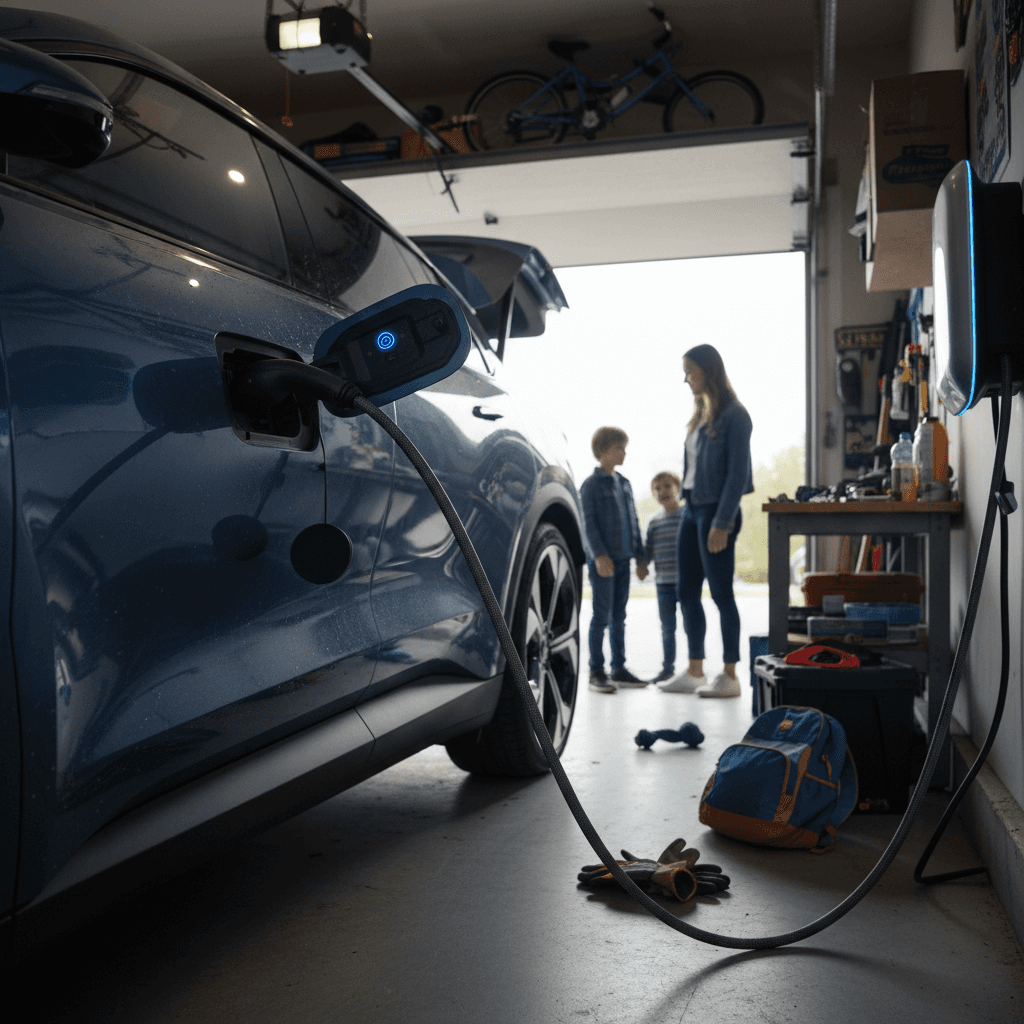
A driveway, garage, or assigned spot near an outlet makes EV life dramatically easier. You can start with a regular 120V outlet and upgrade to a 240V Level 2 charger later.
3. Public chargers on familiar routes
Open your favorite charging apps and look at stations near work, shopping, and your usual highway routes. Even if you plan to charge at home, backup options reduce anxiety.
4. Weather and terrain you understand
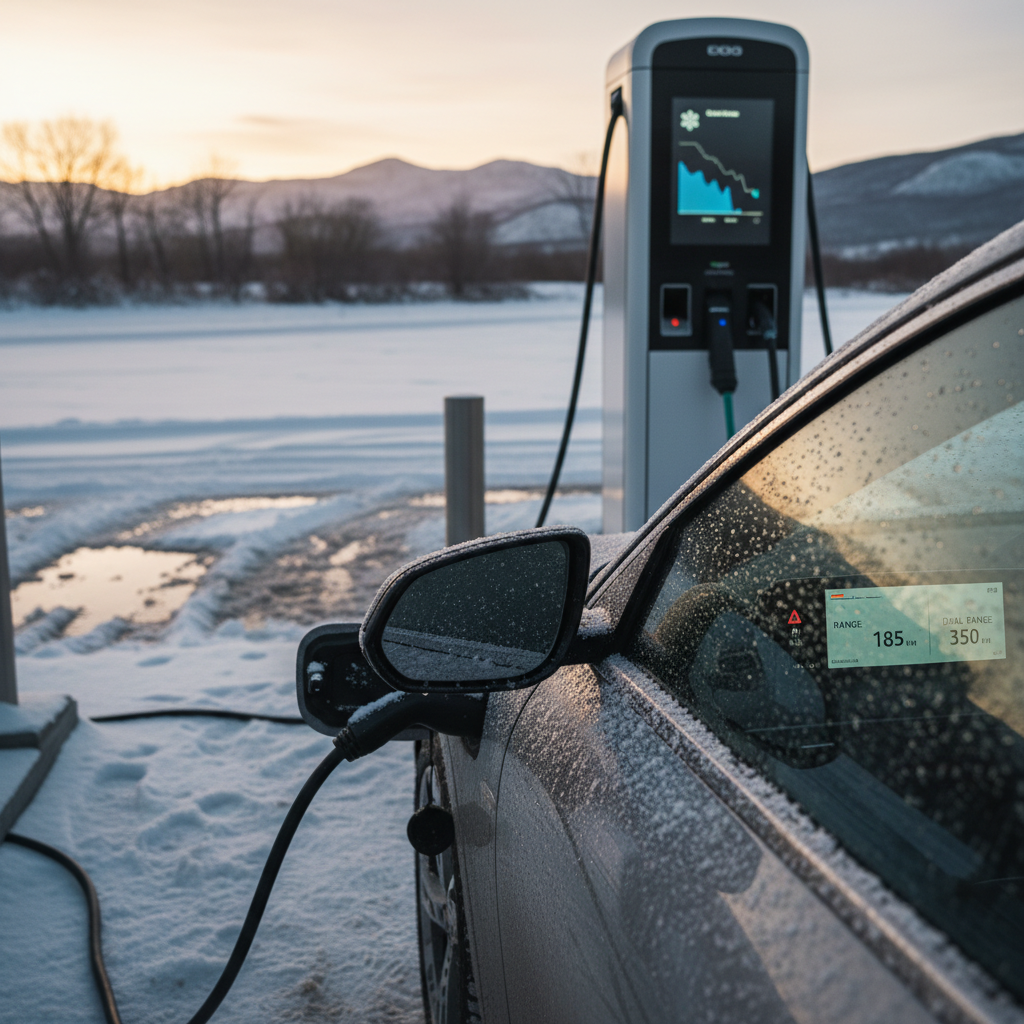
If you live in a region with harsh winters, steep grades, or very high speeds, you’ll want an extra range buffer and a car that manages cold‑weather range well.
5. Budget for a charging setup
Even a basic Level 2 charger plus any electrical work is an upfront cost you should factor into the purchase decision.
When an EV might not be your first car, yet
How to choose your first EV
Shopping for your first electric car is different from choosing another gas sedan or SUV. Horsepower and leather seats matter less than battery size, charging speed, and how honestly the range rating matches your life. The good news: once you know which specs to care about, the field narrows quickly.
Four key decisions for your first EV
Use these to filter the endless model lists down to a handful that make sense for you.
1. City runabout or road‑trip partner?
If most of your driving is local, a smaller‑battery EV can be cheaper and still plenty capable. If you regularly take 200–300 mile trips, look for higher range and faster DC fast‑charging speeds.
2. Commuter, couple, or family?
A compact hatchback may be perfect as a solo commuter’s first EV. Families might prefer a crossover or three‑row SUV with more cargo space and rear‑seat room.
3. Range you’ll actually use
Instead of chasing the biggest number on the window sticker, calculate your real needs: add your daily miles, then layer in 30–40% as a buffer for bad weather and battery aging.
4. How fast do you need to charge?
Home charging overnight smooths out most of the urgency. But if you’ll road‑trip frequently, prioritize models that can add 150–200 miles in ~30 minutes on a DC fast charger.
Core EV specs to understand for your first purchase
You don’t have to become an engineer; you just need to know which numbers matter and what they mean.
| Spec | What it tells you | What to look for in a first EV |
|---|---|---|
| Battery size (kWh) | Energy capacity, like fuel tank size | Enough for your daily needs plus 30–40% buffer |
| EPA range (miles) | Official estimate of how far you can go | Be realistic: assume 20–30% less in winter or at highway speeds |
| Onboard AC charger (kW) | How fast you charge at home/Level 2 | 7–11 kW is common and works well for overnight charging |
| DC fast‑charge peak (kW) | Maximum rate on road‑trip chargers | Faster is better if you travel often; 100+ kW is a comfortable target |
| Drive type (FWD/RWD/AWD) | Traction and handling feel | AWD can help in snow but may cost range and money |
| Heat pump | More efficient cabin heating in cold weather | Helpful in cold climates; not a must‑have in warm regions |
Focus on these specs when comparing your first EV candidates.
Shortlist smarter, not longer
Best used “first EV” picks to consider
The used EV market in 2025 is a sweet spot for first‑time buyers. Early adopters are trading up, prices have softened, and many models now have years of real‑world data behind them. Here are categories, not just nameplates, to focus on when you’re choosing your first electric car.
Good first‑EV categories (and examples)
Specific availability will depend on your local used market, but these are the types of EVs that tend to make forgiving first cars.
City‑friendly commuters
Compact hatchbacks and small crossovers with modest range but low running costs are great first EVs for urban or suburban duty.
Think: smaller Korean and Japanese models, or earlier‑generation European city EVs.
All‑rounder crossovers
Mid‑size crossovers with 220–300 miles of range, decent DC fast‑charging, and roomy cabins make excellent only‑car EVs.
Look for models praised for reliability and simple, intuitive tech.
Family‑ready three‑row SUVs
If you’re hauling kids, dogs, and camping gear, a three‑row EV SUV with flexible seating and strong charging can be a great first EV, especially as a used value.
Why used can be smarter for your first EV
Charging your first EV at home and on the road
The biggest unknown for most first‑time EV buyers isn’t the car, it’s the cord. How quickly will it charge at home? Will you be stuck waiting at public chargers? The reality is more boring (and better) than the horror stories: if you set things up right, charging fades into the background of your life.
Home charging: your new “gas station”
- Level 1 (120V): Adds only a few miles of range per hour, but can work if you drive very little and plug in every night.
- Level 2 (240V): Typically adds 20–40 miles of range per hour, enough to refill most batteries overnight.
- Smart scheduling: Many utilities offer cheaper off‑peak rates at night; most EVs let you set a charging schedule from the screen or app.
Public and DC fast charging
- Level 2 public: Found at workplaces, shopping centers, hotels, great for topping up while you do something else.
- DC fast charging: Highway‑focused stations that can add 150–200 miles in roughly 30 minutes on newer EVs.
- Plan around stops: Think of fast charging like a built‑in coffee and stretch break rather than a fuel stop you sprint through.
Do a “charging rehearsal” before you buy
What ownership really costs with your first EV
Sticker price is only part of the story. One of the pleasant surprises first‑time EV owners discover is how predictable and low‑drama ownership can be, especially if you buy used at today’s softened prices. But the cost profile is different from a gas car.
Where your money goes with an EV vs. gas
Your first EV shifts costs from the gas station to your electric bill, and trims back maintenance.
Energy cost: electricity vs. gas
On a per‑mile basis, home charging is often cheaper than gasoline, especially with off‑peak rates. Public fast charging can approach gas prices, but you’ll typically use it far less often.
Maintenance and repairs
No oil changes, no exhaust system, no timing belt. You’ll still pay for tires, brakes, cabin filters, and suspension, but there are far fewer moving parts.
Depreciation, your friend as a buyer
Early EVs depreciated quickly, which hurts the first owner but helps you. A carefully chosen used EV can deliver a lot of car for the money.
Upfront extras: charger & installation
Budget for a Level 2 charger and any electrical work. Think of it as pre‑paying some of your fueling costs up front, then enjoying low daily costs.
Don’t ignore insurance and tires
Battery health: the part every first‑EV buyer worries about
If you’re buying your first EV, you’ve probably heard horror stories about expensive battery replacements. The truth is more nuanced. EV batteries do lose capacity over time, but most modern packs are designed, and warrantied, to last many years. The trick is understanding the current health of the battery in the specific car you’re considering.
- Batteries typically lose range fastest in the first few years, then level off into a slow, steady decline.
- Heat, repeated fast‑charging, and always charging to 100% can accelerate wear.
- A healthy used EV will still have more range than you’ll use most days, if you chose the right model and know its real‑world battery health.
Why independent battery data matters
How Recharged makes buying your first EV less scary
Buying your first EV shouldn’t feel like guesswork. That’s why Recharged was built specifically around used electric vehicles, from the way cars are inspected to how battery health is measured and explained.
What Recharged does differently for first‑time EV buyers
You bring your questions; Recharged brings data, tools, and people who live and breathe EVs.
Recharged Score battery report
Every car on Recharged comes with a Recharged Score Report that includes verified battery health diagnostics, so you can see how that specific pack is performing compared with similar vehicles.
EV‑focused inspection
Beyond typical used‑car checks, Recharged looks at charging behavior, software status, and EV‑specific wear items so you’re not surprised after delivery.
EV specialists on call
From "Can this handle my commute in winter?" to "Is this a good first EV for my family?", you can talk with specialists whose entire job is helping people make the leap to electric.
Trade‑in and instant offers
Have a gas car to sell? Recharged can give you an instant offer or help you consign it, so you can roll straight into your first EV with fewer moving parts.
Fully digital, with real‑world backup
Browse, finance, sign, and arrange nationwide delivery online, or visit the Recharged Experience Center in Richmond, VA if you prefer to see cars in person.
Financing built for EVs
Recharged offers financing options tailored to used EVs, including guidance on total cost of ownership so you can compare apples‑to‑apples with a gas car payment.
Ready to find your next EV?
Browse VehiclesA simpler way into your first EV
First EV FAQ
Common questions about your first EV
Key takeaways before you buy your first EV
- Make sure an EV fits your daily life, parking with a plug, realistic range needs, and access to backup charging.
- Don’t chase the biggest battery; choose the right range and charging speed for how you actually drive.
- Seriously consider a used EV for your first; let someone else pay the steepest depreciation while you learn.
- Treat battery health as the make‑or‑break factor. Demand real data, not just dashboard guesses.
- Plan your charging routine before you buy: at home, at work, and on the road.
- Use EV‑specific marketplaces like Recharged that understand battery diagnostics, pricing, and support from start to finish.
Your first EV doesn’t have to be perfect. It just has to be honest about what it can do and transparent about the health of the battery that powers it. Once you’ve lived with one, quiet mornings, no gas stations, predictable costs, you may wonder why you waited so long. When you’re ready, Recharged is here to help you find a used EV that fits your life today, with the data and support to make that first electric step feel like a confident stride instead of a leap of faith.