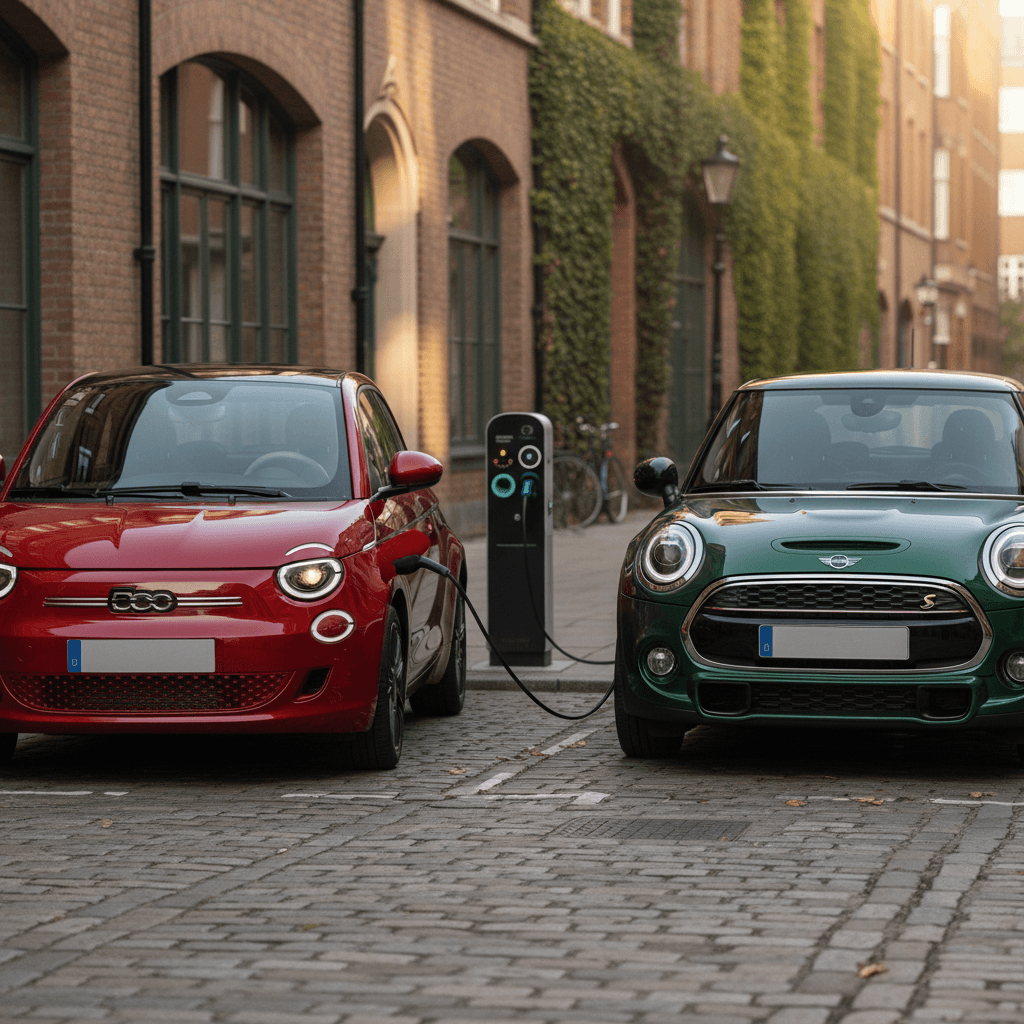
If you’re cross-shopping the Fiat 500e vs Mini Cooper SE, you’re already looking in the right place: both are small, stylish EVs that shine in dense cities and short commutes. The real question isn’t which one is "better" in the abstract, it’s which one fits your daily life, budget, and charging setup.
Two Generations of "Mini" EVs
Overview: Fiat 500e vs Mini Cooper SE
On paper, the Fiat 500e and Mini Cooper SE have a lot in common. Both are subcompact, front-wheel-drive hatchbacks with quirky styling, premium touches, and modest real-world range that’s tailored to urban use rather than cross-country road trips. But their personalities and strengths differ enough that one will almost certainly fit you better than the other.
Why You Might Prefer the Fiat 500e
- More range (up to about 149 EPA miles) from a 42 kWh battery.
- Smooth, relaxed character that feels very at home in the city.
- Extremely efficient, with real-world energy use among the best in the segment.
- Fresh design and tech in the 2024+ U.S. model.
Why You Might Prefer the Mini Cooper SE
- Much punchier acceleration (181 hp) and classic MINI go-kart feel.
- More upscale cabin design and materials than most small EVs.
- Sharply tuned steering, great for drivers who enjoy back roads.
- Strong brand appeal and a huge enthusiast community.
A Quick Reality Check on Range
Key Specs at a Glance
Fiat 500e vs Mini Cooper SE: Core Specs
Headline specs for U.S.-market versions that most used-EV shoppers will encounter.
| Spec | Fiat 500e (2024–2025 U.S.) | Mini Cooper SE (2020–2024 U.S.) |
|---|---|---|
| Power | ~118 hp, FWD | 181 hp, FWD |
| Torque | ~162 lb-ft | 199 lb-ft |
| Battery (usable approx.) | ~37–38 kWh (42 kWh gross) | ~28–29 kWh (32.6 kWh gross) |
| EPA Range | Up to ~149 miles | ~110–114 miles |
| 0–60 mph | Low 8-second range (approx.) | ~6.9 seconds |
| DC Fast-Charging Peak | Around 85 kW | Around 50 kW |
| On‑board AC Charging | Level 2, up to ~11 kW (market dependent), 7.4 kW common | 7.4 kW Level 2 |
| Body Style | 2-door hatchback | 2-door hatchback |
| Front Trunk (Frunk) | No | No |
| Seats | 4 | 4 |
Figures are approximate and can vary by model year, wheel size, and test cycle.
Designed Around Short, Predictable Trips
Range, Efficiency, and Battery Tech
Range is usually the first big consideration, and here the Fiat 500e has a clear edge. The latest U.S.-spec car uses a 42 kWh battery and is EPA-rated at up to about 149 miles, with particularly strong city-cycle efficiency. The Mini Cooper SE, by contrast, carries a roughly 32.6 kWh gross pack with about 28–29 kWh usable and delivers an EPA range in the 110–114‑mile neighborhood, depending on year and wheel package.
- In mixed real-world driving, many Fiat 500e owners see roughly 4.0+ mi/kWh in temperate weather, which helps stretch that relatively small pack.
- Mini Cooper SE owners often report 3.2–3.7 mi/kWh depending on speed and climate, aligning with its lower official range.
- Cold weather and highway speed will noticeably trim range on both, but the Fiat’s extra usable kWh give you a bigger buffer.
Cold Weather Tip
Fiat 500e: Efficiency First
The Fiat’s mission is straightforward: be the most efficient city car it can be. It uses its battery capacity to deliver a bit more range without trying to be a highway cruiser. For urban and suburban commuters in the 30–60 mile/day bracket, that’s more than enough.
Mini Cooper SE: Performance First
The Mini SE’s smaller battery helps keep weight down and responses sharp. MINI clearly prioritized instant punch and handling over long legs. It feels more like an electric hot hatch than a traditional eco‑focused EV.
Charging Speed and Daily Usability
Neither the Fiat 500e nor the Mini Cooper SE is built for cross‑country DC fast‑charging marathons, but both are very easy to live with if you have consistent access to Level 2 home or workplace charging.
Charging Comparison
How long you’ll actually spend at the plug with each car.
| Charging Scenario | Fiat 500e | Mini Cooper SE |
|---|---|---|
| 120V Level 1 (household outlet) | Good only for emergency trickle charging; overnight may add 30–40 miles. | Similar story: adequate only if your daily use is very low. |
| 240V Level 2 (~7 kW) | Full charge in roughly 6–7 hours from low state of charge. | Full charge in roughly 4 hours thanks to the smaller pack. |
| DC Fast Charge (10–80%) | Around 35–40 minutes at or near peak rates when the battery is warm. | More like 30 minutes, but you’re adding fewer total miles due to lower range. |
Times are approximate and assume ideal conditions and compatible equipment.
Think in Miles Added per Hour
Where the cars feel different is how they fit into your charging routine. The Mini’s smaller pack fills faster, but you start with fewer miles to begin with. The Fiat takes a bit longer to top off, but you’re rewarded with a healthier morning range estimate.
Questions to Ask About Your Charging Life
1. Do you have reliable home Level 2?
If you own your home and can install a 240V charger, either car is easy to live with. If you’re limited to a wall outlet, their short range will feel tighter, especially in winter.
2. How often do you park near public Level 2?
Garage access at work or a public Level 2 charger within walking distance of home makes the Mini’s shorter range easier to justify.
3. How many miles do you truly drive per day?
Track a week or two in your gas car first. If your real mileage is under 50–60 miles per day, both cars work. If you regularly hit 80+ miles, the Fiat’s extra range is meaningful.
4. Will you road-trip this car?
If you plan frequent long-distance trips, neither of these is ideal as your only vehicle. They excel as efficient, fun runabouts paired with another long-range car.
Driving Experience: Fun, Ride, and Noise
Both cars punch way above their size class when it comes to personality. They just express it differently.
How They Drive
Two different answers to the same question: how should a tiny EV feel?
Mini Cooper SE: Go‑Kart EV
- 181 hp and 199 lb-ft bring strong, instant shove from a stop.
- Quick steering and a firm suspension make it feel like a true hot hatch.
- More road and tire noise, but also more feedback through the wheel.
- Great choice if you enjoy back roads and on‑ramps as much as parallel parking.
Fiat 500e: Calm and Composed
- Less outright power, but still plenty of punch around town.
- Softer ride tuning makes broken city pavement more tolerable.
- Light, easy steering and tight turning radius.
- Feels more relaxed and "cute" than aggressive, appealing if comfort matters more than speed.
Both Are Genuinely Fun
Cabin Space, Cargo, and Everyday Practicality
Let’s be honest: neither the Fiat 500e nor the Mini Cooper SE is a family hauler, and that’s fine. These are 2+2 city cars, perfect for solo drivers, couples, or small households that occasionally carry a third or fourth passenger.

Front Seats
- Mini SE generally feels more substantial inside, with higher‑end materials and a more traditional driving position.
- Fiat 500e trades outright space for a charming, minimalist aesthetic and great visibility.
- Taller drivers (6’0" and up) may find the Mini slightly more accommodating over longer stints.
Rear Seats and Cargo
- Both rear seats are best for kids or short hops with adults.
- Cargo space is modest, but fold‑flat rear seatbacks make Costco runs doable if you pack smart.
- If you frequently haul pets or bulky items, you’ll want to look closely at seat-folding flexibility and load‑in height during a test drive.
Try Your Real Life on for Size
Pricing, Depreciation, and Total Cost of Ownership
Sticker prices for new short‑range EVs can be deceiving because depreciation is steep in the first few years. That’s bad news for the first owner, but very good news if you’re shopping used.
Cost Picture: New vs Used
Why these two make a lot of sense as pre-owned buys.
New Purchase Reality
- New Fiat 500e pricing lands in the lower EV bracket, but incentives will vary by region and inventory.
- The Mini Cooper SE is now near the end of its U.S. lifecycle, and new inventory is limited in many markets.
- Short‑range EVs can be a tougher sell new when similar‑priced cars offer 250+ miles of range.
Used EV Sweet Spot
- Three‑ to five‑year‑old Mini SEs and, soon, early Fiat 500e models often sell at a significant discount to their original MSRP.
- Insurance and registration costs can be lower than larger EVs with similar sticker prices.
- Electric powertrains typically mean lower routine maintenance than equivalent gas hatchbacks.
Don’t Ignore Battery Health
This is where buying from a source that can verify real battery condition, instead of guessing from a dashboard range estimate, becomes critical. What looks like a cheap runabout can become frustrating if real‑world range has sagged well below the window sticker number.
Which One Fits You Best? Scenarios and Recommendations
Rather than chasing a winner on specs alone, it’s more useful to look at who each car is built for. Here are a few common buyer profiles and which car tends to fit better.
Buyer Profiles: Fiat 500e vs Mini Cooper SE
Match your commute and personality to the right car.
The Urban Commuter
You drive 20–40 miles a day, mostly city streets, with street or garage parking at home.
- Better fit: Fiat 500e
- Why: Extra range cushion, great low‑speed efficiency, and easy maneuverability.
The Enthusiast Driver
You care more about steering feel and acceleration than maximum range.
- Better fit: Mini Cooper SE
- Why: Sharper handling, more power, and an eager character on twisty roads.
Two‑Car Household
You already have a long‑range car or gas vehicle for road trips.
- Better fit: Either
- Why: With another car for long journeys, both work brilliantly as a second car or daily runabout.
Small Family, Short Trips
One or two kids, with school runs and errands under 50 miles total most days.
- Better fit: Fiat 500e
- Why: The extra range buffer and smoother ride can make life easier.
Suburban Weekender
Your weekday commute is modest, but you occasionally do 90–120‑mile round trips to visit friends or trailheads.
- Better fit: Fiat 500e
- Why: More usable range before you have to think about DC fast charging.
Style‑First Shopper
You want something that makes you smile every time you walk up to it.
- Better fit: Tie
- Why: The Fiat leans cute and chic; the Mini leans sporty and premium. It’s all about which one you connect with emotionally.
"With short‑range EVs like these, the question isn’t whether they can replace every car for every person. It’s whether they solve 95% of your driving in a cleaner, more enjoyable way."
How Recharged Helps You Buy a Used City EV With Confidence
Short‑range EVs like the Fiat 500e and Mini Cooper SE can be some of the best values in the used market, if you know what you’re getting into. The big variable is battery health, which most traditional used‑car lots can’t quantify beyond a guess based on the dash display.
- Every EV sold through Recharged comes with a Recharged Score Report that includes verified battery health, so you know how much real‑world range to expect.
- Expert EV specialists can walk you through whether a Fiat 500e or Mini SE better matches your commute and charging setup.
- You can trade in your current car, get financing, and arrange nationwide delivery in a largely digital, no‑surprise process.
- If you’re torn between models, our range tests and ownership data, especially on cars like the 500e, give you a clearer picture than a quick test drive ever could.
Make a City EV Work for You
Ready to find your next EV?
Browse VehiclesFAQ: Fiat 500e vs Mini Cooper SE
Frequently Asked Questions
The Fiat 500e and Mini Cooper SE prove that an EV doesn’t have to be big or expensive to make your daily driving better. The Fiat leans into efficiency, range, and easygoing charm; the Mini doubles down on character and performance. Match the car to your real‑world use and insist on clear battery‑health data, and either one can be a smart, satisfying choice for your next city EV, especially when you find it through a marketplace that understands electric cars as well as you do.