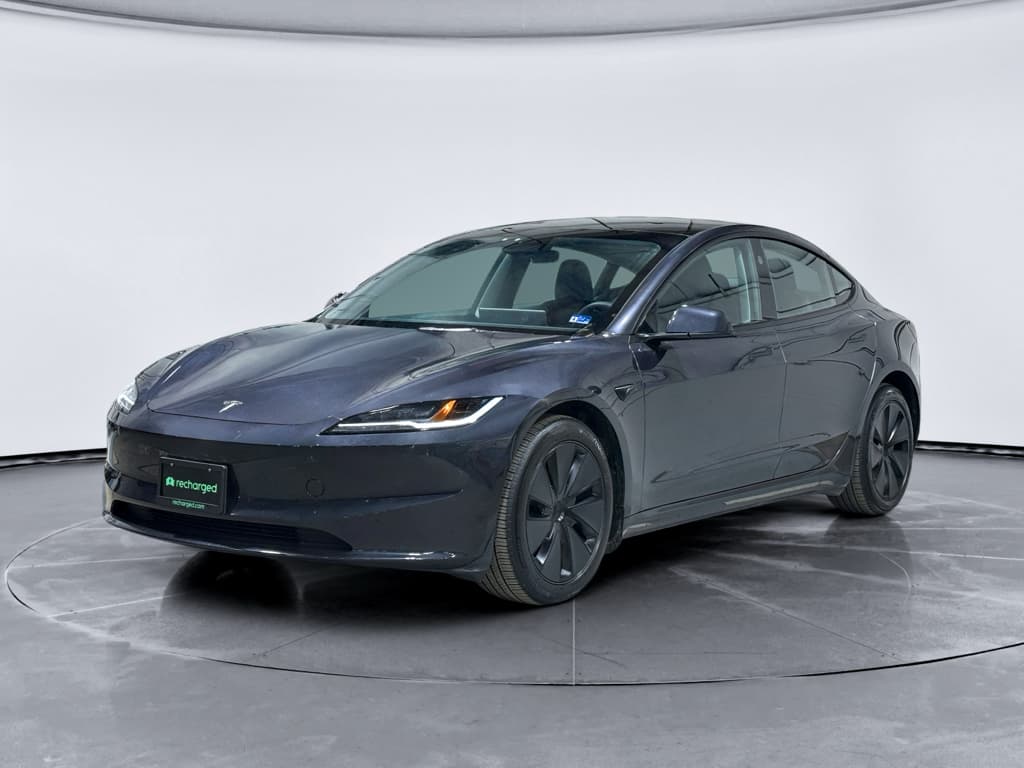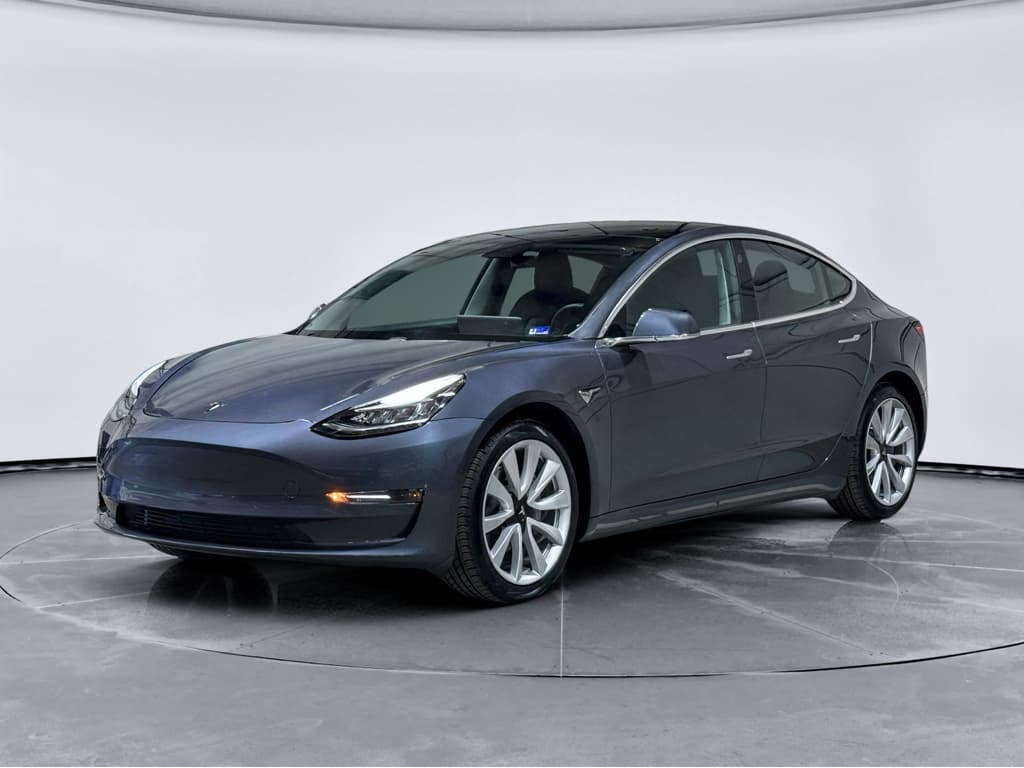
If you’re shopping for a used Tesla, you’ve probably noticed something quickly: used Tesla Model 3 financing rates don’t always match the rock-bottom APRs you see in new-car ads. EVs are still a new asset class for many lenders, and the Model 3 has its own quirks, battery health, software, and fast-changing resale values, that show up directly in the rate you’re offered.
Big picture
Why used Tesla Model 3 financing rates are different
On paper, a used Tesla Model 3 looks like any other compact luxury sedan. Underneath, it’s a rolling computer with a large lithium-ion battery pack and over-the-air software updates. Lenders know that predicting the long-term value of that mix is tricky, so used Tesla Model 3 financing rates often come in higher than rates on mainstream gas sedans of the same age.
- Battery health is harder to evaluate than mileage on a gas car.
- Tesla’s frequent price changes on new vehicles can ripple through used values.
- Some lenders are still catching up on EV-specific residual value data.
- Repair networks and parts for Teslas are more specialized than for legacy brands.
Don’t compare to teaser new-car APRs
What actually shapes your used Model 3 APR
Every lender builds your APR from the same core ingredients. Understanding these can help you change the ones you control and negotiate the ones you don’t.
Main drivers of your used Tesla Model 3 rate
Some are about you, some are about the car, and some are about the broader economy.
Your credit profile
Lenders anchor on your FICO score, payment history, and debt-to-income ratio. Clean credit and low revolving balances do more for your APR than any other factor.
Vehicle risk factors
Year, mileage, trim, and battery health all matter. A well-documented Model 3 with strong battery diagnostics is easier to finance on good terms.
Macro & lender policy
Interest rates set by the Fed and each lender’s appetite for EV risk influence your offer. The exact same buyer can see different APRs from different lenders on the same day.
- Loan-to-value (LTV): How big your loan is relative to the car’s appraised value.
- Loan term length: Longer terms mean more risk, which usually pushes APR higher.
- Down payment: More money down can shave the rate and widen your approval options.
- Use case: Personal use vs. ride-hailing or high-mileage commercial use.
Simple rule of thumb
The 2025 landscape for used Tesla Model 3 financing rates
Rate sheets move with the broader economy, so no single number will fit every buyer. But for context, in early 2025 many borrowers with solid credit profiles are seeing used EV APRs in the mid- to high-single digits, while weaker credit can push offers into the teens.
Illustrative APR bands for used EV buyers (2025)
These are reference points, not quotes
How loan terms change your monthly payment
With a Model 3, the difference between a comfortable payment and a stressful one is usually more about loan structure than headline price. Term length, APR, and down payment all interact, and stretching one to fix another can get expensive fast.
Sample payments on a used Tesla Model 3
Illustrative payments for a $30,000 used Model 3 purchase with different APRs and terms. Taxes and fees excluded for simplicity.
| Scenario | Price & Down | Loan Amount | APR | Term | Est. Monthly Payment | Total Interest Paid |
|---|---|---|---|---|---|---|
| Baseline good credit | $30,000 price, $6,000 down | $24,000 | 6.0% | 60 months | ≈ $463 | ≈ $3,800 |
| Longer term, same rate | $30,000 price, $3,000 down | $27,000 | 6.0% | 72 months | ≈ $450 | ≈ $5,200 |
| Higher rate, shorter term | $30,000 price, $3,000 down | $27,000 | 9.0% | 60 months | ≈ $561 | ≈ $6,700 |
| Lower rate, bigger down | $30,000 price, $9,000 down | $21,000 | 5.0% | 60 months | ≈ $396 | ≈ $2,800 |
Use these as rough planning numbers; your actual offers will differ.
Watch the total interest, not just the payment
How battery health and EV risks affect rates
For a lender, the battery pack is the single most important, and least visible, component on a used Tesla. It affects range, performance, and resale value. Any uncertainty around battery health shows up as perceived risk, and risk gets priced directly into your APR or LTV limit.
Why lenders care about battery data
- Range is value: A Model 3 with 310 miles of real-world range is worth more, and easier to resell, than one that can only manage 200.
- Pack replacement is expensive: Even if failure is rare, the potential bill runs five figures, which matters for collateral value.
- Abuse is invisible without diagnostics: Frequent DC fast charging or high-mileage ride-hail use isn’t obvious from an odometer alone.
How documented health can help your rate
- Objective battery diagnostics make the car easier to underwrite.
- Some lenders will look more favorably at EVs with verified health reports.
- A car with strong battery metrics can justify a higher LTV and, in some cases, sharper pricing.
Every vehicle bought and sold through Recharged comes with a Recharged Score Report that includes verified battery health. That transparency is valuable for you, and for the lender evaluating your loan.
Where Recharged fits in
Ready to find your next EV?
Browse VehiclesWhere to finance a used Tesla Model 3
You have more financing options for a used Tesla Model 3 than ever before, but they’re not created equal. The right choice depends on your credit profile, how long you plan to keep the car, and how much time you’re willing to spend shopping offers.
Common sources for used Model 3 financing
Each has its own tradeoffs in rate, convenience, and EV expertise.
Credit unions & community banks
Often competitive rates and more flexibility with used EVs, especially if you’re already a member. Approval can be slower and documentation more manual, but you may see lower APRs than big national banks.
National banks & captives
Well-known names and slick online applications. Some are still conservative on used EVs and may cap LTVs or add rate premiums compared with gas cars.
EV-focused retailers like Recharged
Platforms that specialize in used EVs increasingly pair inventory with integrated financing. At Recharged, you can get pre-qualified, compare structures, and complete the entire transaction digitally, with specialists who understand Tesla specifics.
Always compare at least two channels
Step-by-step: Qualify for better used Model 3 rates
You can’t control the Fed, but you can make yourself look safer and simpler to underwrite. Here’s a practical checklist to tilt used Tesla Model 3 financing rates in your favor over the next 30–60 days.
Pre-financing checklist for a stronger approval
1. Pull and clean up your credit
Get your credit reports from the major bureaus and confirm there are no errors. If you can, pay down high-utilization credit cards to under 30% of their limits a month or two before applying.
2. Set a realistic budget first
Instead of shopping the highest sticker price a lender will approve, decide what monthly payment fits comfortably after housing, savings, and other obligations.
3. Plan your down payment
Even moving from 5% to 10–15% down can improve both approval odds and rate. If you have a current EV or gas car, explore trade-in or consignment options to boost your cash at signing.
4. Get pre-qualified
Use soft-pull pre-qualification tools, like Recharged’s <strong>no-impact pre-approval</strong>, to understand your likely APR band and max amount before you fall in love with a specific car.
5. Choose the right car profile
A well-maintained, mainstream trim with documented battery health is easier to finance than a heavily modified car or a rare spec. That’s one reason Recharged focuses on clean, verified inventory.
6. Avoid big new debts right before applying
Hold off on new credit cards, furniture financing, or personal loans. Fresh inquiries and new tradelines can spook underwriters and nudge your offer into a higher rate tier.
Comparing financing offers on a used Tesla Model 3
Once you have two or three offers in hand, it’s tempting to scan for the lowest APR and call it a day. For a used Tesla Model 3, that shortcut can hide important differences in structure and risk that show up later in ownership.
Look beyond the headline APR
- Total interest paid: Ask each lender for amortization tables or use an online calculator to see the full interest cost over the life of the loan.
- Prepayment rules: Some lenders make it painless to pay off early; others add fees or restrict partial prepayments.
- LTV requirements: A low advertised rate may assume a large down payment or low LTV that doesn’t match the car you want.
Questions to ask each lender
- “Is this rate specific to EVs or is there a premium versus gas vehicles?”
- “How does documented battery health or a condition report affect my approval?”
- “If I refinance later when rates drop, are there penalties?”
Specialized retailers like Recharged can walk you through these tradeoffs with EV-specific context rather than generic auto-loan scripts.
Refinancing as a backup plan
Common mistakes with used Tesla Model 3 financing
The same patterns show up again and again in EV financing. Avoiding a handful of common traps can save you thousands over the life of your used Tesla Model 3 loan.
- Chasing the lowest possible payment by stretching to 84 months or more, even if it means being upside down for most of the loan.
- Ignoring battery health entirely and focusing only on miles and cosmetics.
- Letting a single dealer-arranged offer dictate your decision, without even a basic comparison shop.
- Rolling high negative equity from your current vehicle into the new loan, which can push LTVs and APRs into dangerous territory.
- Skipping pre-qualification and discovering late in the process that the car you picked doesn’t fit the lender’s EV criteria.
Upside down on a rapidly evolving car
FAQs: used Tesla Model 3 financing rates
Frequently asked questions about used Model 3 financing
Key takeaways on used Model 3 financing
Used Tesla Model 3 financing rates reflect a mix of your personal credit story, the health and pricing of the car you pick, and how comfortable a given lender is with EVs. You can’t control every variable, but you can absolutely tilt the odds in your favor by tightening up your credit, planning a realistic down payment, and choosing a car with transparent battery health and fair market pricing.
If you want to simplify the process, Recharged combines curated used EV inventory, Recharged Score battery diagnostics, integrated financing options, and expert EV support into a single, digital experience. That way, you spend less time wrestling with opaque rate sheets and more time deciding if a Model 3 truly fits your life and budget for the long haul.